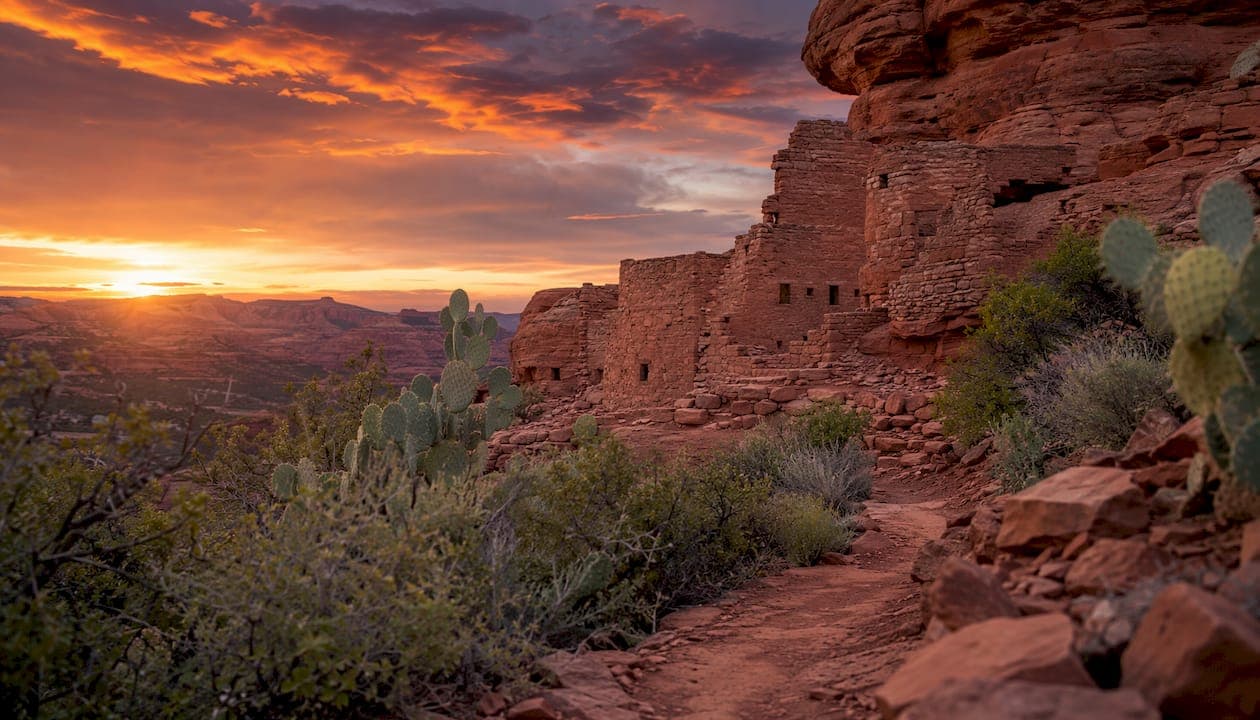
The six most visitor-ready ancient ruins near Sedona are Montezuma Castle, Montezuma Well, Tuzigoot, Palatki, Honanki, and Wupatki. Two more sites worth adding to your list: Walnut Canyon and Fort Verde State Historic Park. Here's the fast version:
- Montezuma Castle National Monument (approx. 25 miles south) — Best for families and first-timers; paved trail, full visitor center, no climbing required.
- Montezuma Well (approx. 30 miles south) — Best for photographers and curious naturalists; a five-story cliff dwelling built into a limestone sinkhole with a half-mile paved loop.
- Tuzigoot National Monument (approx. 25 miles southwest) — Best for archaeology enthusiasts; a hilltop pueblo with 110 rooms at its peak and sweeping Verde Valley views.
- Palatki Heritage Site (approx. 13 miles northwest) — Best for hikers and photographers; cliff dwellings plus pictographs, rough gravel roads, high-clearance recommended.
- Honanki Heritage Site (approx. 20 miles northwest) — Best for off-the-beaten-path seekers; larger cliff dwellings and rock art, more remote than Palatki.
- Wupatki National Monument (approx. 55 miles north) — Best for a full-day archaeological road trip; ancient Puebloan ball courts and multi-story pueblos on an open volcanic plateau.
- Walnut Canyon National Monument (approx. 50 miles northeast near Flagstaff) — Short mention: cliff dwellings built into a limestone canyon; paved trail, NPS managed.
- Crane Petroglyph Heritage Site (approx. 15 miles south near Beaver Creek) — Short mention: the largest known petroglyph site in the Verde Valley, open most days.
- Fort Verde State Historic Park (approx. 30 miles south in Camp Verde) — Short mention: 19th-century military history rather than pre-Columbian ruins, but a solid add-on for history buffs.
Table of Contents
- Site-by-site profiles: what each ruin is and how to visit
- How to pick which ruin to visit from Sedona
- Access rules, permits, and cultural etiquette
- When to go, how to prepare, and what to know about the roads
- Why a guided tour makes these sites significantly better
- Key Takeaways
- What these sites actually teach you, if you let them
- Private ruins tours with all logistics handled from Sedona
- Useful sources and official pages
Site-by-site profiles: what each ruin is and how to visit
Montezuma Castle National Monument
Built in the early 1100s by the Sinagua people, this five-story, 20-room cliff dwelling is one of the best-preserved prehistoric structures in North America. You view it from a paved, quarter-mile trail below the alcove — no climbing, no touching. The visitor center covers Sinagua history and the Verde Valley's broader archaeological story. Drive time from Sedona is roughly 30 minutes south on I-17. Restrooms, parking, and interpretive signage are all on-site. Entry is covered by the America the Beautiful pass or a per-person fee.
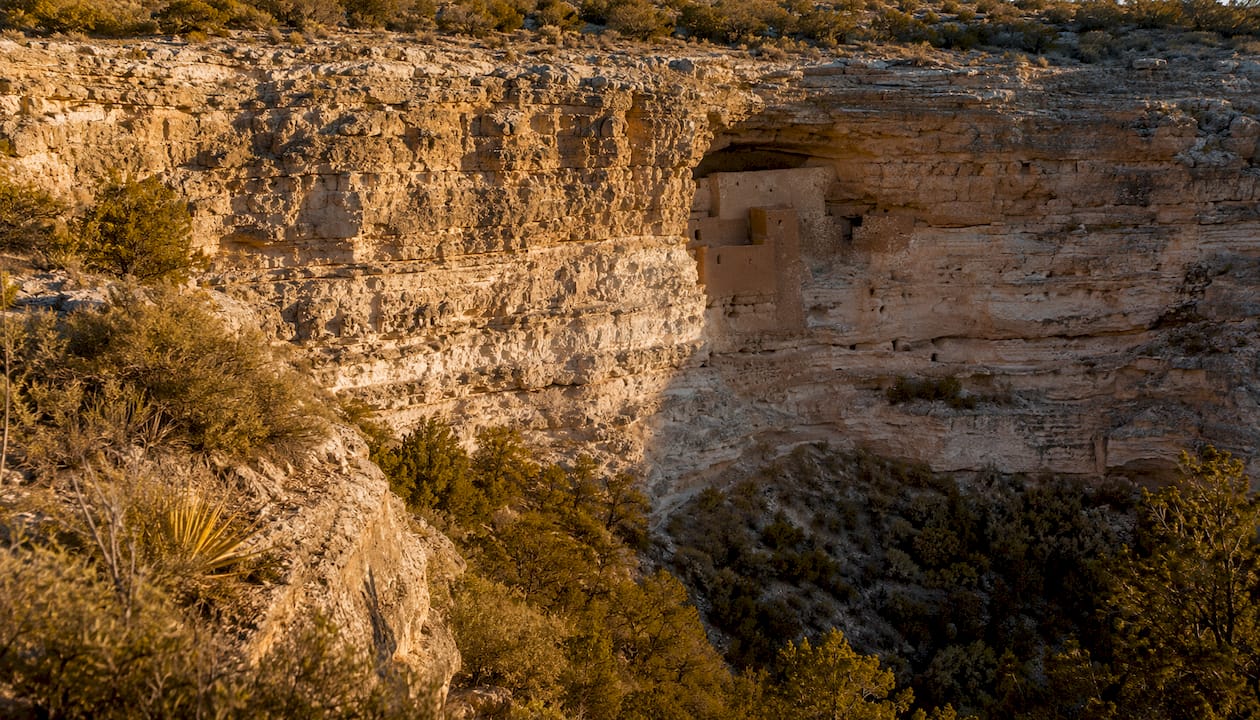
Photography note: The dwelling faces southwest, so late afternoon light hits the facade directly. Morning visits are cooler and less crowded.
Montezuma Well
A short drive from Montezuma Castle, the Well is a collapsed limestone cavern filled with spring water and ringed by cliff dwellings and irrigation canals the Sinagua built centuries ago. The 0.5-mile paved trail is manageable for most visitors, including those with limited mobility. The ecosystem inside the sinkhole is biologically unusual — the water chemistry supports species found nowhere else. Plan 45–60 minutes here, and combine it with Montezuma Castle for a solid half-day.
Tuzigoot National Monument
Tuzigoot sits on a ridge above the Verde River and was built and expanded between approximately 1050 CE and 1380, eventually reaching roughly 110 rooms. The 0.3-mile Pueblo Trail loops the structure with stairs leading to a reconstructed rooftop room and panoramic views. The visitor center has an excellent artifact collection. Drive time from Sedona is about 25–30 minutes southwest via SR 89A through Cottonwood. Paved trail, restrooms, and a full interpretive center make this one of the most accessible archaeological sites in the Verde Valley.
Pro Tip: Pair Tuzigoot with a stop at a Verde Valley winery on the way back — the Sedona highlights and wine route runs right through this corridor.
Palatki Heritage Site
Palatki is one of the largest cliff dwellings in the Red Rock country, occupied roughly between CE 1150 and 1350. You'll see cliff dwellings and a separate rock art alcove packed with pictographs spanning multiple cultural periods. The Coconino National Forest manages the site, and timed-entry reservations through Recreation.gov are required. Getting there means driving SR 89A west from Sedona, then turning onto FR 525 and FR 795 — about 13 miles and 30 minutes when roads are dry. Passenger cars can usually make it in dry conditions, but a high-clearance vehicle is strongly recommended. Restrooms are on-site; the visitor facilities are more limited than at NPS monuments.
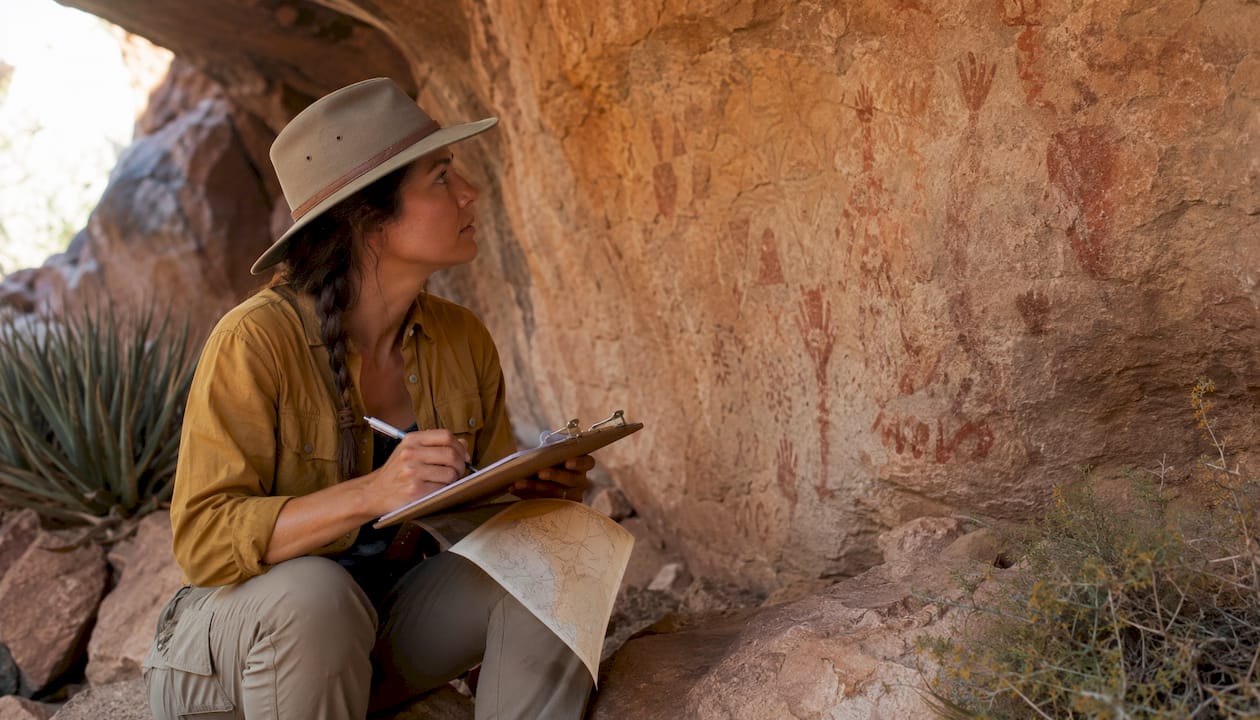
Photography note: The pictograph alcove faces east and catches beautiful morning light. Arrive early.
Honanki Heritage Site
Honanki was first described by archaeologist Jesse Walter Fewkes and is actually larger than Palatki in terms of cliff dwelling extent. It contains both cliff dwellings and rock art, and the setting feels more remote and less visited. Also managed by the Coconino National Forest, Honanki sits farther out on FR 525 — plan for rougher roads and a longer drive than Palatki. High-clearance vehicles are not just recommended here; they're close to necessary after any rain. Facilities are minimal. The payoff is a genuine sense of solitude and a site that most day-trippers never reach.
Wupatki National Monument
About 55 miles north of Sedona near Flagstaff, Wupatki sits on a high volcanic plateau and feels unlike anything else in the region. The Ancestral Puebloans built multi-story pueblos and a formal ball court here, and the open landscape means you can see the structures from a distance before you even park. Multiple short trails connect several distinct pueblo sites within the monument. This is a full-day commitment from Sedona, and it pairs naturally with a Grand Canyon and ancient ruins itinerary that covers both in one trip. NPS entry fees apply; the America the Beautiful pass works here too.
Walnut Canyon National Monument
About 50 miles northeast of Sedona near Flagstaff, Walnut Canyon features cliff dwellings built into the walls of a limestone canyon by Sinagua people around 1100 CE. The Island Trail descends 185 feet and passes 25 cliff rooms; it's steep but paved. The Rim Trail is easier and gives good views without the descent. NPS managed, with a visitor center and restrooms. Worth combining with Wupatki if you're already heading toward Flagstaff.
Crane Petroglyph Heritage Site
Crane Petroglyph Heritage Site — formerly called V Bar V Heritage Site — is the largest known petroglyph site in the Verde Valley and one of the best-preserved. Located about 2.8 miles east of the I-17 and SR 179 junction on FR 618, it's roughly 15 miles south of Sedona. The Verde Valley Archaeological Society and Friends of the Forest provide interpretive tours on-site. Hours run 9 AM–4:30 PM most days (noon–4:30 PM on Wednesdays). A Red Rock Pass is required for parking. The rock art panels here are extraordinary in density and condition.
Fort Verde State Historic Park
Fort Verde in Camp Verde, about 30 miles south of Sedona, preserves four original 1880s military buildings from the U.S. Army's campaign in the Verde Valley. It's not a pre-Columbian site, but it fills in the post-contact history of the same landscape you've been exploring all day. Admission is modest, and the museum is small but well-curated. A good add-on for history buffs who want the full arc of human occupation in this valley.
How to pick which ruin to visit from Sedona
| Site | Drive from Sedona (approx.) | Accessibility | What you'll see | Facilities | Time needed | Best for |
|---|---|---|---|---|---|---|
| Montezuma Castle | ~30 min south | Paved trail, easy | 5-story cliff dwelling | Visitor center, restrooms | 1 hr | Families, first-timers |
| Montezuma Well | about 30 min south | Paved 0.5-mile loop | Cliff dwellings, sinkhole | Restrooms | 45–60 min | Photographers, naturalists |
| Tuzigoot | ~25–30 min SW | Paved 0.3-mile loop | 110-room hilltop pueblo | Visitor center, restrooms | 1 hr | Archaeology enthusiasts |
| Palatki | ~30 min NW | Rough gravel road; high-clearance recommended | Cliff dwellings, pictographs | Restrooms, limited | about 1–2 hrs | Hikers, photographers |
| Honanki | ~45 min NW | Rough road; high-clearance near-required | Large cliff dwellings, rock art | Minimal | about 1–2 hrs | Off-path seekers |
| Wupatki | ~1 hr north | Paved roads, multiple short trails | Pueblos, ball court | Visitor center, restrooms | 2–3 hrs | Full-day trippers |
| Walnut Canyon | ~50 min NE | Paved but steep trail | Cliff rooms in canyon walls | Visitor center, restrooms | about 1–2 hrs | Active visitors |
| Crane Petroglyph | ~20 min south | Paved access road, flat walk | Dense petroglyph panels | Interpretive guides on-site | 1 hr | Rock art lovers |
| Fort Verde | ~30 min south | Fully accessible | 1880s military buildings | Museum, restrooms | 45–60 min | History buffs |
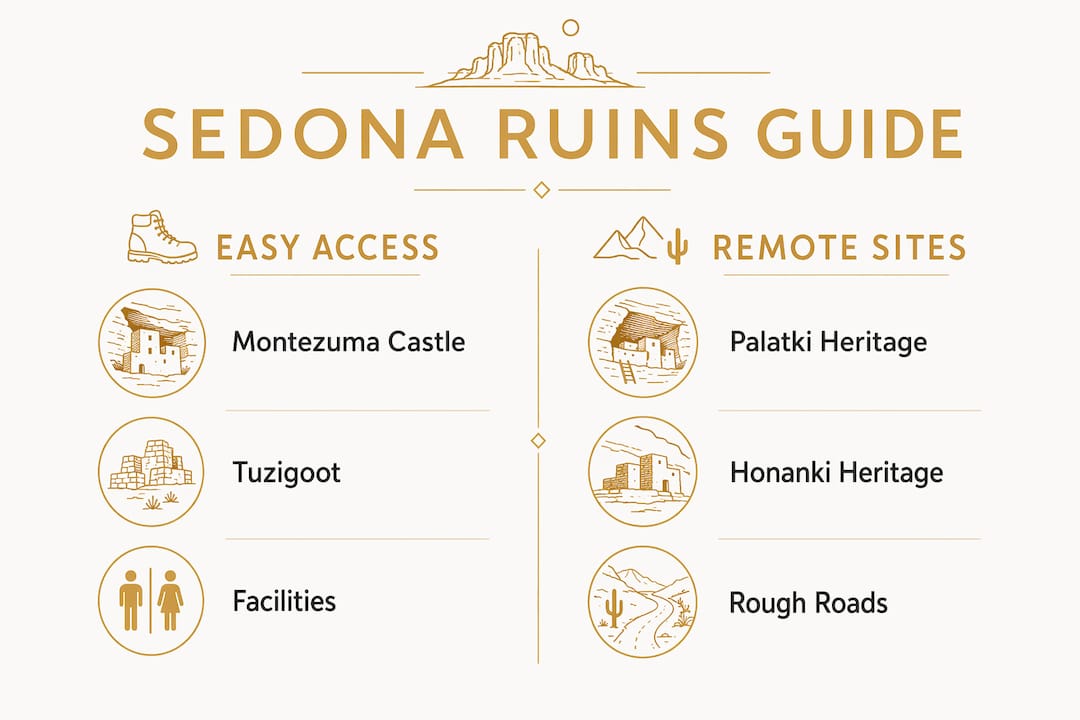
Half-day plan: Montezuma Castle plus Montezuma Well, then lunch in Cottonwood. Easy, paved, and genuinely impressive.
Full-day plan: Tuzigoot in the morning, Palatki in the afternoon (reserve ahead), and a Verde Valley winery stop on the way back. That's archaeology plus landscape plus a glass of local Syrah.
Multi-monument day: The Four National Monuments tour covers Montezuma Castle, Tuzigoot, Wupatki, and Sunset Crater in a single guided day — the most efficient way to hit the highlights without driving yourself across three different road types.
Access rules, permits, and cultural etiquette
The rules at these sites are not suggestions. NPS policy at Montezuma Castle and related monuments requires visitors to stay on marked trails and prohibits climbing on structures, touching petroglyphs or pictographs, and removing any artifact, no matter how small. Palatki and Honanki require advance reservations through Recreation.gov — walk-ins are not guaranteed entry, especially on weekends.
The Sinagua people are recognized by NPS and cultural historians as ancestors to the Hopi. Descendant tribes — including the Hopi, Yavapai, and Apache — remind visitors that these places are living heritage, not abandoned curiosities. Every wall, every painted panel, and every carved stone is connected to ongoing cultural stories. Treat them accordingly.
Calling a site "abandoned" or "empty" is both factually wrong and disrespectful. The people left; the culture did not. Follow posted signage, listen to on-site staff, and if a ranger or guide tells you to step back, step back. Photography is generally permitted for personal use, but some rock art panels have specific restrictions — check with staff before pointing a lens at anything.
For current hours, road status, and permit availability, go directly to the NPS or Coconino National Forest pages for each site before you leave Sedona. Conditions change, especially after monsoon storms.
When to go, how to prepare, and what to know about the roads
Best months: March through May and October through November offer the most comfortable temperatures for outdoor site visits. Summer in the Verde Valley means triple-digit heat by midday, and July through September brings monsoon storms that can close Forest Service roads with almost no warning. If you visit in summer, start before 8 AM and be off exposed trails by 11 AM.
Before you leave, pack:
- At least one liter of water per person per hour of planned outdoor time
- Sunscreen (SPF 30 or higher) and a wide-brim hat
- Layered clothing — mornings can be cool even in spring
- Closed-toe shoes with grip; sandals are not appropriate for gravel roads or uneven ruins trails
- A basic first-aid kit
- Offline maps or downloaded directions (cell service is unreliable on Forest Service roads)
- Printed or digital permit confirmations for Palatki and Honanki
Road conditions matter more than most visitors expect. FR 525 and FR 795 to Palatki and Honanki are rough gravel roads that can become impassable after rain. A passenger car can make it when conditions are dry, but one afternoon monsoon can turn the road into a mud trap overnight. Honanki's access road is rougher still.
Pro Tip: Check the Red Rock Ranger District road alerts on the Coconino National Forest website the morning of your visit — not the night before. Roads that are passable at 7 PM can be closed by 7 AM after a storm.
Flash flood risk is real in canyon areas. If skies darken and thunder builds, move to high ground and do not attempt creek crossings.
Why a guided tour makes these sites significantly better
Visiting Palatki or Honanki on your own means navigating rough roads, securing timed-entry tickets, finding parking, and then interpreting what you're looking at with only a trail sign for context. A private guided tour removes every one of those friction points. Guided visits handle reservations, parking logistics, and remote-road navigation while providing the kind of cultural and archaeological context that transforms a pile of ancient stones into a coherent story.
The difference between reading a trail sign and hearing a knowledgeable guide explain the relationship between a Sinagua cliff dwelling and the Hopi people alive today is the difference between seeing a site and understanding it.
What a quality private tour provides: door-to-door pickup from your Sedona accommodation, a WFR-certified guide who knows the roads and the sites, all park fees and reservations handled in advance, and on-site behavioral guidance that keeps your group respectful and compliant with preservation rules. For remote sites like Honanki, that last point alone is worth the price.
Grandcanyonjourneys offers exactly this kind of experience. Their ancient ruins and Grand Canyon tour pairs Wupatki National Monument with Grand Canyon vistas in a single private day, with all logistics managed from pickup to drop-off. For visitors who want to cover multiple national monuments in one trip, the Four National Monuments itinerary hits Montezuma Castle, Tuzigoot, Wupatki, and Sunset Crater without requiring you to navigate a single Forest Service road yourself.
Pro Tip: When booking any guided ruins tour, confirm that your guide holds a Wilderness First Responder (WFR) certification. Remote archaeological sites are far from urgent medical care, and that credential is a meaningful safety signal.
Key Takeaways
The most accessible ancient ruins near Sedona are Montezuma Castle and Tuzigoot for easy, paved visits, while Palatki and Honanki reward hikers willing to navigate rough Forest Service roads with high-clearance vehicles.
| Point | Details |
|---|---|
| Best site by visitor type | Families: Montezuma Castle. Photographers: Palatki. Archaeology buffs: Tuzigoot or Wupatki. Limited mobility: Montezuma Well. |
| Road and vehicle warning | FR 525 and FR 795 to Palatki and Honanki can be impassable after rain; high-clearance vehicles are strongly recommended. |
| Etiquette imperative | Stay on marked trails, never touch rock art or structures, and treat every site as living heritage connected to Hopi, Yavapai, and Apache communities. |
| Best time to visit | March through May and October through November offer the most comfortable conditions; summer heat and monsoon storms create real hazards. |
| Grandcanyonjourneys option | Private guided tours cover Wupatki, Montezuma Castle, and Tuzigoot with all logistics, WFR-certified guides, and park fees included. |
What these sites actually teach you, if you let them
There's a version of visiting Palatki where you park, walk the trail, take a few photos, and leave. You've technically seen a cliff dwelling. But you've missed the part that makes it worth the drive.
The pictographs at Palatki span multiple cultural periods. Some are Sinagua; some predate them. A guide who understands the archaeological and tribal context can point to a panel and explain not just what the images depict but why they were placed there, what they meant to the people who made them, and what they mean to Hopi descendants today. That's not information you get from a trail sign.
What I keep coming back to is this: the conventional approach to visiting ruins — drive out, look, leave — treats these places as scenery. They're not. They're records. Every room, every painted wall, every carved stone is a document written by people who understood this landscape far better than most visitors ever will. The best thing you can do is slow down, follow the rules, and listen to someone who has actually studied what you're looking at.
Private ruins tours with all logistics handled from Sedona
Visiting remote archaeological sites on your own is entirely possible — but it requires advance reservations, the right vehicle, solid offline navigation, and enough cultural knowledge to make the visit meaningful rather than just scenic.
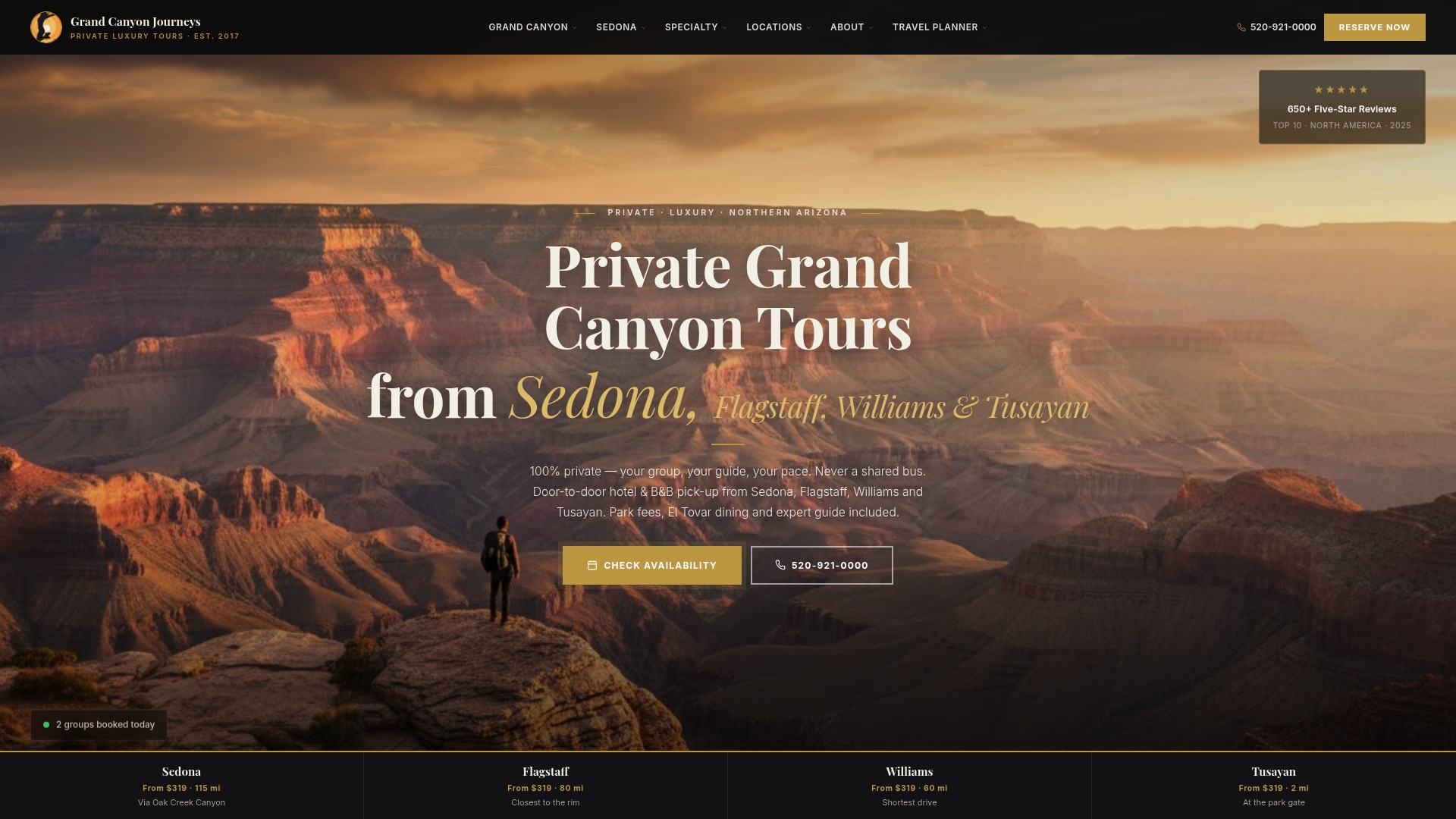
Grandcanyonjourneys handles all of it from a single booking. Their private tours depart door-to-door from your Sedona accommodation in a climate-controlled luxury vehicle, with WFR-certified guides, all park entry fees covered, and itineraries that pair archaeological sites with the broader Northern Arizona landscape. The ancient ruins and Grand Canyon tour is the most direct option for readers of this article. For a curated multi-monument day, the Four National Monuments tour covers Montezuma Castle, Tuzigoot, Wupatki, and Sunset Crater without a single Forest Service road to navigate yourself. Check availability and book directly at grandcanyonjourneys.com.
Useful sources and official pages
Check these official pages for current hours, fees, road conditions, and reservation requirements before your visit. Conditions change, especially during monsoon season.
- Montezuma Castle National Monument (NPS) — Hours, entry fees, trail information, and visitor center details for both Montezuma Castle and Montezuma Well.
- Palatki Heritage Site (Coconino National Forest) — Directions via FR 525/FR 795, road condition notes, and reservation requirements.
- Honanki Heritage Site (Coconino National Forest) — Access details, road warnings, and site description including rock art and cliff dwellings.
- Tuzigoot National Monument (NPS) — Trail length, visitor center hours, and interpretive program information.
- Crane Petroglyph Heritage Site (Coconino National Forest) — Hours, Red Rock Pass requirements, and interpretive tour schedule.
- Palatki/Honanki Reservations (Recreation.gov) — Timed-entry ticket booking for Palatki and Honanki; book well in advance for weekends.
- Wupatki National Monument (NPS) — Entry information, trail maps, and visitor center details for the Flagstaff-area monuments.