You can usually avoid or manage altitude sickness at the Grand Canyon by ascending gradually, staying hydrated, and descending immediately if symptoms appear. The U.S. National Park Service identifies descent as the most effective treatment, while MedlinePlus confirms that gradual ascent is the single most important prevention step. Grandcanyonjourneys recommends every visitor plan their itinerary with elevation in mind before leaving home.
Quick prevention checklist:
- Spend a night in Flagstaff or Sedona before heading to the rim
- Drink water consistently, not just when thirsty
- Skip alcohol for the first 24 hours at elevation
- Pace hikes and take rest stops, especially on steep descents
If symptoms appear:
- Stop all physical exertion immediately
- Descend to a lower elevation; do not wait to see if it passes
- Call 911 or contact a park ranger if symptoms are severe
Key Takeaways
Gradual ascent and immediate descent if symptoms appear are the two non-negotiable rules for managing altitude sickness at the Grand Canyon.
| Point | Details |
|---|---|
| South Rim elevation | Roughly 7,000 ft; North Rim reaches about 8,297 ft — both high enough to trigger AMS. |
| Symptoms start late | Headache, nausea, and dizziness often appear 12–24 hours after arrival, not immediately. |
| Descent is the cure | Stop exertion, descend to lower elevation; call 911 if confusion or loss of coordination appears. |
| Acclimatize first | Spend a night in Flagstaff or Sedona before rim activities to reduce risk significantly. |
| Guided hikes add safety | Grandcanyonjourneys' WFR-certified guides pace hikes and know evacuation routes below the rim. |
Table of Contents
- What is altitude sickness at the Grand Canyon, and who is at risk?
- How Grandcanyonjourneys helps you manage altitude risk on the trail
- Sources
What is altitude sickness at the Grand Canyon, and who is at risk?
Acute mountain sickness (AMS) is your body's response to reduced oxygen at elevation. The South Rim sits at roughly 7,000 feet; the North Rim reaches about 8,297 feet. The canyon floor drops nearly a mile below the rims, creating dramatic temperature and pressure swings that affect exertion and hydration needs throughout the day.
Symptoms include headache, nausea, dizziness, fatigue, and shortness of breath. They typically appear 12–24 hours after arrival, which catches many visitors off guard — you may feel fine on arrival and wake up struggling. Some people experience symptoms above 6,000 feet, so travelers flying in from sea-level cities like Los Angeles or Miami face real risk without an acclimatization day.
Fit people are not immune. Park rangers regularly treat visitors for AMS-related headaches and nausea after rapid ascent or overexertion. Seniors and anyone with cardiovascular or respiratory conditions should consult a physician before the trip. If a headache develops at your current elevation, do not go higher — that symptom signals your body is already under stress.
For prescription prophylaxis, acetazolamide (Diamox) can reduce AMS risk but requires a doctor's prescription and carries contraindications. Talk to your physician at least a week before departure. Dexamethasone is sometimes used for severe cases, again only under medical supervision.
Practical steps that consistently reduce symptoms: arrive a day early, rest on arrival, drink water before you feel thirsty, and choose trails that allow a quick retreat to the rim if needed. The Grand Canyon packing guide covers electrolyte planning and layering for the rim-to-floor temperature shift.
How Grandcanyonjourneys helps you manage altitude risk on the trail
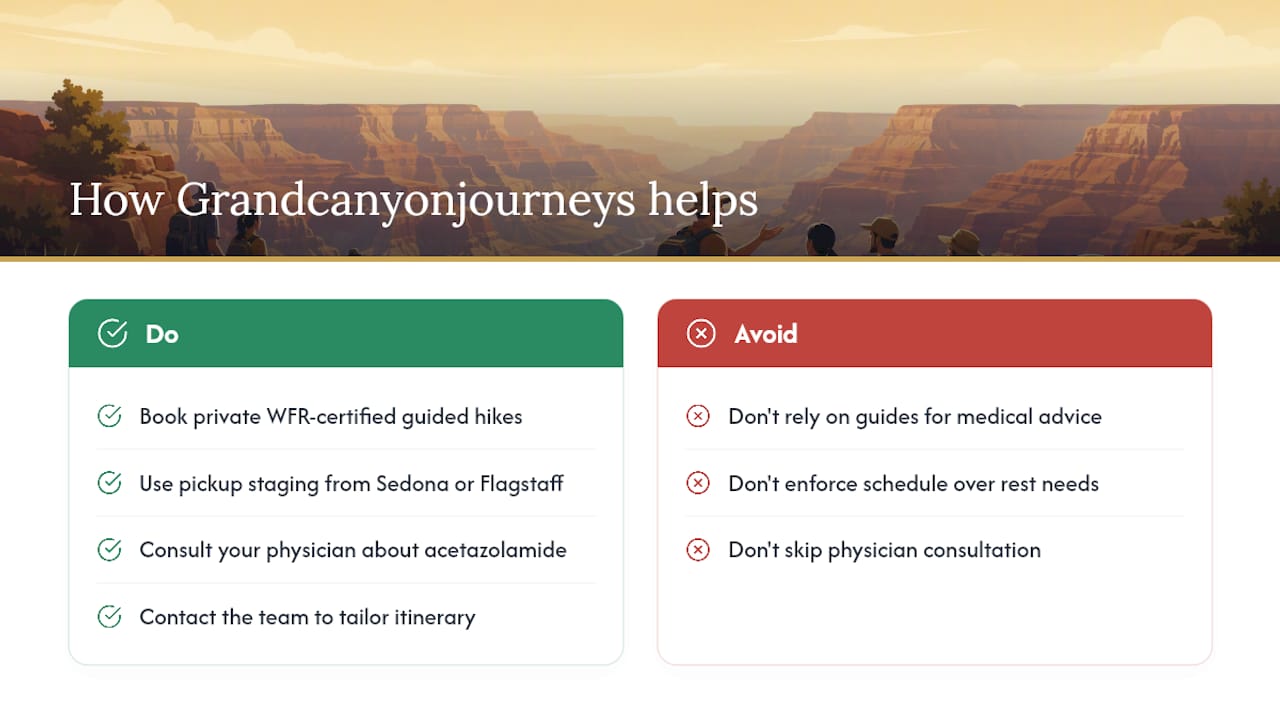
Grandcanyonjourneys builds altitude awareness directly into every guided hike. Private guided hikes below the rim are led by Wilderness First Responder (WFR)-certified guides who know the evacuation routes, carry emergency supplies, and set a pace matched to your group's fitness and acclimatization level. Door-to-door pickup from Sedona or Flagstaff means you stage from a lower elevation before reaching the rim, giving your body a head start. Itineraries are fully adjustable — if someone in your group needs more rest time, the schedule bends around that, not the other way around.
Before booking a hike, consult your physician about prescription options like acetazolamide. Grandcanyonjourneys guides are not a substitute for medical advice, but they are trained to recognize early AMS signs and act fast. Plan your visit or contact the team directly to build an itinerary around your health needs.
Sources
- Acute mountain sickness: MedlinePlus Medical Encyclopedia
- Acute Mountain Sickness - Rocky Mountain National Park (U.S. National Park Service)
- Grand Canyon National Park guide - AARP
- 7 Tips to Avoid Grand Canyon Altitude Sickness | Under Canvas®
- Grand Canyon Altitude Sickness And How To Avoid It - Zaca
- Hiking Rim-to-Rim in a Single Day: Conquering the Grand Canyon