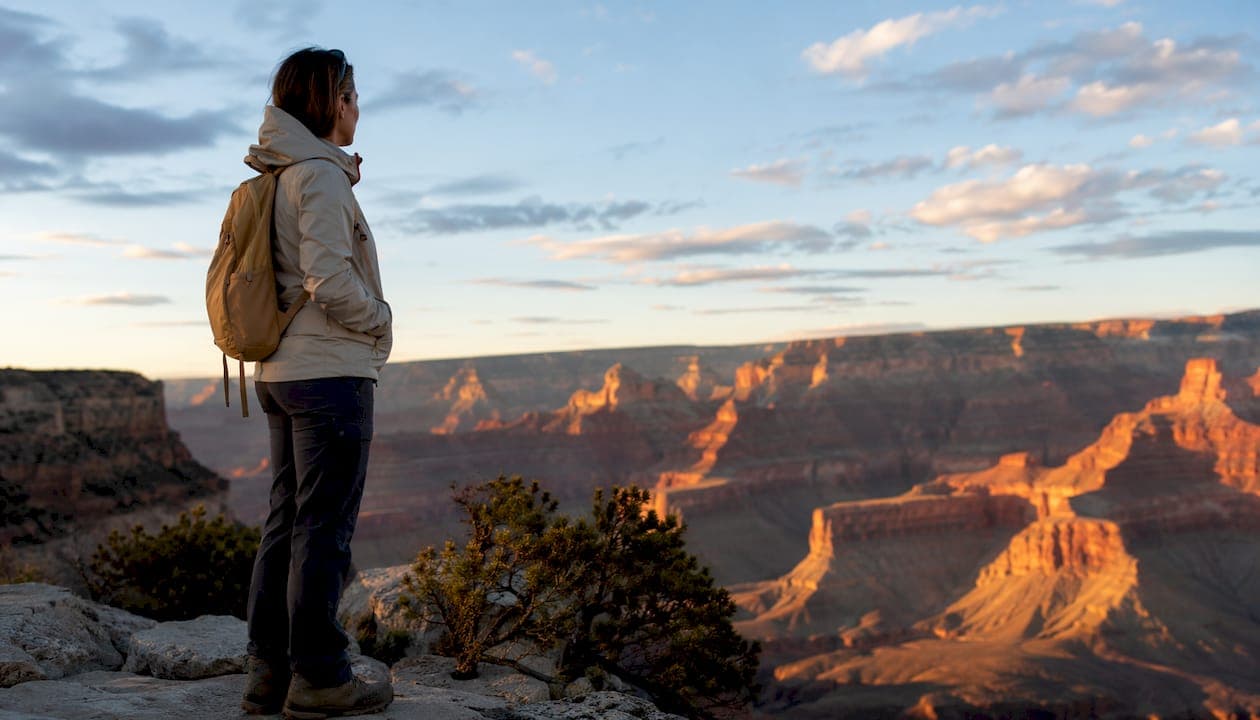
Yes, you can have a genuinely satisfying Grand Canyon day trip by focusing entirely on the South Rim with a sunrise-to-sunset plan. One day is enough to hike into the canyon, hit the best viewpoints, and catch a sunset that will stay with you for years. The key is not trying to do everything.
TL;DR for the one-day plan:
- Arrive by 7:30 AM (earlier in summer) to secure parking near the Visitor Center before lots fill
- Hike South Kaibab Trail to Ooh Aah Point (1.8 miles round-trip) for the best inner-canyon views of the morning
- Pick one scenic drive: Hermit Road for sunset-friendly western views, or Desert View Drive for a quieter self-drive east to the Watchtower
- Position yourself at Hopi Point 45–60 minutes before sunset
One safety rule covers the whole day: carry at least 3 liters of water per person if you're hiking, and never attempt a rim-to-river round trip in a single day. The NPS hiking guidance is clear on this, and rescues from that mistake are common.
Table of Contents
- What does a grand canyon one day itinerary actually look like?
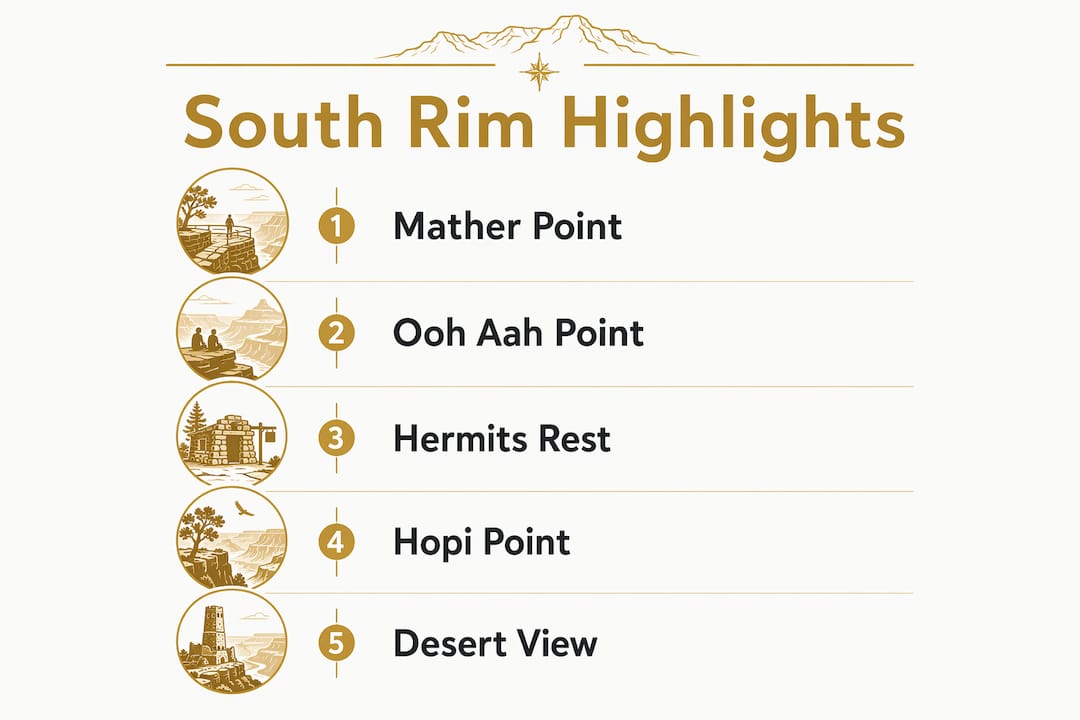
- Which viewpoints should you prioritize on the South Rim?
- What are the best short hikes for a one-day visit?
- How do entrance fees, parking, and shuttles work?
- When should you be where for the best light and fewest crowds?
- What should you pack for a one-day visit?
- How do you actually maximize a single day at the canyon?
- Key Takeaways
- What actually makes a one-day canyon visit memorable
- A private Grand Canyon day tour worth considering
- Useful sources and official park information
What does a grand canyon one day itinerary actually look like?
A well-paced South Rim day breaks into four natural blocks: sunrise and the visitor center, a morning hike, a midday scenic drive with lunch, and an afternoon that ends at sunset. Here's how to run it.
Hour by hour:
-
5:30–6:30 AM — Predawn arrival and sunrise. Leave your lodging in Flagstaff (about 80 miles, 1.5 hours), Williams (about 60 miles, 1 hour), or Las Vegas (about 280 miles, 4 hours) early enough to be at Mather Point or Yaki Point before first light. Sunrise at the canyon is genuinely different from any other time of day: the light hits the inner walls in shades of amber and red that disappear by 8 AM.
-
6:30–8:00 AM — Visitor Center and Rim Trail. After sunrise, walk to the Grand Canyon Visitor Center to pick up a park map and check the day's shuttle schedule. The Rim Trail between Mather Point and Yavapai Point is paved, flat, and one of the most rewarding short walks in the park. Give it 30–45 minutes.
-
8:00–10:30 AM — South Kaibab Trail to Ooh Aah Point. This is the morning's main event. The trailhead is accessible only by shuttle (Orange Route), which runs early. Plan 1.5–2 hours for the round trip at a comfortable pace, including time to stop and take in the view at the top. Carry all your water — there is none on this trail.
-
10:30 AM–12:30 PM — Scenic drive choice. Pick one: Hermit Road (shuttle-required March–November, best for sunset stops) or Desert View Drive (self-drive, 25 miles east to the Watchtower). Both are excellent; neither is a quick detour. If you want to end the day at Hopi Point for sunset, Hermit Road is the logical choice. If you're more interested in the cultural stop at Desert View Watchtower and the Colorado River views from the east, go that direction instead.
-
12:30–2:00 PM — Lunch. Bright Angel Restaurant inside the park is the easiest sit-down option. El Tovar Dining Room, right on the rim, is the more memorable choice if you have a reservation. A packed picnic eaten at a rim overlook is faster and honestly hard to beat.
-
2:00–4:30 PM — Quieter afternoon stops. Yavapai Geology Museum is worth 30–45 minutes, especially if midday haze has reduced long-distance visibility. The Trail of Time, a geologic timeline walk along the rim, is a low-effort way to keep moving without rushing.
-
4:30–7:30 PM — Sunset at Hopi Point. Board the Hermit Rest Route shuttle toward Hopi Point no later than 60 minutes before sunset. Hopi Point juts further into the canyon than most overlooks and faces due west, which is exactly what you want for golden hour. Stay until the light is gone.
Pro Tip: If you're traveling with kids or seniors, swap the South Kaibab hike for a longer Rim Trail walk and spend the saved energy on a second scenic overlook. The canyon is just as impressive from the rim.
Alternatives by traveler type:
- Late arrivals (after 9 AM): Skip the hike, use the Tusayan shuttle to avoid parking stress, and focus on Mather Point, the Visitor Center, and one scenic drive.
- Families with young children: Rim Trail between Mather Point and Bright Angel Trailhead, lunch at Bright Angel Restaurant, and the Yavapai Museum.
- Very active hikers: South Kaibab to Ooh Aah Point in the morning, then Bright Angel Trail to 1.5-Mile Resthouse in the afternoon — two separate short hikes, both safe turnarounds.
Which viewpoints should you prioritize on the South Rim?
The South Rim is the right choice for a single day: open year-round, full shuttle system, dining, lodging, and the park's most accessible iconic overlooks. The North Rim closes in winter and requires a much longer drive. For a day trip, there's no real debate.
Here are the stops worth your time, in rough priority order:
- Mather Point — The first overlook most visitors reach from the Visitor Center parking lot. Crowds gather here at sunrise, but the view is genuinely spectacular. Give it 20–30 minutes.
- Yavapai Geology Museum — A short walk east of Mather Point. The 3D relief map inside gives you a spatial understanding of the canyon's scale that photographs can't. Good indoor option when midday haze flattens the view.
- Grand Canyon Village — Bright Angel Lodge and El Tovar are here, along with the Bright Angel Trailhead. Even if you're not hiking Bright Angel, walking the rim between the lodges and looking down at the trail switchbacks is worth 15 minutes.
- Hopi Point — The best sunset overlook on the South Rim. It extends further into the canyon than most other points and gives you an unobstructed west-facing view. Shuttle access only during peak season.
- Yaki Point — The South Kaibab Trailhead is here. Shuttle access only. The view from the point itself, before you even start hiking, is one of the most dramatic on the rim.
- Desert View Watchtower — A 70-foot stone tower at the east end of Desert View Drive with 360-degree views including the Colorado River and the Painted Desert. Hopi murals inside make it a genuine cultural stop, not just a viewpoint.
Parking reality: Lots near the Visitor Center and Mather Point fill by 9–10 AM during peak season. If you're arriving after 8 AM, plan to park in Tusayan and use the shuttle, or accept a longer walk from overflow lots.
The scenic drive trade-off: Hermit Road and Desert View Drive are both worth doing, but not both in a single day. Hermit Road (shuttle-only March–November) runs west and sets you up perfectly for sunset at Hopi Point. Desert View Drive goes east and ends at the Watchtower — quieter, self-driven, and better if you want the cultural stop. Pick one and commit.
What are the best short hikes for a one-day visit?
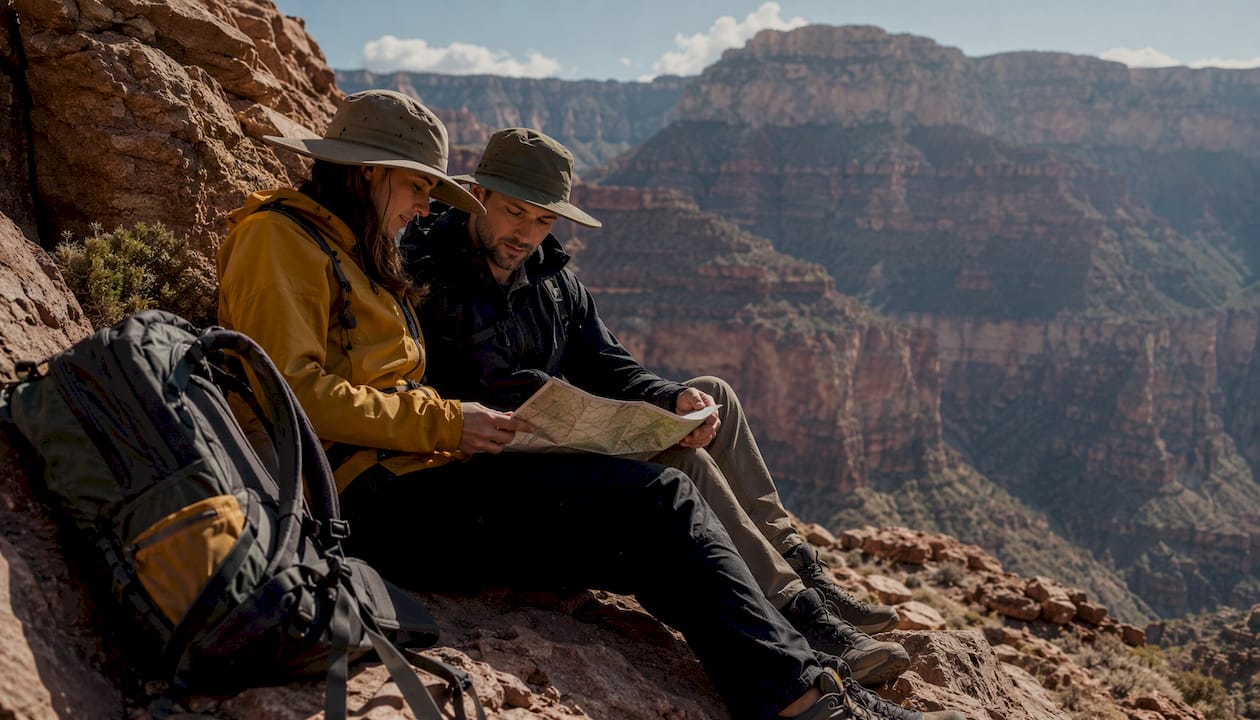
The canyon rewards short hikes disproportionately. You don't need to go far to feel like you're inside it.
| Trail | Distance (RT) | Elevation Change | Water Available | Best Time |
|---|---|---|---|---|
| South Kaibab → Ooh Aah Point | 1.8 miles | ~600 ft descent | None on trail | Early morning |
| Bright Angel → 1.5-Mile Resthouse | 1.8 miles round trip | about 600 feet descent | Seasonal (May–Sep) | Morning |
| Rim Trail (Mather to Bright Angel) | 1.8 miles round trip | Minimal | At trailheads | Any time |
South Kaibab to Ooh Aah Point is the single best short hike for a one-day Grand Canyon trip. The 1.8-mile round trip drops about 600 feet into the canyon and delivers panoramic inner-canyon views that the rim simply can't match. There is no water on this trail at any point, and the exposure is real. Carry everything you need before you start, and go early — the trail faces east and gets full sun by mid-morning.
Bright Angel to 1.5-Mile Resthouse is the better choice if you want shade and the option of water. Seasonal water stations operate May through September at the resthouse. The trail is wider, more trafficked, and slightly more forgiving than South Kaibab. The round trip takes about 2–2.5 hours at a moderate pace.
The one thing both trails share: they go down first. Every step down is a step you have to climb back up, in heat, at altitude. The NPS strongly discourages hiking to the river and back in a single day. The rim-to-river round trip covers roughly 9.5 miles and about 4,780 feet of elevation change. Rescues from that attempt are a regular occurrence, especially in summer.
NPS rule of thumb: avoid hiking down into the canyon between 10 AM and 4 PM in summer. If you haven't started your descent by 9 AM, save the hike for a viewpoint walk instead.
How do entrance fees, parking, and shuttles work?
L'entrée du parc coûte 35 $ par véhicule, valable pour sept jours. Le pass annuel America the Beautiful est accepté pour accéder au parc. Most day visitors don't need an advance reservation for the park itself — you pay at the entrance gate and go.
Parking and arrival:
- Arrive by 7:30 AM in peak season (May–October) to secure a spot near the Visitor Center
- Lots near Mather Point fill by 9–10 AM on busy days
- If you miss that window, park in Tusayan (2 miles south of the entrance) and take the Tusayan shuttle to the Visitor Center — it runs with park admission and removes the parking stress entirely
- Overflow lots further from the rim are available but add a longer walk
Shuttle system basics:
- The free park shuttle runs multiple routes; the two most useful for a one-day visit are the Orange Route (Kaibab/Rim) and the Red Route (Hermit Rest)
- Hermit Road is closed to private vehicles from March 1 through November 30; the Red Route shuttle is the only way to reach Hopi Point and Mohave Point during that period
- Shuttles run frequently during peak hours but can get crowded; boarding at less-popular stops (rather than the Visitor Center) often means a faster ride
Getting there from major hubs:
- Flagstaff: about 80 miles, roughly 1.5 hours via US-180 and AZ-64
- Williams: about 60 miles, roughly 1 hour via AZ-64
- Las Vegas: about 280 miles, roughly 4 hours via US-93 and AZ-40
Pro Tip: If you're driving from Las Vegas, leave by 4:00 AM to reach the park in time for sunrise. A pre-booked private tour from Sedona or Flagstaff eliminates the drive entirely — you arrive rested and ready.
When should you be where for the best light and fewest crowds?
Aligning hikes and drives with the light is what separates a frantic day from a memorable one. The canyon changes dramatically from hour to hour, and the difference between a flat midday shot and a golden-hour shot from Hopi Point is not subtle.
- Sunrise (5:30–7:00 AM): Mather Point and Yaki Point face east and catch the first light. Crowds are thinner than at any other point in the day. The inner walls glow in shades of red and orange that last maybe 30 minutes — worth the early alarm.
- Mid-morning (8:00–10:30 AM): Best time for the South Kaibab hike. Light is still good for photography inside the canyon, and temperatures are manageable.
- Midday (11:00 AM–2:00 PM): Haze often builds, flattening the canyon's depth in photos. This is the right time for the Yavapai Geology Museum exhibits, lunch, or a shaded rim walk. Avoid hiking down into the canyon during these hours in summer.
- Afternoon (2:00–4:30 PM): Light starts improving after 3 PM. Inner-canyon contrast returns. Quieter overlooks like Shoshone Point (a 1-mile walk from a gated road off Desert View Drive) reward visitors willing to walk a little further from the shuttle stops.
- Golden hour and sunset (4:30 PM to dark): Hopi Point and Mohave Point are the premier west-facing overlooks. Arrive 45–60 minutes before sunset to claim a good spot. The color sequence — gold to orange to deep red to purple — takes about 45 minutes to play out fully.
Practical photo tips: A polarizing filter cuts glare off the canyon walls and deepens the blue of the sky. Use a person or a rock formation in the foreground to give the image scale — without it, the canyon's depth doesn't read in a photo. Watch the shadows: as the sun drops, they sweep across the canyon walls and create entirely new compositions every few minutes.
What should you pack for a one-day visit?
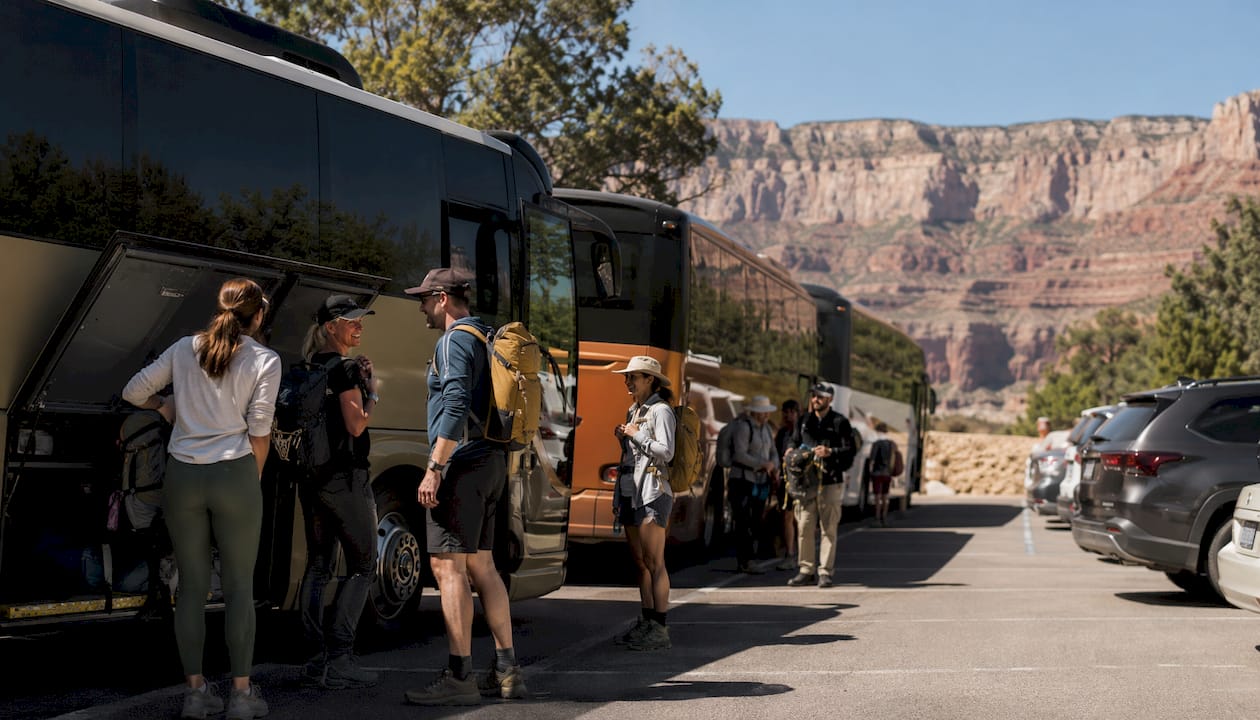
The canyon's elevation (about 7,000 feet at the South Rim) and desert climate create conditions that catch visitors off guard. Temperature swings of 20–30°F between rim and trailhead are normal, and the sun at altitude is more intense than most people expect.
Core packing list:
- Water: at least 3 liters per person if hiking in summer; more in extreme heat
- Layered clothing: a light jacket for the predawn start, sun-protective layers for midday
- Sturdy closed-toe shoes with ankle support (sandals and flip-flops are genuinely dangerous on canyon trails)
- Sun protection: wide-brim hat, SPF 30+ sunscreen, UV-blocking sunglasses
- High-calorie snacks: trail mix, energy bars, fruit — something that doesn't require refrigeration
- Basic first-aid kit with blister care and an electrolyte mix (heat cramps are common)
- Headlamp or phone flashlight for predawn arrivals
- Offline maps downloaded before you lose cell signal inside the park
For families and seniors: Plan rest windows into the itinerary rather than treating them as lost time. Shade is limited on canyon trails, so the Rim Trail's paved sections and the Yavapai Museum's indoor exhibits are genuinely useful midday options. Accessible overlooks and mobility-friendly routes are available throughout the South Rim.
Pro Tip: Freeze a water bottle the night before and pack it alongside a room-temperature one. The frozen bottle stays cold for hours and gives you cold water when you need it most — mid-hike, mid-afternoon.
The NPS is direct about heat risk: the combination of high altitude, intense sun, dry air, and physical exertion depletes water and electrolytes faster than most visitors anticipate. Carrying enough water is not optional on a summer hike.
How do you actually maximize a single day at the canyon?
The biggest mistake one-day visitors make is trying to hit every overlook on both scenic drives, squeeze in a long hike, and still catch sunset. The result is a day spent rushing between parking lots. Experienced guides recommend focusing on one area of the canyon rather than racing the rim.
The two-anchor rule: Pick a sunrise stop and a sunset stop, then build everything else around them. Sunrise at Mather Point and sunset at Hopi Point is the classic South Rim pairing. Everything in between — one short hike, one scenic drive, lunch, one museum stop — fits naturally into that frame.
Time-saving decisions:
- Pre-pack a picnic lunch to skip the restaurant wait and eat at a rim overlook instead
- Use the Tusayan shuttle if you're arriving after 8:30 AM — it's faster than circling for parking
- Book a private guided day tour to eliminate every routing and logistics decision; your guide handles timing, transport, and park entry while you focus on the canyon
For limited mobility or families:
- The paved Rim Trail between Mather Point and Bright Angel Trailhead is accessible and flat
- Yavapai Geology Museum is fully accessible and genuinely interesting for all ages
- The Grand Canyon accessibility guide lists which overlooks have paved access and accessible restrooms
Last-minute visitor checklist:
- Download offline maps before you lose cell signal
- Fill water bottles before leaving Tusayan or your lodging
- Park in Tusayan if arriving after 8:30 AM
- Decide on Hermit Road or Desert View Drive before you enter the park — not after
- Set a hard turnaround time for any hike (no later than 10 AM descent start in summer)
- Check the NPS visitor center hours and shuttle schedule the morning of your visit
Key Takeaways
A focused South Rim plan — sunrise at Mather Point, a short morning hike, one scenic drive, and sunset at Hopi Point — is the most effective way to spend a grand canyon one day visit.
| Point | Details |
|---|---|
| Arrive early | Les parkings se remplissent entre 9 h et 10 h en haute saison ; il est recommandé d’arriver vers 7 h 30 pour garantir une place près du centre des visiteurs. |
| Pick one scenic drive | Hermit Road (shuttle, sunset-friendly) or Desert View Drive (self-drive, Watchtower) — not both. |
| Safe hike turnarounds | South Kaibab jusqu’à Ooh Aah Point (1,8 miles aller-retour) ou Bright Angel jusqu’à 1.5-Mile Resthouse ; ne tentez jamais un aller-retour jusqu’à la rivière en une journée. |
| Carry enough water | Au moins 3 litres d’eau par personne si vous randonnez en été ; les électrolytes sont aussi importants que le volume d’eau. |
| Grandcanyonjourneys private tours | Door-to-door pickup, WFR-certified guides, and timed routing handle every logistics decision so you focus on the canyon. |
What actually makes a one-day canyon visit memorable
Most people who leave the Grand Canyon disappointed made the same mistake: they tried to see all of it. The canyon is 277 miles long and a mile deep. You are not going to see all of it. What you can do in a single day is see enough of it, slowly enough, to actually feel its scale.
The South Rim plan works not because it's the most efficient route, but because it's built around the canyon's best moments: the first light hitting the inner walls at sunrise, the physical sensation of being below the rim on a trail, and the slow color change at Hopi Point as the sun drops. Those three experiences, done well, are worth more than a dozen rushed overlook stops.
The detail most guides understate is the value of a WFR-certified guide on a below-the-rim hike. Wilderness First Responder training isn't just a credential for emergencies — it shapes how a guide reads the trail, manages group pace, and makes turnaround calls before conditions become a problem. That judgment is genuinely hard to replicate on a self-guided hike, especially for first-time canyon visitors.
Grandcanyonjourneys' private tours are built around exactly this philosophy: fewer stops, better timing, and a guide who knows when to push and when to slow down. The included lunch at El Tovar, on the rim, is not a luxury add-on — it's a deliberate pause in the middle of the day that most self-guided visitors skip and later wish they hadn't.
A private Grand Canyon day tour worth considering
Grandcanyonjourneys offers something the standard self-guided day can't: a completely handled day, from door-to-door pickup in a climate-controlled luxury vehicle to a sit-down lunch at El Tovar overlooking the rim. Every routing decision, park entry, and timing call is managed by a WFR-certified guide who has done this route dozens of times.
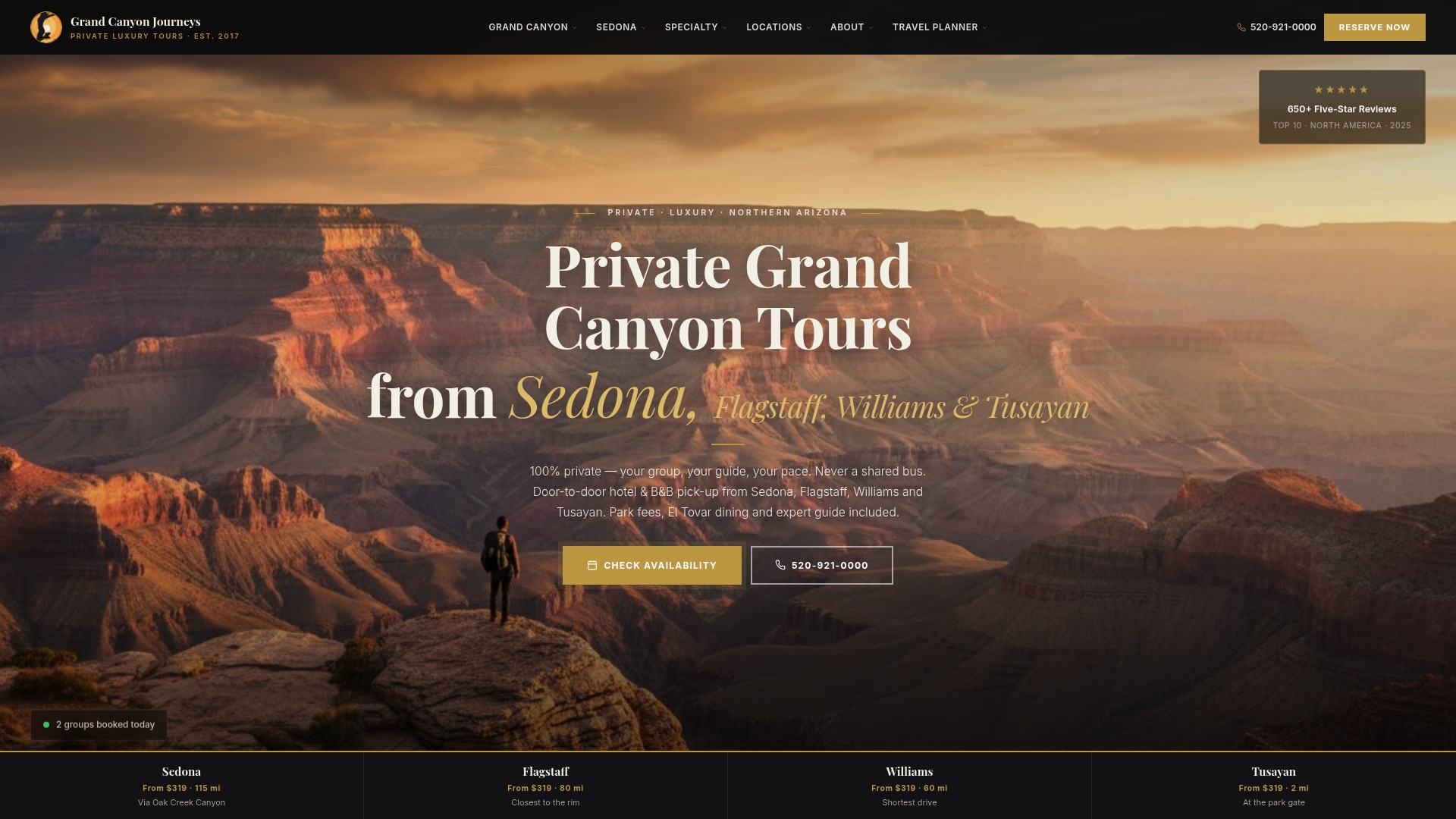
This option fits best for small private groups, couples, and travelers who want the canyon's best moments without spending the morning circling parking lots or second-guessing shuttle schedules. The Private Grand Canyon Day Tour departs from Sedona, Flagstaff, and Williams, with timed routing for both sunrise and sunset. For visitors coming from Sedona specifically, the Sedona departure page has current availability and booking details. Reserve your date in advance — private tours fill quickly in peak season.
Useful sources and official park information
Before your visit, check these official sources for current conditions, shuttle schedules, and any temporary closures:
- NPS Grand Canyon Plan Your Visit — the authoritative starting point for entrance fees, hours, and current alerts
- NPS Visitor Centers — hours and locations for the Grand Canyon Visitor Center and Yavapai Geology Museum
- NPS Shuttle Bus Information — current routes, hours, and seasonal changes to the Hermit Rest Route and Kaibab/Rim Route
- NPS Hiking Tips — official safety guidance including heat warnings and the rim-to-river caution
- NPS Trail of Time — details on the geologic timeline walk along the rim
Entrance fees and shuttle schedules are set by the NPS and change periodically. Verify both before you travel, especially if visiting in shoulder season (March or November) when Hermit Road shuttle rules are transitioning. Park webcams and weather forecasts are available through the NPS site and are worth checking the morning of your visit — afternoon thunderstorms are common in July and August and can change plans quickly.
This article is general travel information, not professional safety or medical advice. Verify current trail conditions, water availability, and shuttle schedules with the NPS before your visit.