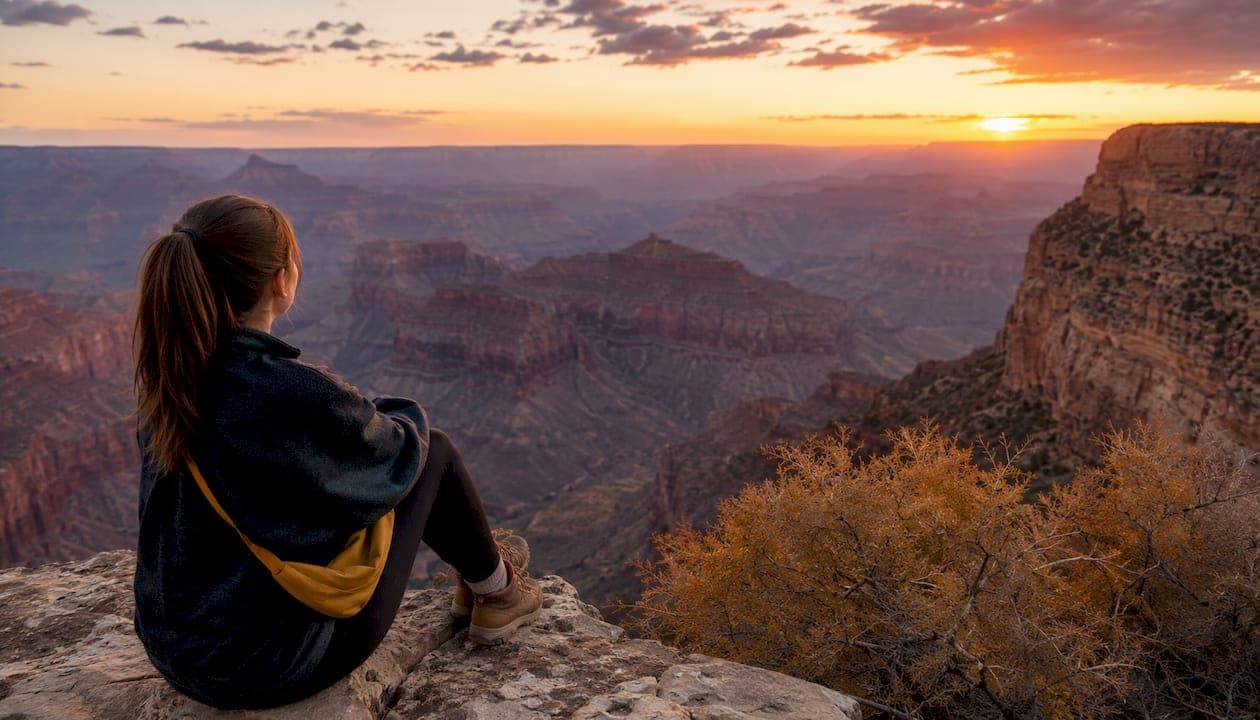
The five best grand canyon sunset spots for private luxury travelers are Hopi Point, Mohave Point, Pima Point, Lipan Point, and Grandview Point. Sunset times shift seasonally from earlier in winter to later in summer, so timing is everything. Arrive well before sunset to claim your position and stay some minutes after the sun drops. A private tour removes every friction point: no shuttle lines, no parking scrambles, no guessing which viewpoint is worth the walk.
Your shortlist at a glance:
- Hopi Point — deepest canyon penetration on the South Rim; 270-degree panorama with the Colorado River below
- Mohave Point — slightly less crowded than Hopi with equally vivid color and better railing access for photographers
- Pima Point — quietest of the Hermit Road cluster; you can sometimes hear the river from the overlook
- Lipan Point — Desert View Drive gem facing southwest; far fewer crowds, unique river geometry
- Grandview Point — highest elevation on the South Rim; panoramic reach in every direction, short walk from limited parking
Table of Contents
- Which grand canyon sunset spots are right for you?
- When to go and how to plan your arrival
- How to choose the right private luxury sunset tour
- Getting the best photos and the best experience
- Safety rules and NPS guidance every visitor should know
- Key Takeaways
- What actually separates a great Grand Canyon sunset from a forgettable one
- Private sunset expeditions from Grandcanyonjourneys
- Useful sources for planning and verification
Which grand canyon sunset spots are right for you?
Each viewpoint delivers something different. The choice comes down to what you're actually chasing.
Hopi Point
Hopi juts farther into the canyon than almost any other South Rim overlook, giving you a near-360-degree sweep with the Colorado River winding through the gorge below. The western exposure means the sun drops directly into your frame. The NPS lists Hermit Road viewpoints — Hopi, Mohave, and Pima — among the top sunset locations on the South Rim, and Hopi draws the largest crowds of the three, sometimes 100 or more people in peak season. Restrooms are on site. During peak months (March through November), the Hermit Road shuttle limits private vehicle access, so a private tour operator who plans the route in advance makes a real difference here.
Mohave Point
Mohave sits higher than most nearby overlooks, with unobstructed sightlines north and south. Rock formations like "Alligator Rock" catch the last light dramatically, which makes it a strong choice for photographers who want foreground interest. Crowds are lighter than Hopi, and railing space is easier to claim without arriving two hours early. The walk in is slightly more rugged, so wear shoes with grip.
Pima Point
Pima is the farthest west on Hermit Road and consistently the least crowded of the three main sunset points. On still evenings, the roar of the Colorado River carries up from the gorge. The paved trail and accessible overlook make it comfortable for guests who prefer a relaxed, unhurried experience over a competitive scramble for rail space.
Lipan Point
Lipan Point faces southwest and sits along Desert View Drive on the East Rim, about 23 miles from Grand Canyon Village. The angle reveals a longer stretch of the Colorado River than most western viewpoints show, and the surrounding geology looks noticeably different at golden hour. Crowds here are a fraction of what you'll find on Hermit Road. There's minimal commercial infrastructure, so bring water and snacks. For photographers, the saturated hues before and after sunset are particularly intense from this vantage.
Grandview Point
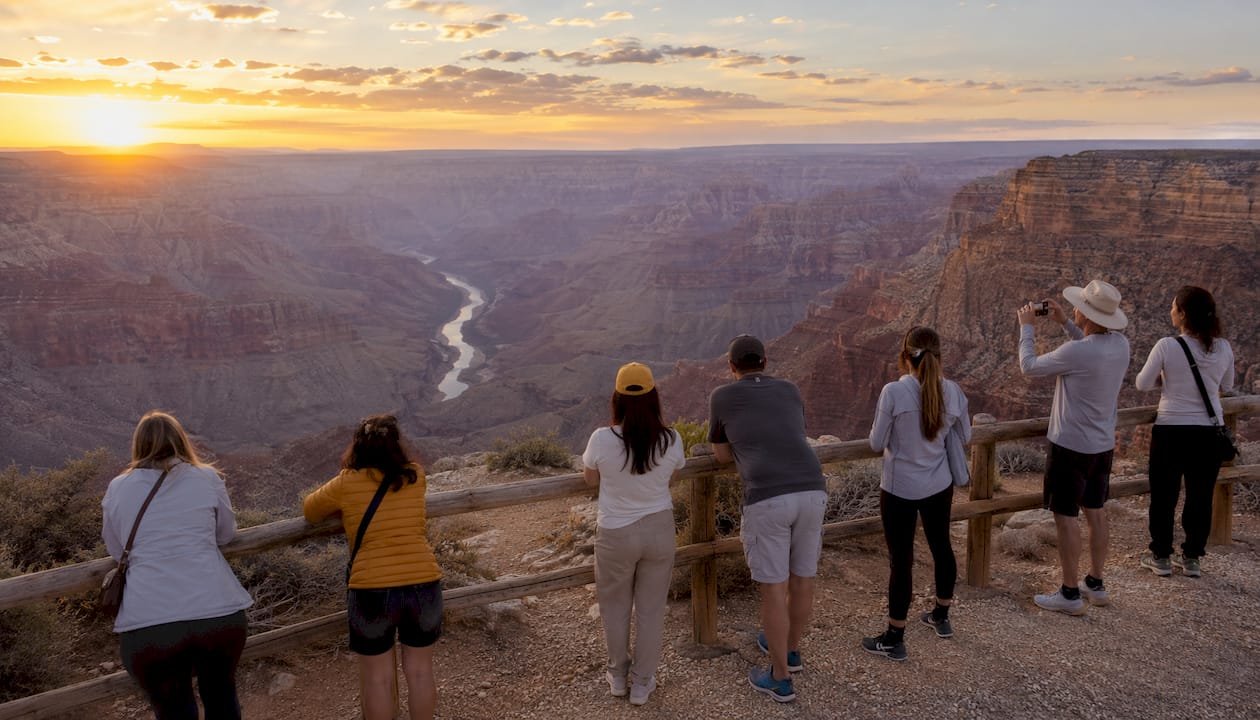
At the highest elevation on the South Rim, Grandview delivers a sweeping panoramic reach that rewards guests who want scale over intimacy. It's a 20-minute drive east of Grand Canyon Village, parking is limited, and the overlook is a short walk from the lot. Restrooms are available. This is a strong pick for small private groups who want a quieter experience without committing to the full East Rim drive.
| Viewpoint | Best For | View Orientation | Crowds | Amenities |
|---|---|---|---|---|
| Hopi Point | Panoramic views, river | West | High in peak season | Restrooms, rails |
| Mohave Point | Photography, foreground | West | Moderate | Rails, paved trail |
| Pima Point | Quiet experience | West/Southwest | Low | Paved trail |
| Lipan Point | River geometry, solitude | Southwest | Very low | Bring your own water |
| Grandview Point | Elevation, panorama | West/Southwest | Low–moderate | Restrooms, short walk |
Pro Tip: Ask your guide to position the group at Mohave or Pima rather than defaulting to Hopi. You get comparable color with room to breathe at the railing, and a private operator can time the arrival so you're settled before the shuttle crowds arrive.
When to go and how to plan your arrival
Sunset at the South Rim shifts with seasons, occurring earlier in winter and later in summer. That three-hour swing matters for scheduling, especially if you're combining a sunset with dinner at El Tovar.
The best light starts before the sun actually disappears. Colors intensify in the 20–30 minutes before the sun dips below the rim and can persist for 10–15 minutes after. Arriving 90 minutes early gives you time to settle, scout composition, and watch the canyon transition from afternoon light into golden hour without rushing.
| Quick Reference | Detail |
|---|---|
| Seasonal sunset range | ~5:15 PM (winter) to ~8:20 PM (summer) |
| South Rim elevation | ~6,790 ft |
| Park vehicle fee | $35 per vehicle (valid 7 days) |
| Hermit Road shuttle | Seasonal: March 1–November 30 |
| America the Beautiful pass | $80 annual; covers park entry |
Park entry is $35 per vehicle for a 7-day pass, or $80 for the America the Beautiful annual pass. Private tours from Grandcanyonjourneys include park entry, so guests don't need to factor that into their budget separately.
Arrival window:
- 90 minutes before sunset: Arrive at the viewpoint, find your position, take in the afternoon light
- 60 minutes before: Canyon walls begin warming; good time for wide establishing shots
- 30 minutes before: Golden hour begins in earnest; colors shift rapidly
- At and after sunset: Stay put. The most saturated colors often appear 5–10 minutes after the sun drops
How to choose the right private luxury sunset tour
Not every "private tour" delivers the same experience. Here's what to confirm before booking.
- Confirm exact viewpoint access. Ask which specific overlooks are included and whether the operator plans around shuttle restrictions on Hermit Road during peak months.
- Verify park entry is included. A reputable operator covers this; having to stop at the entrance gate on your own adds friction and time.
- Ask about vehicle comfort. Climate control and panoramic windows matter on a 2–3 hour drive from Sedona. Grandcanyonjourneys uses late-model luxury SUVs and custom vans with plush leather seating.
- Check guide qualifications. Wilderness First Responder (WFR) certification is the standard for guides leading guests near canyon rims and on trail approaches. Ask directly.
- Confirm dining options. El Tovar offers rim-side dining and is the natural complement to a private sunset itinerary. Ask whether the operator can arrange seating.
- Ask about group size limits. A genuinely private tour means your group only. If the operator mentions "small group" or "shared vehicle," that's a different product.
Red flags: No clear timing plan for the viewpoint, inability to confirm park entry inclusion, or any suggestion that you'll share transport with other guests.
Getting the best photos and the best experience
The most intense colors at the Grand Canyon often happen after the sun disappears, not during the actual sunset. Position yourself before the light changes, not after.
A few things that consistently make a difference: use the rim railings as a compositional anchor rather than a barrier, and look for foreground rock texture to give depth to wide shots. For low-light conditions after sunset, a tripod is worth the carry. Sunset photography at the canyon rewards patience more than gear.
Pro Tip: Partly cloudy evenings often produce the most dramatic results. Per NPS weather guidance, clouds, air quality, and time of day all shape sunset color. A thin layer of clouds above the western horizon backlit by the setting sun can turn the sky colors you won't see on a perfectly clear day.
Work with your guide to scout the viewpoint earlier in the day if possible. Knowing exactly where you'll stand, which direction you'll face, and where the sun will drop lets you compose shots in advance instead of scrambling when the light peaks.
Safety rules and NPS guidance every visitor should know
The South Rim sits at roughly 6,790 feet, and temperatures drop fast after sunset. Pack layers.
- Stay behind all railings and barriers; no climbing on ledges or rock outcroppings near the rim
- Keep your group together, especially in low light after sunset
- Watch footing on uneven paths when walking back to the vehicle in the dark
- Drones require a permit from the NPS; flying without one is prohibited in the park
- Follow Leave No Trace principles: pack out everything you bring in
- NPS recommends arriving before sunset and staying after to witness the full color transition
Guides with WFR certification can adapt the itinerary for weather changes or unexpected conditions. That flexibility, combined with private transport waiting at the trailhead, removes the logistical stress that often cuts a sunset experience short.
Key Takeaways
The best Grand Canyon sunset views come from west-facing Hermit Road points for drama and the East Rim for solitude, with timing and private transport determining how much of the experience you actually get to enjoy.
| Point | Details |
|---|---|
| Top sunset viewpoints | Hopi, Mohave, Pima (west-facing drama); Lipan Point (east-rim solitude and river views) |
| Arrive early, stay late | Plan to be at your viewpoint 90 minutes before sunset; stay 10+ minutes after for peak color |
| Seasonal timing | Sunset shifts from ~5:15 PM in winter to ~8:20 PM in summer; check NPS for same-day times |
| Safety essentials | Stay behind rails, bring layers for post-sunset temperature drops, no drones without a permit |
| Grandcanyonjourneys | Private sunset expeditions include park entry, WFR-certified guides, luxury transport, and optional El Tovar dining |
What actually separates a great Grand Canyon sunset from a forgettable one
Most people focus on which viewpoint to pick. That's the wrong question. The viewpoint matters less than the 30-minute window around it.
The canyon's color transformation is fast and unforgiving. Guests who arrive at Hopi Point 15 minutes before sunset and leave the moment the sun drops miss the best part entirely. The deep reds and purples that saturate the canyon walls after the sun disappears are what people remember years later. Getting there early, staying late, and not rushing back to the parking lot is the whole game.
Private tours solve this because the vehicle waits for you. There's no shuttle to catch, no parking meter to beat. That single logistical freedom changes how guests experience the light. Couples who've done the shuttle version and then done a private tour describe them as completely different events, not just more comfortable versions of the same thing.
The other thing most guides won't tell you: Pima Point on a weeknight in shoulder season is one of the quietest, most genuinely private sunset experiences on the South Rim. No crowds, clear sightlines, and the sound of the river below. It doesn't photograph as dramatically as Hopi, but it feels like the canyon is yours.
Private sunset expeditions from Grandcanyonjourneys
The difference between watching a Grand Canyon sunset and actually being present for one comes down to what's been handled before you arrive.
Grandcanyonjourneys builds private sunset expeditions around the timing and access that matter most: door-to-door pickup from Sedona in a climate-controlled luxury vehicle, park entry included, and a WFR-certified guide who positions your group at the right viewpoint before the light peaks. Optional rim-side dining at El Tovar turns the evening into a full experience rather than a drive-and-watch. Group size is yours alone. Itineraries flex around weather, your pace, and what you want to see.
Reserve your private sunset expedition directly on the Grandcanyonjourneys website. Peak season dates fill quickly, so booking 2–3 weeks in advance is advisable for spring and fall travel.
Useful sources for planning and verification
Before your departure, confirm same-day sunset times and check for any NPS advisories or shuttle schedule changes.
- NPS Sunrise/Sunset Times and Moon Phases — official daily sunset times, shuttle schedules, and viewpoint guidance
- NPS Weather — Grand Canyon — current conditions, air quality, and cloud forecasts that affect sunset color
- Desert View Drive — NPS — East Rim road conditions, Lipan Point access, and seasonal closures
- Grandcanyonjourneys Private Sunset Tour — tour inclusions, booking, and itinerary details
- Grand Canyon Travel Planner — logistics resource for private clients planning multi-stop or multi-day itineraries
Always verify NPS shuttle hours and road conditions the day before your visit. Hermit Road operates on a seasonal schedule, and conditions at 6,790 feet can change quickly.
Recommended
- Private Grand Canyon Sunset Tour from Sedona | Golden Hour — Grand Canyon Journeys
- Private Grand Canyon Day Tour from Sedona | South Rim — Grand Canyon Journeys
- Private Grand Canyon Tours from Sedona, Flagstaff & Williams | Grand Canyon Journeys
- Private Grand Canyon Hiking Tour from Sedona | Below the Rim — Grand Canyon Journeys