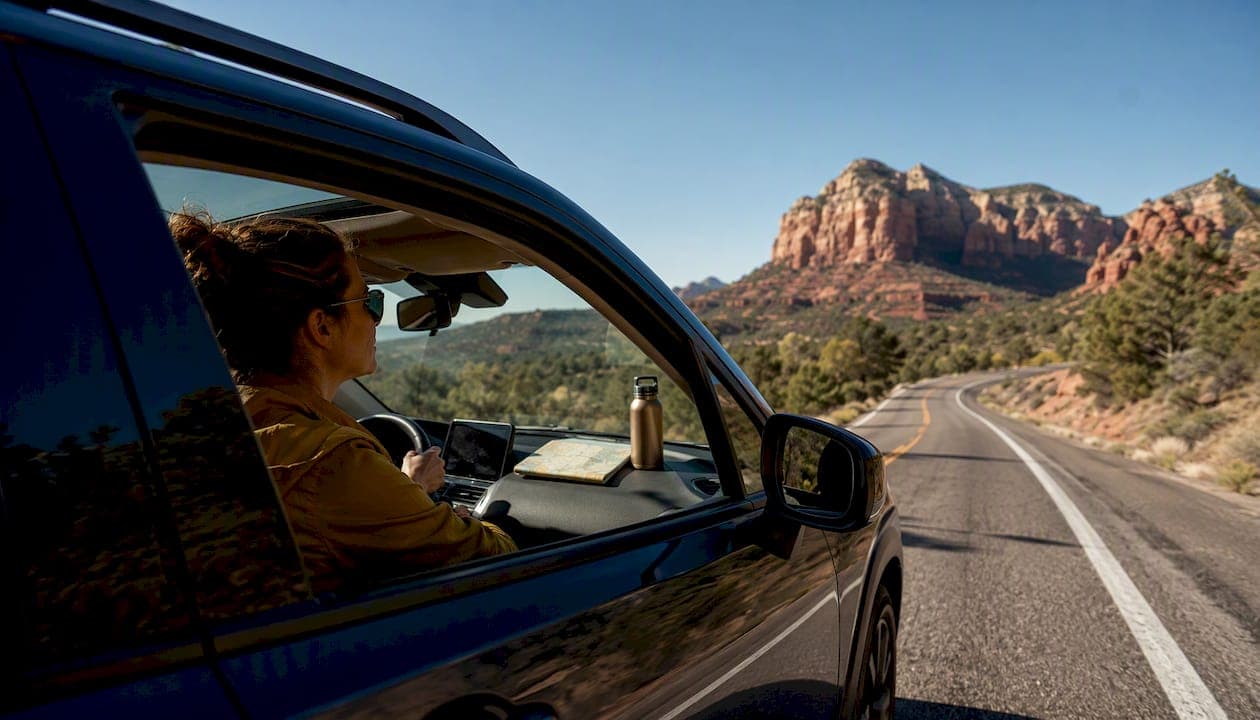
The drive from Phoenix to Sedona takes roughly 1 hour 50 minutes to 2 hours 30 minutes, depending on your route, traffic, and how many stops you make. The distance runs about 115–116 miles by the fastest path. That range exists because two very different roads get you there: the quick, efficient I-17 north to AZ-179, and the slower, jaw-dropping US-89A through Oak Creek Canyon.
Quick planning summary:
- Fastest route: I-17 north to AZ-179 into Sedona, roughly 1:50–2:00 under light traffic
- Scenic route: US-89A through Oak Creek Canyon adds 20–40 minutes but rewards you with one of Arizona's most dramatic canyon drives
- Best departure window: Leave Phoenix between 9–11 AM on weekdays to clear Phoenix rush hour and beat the midday tourist wave into Sedona
- Parking reality: Trailhead and overlook parking in Sedona fills up by midday on busy days; arriving before 10 AM gives you the best shot at a spot
- Add buffer: Any stops, weekend traffic, or weather can push total travel time to 3–5 hours
Table of Contents
- Which route should you take from Phoenix to Sedona?
- How the primary route (I-17 to AZ-179) actually works
- What to expect on the scenic US-89A / Oak Creek Canyon route
- Alternate routes, weather detours, and winter conditions
- Top stops between Phoenix and Sedona and how much time they add
- Parking and arrival logistics in Sedona
- A sample day-trip timeline from Phoenix to Sedona
- Driving safety tips: fuel, cell coverage, wildlife, and speed limits
- Skip the drive: private transfers and guided tours from Phoenix to Sedona
- Key Takeaways
- The part most Phoenix-to-Sedona guides get wrong
- See Sedona without the parking headache
- Useful sources and links for planning your trip
Which route should you take from Phoenix to Sedona?
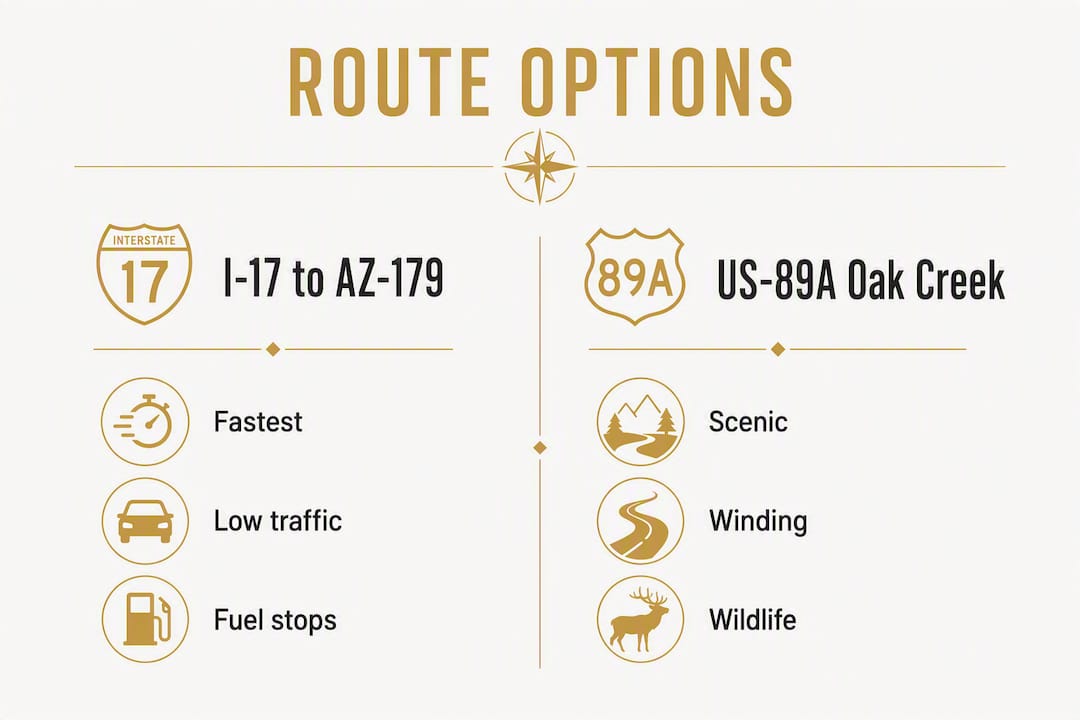
Three main options connect Phoenix to Sedona, and they serve very different purposes. The table below lays out the honest tradeoffs.
| Route | Distance | Drive time (no stops) | Scenic value / difficulty | When to choose it |
|---|---|---|---|---|
| I-17 N → AZ-179 (primary) | about 116 miles | 1 hour 50 minutes to 2 hours | Moderate desert scenery / easy highway driving | Fastest arrival, time-sensitive plans, first-time drivers |
| US-89A via Oak Creek Canyon (scenic) | 115–116 miles | 2 hours 10 minutes to 2 hours 40 minutes | Spectacular canyon / winding, narrow road | When the drive itself is part of the experience |
| Via Cottonwood / AZ-260 or Flagstaff detour | longer distance | longer drive time | Varies / longer but avoids canyon road | Winter snow closures on 89A, RV/trailer travel, or visiting Cottonwood |
If you need to arrive by a specific time — a restaurant reservation, a guided hike, a sunset viewpoint — take I-17 to AZ-179. It is predictable, well-maintained, and the GPS rarely surprises you. Save Oak Creek Canyon for a day when the drive is the destination.
How the primary route (I-17 to AZ-179) actually works
From central Phoenix, you pick up I-17 north from downtown or from the I-10/I-17 interchange near the airport. The freeway runs straight north through the desert, climbing gradually through Black Canyon City and past Cordes Junction. Distance calculators confirm a no-stop time of around 1 hour 57 minutes for roughly 116 miles, which matches real-world experience on a quiet weekday morning.
The key exit is AZ-179 south of the Village of Oak Creek. Watch for the signs around mile marker 298 on I-17; the exit is well-marked. From there, AZ-179 winds north through the red rock corridor for about 15 miles into Sedona proper. This stretch is beautiful in its own right, with Cathedral Rock and Bell Rock visible from the road, but it is also where traffic slows on weekends as people pull over for photos.
Fuel is available at several points along I-17, including Black Canyon City and Cordes Junction. Cell coverage is generally solid on I-17 but can drop in pockets between Cordes Junction and the AZ-179 exit. Download your navigation offline before leaving Phoenix, especially if you plan to deviate from the main highway.
Peak-period congestion on I-17 near Phoenix — particularly on Friday afternoons and Sunday evenings — can add 30–60 minutes to the baseline time. A mid-morning weekday departure sidesteps both the Phoenix rush and the afternoon tourist surge into Sedona.
What to expect on the scenic US-89A / Oak Creek Canyon route
US-89A through Oak Creek Canyon is one of the genuinely great drives in the American Southwest. The road drops into a narrow canyon carved by Oak Creek, with sheer red and white sandstone walls rising on both sides and cottonwood trees lining the creek below. It is worth doing at least once.
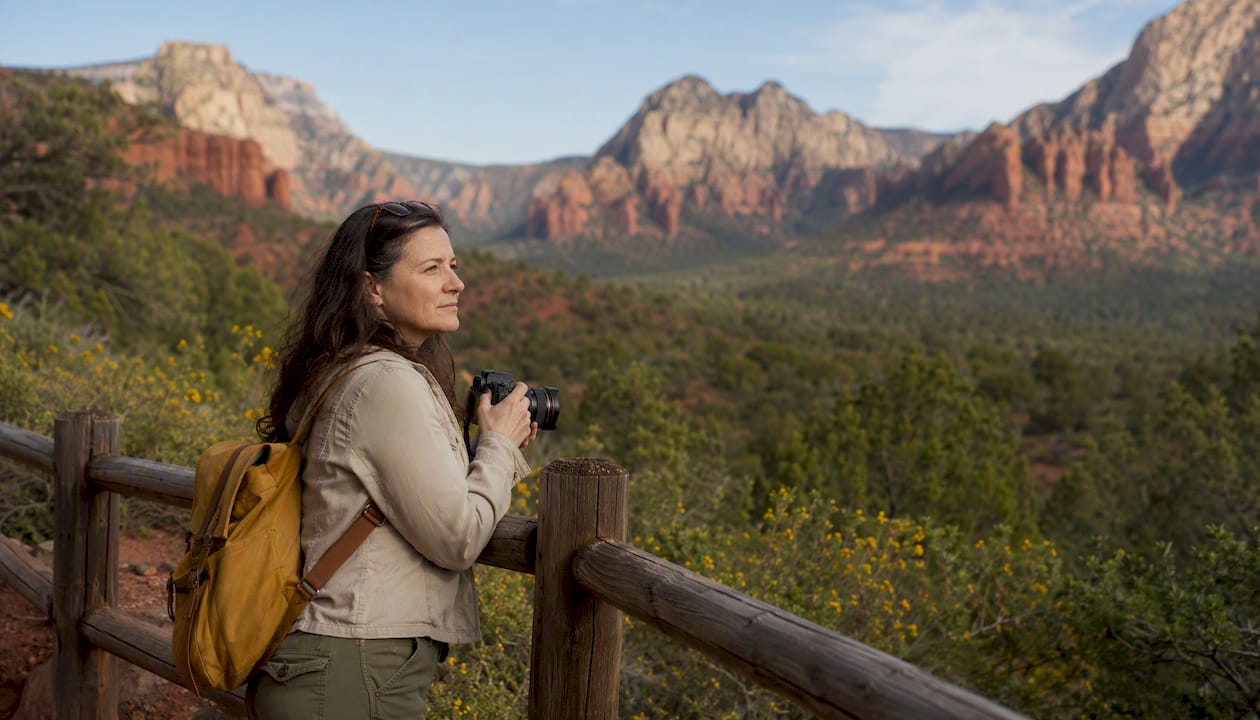
That said, it is not a fast road. The canyon section is two lanes, with tight switchbacks, limited passing zones, and a 25–35 mph speed limit through the narrowest stretches. Plan for 2 hours 10 minutes to 2 hours 40 minutes total from Phoenix, assuming no stops, on the scenic US-89A route. On a busy weekend, it can take even longer.
A few practical notes before you commit to this route:
- RVs and trailers: The switchbacks on 89A are genuinely difficult for anything over about 22 feet. Many RV rental agreements specifically restrict this road. If you are towing, take I-17.
- Narrow passing zones: Oncoming traffic is close. Stay in your lane, reduce speed in curves, and do not attempt to pass on the canyon section.
- Seasonal closures: ADOT occasionally closes 89A through Oak Creek Canyon after heavy snow or rockfall. Check ADOT road conditions before departure in winter months.
Pro Tip: Avoid driving Oak Creek Canyon at dawn or dusk. Wildlife crossings are frequent in low light, and the canyon walls reduce visibility further. A mid-morning run gives you the best light for scenery and the safest conditions.
Alternate routes, weather detours, and winter conditions
When Oak Creek Canyon is closed or icy, the standard detour runs north on I-17 to Flagstaff, then south on US-89A from the top of the canyon. This adds extra distance and increases total drive time significantly depending on conditions. It is the only practical option when ADOT closes the canyon road.
The Cottonwood/AZ-260 route is a different kind of detour. If Cottonwood is on your itinerary anyway, you can exit I-17 at AZ-260 near Camp Verde, pass through Cottonwood, and then take AZ-89A south into Sedona. This adds distance but lets you visit the Verde Valley wine region or Tuzigoot National Monument without backtracking.
Winter deserves a specific mention. Sedona itself sits at about 4,350 feet and rarely gets significant snow, but the Flagstaff area and the upper reaches of Oak Creek Canyon regularly see winter storms. Monsoon season (July through September) brings afternoon thunderstorms that can cause flash flooding on lower canyon roads and reduce visibility on I-17. Either season, check the National Weather Service forecast for Yavapai County before you leave.
Travel time reality check: Peak-period travel on Fridays and Sunday evenings commonly adds 30–60 minutes to the baseline I-17 drive time. On a holiday weekend, budget up to 2 hours 30 minutes even on the fast route.
Top stops between Phoenix and Sedona and how much time they add
The drive itself is not particularly stop-heavy, but a handful of detours are worth knowing about. The honest caveat: adding multiple major historic sites can turn what is normally a roughly two-hour drive into a 4–5 hour outing once you factor in parking, walking, and wait times. Pick one or two stops to keep your day trip manageable.
- Sunset Point Rest Area (I-17, mile marker 252): A quick 10–15 minute stop with panoramic views of the Bradshaw Mountains and the valley below. No fee, easy pull-off, good for stretching legs. Worth it on any trip.
- Montezuma Castle National Monument (exit 289 off I-17): A five-story cliff dwelling built by the Sinagua people around 1100 CE. The National Park Service charges an entry fee (check the NPS site for current pricing). Budget 45–60 minutes minimum including the walk to the viewing platform and parking. Reservations are not required, but the lot fills on busy days.
- Camp Verde: The small town near Montezuma Castle has gas stations, fast food, and a few local restaurants. Useful for a fuel stop if you skipped Black Canyon City.
- Cottonwood: About 17 miles west of Sedona via AZ-89A, Cottonwood is the Verde Valley's main town. It has a walkable historic Main Street, several wine tasting rooms, and good lunch options. Adding Cottonwood to your route means entering Sedona from the west on 89A rather than from the south on 179. Budget an extra 45–90 minutes depending on how long you linger.
Road trip guides consistently list Montezuma Castle, Camp Verde, and Cottonwood as the most practical stops for a Phoenix-to-Sedona itinerary. If you are doing a single day trip, Sunset Point plus one of the others is a realistic combination without blowing your schedule.
Parking and arrival logistics in Sedona
Sedona's popularity has outpaced its parking infrastructure. Popular trailheads like Cathedral Rock, Bell Rock, and Devil's Bridge regularly fill before 9 AM on weekends. By midday on a busy Saturday, you may circle for 30–45 minutes without finding a legal spot. That is not an exaggeration.
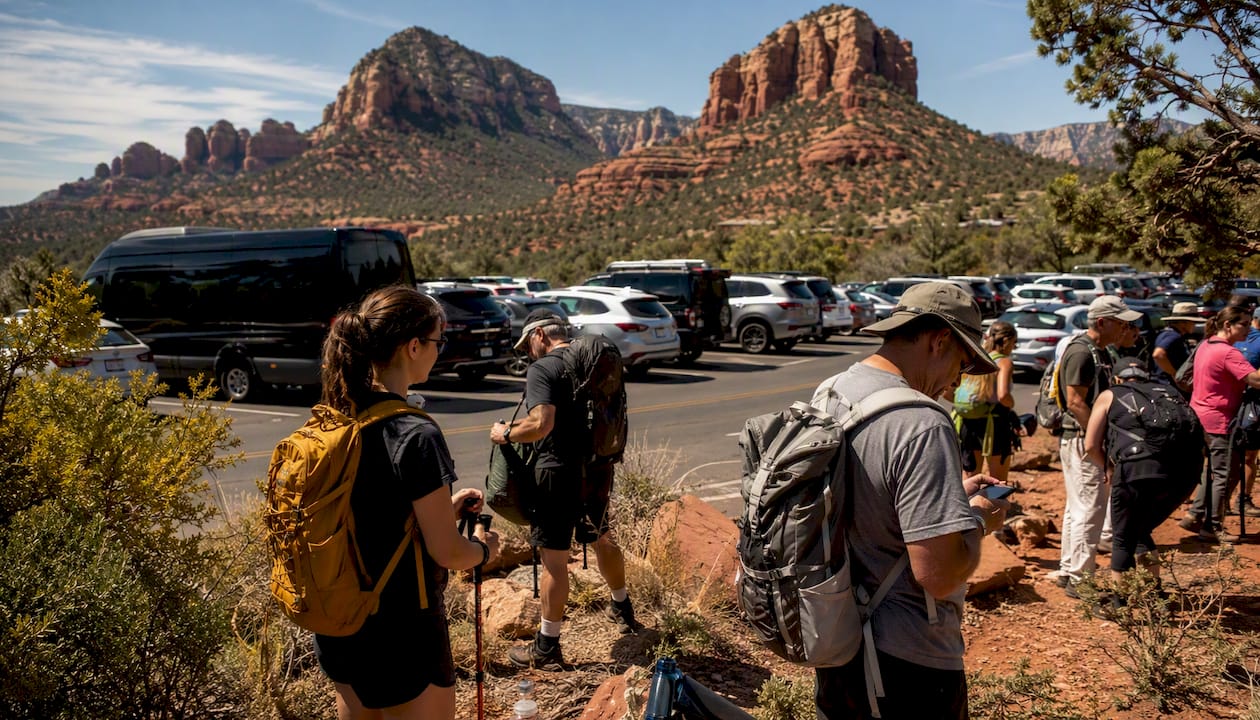
A few strategies that actually work:
Arrive early. Before 9 AM on weekends, most trailhead lots still have space. This is the single most reliable approach.
Use the Sedona Shuttle (Roadrunner). The City of Sedona operates a shuttle service connecting the main visitor areas and several trailheads. It runs seasonally and covers key stops including Tlaquepaque, Uptown, and the Village of Oak Creek corridor. Check current schedules and routes at visitsedona.com before your trip, as service hours change by season.
Park at a secondary lot and walk or shuttle. The Sedona Visitor Center near the Y intersection has a larger lot and is a reasonable base for walking into Uptown. Several hotels also allow day-use parking for a fee.
Pro Tip: If you are arriving for a specific activity — a guided hike, a restaurant reservation, a sunset viewpoint — plan to be parked before your start time to avoid delays. Sedona's road layout funnels most traffic through a single intersection (the Y), and backups there can add 15–20 minutes even after you have arrived in town.
A sample day-trip timeline from Phoenix to Sedona
This schedule works for a round-trip day from central Phoenix using the I-17/AZ-179 route. Adjust departure by 30 minutes earlier if you want Oak Creek Canyon instead.
- 7:00–7:30 AM: Depart Phoenix. Fill the tank before leaving; gas is cheaper in Phoenix than in Sedona.
- 7:45 AM: Pass through north Phoenix and onto I-17. Traffic is light at this hour.
- 8:15 AM: Optional 10-minute stop at Sunset Point Rest Area (mile marker 252) for views and a stretch.
- 8:45–9:30 AM: Optional stop at Montezuma Castle National Monument (exit 289). Allow 45 minutes including parking and the walk.
- 9:30–10:00 AM: Arrive in Sedona via AZ-179. Park before 10 AM for the best trailhead availability.
- 10:00 AM–1:00 PM: Morning activity window. Hike, explore Uptown, visit Chapel of the Holy Cross, or take a jeep tour.
- 1:00–2:00 PM: Lunch in Sedona. Uptown has a range of options; expect a wait at popular spots on weekends.
- 2:00–4:30 PM: Afternoon activity. A second viewpoint, a wine tasting in Tlaquepaque, or a short trail near Bell Rock.
- 4:30–5:00 PM: Depart Sedona. Leaving before 5 PM avoids the Sunday-evening I-17 backup if you are traveling on a weekend.
- 6:30–7:00 PM: Arrive back in Phoenix.
If you want to catch sunset from a Sedona viewpoint, push the departure back to 5:30–6:00 PM and expect heavier traffic on the return. Friday and Sunday evenings on I-17 southbound can add a full hour to the return leg.
Driving safety tips: fuel, cell coverage, wildlife, and speed limits
A few things catch visitors off guard on this route.
Fuel: Fill up in Phoenix or at the I-17 stops in Black Canyon City or Cordes Junction. Gas in Sedona runs noticeably higher than Phoenix prices, and there are no stations on AZ-179 between I-17 and Sedona proper. Do not arrive on fumes.
Cell coverage: I-17 is generally covered, but there are dead zones between Cordes Junction and the AZ-179 exit. On US-89A through Oak Creek Canyon, coverage drops significantly in the canyon bottom. Download Google Maps or Apple Maps offline for the Sedona area before you leave.
Speed limits and grades: I-17 has a 75 mph limit in open stretches but drops through construction zones. The highway has steep grades north of Black Canyon City; trucks use the right lane and slow considerably on climbs. Leave following distance.
Wildlife: Mule deer and javelina cross both I-17 and AZ-179 regularly, especially at dawn and dusk. A deer strike at highway speed is serious. Slow down when you see the yellow warning signs, and scan the shoulders.
RVs and trailers: If you are towing, stick to I-17. The AZ-179 corridor into Sedona has some tight turns near the Village of Oak Creek, and Oak Creek Canyon on 89A is genuinely unsuitable for large rigs.
Pro Tip: The worst congestion window on I-17 northbound is Friday afternoon between 3–6 PM. If you are leaving Phoenix on a Friday, either depart before noon or wait until after 7 PM. The difference can be a full hour.
Skip the drive: private transfers and guided tours from Phoenix to Sedona
Some travelers reach a point where the logistics of self-driving — parking, navigation, fuel stops, departure timing — cost more in stress than the drive saves in money. That is exactly the gap a private transfer fills.
Grandcanyonjourneys operates door-to-door private tours from Sedona covering the red rock country, with options ranging from a Sedona Highlights tour that takes in the iconic overlooks to a guided hike combined with sightseeing led by Wilderness First Responder-certified guides. The logistics — parking, route timing, arrival windows — are handled for you, which matters most when you have a reservation, a sunset to catch, or a group that does not want to spend the first hour of the day circling for a trailhead spot.
For travelers combining Sedona with the Grand Canyon, Grandcanyonjourneys also runs private Grand Canyon day tours from Sedona with all park entries and dining included. Check availability and current tour options at grandcanyonjourneys.com/locations/sedona.
Key Takeaways
The Phoenix to Sedona drive takes roughly two hours on the I-17/AZ-179 route, and arriving before mid-morning on weekends is the single most effective way to avoid both traffic and parking problems.
| Point | Details |
|---|---|
| Baseline drive time | Allow about 1 hour 50 minutes to 2 hours from Phoenix to Sedona; the 116-mile I-17/AZ-179 route is the fastest. |
| Best departure window | Leave Phoenix morning to avoid rush hour and midday parking shortages. |
| Scenic route tradeoff | US-89A through Oak Creek Canyon takes longer and is not suitable for RVs or trailers; check for closures in winter. |
| Stops add up fast | Adding Montezuma Castle and Cottonwood can significantly extend total trip time; pick one or two stops maximum for a day trip. |
| Grandcanyonjourneys option | Travelers who want fixed arrival times and no parking stress can book a private Sedona highlights or guided hike tour through Grandcanyonjourneys. |
The part most Phoenix-to-Sedona guides get wrong
Most articles about this drive treat parking as a footnote. It is not. Parking is the variable that determines whether your day trip works or falls apart.
The drive itself is easy. Two hours on I-17 is genuinely low-stress driving, and even Oak Creek Canyon is manageable if you have done mountain roads before. What catches people is arriving in Sedona at 11 AM on a Saturday, finding every trailhead lot full, and spending 45 minutes driving in circles while the best morning light disappears.
The timing advice in this article is not conservative padding. It reflects how Sedona actually operates at peak season. The town sits at the end of a single-road funnel, and the gap between "arrived at 9 AM and parked in two minutes" and "arrived at 11 AM and gave up on the trailhead entirely" is real and consistent.
There is also a version of this trip that most guides do not mention: the one where you do not drive at all. Not because driving is hard, but because some days the point is Sedona, not the road. If you have a dinner reservation, a specific hike booked with a guide, or a group where one person does not want to navigate, handing the logistics to someone who does this daily is a legitimate choice, not a luxury indulgence.
See Sedona without the parking headache
Grandcanyonjourneys takes the logistics off your plate entirely. Instead of timing your Phoenix departure around trailhead parking and hoping I-17 cooperates, you get door-to-door pickup in a premium climate-controlled vehicle, a guide who knows exactly where to be and when, and an itinerary built around your group.
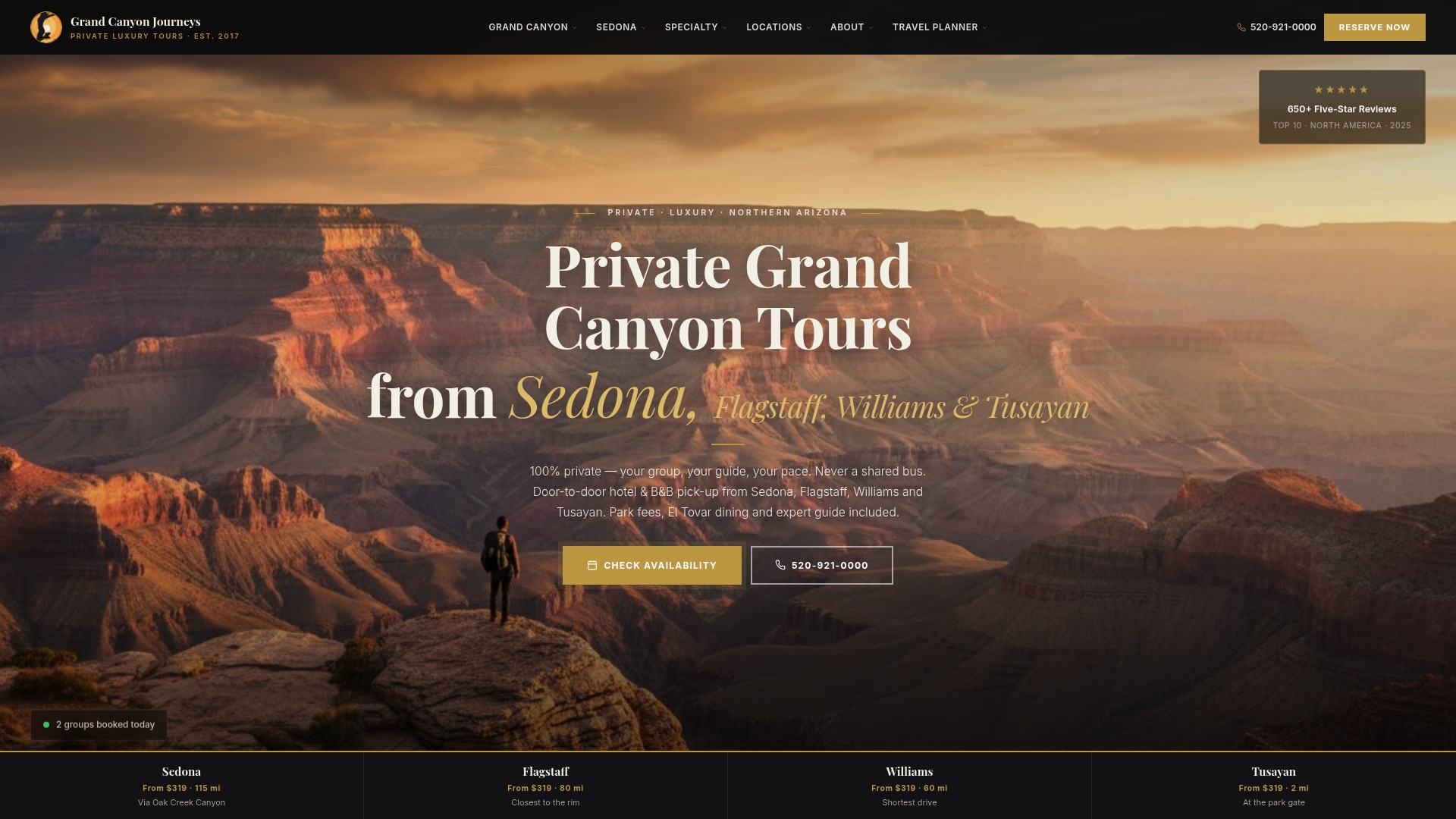
The private Sedona Highlights tour covers the iconic red rock overlooks with none of the midday parking scramble. For active travelers, the Sedona Highlights and Hike tour pairs guided sightseeing with a trail led by a WFR-certified guide. Both options include all logistics, so your day starts the moment you step into the vehicle. Check current availability and dates at grandcanyonjourneys.com/locations/sedona.
Useful sources and links for planning your trip
Before you leave, check live conditions and confirm any fees or schedules that may have changed.
- ADOT Arizona 511 Road Conditions — live traffic, closures, and construction alerts for I-17 and US-89A
- Montezuma Castle National Monument (NPS) — current entry fees, hours, and visitor information
- TravelMath Phoenix to Sedona distance — distance and drive-time calculator for the primary route
- Grandcanyonjourneys Sedona tours — private tours and door-to-door transport options based in Sedona
- Arizona Outdoor Adventures guide — planning resource for hikes, monuments, and multi-stop Northern Arizona itineraries
Before you go: Check the National Weather Service forecast for Yavapai County and the ADOT 511 site for any active closures on your chosen route, especially in winter months or during monsoon season (July through September).