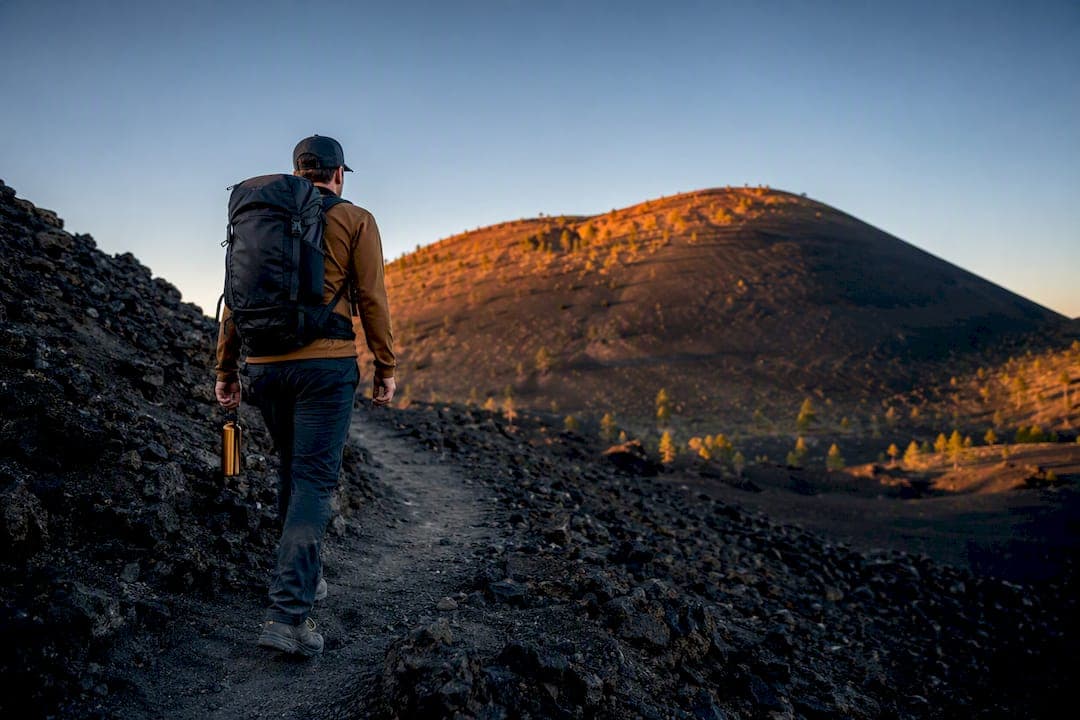
For most visitors, the 1-mile Lava Flow Trail is the single best sunset crater hike: take the paved upper loop for easy access, or the rougher lower loop to get closer to the lava. Bring water, wear closed-toe shoes, and budget for the $25 entrance fee. Lenox Crater rewards climbers with views, and Lava's Edge Trail suits anyone wanting a longer volcanic hike beyond the main loop.
TL;DR:
- The Lava Flow Trail is the most popular, offering both a paved upper loop and a rougher lower loop that takes about 30 to 60 minutes to complete.
- Lenox Crater provides a 1.6-mile steep climb with panoramic views, suitable for hikers seeking a workout and limited water or time constraints.
- The longest trail, Lava's Edge, extends 3.4 miles into quieter cinder fields, taking 1.5 to 2.5 hours, with trail shoes recommended due to mixed terrain.
- Entrance costs $25 per vehicle, but an America the Beautiful pass grants free access, and parking near trailheads requires no long walks.
- Fully paved Bonito Vista and the upper Lava Flow Loop are accessible for wheelchairs and strollers, with pet rules strictly limiting leashed animals to certain trails.
Table of Contents
- What Trails Does Sunset Crater Volcano National Monument Have?
- Which Sunset Crater Trail Should You Hike?
- How Much Does It Cost to Visit Sunset Crater?
- Which Sunset Crater Trails Are Wheelchair Accessible?
- What Should You Bring for a Sunset Crater Hike?
- A Grand Canyon Journeys Perspective on Timing Your Visit
- What Wildlife and Plants Should You Watch for at Sunset Crater?
- Should You Hike Sunset Crater Alone or With a Group?
- Can You Combine Sunset Crater Trails Into One Longer Hike?
- How Do You Get to Sunset Crater From Nearby Towns?
- Where to Find Official Maps and Fee Updates
- Which Trail Fits Your Hiking Style?
- Combine Your Hike With a Private Grand Canyon Day
- Sources
What Trails Does Sunset Crater Volcano National Monument Have?
Sunset Crater Volcano National Monument packs five distinct trails into a compact stretch of cinder fields and ponderosa forest north of Flagstaff. Each one shows off a different piece of the volcano's story, from frozen lava rivers to sweeping crater views.
- Lava Flow Trail (1 mile): the signature hike, tracing the edge of a 900-year-old lava flow.
- Lenox Crater Trail (1.6 miles): a steep climb up a cinder cone with panoramic payoff.
- Lava's Edge Trail (3.4 miles): the longest option, looping farther into the volcanic landscape.
- Bonito Vista (0.3 mile): a short, paved overlook walk.
- A'a Trail (0.25 mile): a quick loop named for the jagged "a'a" lava texture underfoot.
These hikes and trails at Sunset Crater sit on ground that's still geologically young and archaeologically sensitive, which is why staying on marked paths matters here more than at most parks. Elevation hovers around 7,000 feet, so pace yourself, and check conditions seasonally since summer thunderstorms and winter snow both affect access.
Which Sunset Crater Trail Should You Hike?
Picking the right trail comes down to how much time you have and how close you want to get to the lava. Here's how the five stack up.
-
Lava Flow Trail runs 1 mile total, split into a paved upper loop (about 0.4 mile) that's flat and wheelchair-friendly, and a rougher lower loop (about 0.7 mile) over cinders and rock. The lower loop includes a steep staircase and gets you within view of some of the best-preserved lava features in the monument, including squeeze-ups and pressure ridges tied to interpretive stops detailed in the official trail brochure. Plan on 30 to 60 minutes depending on which loop, or both, you walk. This is the trail most people mean when they search for sunset crater hikes, and it's the one Grandcanyonjourneys recommends starting with if you only have time for one.
-
Lenox Crater Trail climbs 1.6 miles round trip up loose volcanic cinders to the rim of an adjacent cinder cone. There's no shade and no maintained switchbacks, so it's a genuine leg-burner, roughly 45 to 90 minutes depending on fitness. The reward is a wide view over the Bonito lava flow and the San Francisco Peaks. Skip this one if you're short on water or hiking with young kids; it suits hikers who want a workout and a photo-worthy overlook.
-
Lava's Edge Trail is the longest at 3.4 miles, a loop that extends past the main flow into quieter cinder fields and forest edges. Give yourself 1.5 to 2.5 hours. Surfaces are mixed dirt, cinder, and rock, so trail shoes with real tread matter here more than on the shorter loops. It's the pick for hikers who've already done Lava Flow and want more volcanic terrain without driving elsewhere.
-
Bonito Vista is a 0.3 mile, fully paved out-and-back to an overlook of the lava flow and crater. It takes 10 to 15 minutes and works for strollers, wheelchairs, and anyone who wants a quick geology fix without committing to a full hike.
-
A'a Trail is the shortest at 0.25 mile, a loop through jagged a'a lava rock near the visitor center. Ten minutes, uneven footing, and a close-up lesson in lava texture. Good for filling a gap before or after another hike.
Quick picks: families want Bonito Vista or the paved Lava Flow upper loop; geology fans want the Lava Flow lower loop; anyone needing full accessibility sticks to Bonito Vista; and hikers chasing mileage go for Lava's Edge.
How Much Does It Cost to Visit Sunset Crater?
Sunset Crater charges a standard vehicle entrance fee, and as of 2026 that's Recreation. If you're visiting multiple federal sites this year, an America the Beautiful annual pass covers entry instead of paying per visit, which pencils out fast if you're also stopping at nearby Wupatki or Walnut Canyon.
Fee snapshot: $25 per vehicle, or free entry with a valid America the Beautiful pass, per recreation.gov's current listing for the monument.
A few planning basics:
- Pick up printed trail brochures and maps at the visitor center, which sits right near the Lava Flow Trail parking area.
- Parking is close to the trailheads for all five hikes; nothing here requires a long walk-in.
- There are no food services inside the monument, so pack your own water and snacks.
- Seasonal closures happen, particularly after heavy snow or during fire restrictions; check the NPS trail page before you drive out.
If you're weighing an annual pass against paying per visit across a Northern Arizona trip, Grandcanyonjourneys' national park passes guide breaks down when each option makes sense.
Which Sunset Crater Trails Are Wheelchair Accessible?
Two routes here are genuinely accessible: Bonito Vista (0.3 mile, fully paved) and the upper loop of the Lava Flow Trail (about 0.4 mile, paved and flat). Both work well for wheelchairs, strollers, and anyone who wants the volcanic scenery without rough footing.
Pet rules are strict and worth knowing before you leave the car:
- Leashed pets are allowed only on the paved upper loop of the Lava Flow Trail.
- Pets are not permitted on Lenox Crater, Lava's Edge, the lower Lava Flow loop, Bonito Vista, or the A'a Trail.
- Climbing Sunset Crater itself has been prohibited since 1973 to prevent erosion, and it's strictly enforced.
- Staying on designated trails isn't a suggestion. Off-trail shortcuts damage fragile lava crust and Sinagua archaeological sites that take centuries to recover.
What Should You Bring for a Sunset Crater Hike?
Sturdy, closed-toe shoes aren't optional here. The lava rock is sharp and brittle, and sandals or worn-out sneakers will shred fast on the A'a Trail or the lower Lava Flow loop.
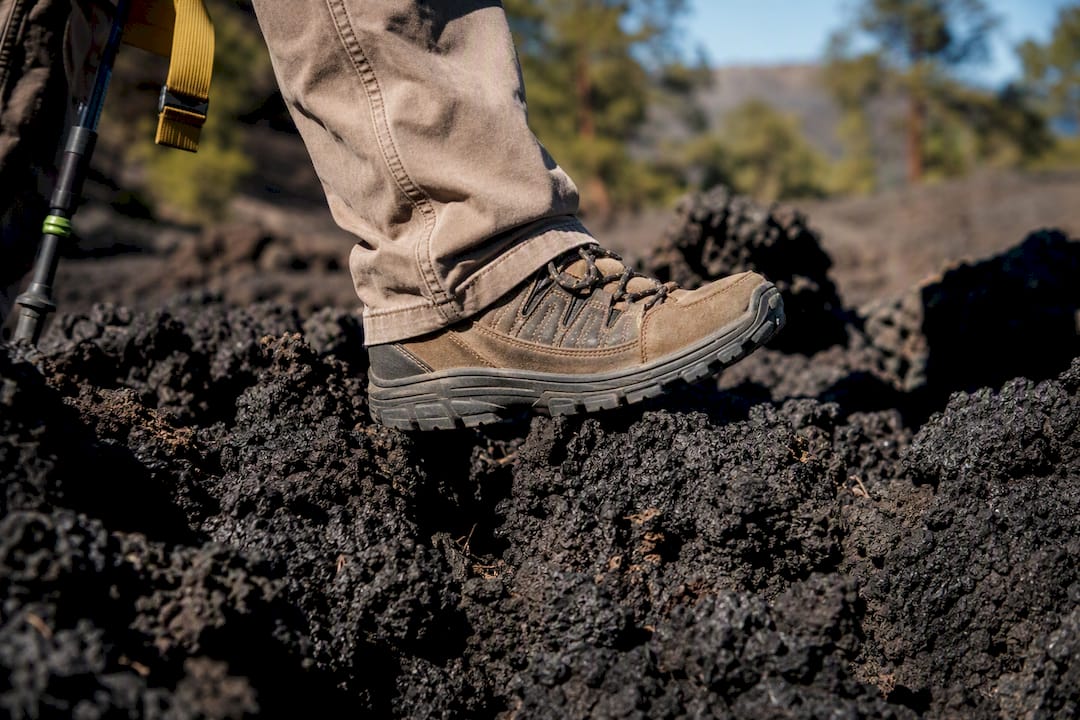
Elevation sits around 7,000 feet, which catches visitors coming from sea level off guard. You'll tire faster than expected, especially climbing Lenox Crater, so drink more water than you think you need and pace your breathing on the steeper sections. Sun protection matters too; there's little shade on the cinder fields, and thin high-altitude air means UV exposure hits harder.
Pro Tip: Layer up even in summer. Mornings at Sunset Crater can be cool and breezy, but the cinder fields radiate heat by midday, especially climbing Lenox.
Watch for loose cinders underfoot on Lenox Crater and Lava's Edge, and take the staircase on the lower Lava Flow loop slowly. It's steep and uneven. During dry summers, check for wildfire smoke or seasonal fire closures before you commit to a longer hike.
A Grand Canyon Journeys Perspective on Timing Your Visit
Chris here, writing from Grandcanyonjourneys, a Northern Arizona operator running private tours out of Sedona, Flagstaff, and Williams. Early mornings at Sunset Crater beat the afternoon crowds and the heat, especially in summer. If you're already in Flagstaff, pairing a short hike here with a scenic drive or a Flagstaff-based day makes efficient use of a single day. Arrive by 9 a.m. for quiet trails and better light on the lava.
What Wildlife and Plants Should You Watch for at Sunset Crater?
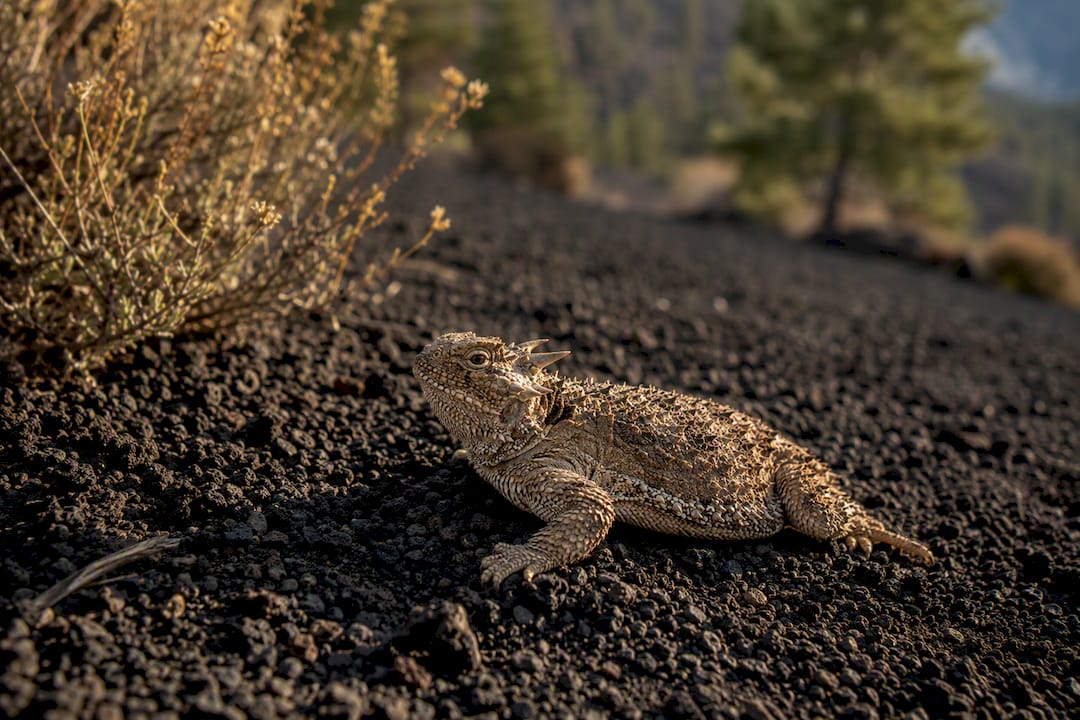
The monument sits in a transition zone between ponderosa pine forest and volcanic cinder fields, which makes for an odd mix of wildlife. Mule deer and elk move through the forested edges, especially near dawn and dusk, and you'll likely spot Steller's jays and pinyon jays working the pines along Lenox Crater and Lava's Edge. Watch the ground on sunny cinder slopes. Short-horned lizards and various snake species, including gopher snakes and occasionally rattlesnakes, use the loose volcanic soil for cover and warmth. Give any snake distance and let it move on its own.
Plant life here tells its own recovery story. Ponderosa pine, Gambel oak, and rabbitbrush have slowly recolonized the cinder fields since the eruption roughly a thousand years ago, but the growth is thin and easily damaged. Avoid stepping on the dark, crusty soil surfaces you'll notice off-trail; that's often biological soil crust, a living layer of lichen and moss that can take decades to regrow once crushed. Wildflowers like penstemon and Indian paintbrush pop up seasonally along Lava's Edge, particularly after summer monsoon rains, but picking them isn't allowed. None of the plants here are known to be hazardous to touch, but the bigger risk is trampling recovering ground that hasn't fully stabilized since the last eruption. Staying on the marked path protects both the scenery and the slow-motion ecological recovery happening just off it.
Should You Hike Sunset Crater Alone or With a Group?
Sunset Crater's short trails make solo hiking reasonably low-risk compared to backcountry routes, but a few quirks of this landscape are worth factoring into your plan either way. Cell coverage is inconsistent across the monument, particularly on Lava's Edge and the far side of Lenox Crater, so solo hikers should tell someone their planned route and expected return time before starting out.
Groups move slower on Lenox Crater's loose cinder slope almost by default, since pace naturally syncs to the slowest hiker, which actually reduces fall risk on that trail's steepest stretch. Solo hikers tend to move faster there but have no one to flag if they roll an ankle on the scree, so extra caution on footing matters more when you're alone.
The lower Lava Flow loop's staircase is another spot where group hiking has a real edge. It's steep, uneven, and shaded in a way that makes footing tricky even in daylight; having someone nearby to spot loose steps helps, especially with kids or older hikers in the group.
Whether solo or with others, carry more water than the short mileage suggests you'll need. At 7,000 feet, dehydration and fatigue sneak up faster than they would at lower elevation, and there are no water fill stations on the trails themselves. Solo hikers especially should treat that as non-negotiable rather than optional.
Can You Combine Sunset Crater Trails Into One Longer Hike?
Yes, and it's one of the better-kept aspects of visiting Sunset Crater. Because the five trails cluster within a few miles of each other along the same park road, you can chain several into a single, longer day without much extra driving.
A natural combination pairs Lava Flow Trail (both loops) with A'a Trail, since they're steps apart near the same parking area. That gives you close-up lava geology plus the jagged a'a texture lesson in under 90 minutes combined. For a bigger day, add Lenox Crater on the way in or out. Its trailhead sits along the same road, so hikers wanting real mileage and a climb can string Lenox, Lava Flow, and A'a into a half-day loop covering close to 3 miles total.
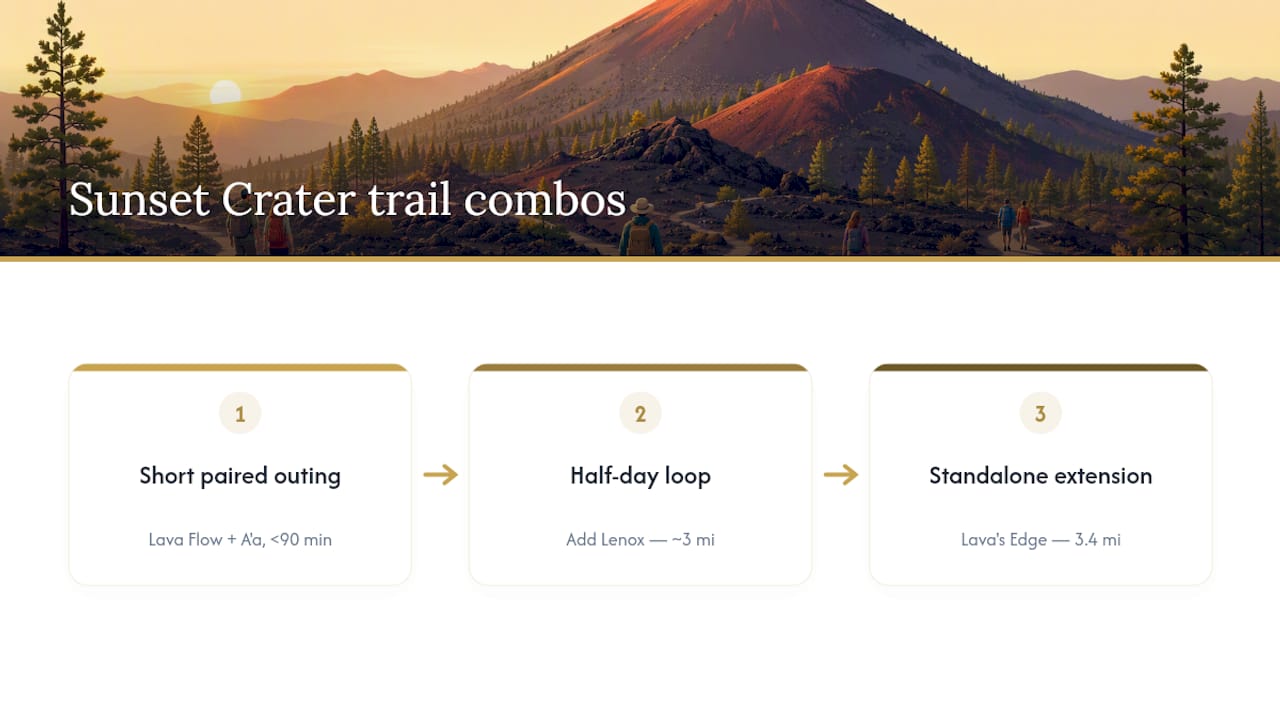
Lava's Edge Trail connects less directly to the others but works well as a standalone extension if you've already knocked out the shorter hikes and still have energy and daylight left. Since it's the longest single trail at 3.4 miles, most hikers treat it as its own outing rather than tacking it onto a combo day.
Whatever combination you build, budget real time for the elevation. Stacking three trails at 7,000 feet takes longer than the same mileage would at sea level, and afternoon heat on exposed cinder sections adds up across a multi-trail day.
How Do You Get to Sunset Crater From Nearby Towns?
Sunset Crater Volcano National Monument sits about 15 miles northeast of Flagstaff via US Highway 89, making Flagstaff the closest and most practical base for a day trip. From Flagstaff, take US-89 north and follow the signed turnoff for the Sunset Crater/Wupatki Loop Road, which leads directly to the visitor center and main trailheads.
Travelers coming from Sedona typically drive north on AZ-89A through Oak Creek Canyon into Flagstaff, then connect to US-89, adding roughly 45 minutes to an hour to the Flagstaff-to-monument leg depending on traffic through the canyon. From Williams, the drive east on I-40 to Flagstaff followed by the same US-89 route north is the most direct path.
There's no public transit or shuttle service running directly to the monument, so a personal vehicle or a guided tour is the only realistic way to reach the trailheads. If you'd rather skip the driving and navigation, Grandcanyonjourneys arranges private Grand Canyon tours from Sedona and Flagstaff that can be structured around regional stops like this one, with door-to-door pickup handling the logistics.
Where to Find Official Maps and Fee Updates
For anything time-sensitive, go straight to the source. The NPS hikes and trails page covers current trail status and rules, the park brochure maps interpretive stops in detail, recreation.gov confirms fees, and the Lava Flow Virtual Trail Guide supplements on-trail signage before you go.
Which Trail Fits Your Hiking Style?
Families should default to Bonito Vista or the paved Lava Flow upper loop. Photographers and geology buffs want the Lava Flow lower loop for the close-up lava texture. Experienced hikers chasing mileage and a climb should pair Lenox Crater with Lava's Edge. If you're building a full Northern Arizona day, a short Sunset Crater hike pairs naturally with a half-day exploring Flagstaff or a guided outing with Grandcanyonjourneys.
— Chris
Combine Your Hike With a Private Grand Canyon Day
A short Sunset Crater hike is a great warmup, but if you're already staging out of Sedona, Flagstaff, or Williams, the bigger draw sitting a short drive away is the Grand Canyon itself. Grandcanyonjourneys runs private, door-to-door guided tours from all three towns, which means you skip the logistics of navigating rim roads or booking separate transportation and let a local guide handle the day.
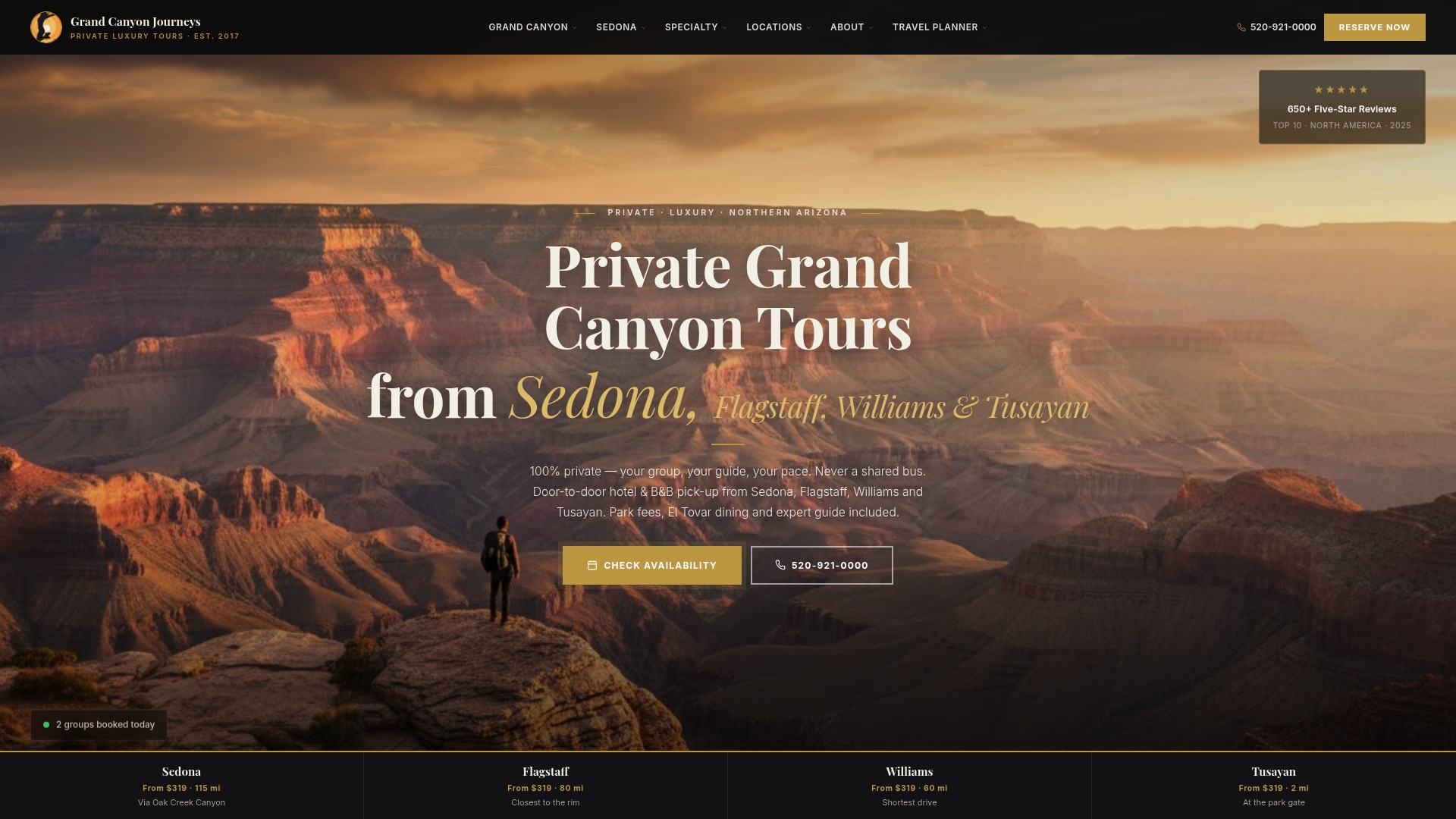
That matters most for travelers who've just spent a morning on volcanic cinder trails and don't want to spend the afternoon figuring out parking and shuttle schedules at a second park. A private Grand Canyon day tour from Sedona includes park fees and a knowledgeable guide, so the only planning left is picking a date. Check current availability and book your preferred departure day directly through Grandcanyonjourneys.
Sources
- Hikes and Trails - Sunset Crater Volcano
- Recreation
- Trails at Sunset Crater Volcano (park brochure)
- Lava Flow Virtual Trail Guide