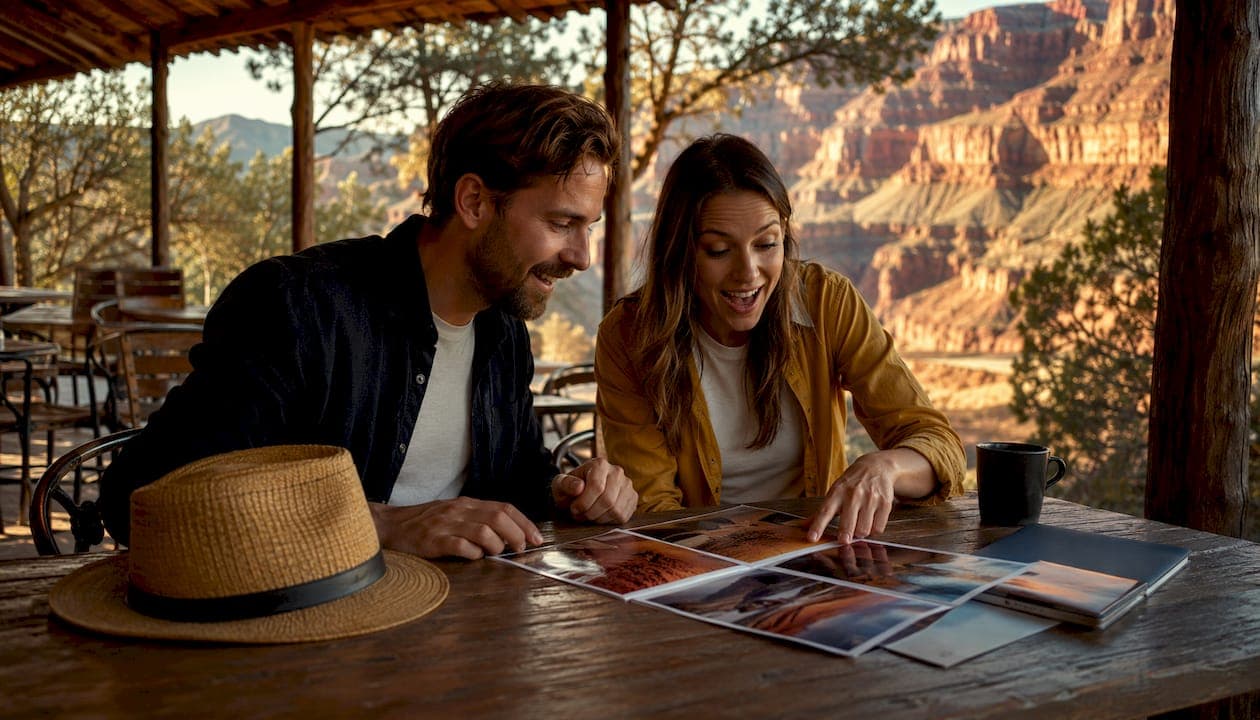
Choose Upper Antelope Canyon if your priority is the iconic midday light beams and an easy, flat walk. Choose Lower Antelope Canyon if you want a more adventurous, narrow-slot experience with richer orange wall color throughout the day. Both sit on Navajo land near Page, Arizona, and both require a licensed Navajo guide to enter. The Navajo Nation charges a $15 per-person entry fee, typically collected per location, per day.
- Best for photography (light beams): Upper Antelope Canyon, midday from late March through early October
- Best for adventure and color: Lower Antelope Canyon, physically demanding but rewarding all day
- Book early: Midday beam-season slots at Upper sell out weeks to months in advance during peak season
Table of Contents
- Upper vs lower Antelope Canyon: side-by-side comparison
- What each canyon actually feels like on arrival
- How to get the best photos in each canyon
- Which canyon suits your group?
- Permits, booking windows, and what to confirm before you pay
- How Grandcanyonjourneys handles Antelope Canyon for private clients
- Key Takeaways
- The canyon choice most travelers get wrong
- Private Antelope Canyon tours worth booking now
- Useful sources for planning your visit
Upper vs lower Antelope Canyon: side-by-side comparison
| Dimension | Upper Antelope Canyon | Lower Antelope Canyon |
|---|---|---|
| Physical difficulty | Easy — flat, sandy floor, no stairs | Moderate — bolted staircases, metal ladders |
| Photography: light | Dramatic vertical beams, 10:30 AM–1:30 PM, May–September most intense | Diffuse ambient light all day; richer orange tones throughout |
| Crowds and feel | Controlled group sizes; wider floor; back-and-forth flow | One-way flow; can feel tighter in narrow passages at peak hours |
| Typical tour duration | ~90 minutes total (including shuttle) | approximately 90 minutes inside the canyon |
| Relative cost | ~$100–$189 per person including Navajo fee | ~$70+ per person including Navajo fee |
| Best for | Families, seniors, first-timers, beam chasers | Active travelers, photographers seeking color, budget-conscious guests |
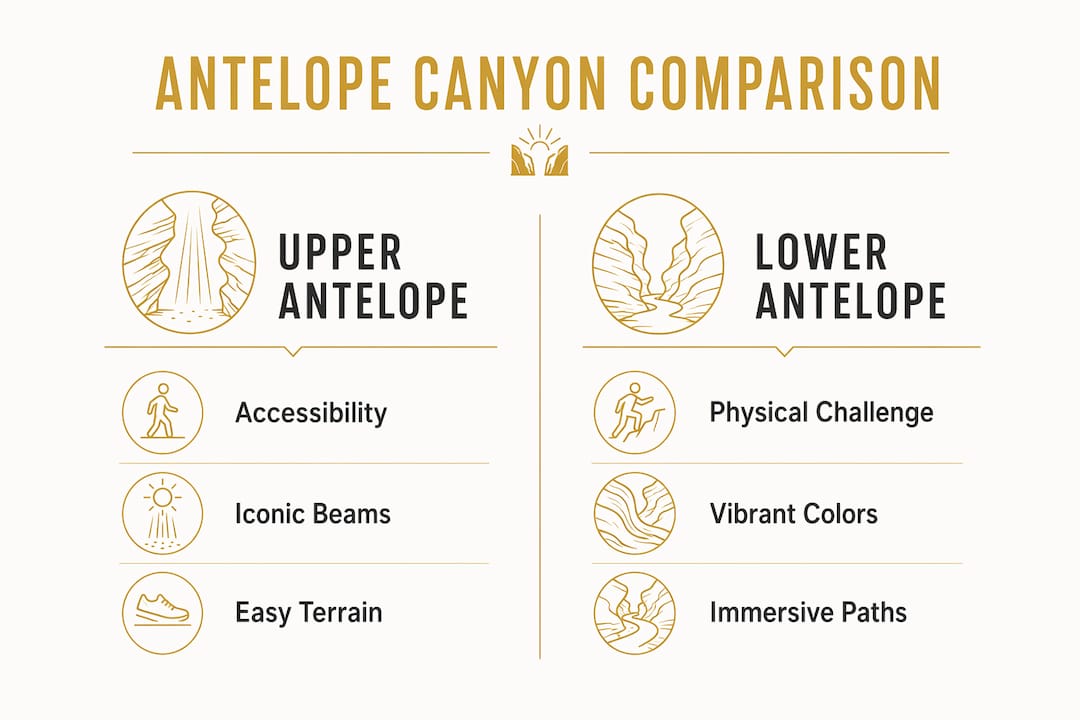
Upper wins on accessibility and iconic imagery. Lower wins on value, physical immersion, and saturated color. For a private luxury group with mixed mobility, Upper is the safer default. If everyone in your party is physically capable and you want something that feels less like a museum queue, Lower delivers a genuinely different experience.
What each canyon actually feels like on arrival
Upper Antelope Canyon sits roughly 4.5 miles from Page. Your guide loads you onto a 4WD truck or shuttle for a short ride across the desert to the entrance, which opens at ground level. You walk straight in. The floor is flat and sandy, the walls rise up to 120 feet above you, and the A-shaped profile keeps the interior relatively dark and moody. Groups move in and then backtrack out, which means you will occasionally be navigating around other parties.
Lower Antelope Canyon is a different arrival entirely. You park near Page and walk to the entrance, where the canyon immediately drops away beneath you. The first thing you do is descend a steep staircase. From there, the route threads through a V-shaped slot with multiple ladders and narrow passages before climbing back out at the far end. The one-way flow is a genuine advantage for photographers: you are never waiting for a group coming the other direction.
- Upper: 4WD shuttle required; check-in window is tight, so arrive 15 minutes early
- Lower: self-drive to parking; descent begins immediately at the entrance
- Upper floor: flat sand, no elevation change, suitable for guests with limited mobility
- Lower terrain: bolted staircases and metal ladders throughout; not suitable for guests with knee or back issues
Pro Tip: Arrive at check-in at least 15 minutes before your slot. Guides will not hold the group, and missing your window at Upper during beam season means missing the beams entirely.
How to get the best photos in each canyon
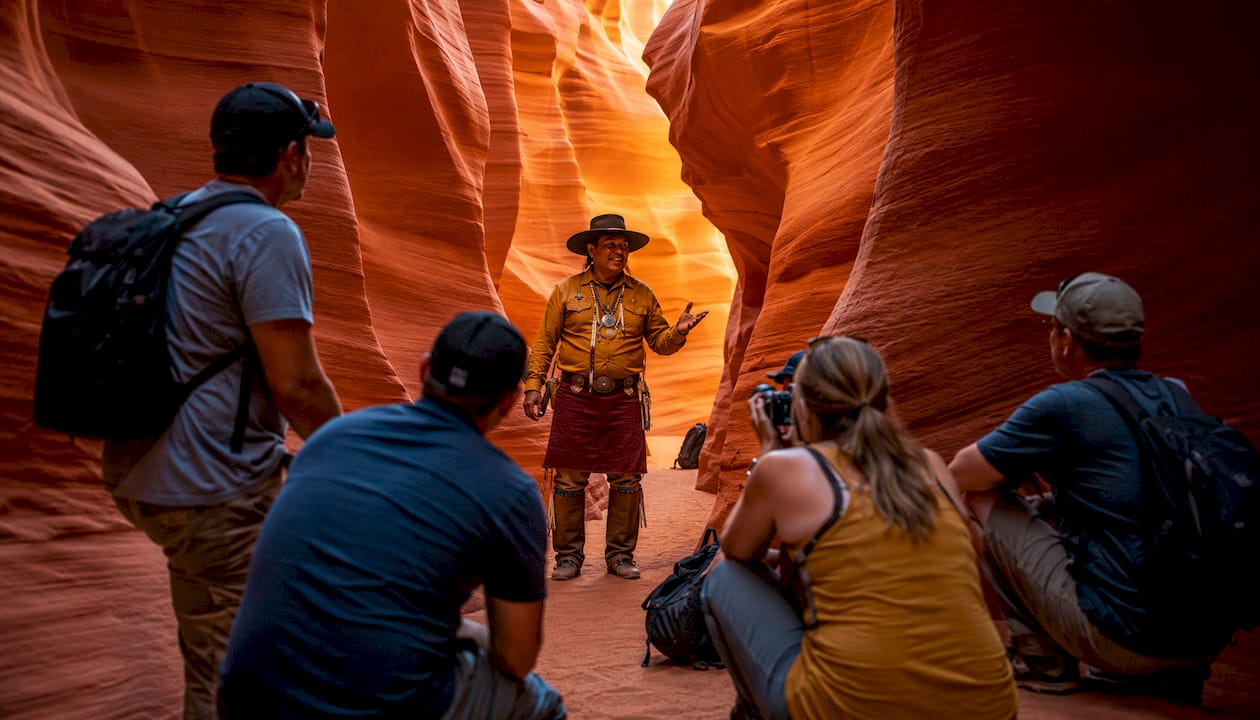
Upper Antelope Canyon's light beams appear when direct sunlight penetrates the narrow overhead openings, most reliably between 10:30 AM and 1:30 PM on clear days from late March through early October. The strongest displays happen in June, July, and August when the sun is nearly overhead. Outside that window, the beams disappear. A cloudy morning will cost you the shot entirely, so weather matters more here than at Lower.
Lower's diffuse natural light produces vivid, saturated orange tones throughout the day. You are not chasing a 90-minute window. The tradeoff is that the pace inside Lower is faster and the passages are tighter, so you have less time to compose each frame.
- Upper: shoot wide aperture, handheld; dust particles in the beam add drama
- Lower: longer exposures work well given the diffuse light; look for spiraling wall formations
- Both canyons: never change lenses inside; fine sand and grit will damage your sensor
- Tripods: check with your specific operator; many photography-focused tours allow them, standard tours often do not
Pro Tip: Protect your camera body with a simple plastic cover before entering. A disposable shower cap fits over most mirrorless bodies and costs nothing. Grit ingress is the most common equipment problem inside both canyons.
Which canyon suits your group?
The right canyon depends almost entirely on who is traveling and what they want to take home from the experience.
- Families with young children or guests with limited mobility: Upper Antelope Canyon. The flat, ground-level walk with no stairs makes it manageable for nearly everyone. Our Grand Canyon accessibility guide covers mobility considerations across Northern Arizona tours in more detail.
- Active, physically capable travelers: Lower Antelope Canyon. The ladders and narrow passages are genuinely engaging, not just a hurdle.
- Beam-chaser photographers: Upper, midday, May through August. No other slot canyon in the American Southwest produces this effect as reliably.
- Color and composition photographers: Lower, for its richer orange hues and spiraling formations that reward careful framing.
- Value-focused travelers: Lower typically runs $30–$50+ less per person than Upper's midday premium slots.
Permits, booking windows, and what to confirm before you pay
Every visit to either canyon requires a licensed Navajo guide. There are no independent visits. The Navajo Nation publishes its list of licensed operators, and confirming your operator appears on that list before booking is the single most important logistics step.
The $15 per-person Navajo entry fee is charged per location, per day. If you book Upper and Lower separately through different operators, you may pay it twice. Many licensed operators bundle it into the tour price, but not all. Ask explicitly before you pay.
Peak beam-season slots at Upper sell out three to six months in advance. Lower is more forgiving, but advance booking is still strongly recommended during March through October. Winter offers smaller crowds and easier availability at both canyons, though you lose the beam window at Upper.
- Confirm the Navajo entry fee is bundled into your tour price
- Verify your operator on the Navajo Nation Parks & Recreation licensed list
- Upper requires a 4WD shuttle from Page; confirm it is included
- Visiting both canyons in one day is feasible; the Navajo Nation waives the $15 entry fee at the second canyon when you visit both on the same day
- Winter visits (November through February) offer lower prices and easier booking, but no light beams at Upper
Pro Tip: When booking a combined Upper and Lower day, sequence Upper first for the midday beams, then Lower in the afternoon. The one-way flow at Lower makes it a natural closer.
How Grandcanyonjourneys handles Antelope Canyon for private clients
Grandcanyonjourneys builds Antelope Canyon into fully private Northern Arizona itineraries, handling every logistical detail so clients never have to navigate permit questions or shuttle logistics on the day. The service includes door-to-door transport in premium climate-controlled vehicles, Wilderness First Responder (WFR)-certified guides, and bundled Navajo permits coordinated in advance.
A typical private day pairs an early Upper Antelope Canyon visit timed for the midday beam window with an afternoon at Lower Antelope Canyon or Horseshoe Bend, sequenced to avoid the worst midday crowds at each stop. Clients can also access Secret Antelope Canyon, a less-visited slot canyon on the same Navajo land, for a more intimate experience. For travelers building a longer Northern Arizona itinerary, the Antelope Canyon and Horseshoe Bend tour bundles both sites with private transport and guide support.
- Private door-to-door transport in luxury SUVs and custom vans
- WFR-certified guides who monitor weather and flash-flood conditions
- Navajo permits coordinated and bundled; no duplicate fee surprises
- Flexible scheduling to target beam windows or avoid peak crowds
- Photography support available for clients who want dedicated shooting time
Pro Tip: When reserving, ask specifically for an early check-in window at Upper during beam season and confirm that the Navajo permit is bundled for both canyons if you plan to visit both. Private tour operators can often secure timing windows that standard group tours cannot.
Key Takeaways
Upper Antelope Canyon is the right choice for light beams, easy access, and iconic imagery; Lower Antelope Canyon delivers richer color, more physical engagement, and better value per dollar.
| Point | Details |
|---|---|
| Beam window is narrow | Upper's light beams appear reliably 10:30 AM–1:30 PM, late March through early October only. |
| Accessibility gap is real | Upper's flat floor suits limited-mobility guests; Lower's ladders and staircases require physical capability. |
| Cost difference is meaningful | Upper runs ~$100–$189 per person; Lower runs ~$70+ per person, including the Navajo entry fee. |
| Book Upper early | Midday beam-season slots sell out three to six months in advance during peak season. |
| Grandcanyonjourneys | Offers private Antelope Canyon itineraries with bundled permits, WFR-certified guides, and flexible beam-window scheduling. |
The canyon choice most travelers get wrong
Most visitors treat the Upper vs Lower decision as a photography question. It is not, or at least not entirely. The more important variable is group composition. A party of four healthy adults in their forties will have a richer experience at Lower: the ladders are fun, the one-way flow gives you more unobstructed time, and the orange tones photograph beautifully without chasing a 90-minute weather-dependent window.
Upper's reputation as the "better" canyon is largely a function of one image: the famous light beam shot. That image is real and worth seeing. But it requires a specific time slot, clear skies, and a midday visit during a six-month window. If any of those conditions fail, you are walking through a beautiful but crowded slot canyon without the signature effect. Lower delivers its best qualities every single day, regardless of cloud cover.
The practical advice guides rarely give: if you can only visit one canyon and you are not certain about the weather or your booking timing, Lower is the lower-risk choice. The beams at Upper are extraordinary when they appear. When they do not, Lower wins.
Private Antelope Canyon tours worth booking now
Grandcanyonjourneys offers private, door-to-door Antelope Canyon experiences built around your group's priorities, whether that means targeting the Upper Canyon beam window or spending unhurried time in Lower's narrow passages. Every itinerary includes WFR-certified guide support, bundled Navajo permits, and premium climate-controlled transport from your door.
For travelers who want both canyons in a single day, the private Antelope Canyon and Horseshoe Bend itinerary sequences the stops to maximize light and minimize crowds. To build a custom Northern Arizona day that pairs Antelope with the Grand Canyon South Rim or an archaeological site, browse the full luxury Arizona experiences portfolio or contact the team directly to confirm beam-season availability and permit bundling for your dates.
Useful sources for planning your visit
- Navajo Nation Parks & Recreation — Licensed Antelope Canyon Tour Operators: Confirm your operator is licensed before booking
- Visit Arizona — Antelope Canyon Guide: Official Arizona tourism overview including reservation requirements
- Earth Trekkers — Upper vs Lower Antelope Canyon Comparison: Detailed first-hand comparison with tour pricing and timing notes
- HikeDesert — Antelope Canyon Tour Guide: Practical logistics, seasonal booking windows, and gear advice
- Check weather and flash-flood alerts through the National Weather Service before your visit; guides monitor conditions, but knowing the forecast yourself adds an extra layer of preparation
- For extended Arizona road trips that include Antelope Canyon and the Grand Canyon, CampGazer is a useful resource for planning overnight stops along the route