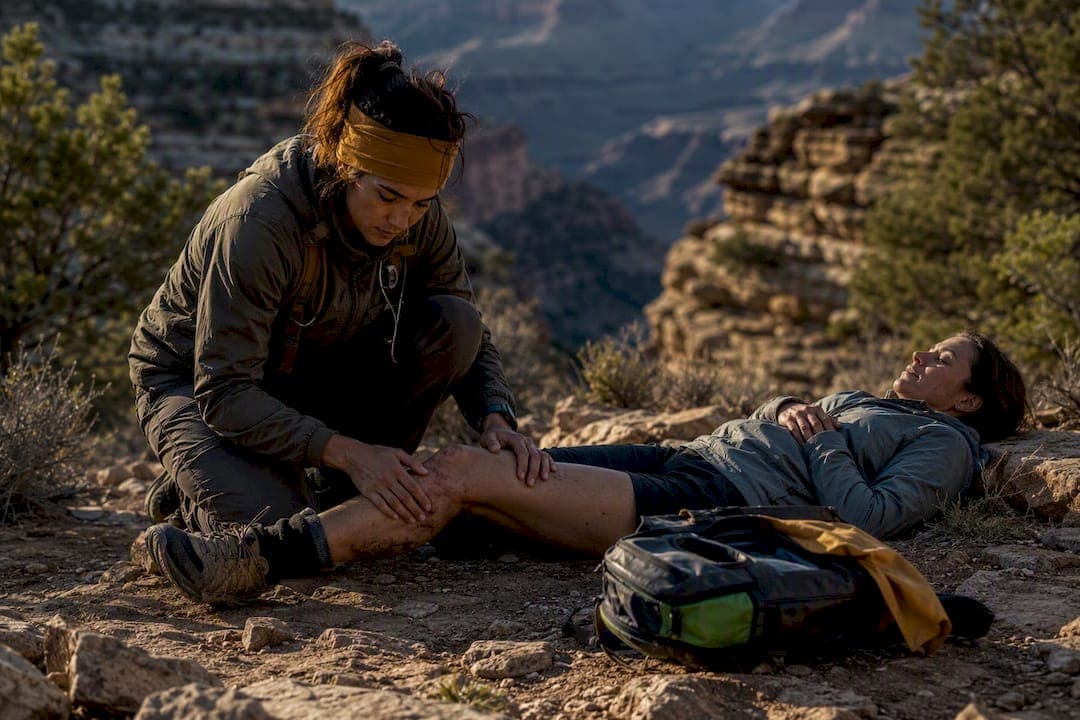
A WFR certified guide holds the industry-standard wilderness emergency-care certification designed to manage medical problems and evacuations when advanced care is hours or days away. Wilderness First Responder training typically runs 70 to 80 hours, in-person or hybrid, and it's the credential most outfitters expect before handing someone a multi-day trip roster.
TL;DR:
- In-person WFR courses usually last 70 to 80 hours over 7 to 10 days, while hybrid options combine online and a 4 to 6-day field session.
- The curriculum emphasizes patient assessment, trauma management, environmental emergencies, and evacuation decision-making, with practical scenario testing.
- Reputable programs follow WMEC standards, require rescue simulations, and mandate CPR/AED certification for quality and credibility.
- Refreshers every two to three years include a minimum of 16 hours, making recertification essential for maintaining trust and employment; skipping it risks credential lapses.
- Obligation and costs vary, but ongoing professional development through advanced rescue courses and recertification can significantly boost guiding career prospects.
Table of Contents
- What Is WFR Certification, and Who Actually Needs It?
- Course Formats and Typical Schedules
- What You Actually Learn and Have to Demonstrate
- Certification Standards, Quality Signals, and Recertification
- How to Choose the Right WFR Course
- Putting WFR to Work on an Actual Trip
- Typical Costs and Financial Investment for WFR Certification
- What Comes After Certification
- Career and Practical Benefits of WFR Certification
- A Guide's Take on What Training Actually Prepares You For
- How Grandcanyonjourneys Approaches Guide Training and Safety
- Sources
What Is WFR Certification, and Who Actually Needs It?
Wilderness First Responder training exists for one specific problem: what happens when someone gets hurt and help isn't coming for a while. Front-country first aid and even EMT training assume an ambulance is minutes away. WFR assumes it isn't.
That gap matters more than most people realize. An EMT course trains you to stabilize and hand off a patient fast. A WFR course trains you to manage a patient, sometimes for a day or more, while deciding whether to wait for help, carry the person out, or hike them out on their own legs. The training centers on managing medical emergencies when definitive care is delayed, which is a different skill set than treating someone who'll be in an ER within the hour.
Guides and outfitters are the obvious audience, but the certification shows up just as often among field researchers doing backcountry fieldwork, search and rescue volunteers, and trip leaders running technical canyon routes or multi-day archaeological digs. Anywhere evacuation could take hours, and anywhere a leader is legally or professionally responsible for a group, WFR has become close to a baseline expectation rather than a bonus qualification.
Course Formats and Typical Schedules
Two formats dominate the WFR world, and picking between them usually comes down to how much time you can block off at once.
The traditional path is a fully in-person course, running roughly 70 to 80 hours across 7 to 10 consecutive days. Everything happens on-site: lectures, skills drills, and full-scale mock rescues, often outdoors in whatever weather shows up.
The hybrid path splits the workload. You complete roughly 30 to 40 hours of self-paced online coursework covering anatomy, physiology, and core medical concepts, then attend an intensive 4 to 6 day in-person field block where you apply everything to live scenarios. NOLS runs one of the more recognized hybrid structures, and its format is a useful reference point for what a legitimate hybrid course should include.
Here's how the two typically break down:
- Full in-person WFR – 70 to 80 total hours, 7 to 10 straight days, best for anyone who can take a week off without splitting attention.
- Hybrid WFR – 30 to 40 online hours completed on your own schedule, followed by a concentrated 4 to 6 day field intensive.
- Recertification course – shorter refreshers (covered later) that renew an existing certification without repeating the full curriculum.
Working guides and seasonal instructors often lean toward hybrid formats because the online portion can happen during off-season downtime, leaving only a single work week blocked out for the field component. That said, no format shortens the hands-on hours, and providers who quietly compress the in-person block to save costs are cutting the part of the training that matters most.
What You Actually Learn and Have to Demonstrate
WFR curriculum is built around a repeatable framework for assessing and managing a patient over time, not a checklist of quick fixes. Every course, regardless of provider, covers the same core ground: patient assessment using SOAP notes (Subjective, Objective, Assessment, Plan), trauma management, spine care protocols, wound care, environmental emergencies like hypothermia and heat illness, and the decision logic behind evacuation calls.
Coursework typically covers:
- Systematic patient assessment and SOAP documentation
- Trauma care, including fracture management and improvised splinting
- Spine injury assessment and clearance protocols
- Wound care and infection prevention in field conditions
- Environmental emergencies: heat illness, hypothermia, altitude, dehydration
- Evacuation decision-making that weighs patient risk against rescuer risk
Testing isn't limited to a written exam. Programs combine that exam with hands-on practical skill checks and multi-day mock scenarios where instructors simulate injuries, chaos, and time pressure to see how candidates actually perform under stress. Most providers also require current CPR/AED certification through AHA or an ALCOR-aligned standard, and a growing number now build in epinephrine auto-injector training given how often severe allergic reactions come up in the backcountry.
Pro Tip: Before enrolling, ask the provider exactly how many scenario simulations you'll run and how realistic they are. A course with two staged mock rescues teaches very differently than one with daily scenario drills built around actual terrain.
Certification Standards, Quality Signals, and Recertification
WFR isn't a state-licensed credential. There's no government board grading providers, which means quality varies more than most students expect. The Wilderness Medicine Education Collaborative (WMEC) fills that gap by publishing recommended minimum hours and a defined scope of practice that reputable schools use as their baseline.
Because the certification is unregulated, the credential's real value hinges on how closely a school follows those consensus standards and how rigorously it tests candidates. Look for these signals before enrolling:
- A published curriculum that explicitly maps to WMEC's recommended minimums
- Clear testing policy covering written, practical, and simulation components
- Instructor credentials listed, not just implied
- A stated CPR standard (AHA or equivalent) built into the course, not left to the student
Recertification typically comes due every two to three years, and WMEC guidance calls for a minimum in-person hour count, often around 16 hours, to keep skills current. Skipping recert isn't a paperwork issue; it's the difference between a resume line and a credential employers actually trust.
How to Choose the Right WFR Course
Not all 70-hour courses are equal, and the difference usually shows up exactly where you'd expect: the hands-on hours. Before booking a seat, run through this checklist.
- Confirm total and in-person hours. A course advertising 70 hours that spends 50 of them online isn't equivalent to one running mostly in the field.
- Check for WMEC alignment. Providers that publish a curriculum mapped to WMEC standards are showing their work, not just their marketing copy.
- Look at the testing structure. You want written exam plus practical skills plus a realistic simulation component, not a single multiple-choice test at the end.
- Verify adjunct requirements. Confirm CPR/AED certification is built in or clearly required beforehand, since some providers assume you already have it.
- Ask about instructor-to-student ratio. Smaller ratios mean more direct feedback during scenario practice.
- Review the recert and refund policy. Know the renewal window and what happens if illness or scheduling forces you to reschedule.
Guides working in hot, arid terrain should push this further and ask specifically about heat illness and dehydration scenarios, since a course built around alpine or forest settings won't necessarily drill the conditions you'll actually face in canyon country.
Putting WFR to Work on an Actual Trip
The real test of WFR training isn't the exam. It's the moment a client twists an ankle four miles from the trailhead or starts showing early heat exhaustion symptoms on a hot afternoon.
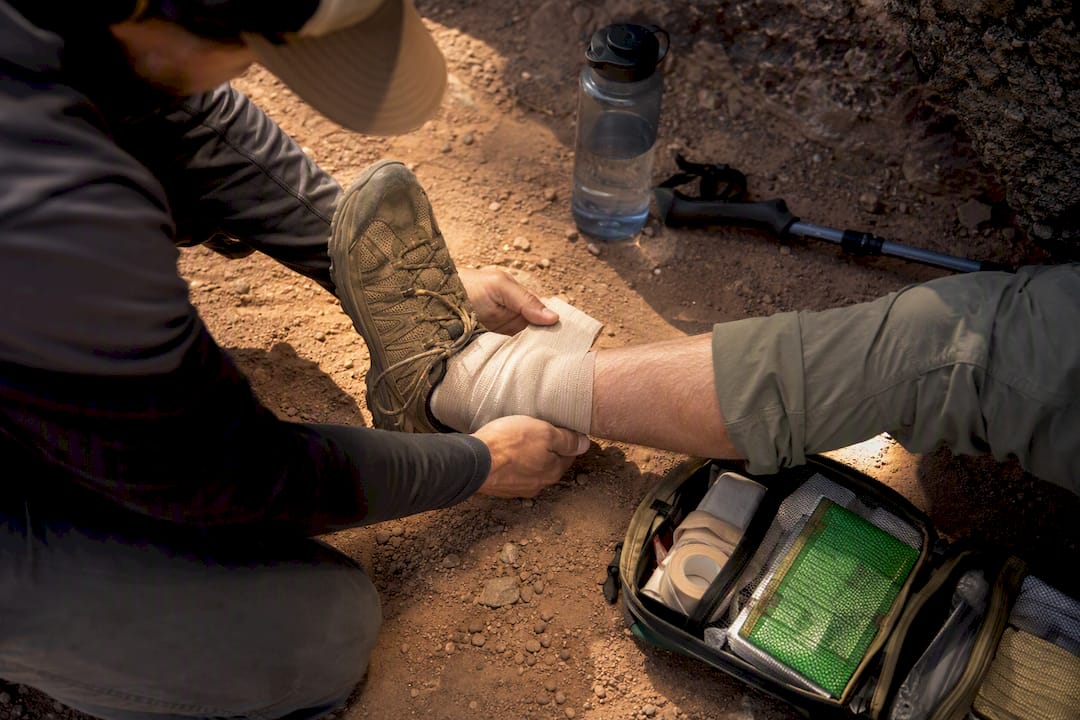
That's when SOAP notes stop being an academic exercise and become the tool you use to track vitals, decide whether symptoms are worsening, and communicate clearly if you eventually hand the patient to EMS. Environmental protocols, particularly for heat and dehydration, come up constantly on guided trips through hot, exposed terrain, as explained in Glacier Hiking Tips: Stay Safe and Prepared. Clients also notice: knowing your guide is WFR certified changes how much they trust the person leading them somewhere remote. For genuinely high-risk routes or larger groups, some operations still pair a Recertified lead guide with additional medical backup rather than relying on one certification alone.
Typical Costs and Financial Investment for WFR Certification
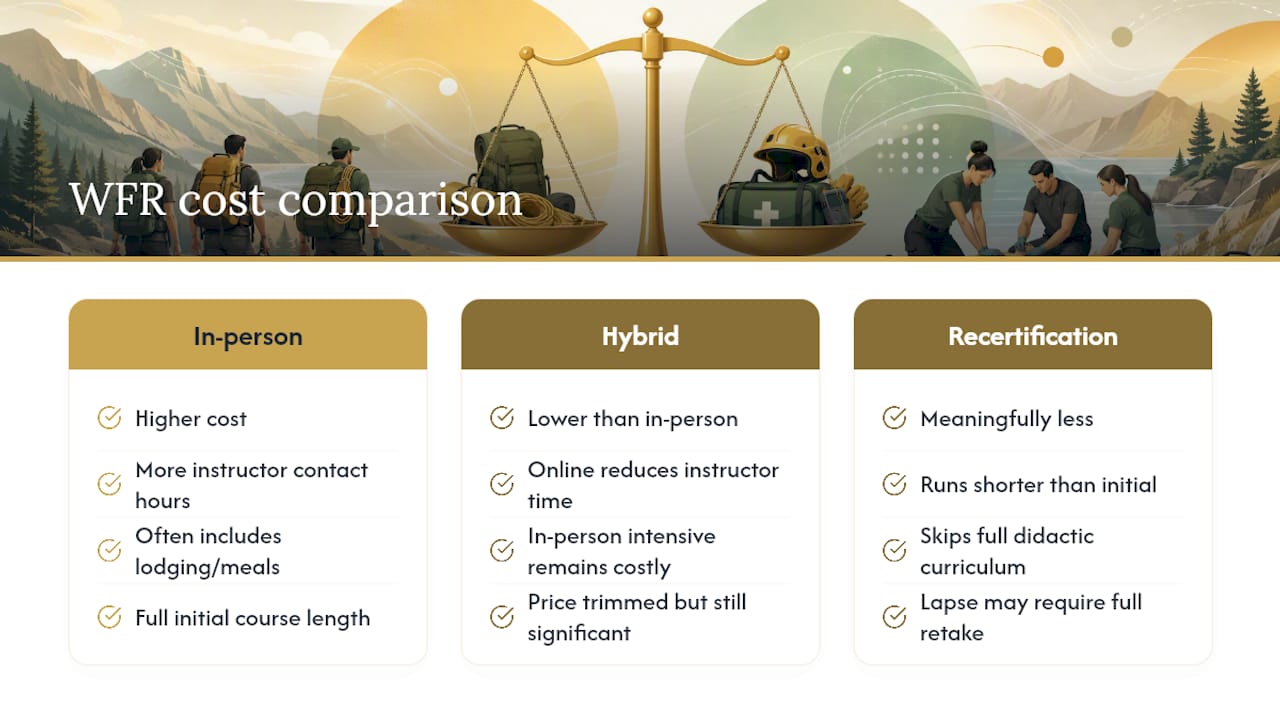
Course pricing varies by provider, location, and format, but a few cost patterns hold across the industry. In-person courses tend to run higher than hybrid options because they include more instructor contact hours and often cover lodging or meals during the multi-day block. Hybrid courses can trim the price somewhat since the online portion requires less direct instructor time, though the in-person intensive still carries most of the cost.
Beyond the course fee itself, budget for a few recurring expenses: CPR/AED certification if it isn't bundled in, travel and lodging to reach the training site, and any required gear for outdoor practical sessions. Recertification courses cost meaningfully less than the initial certification since they run shorter and skip the full didactic curriculum, but they still aren't free, and letting a certification lapse past its renewal window sometimes means retaking the full course instead of the shorter refresher.
For anyone weighing WFR against a career in guiding, it's worth treating the certification as a recurring line item rather than a one-time purchase. Between the initial course, CPR renewals, and recertification every two to three years, WFR is closer to an ongoing professional expense than a single credential you earn once and forget. Providers vary enough in price that it's worth comparing a few directly rather than assuming the cheapest option and the most rigorous option are the same course.
What Comes After Certification
Getting certified isn't the finish line for anyone serious about guiding professionally. Most WFR holders eventually look at advanced training that builds on the base certification rather than replacing it.
Wilderness EMT (WEMT) sits above WFR for guides who want a scope of practice closer to a licensed EMT while keeping the wilderness-specific skill set. Some professionals pursue Wilderness Medicine electives focused on specific environments, high altitude, swift water, or desert heat illness, depending on where they actually guide. Search and rescue teams sometimes require additional technical rescue training on top of WFR for members who respond to backcountry incidents.
The recertification cycle itself doubles as a development opportunity. Rather than treating a two to three year recert as a chore, guides who use that window to add a CPR instructor certification, a swift water rescue course, or a wilderness medicine elective end up with a resume that shows depth, not just a single static credential. Outfitters hiring for demanding routes tend to notice that difference immediately.
Career and Practical Benefits of WFR Certification
WFR certification changes hiring conversations in a fairly direct way. Outfitters running multi-day trips, technical routes, or remote fieldwork frequently list WFR as a minimum requirement, not a preference, which means the certification is often the line between qualifying for a role and not making the shortlist at all.
Insurance is where the credential's value gets less visible but arguably more important. Liability coverage for guiding operations often factors in whether staff carry recognized wilderness medical training, and a fully certified team can affect what an operation's insurer requires or how claims get handled after an incident. That's a business-level benefit, but it flows directly into which guides get hired and retained.
There's also a compounding effect over a guiding career. Guides who keep their WFR current, rather than letting it lapse and requalify years later, tend to move into lead-guide or trip-coordinator roles faster, since operators see continuous certification as a signal of reliability, not just competence at a single point in time.
A Guide's Take on What Training Actually Prepares You For
Scenario practice is where WFR training either earns its reputation or doesn't. Reading about a heat casualty and standing over one at mile six are different experiences entirely, and the courses that force realistic, repeated simulation are the ones that build actual judgment. Guides evaluating programs should weigh simulation hours as heavily as they weigh the certificate itself. For trip-specific safety context around Grand Canyon terrain, Grandcanyonjourneys' Arizona emergency information page is a useful reference point.
— Chris
How Grandcanyonjourneys Approaches Guide Training and Safety
Some private tour operators offer alternatives to standard group tour buses for travelers seeking trips led by guides trained for situations encountered on remote Grand Canyon terrain. Guide preparedness is an important consideration that clients may inquire about before booking.

If you're planning a trip below the rim and want to understand how guide qualifications factor into a private itinerary, the Grand Canyon hiking tour from Sedona page lays out what a guided descent actually involves. For a broader look at available private itineraries, the Grand Canyon tour listings page covers all current options from Sedona, Flagstaff, and Williams. And if you're still mapping out logistics, dates, or questions about how a trip is staffed, the Grand Canyon travel planner is the fastest way to start that conversation and get a private tour on the calendar.