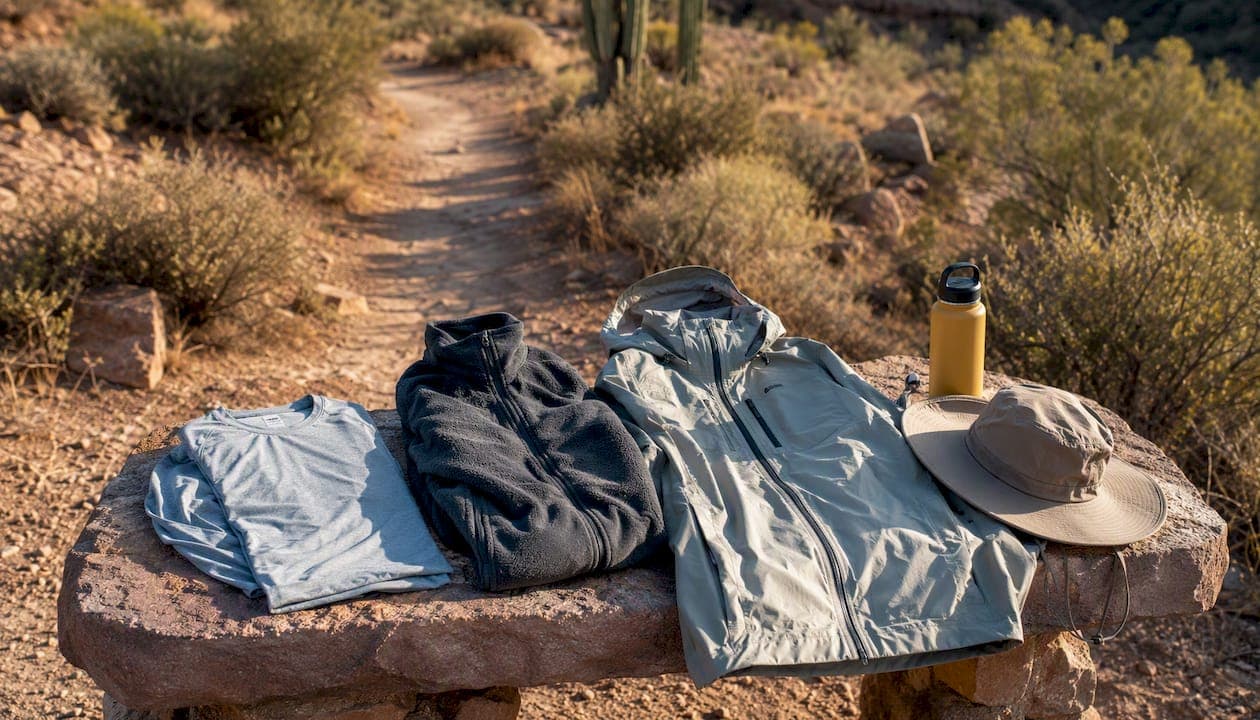
Pack for Arizona with one rule: a lightweight, sun-protective 3-layer system plus the right shoes. That single framework handles 105°F Phoenix afternoons, 39°F Grand Canyon mornings, and surprise monsoon downpours without requiring a second checked bag. Here is what goes in the bag before anything else:
- Wide-brim hat (3-inch brim minimum)
- UPF 50+ sun hoody or long-sleeve UPF shirt
- Breathable trail runners with a grippy sole
- Light insulating layer (compressible fleece or puffy)
- Compact rain shell (under 10 oz)
- Reusable water bottle (1L minimum, insulated preferred)
Arizona's elevation range is the reason layering matters so much. Sedona sits at roughly 4,350 feet; the Grand Canyon South Rim is near 7,000 feet. NOAA data shows Sedona morning temperatures can be quite cool while summer afternoon highs are hot. That is a 58-degree swing in a single day. Packing only for the high temperature is the most common mistake first-time visitors make.
Pro Tip: Wear your bulkiest shoes and carry your insulating layer on the plane. Both items are heavy and compressible enough to wear or stow in an overhead bin, leaving room in your bag for everything else.
Key Takeaways
Arizona's daily temperature swings of 30°F–58°F make a 3-layer system the single most practical packing framework for any season, any elevation, and any activity in the state.
| Point | Details |
|---|---|
| Layer, don't overpack | A base layer, compressible mid layer, and packable shell cover every Arizona scenario without a second bag. |
| Avoid cotton on trails | Cotton holds sweat and fails in both heat and cold; choose merino or synthetic fabrics for any active use. |
| Sun protection is structural | A UPF 50+ sun hoody blocks 98%+ of UV and outperforms sunscreen alone on long desert hikes. |
| Drink 1 liter per hour | Hydration is the most critical safety variable on Arizona trails above 90°F; carry more than you think you need. |
| Grandcanyonjourneys simplifies packing | Guided tours handle safety gear and route logistics, so guests pack only personal sun protection, water, and layers. |
Table of Contents
- What to wear in Arizona by season
- How to layer for Arizona's desert climate
- What to wear for each Arizona activity
- Shoes, socks, and accessories that actually matter
- Arizona packing checklists by trip length
- Staying safe in Arizona's sun, heat, and desert
- What WFR-certified guides recommend you actually pack
- The packing mistake most Arizona visitors make
- A guided tour makes packing simpler
- Sources
What to wear in Arizona by season
Arizona does not have one climate. Phoenix bakes at low elevation while Flagstaff and the Grand Canyon rim sit in a cool ponderosa pine forest above 6,000 feet. Sedona falls in between. The season you visit changes the packing list dramatically.
Summer (June through September)
Phoenix regularly experiences temperatures well above 90°F from June through August. Lightweight, breathable clothing, a wide-brim hat, SPF 30+ sunscreen, and a reusable water bottle are non-negotiable. Loose linen or moisture-wicking synthetic shirts in light colors reflect heat better than dark fabrics. Avoid midday outdoor activity between 11 AM and 3 PM whenever possible.
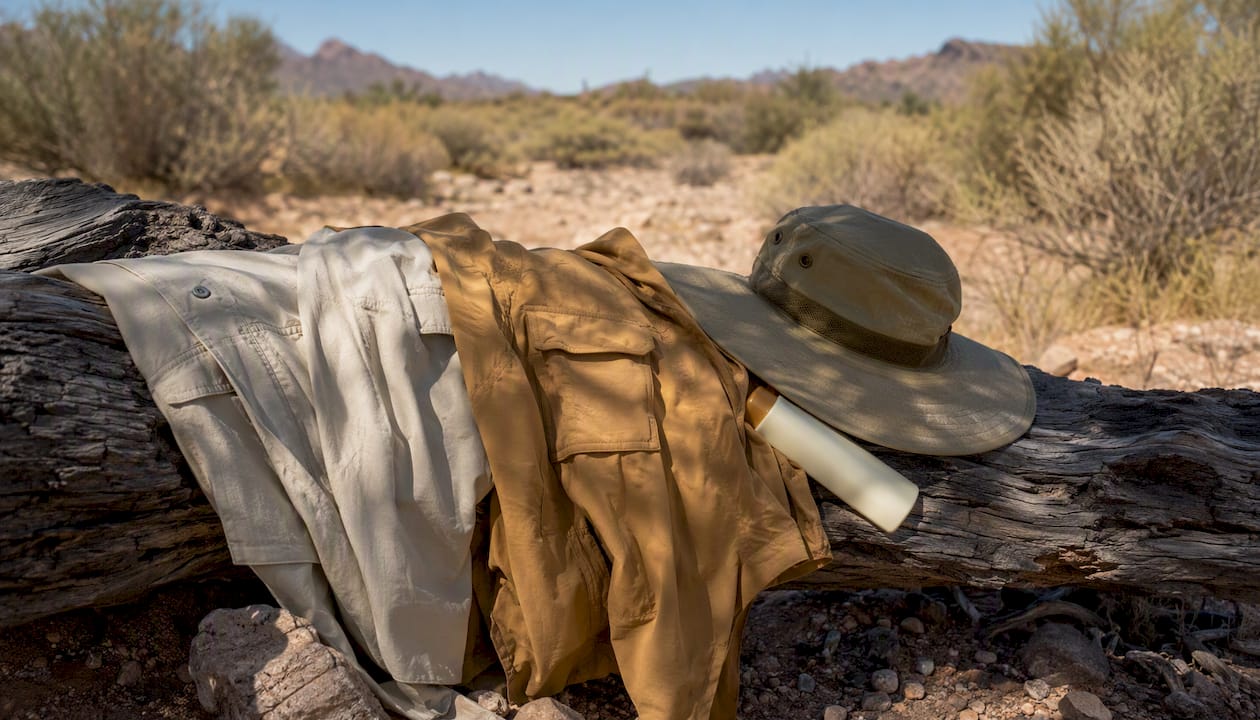
At higher elevations, summer mornings still start cool. The Grand Canyon rim at 7,000 feet can feel genuinely cold at sunrise even in July. Pack a light fleece you can strip off by 9 AM.
Monsoon season runs roughly July through mid-September. Afternoon thunderstorms build fast and drop hard rain. A packable waterproof shell weighing under 10 oz earns its place in every daypack during this window.
Fall (October through November)
Fall is Arizona's sweet spot for hiking. Daytime temperatures in Sedona run 65°F–80°F, mornings start around 45°F–55°F, and the crowds thin after Labor Day. A light fleece or softshell over a moisture-wicking base layer handles the morning chill; you will likely strip to a single layer by 10 AM. For town evenings in Sedona or Scottsdale, a linen button-down or light knit over technical pants reads as polished casual without requiring a wardrobe change.
Winter (December through February)
Winter in Arizona surprises visitors who expect year-round warmth. Phoenix days stay mild at 65°F–70°F, but the Grand Canyon rim regularly drops below freezing overnight and can see snow. Pack a mid-weight insulated jacket, a beanie, and gloves if you plan any rim or below-rim hiking. Sedona winters are crisp: monthly data shows March mornings averaging near 39°F with afternoons around 68°F, and December and January run colder still.
Spring (March through May)
Spring mirrors fall in terms of comfort, with one caveat: wind. Northern Arizona gets gusty in March and April, so a windproof outer shell matters more than rain protection at this time of year. Mornings average 40°F–54°F across Sedona and the canyon country, with afternoons climbing to 68°F–84°F. Late May starts to feel like early summer at lower elevations, so check the forecast for your specific dates.
Pro Tip: Monsoon season does not start until July, but late May and June can bring isolated dry thunderstorms with strong gusty winds. A lightweight wind shell doubles as rain protection and weighs almost nothing.
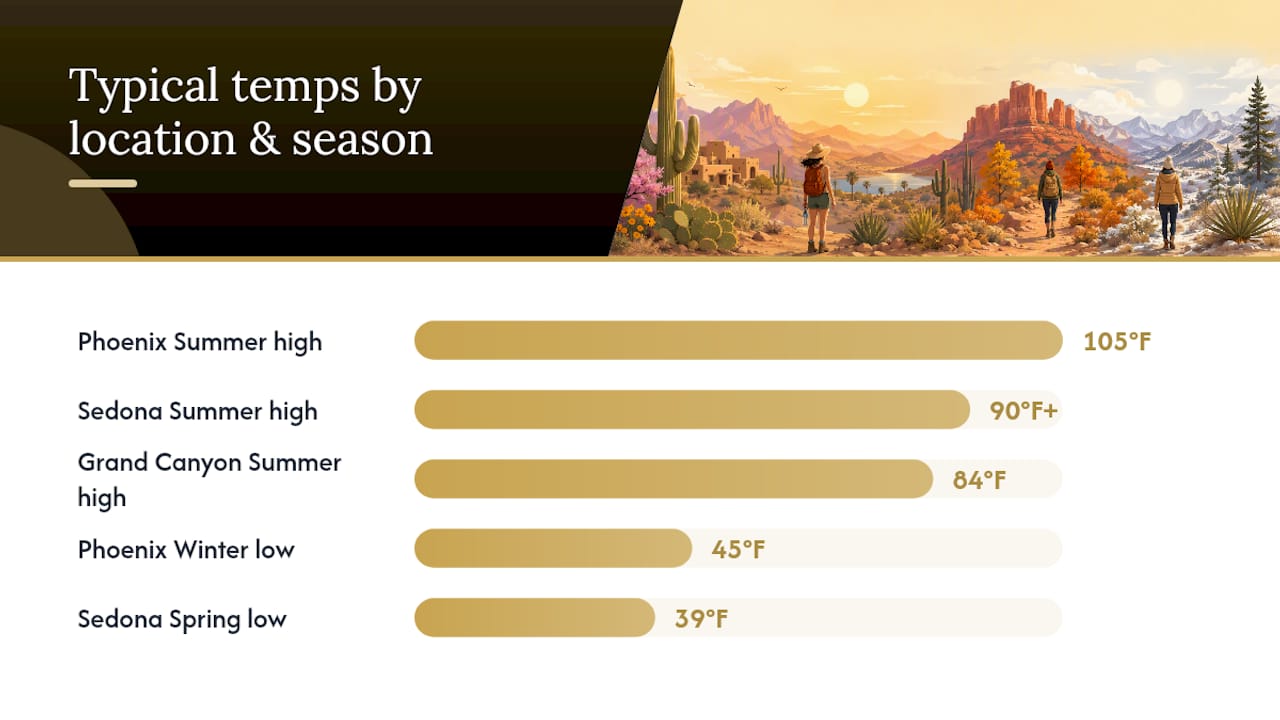
Arizona temperature reference by location and season
| Location | Season | Typical Morning Low | Typical Afternoon High |
|---|---|---|---|
| Phoenix | Summer | 80°F | 105°F |
| Phoenix | Winter | 45°F | 68°F |
| Sedona | Spring (March) | 39°F | 68°F |
| Sedona | Summer (July) | 68°F | 90°F or above |
| Grand Canyon South Rim | Summer | 50°F | 84°F |
| Grand Canyon South Rim | Winter | below freezing | 39°F |
How to layer for Arizona's desert climate
The 3-layer system is not complicated, but most travelers either skip a layer or choose the wrong fabric for each slot. Here is how it works for Arizona specifically.
1. Base layer: moisture management
Your base layer sits against your skin and its only job is moving sweat away from your body. Merino wool is the best choice for multi-day trips because it resists odor through multiple wears. Lightweight synthetic blends (polyester or nylon) dry faster and cost less. Either works. What does not work is cotton.
Cotton absorbs moisture and holds it against your skin. On a hot desert hike, that means a soaked shirt that adds weight and chafes. On a cold canyon morning, wet cotton pulls heat away from your body fast. Desert hiking guides consistently flag cotton as the single worst fabric choice for active outdoor use in Arizona.
2. Mid layer: temperature regulation
The mid layer adds warmth when you need it and compresses small enough to stuff into a daypack when you do not. A 100-weight fleece or a lightweight down or synthetic puffy jacket covers this slot. Target something under 12 oz that packs to the size of a water bottle. You will put it on at the trailhead at 6 AM and pull it off by 8 AM on most summer hikes.
3. Outer layer: wind and rain protection
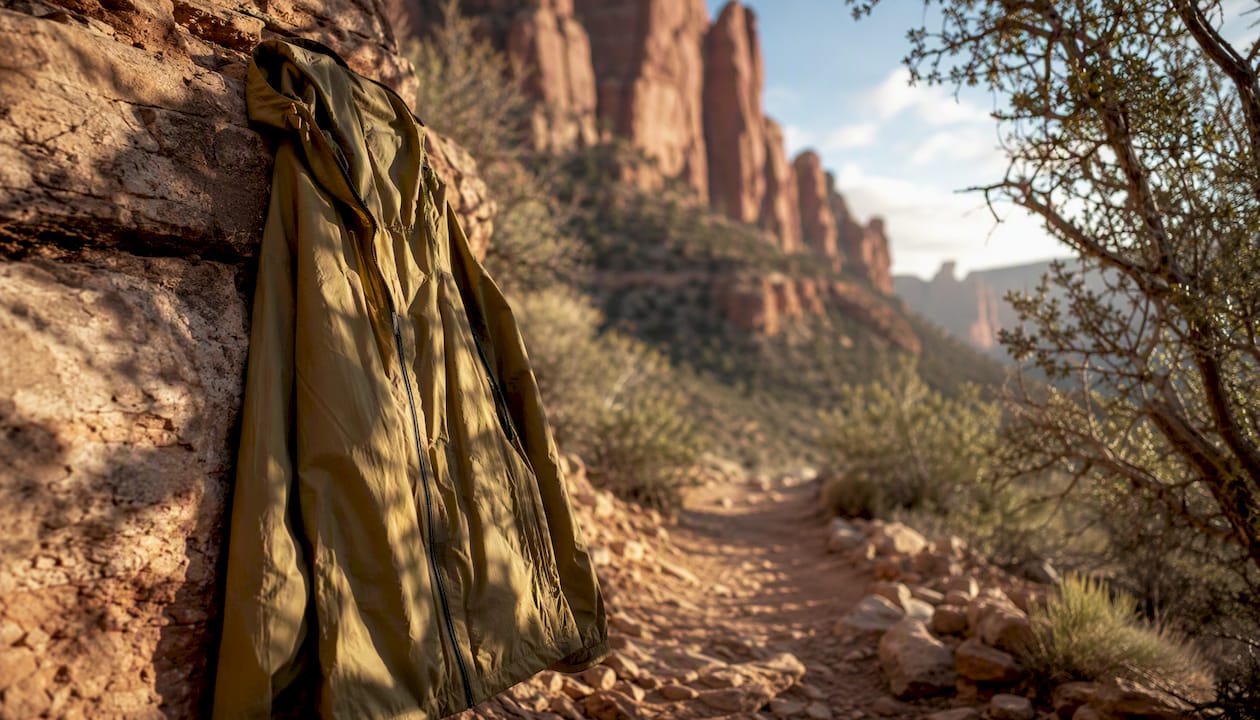
A packable hardshell or softshell handles monsoon rain and canyon wind. It does not need to be heavy. A 7–9 oz waterproof-breathable shell that stuffs into its own pocket is the standard. If you are visiting only in spring, a windproof softshell without a waterproof membrane is lighter and more breathable.
Fabric dos and don'ts
Choose:
- Nylon or polyester blends (lightweight, quick-dry)
- Merino wool (odor-resistant, temperature-regulating)
- UPF 50+ rated fabrics (block 98%+ of UV radiation)
- Loose-fitting cuts with ventilation panels
Avoid:
- Cotton in any layer used for hiking
- Tight compression fabrics during peak heat exertion
- Dark colors in direct sun at low elevation
One technical point worth knowing: loose, high-airflow clothing outperforms tight moisture-wicking gear in desert heat because it creates a chimney effect, pulling hot air up and away from your skin. A loose UPF sun hoody does more cooling work than a fitted synthetic tee, even if the tee has a better wicking rating on the label.
A UPF 50+ sun hoody blocks more than 98% of UV radiation and reduces how often you need to reapply sunscreen during a long hike. For anyone spending more than two hours in direct Arizona sun, it is a more reliable protection system than sunscreen alone.
What to wear for each Arizona activity
Desert hiking (Phoenix trails, Sonoran Desert)
Loose, breathable fabrics win here. A UPF sun hoody over a moisture-wicking base, lightweight convertible pants or shorts (depending on brush density), and a wide-brim hat cover the basics. Phoenix trail systems like Camelback Mountain and South Mountain involve rocky, exposed terrain with no shade, so sun protection is structural, not optional. Start before 7 AM in summer. Carry at least 1 liter of water per hour of hiking.
Grand Canyon rim and below-rim hikes
The rim is a different environment from the inner canyon. Temperature drops roughly 5°F for every 1,000 feet of elevation gain, which means the canyon floor at Phantom Ranch runs 20°F–25°F hotter than the South Rim. Descending feels easy; the climb out in midday heat is where people get into trouble.
For rim walks: layers plus closed-toe shoes with ankle support. For below-rim hikes on Bright Angel or South Kaibab trails, add an extra insulating layer in your pack for the return trip, when fatigue and shade loss combine. Check the Grand Canyon hiking guide for trail-specific gear notes before you go.
Pro Tip: Pack your insulating layer in the top lid or shoulder pouch of your daypack, not buried at the bottom. On canyon descents, temperature drops can be abrupt and you want that layer accessible in under 30 seconds.
Slot canyons and technical areas
Quick-dry, abrasion-resistant fabrics are the priority. Slot canyon walls are sandstone and they will scuff thin synthetic fabrics on a tight squeeze. Avoid white sneakers entirely — the red iron oxide dust in Antelope Canyon and similar sites stains light-colored shoes permanently. A small packable wind layer handles the temperature contrast between the hot desert floor and the cool, shaded canyon interior.
Sedona sightseeing and town
Sedona's red rock country calls for what locals describe as polished casual: breathable natural fabrics (linen, cotton-linen blends) for town, with technical layers underneath for any trail time. A linen button-down over a moisture-wicking base layer and lightweight hiking pants works for both a morning trail walk and an afternoon wine tasting. Sedona packing guidance specifically recommends lightweight long sleeves and dark-soled hiking shoes to handle the red-rock terrain.
Phoenix city, pool, and golf
Light breathable fabrics, sun protection, and a pool-to-town transition piece (a light cover-up or linen shirt) cover Phoenix city days. Golf in summer means a moisture-wicking polo, UV-blocking sunglasses, and a wide-brim hat or cap. Evenings cool down enough for a light layer at outdoor restaurants from October through April.
Evening and stargazing
Arizona's dark skies are spectacular, and desert nights cool fast. Even in summer, temperatures at elevation drop into the 50s°F after sunset. A compressible puffy jacket, a beanie, and long pants are the minimum for a stargazing session above 5,000 feet. During monsoon season, add a rain shell because evening storms build quickly after dark.
Shoes, socks, and accessories that actually matter
Footwear decision rules
The choice between trail runners and hiking boots comes down to trip length and terrain. For day hikes on well-maintained trails like Bright Angel or Sedona's Bell Rock Pathway, lightweight breathable trail runners with a Vibram or similar grippy sole outperform heavy boots. They dry faster, weigh less, and reduce foot fatigue on long days.
Waterproof membranes like Gore-Tex trap sweat in extreme heat, which can cause blisters faster than a breathable mesh upper would. In Arizona's dry summer heat, breathable mesh trail runners paired with gaiters are usually the better call. Save waterproof boots for winter canyon hikes where stream crossings or snow are possible.
Sandals are fine for town, pool decks, and campsite evenings. They are not appropriate for any trail with loose rock, cactus, or significant elevation change.
Red-rock staining note: Dark-soled trail shoes are the practical choice for Sedona and slot canyon hikes. The red iron oxide dust that makes the landscape beautiful will permanently tint light-colored soles and uppers after one hike.
Socks
Merino wool or synthetic blend hiking socks prevent blisters better than cotton athletic socks, which bunch and hold moisture. For sandy trails, a low-profile gaiter over the sock cuff keeps debris out and reduces hot spots.
Accessories checklist
- Wide-brim hat: 3-inch brim minimum; a crushable straw or nylon hat packs flat
- UV-blocking sunglasses: look for UVA/UVB 400 protection; wraparound frames reduce peripheral exposure
- Neck gaiter or buff: doubles as sun protection and dust filter on windy days
- Reusable insulated water bottle: 1L minimum; wide-mouth bottles are easier to fill at park water stations
- Electrolyte packets: heat and sweat deplete sodium faster than water alone replaces it
Pro Tip: A wet bandana around your neck provides quick evaporative cooling during rest stops. It is low-tech, weighs nothing, and works surprisingly well during the hottest part of the day.
Arizona packing checklists by trip length
3-day Arizona packing list
The goal for a short trip is multi-use items that cover both trail and town without a full wardrobe change.
| Category | Item | Notes |
|---|---|---|
| Tops | 2 moisture-wicking base layer shirts | One to wear, one to wash |
| Tops | 1 UPF sun hoody | Doubles as mid layer on cool mornings |
| Tops | 1 linen or breathable casual shirt | Town and dining |
| Bottoms | 1 pair lightweight hiking pants | Convertible zip-off style adds versatility |
| Bottoms | 1 pair shorts | Trail or casual |
| Layers | 1 compressible fleece or puffy | Packs to fist-size |
| Outer | 1 packable rain shell | Under 10 oz |
| Footwear | 1 pair trail runners | Wear on the plane |
| Footwear | 1 pair casual sandals or sneakers | Town and evenings |
| Accessories | Wide-brim hat, sunglasses, buff/gaiter | Sun protection essentials |
7-day Arizona packing list
A week-long trip covering Phoenix, Sedona, and the Grand Canyon spans three distinct microclimates. Add:
- One extra moisture-wicking base layer shirt (total: 3)
- One pair of lightweight merino or synthetic hiking socks per day (7 pairs, or 4 pairs plus laundry mid-trip)
- One mid-weight insulated jacket for Grand Canyon rim evenings
- One additional casual outfit for dinners or wine tastings
- One pair of low-profile gaiters for sandy trail sections
- Packing cubes to separate trail gear from town wear
Most hotels and vacation rentals in Sedona and Flagstaff offer laundry access. Plan a mid-trip wash on day 4 and you can cut the clothing count by roughly a third.
The 3-3-3 packing rule for Arizona
The 3-3-3 rule (3 tops, 3 bottoms, 3 pairs of shoes) works well as a starting framework, with one Arizona-specific adjustment: replace one of the three shoe slots with a pair of gaiters and a second pair of socks, since most Arizona itineraries need only two shoe types (trail runners and casual sandals). Use packing cubes to keep your trail kit separate from town clothes, which makes airport security and hotel room organization faster.
Carry-on vs. checked: Trail runners, a sun hoody, and a rain shell are the three items most worth protecting from checked-bag delays. Wear the shoes; pack the hoody and shell in your personal item. Everything else can go checked on a 7-day trip.
Staying safe in Arizona's sun, heat, and desert
Heat illness is the most common medical emergency on Arizona trails, and clothing choices directly affect your risk. The Arizona desert safety guide covers this in detail, but the core rules are straightforward.
Hydration
Drink 1 liter of water per hour of active hiking in temperatures above 90°F. Add electrolytes (sodium, potassium) on hikes longer than two hours because plain water alone does not replace what sweat takes. Carry more than you think you need; water sources on most Arizona trails are unreliable or nonexistent.
Heat illness warning signs
Stop activity and move to shade immediately if you or anyone in your group experiences:
- Dizziness, nausea, or confusion
- Skin that is hot and dry (not sweating despite heat)
- Rapid heartbeat with weakness
- Headache that does not improve with water and rest
Hike before 10 AM and after 4 PM in summer. The midday window is genuinely dangerous on exposed trails.
Sun protection hierarchy
Physical coverage comes first. A UPF 50+ hoody and a wide-brim hat block UV more reliably than sunscreen during a 4-hour hike because sunscreen wears off with sweat. Long sleeves and pants block direct solar radiation more consistently than sunscreen during prolonged exposure. Use SPF 30+ sunscreen on exposed skin (face, hands, neck) as the second line of defense, not the first.
Sunglasses with UVA/UVB 400 protection are not optional at high elevation.
Monsoon and flash flood awareness
Monsoon season (July through mid-September) brings fast-building afternoon thunderstorms. Flash floods can fill slot canyons and dry washes within minutes of a storm that is miles away and not visible from your location. Check the Arizona weather guide before any slot canyon visit and follow ranger closures without exception.
Pro Tip: Download the National Weather Service app and set a location alert for your specific trailhead before any summer hike. Monsoon cells move fast and a 20-minute warning is often all you get.
What WFR-certified guides recommend you actually pack
Grandcanyonjourneys' guides hold Wilderness First Responder certification, which means they have seen what goes wrong on Arizona trails and what prevents it. Their practical advice differs from generic packing lists in a few specific ways.
Guide-backed packing priorities for Arizona hikes: Pack your insulating layer in the top lid or shoulder strap pocket of your daypack — not buried inside. On below-rim canyon hikes, temperature can drop sharply on the return ascent when fatigue sets in and shade disappears. You want that layer in your hand within 30 seconds, not after unpacking your lunch. Start hiking by 6 AM in summer, plan a shade break between 11 AM and 1 PM, and carry a minimum of 3 liters of water for any hike longer than 4 miles round-trip.
What Grandcanyonjourneys provides on guided tours:
- Route planning and trail-condition briefings before departure
- Emergency communication equipment and first-aid supplies
- Local knowledge on water sources, shade stops, and turnaround timing
- Climate-controlled vehicle transport between trailheads and accommodations
What guests should bring themselves:
- Personal sun protection (hat, hoody, sunglasses, sunscreen)
- Personal water bottle (1L minimum; guides advise 2L for below-rim hikes)
- One accessible insulating layer in a top-lid pocket
- Closed-toe, grippy trail shoes (not sandals or flat sneakers)
The guided logistics model reduces packing complexity in one concrete way: you do not need to carry navigation gear, group first-aid supplies, or emergency communication devices. That frees up daypack space for water and layers, which are the two things that actually keep you comfortable on an Arizona trail.
The packing mistake most Arizona visitors make
Most travelers pack for the temperature they expect, not the temperature they will actually experience. They see "Phoenix, 105°F" and pack shorts and sandals. Then they stand at the Grand Canyon South Rim at 7 AM in a T-shirt, shivering, wondering why nobody mentioned the 45°F morning.
The 3-layer system is not about carrying more. It is about carrying smarter. A compressible puffy that weighs 8 oz and a packable rain shell that weighs 7 oz add almost nothing to a bag but cover every temperature scenario Arizona throws at you between June and November.
One piece that earns its keep on every Arizona trip: a loose UPF 50+ sun hoody in a neutral color. It works as a sun shield on a desert trail, a light layer over a tank top at a Sedona winery, and a wind block at a canyon overlook at dusk. It replaces three separate items (sun protection, light layer, casual top) and takes up less space than any of them individually. Pack it first and build the rest of the list around it.
A guided tour makes packing simpler
Packing for Arizona gets easier when someone else handles the logistics. Grandcanyonjourneys runs private luxury tours from Sedona to the Grand Canyon, slot canyons, and Sedona's red rock country, with WFR-certified guides who manage route timing, safety equipment, and local knowledge so guests carry less and worry less.
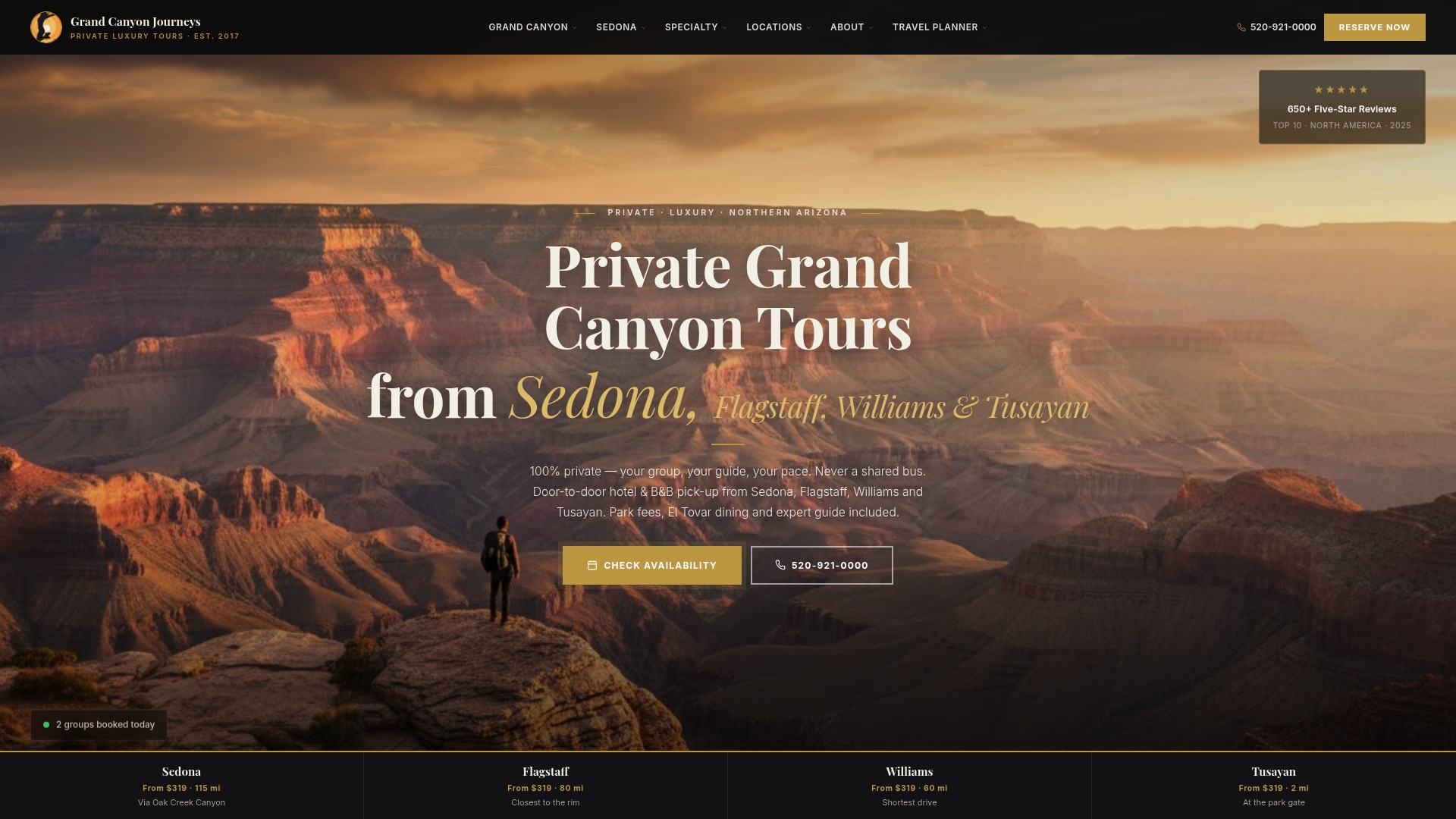
On a guided tour, you skip the navigation gear, group first-aid kit, and emergency communication devices. Grandcanyonjourneys' climate-controlled vehicles handle the temperature transition between trailhead and town, so you are not stuck in sweaty hiking clothes at dinner. The guides brief you on exactly what to wear and bring for each specific route before you leave, which cuts packing uncertainty down to a short personal list: hat, hoody, trail shoes, water bottle.
Book a private Grand Canyon or Sedona tour and get a pre-trip packing brief from a guide who has walked the same trails hundreds of times.
Sources
- NOAA
- What to Wear Hiking in the Desert: A Complete Guide | HikeDesert
- What to Pack for Your Phoenix Getaway: A Season-by-Season Guide | Luxury Getaways
- What to Wear in Sedona — Month-by-Month Guide | AI Outfit Planner: PutTogether
- What to Pack for Your Sedona Vacation by Season
- Desert Hiking Clothes Most Hikers Get Wrong | The Hiking Tribe