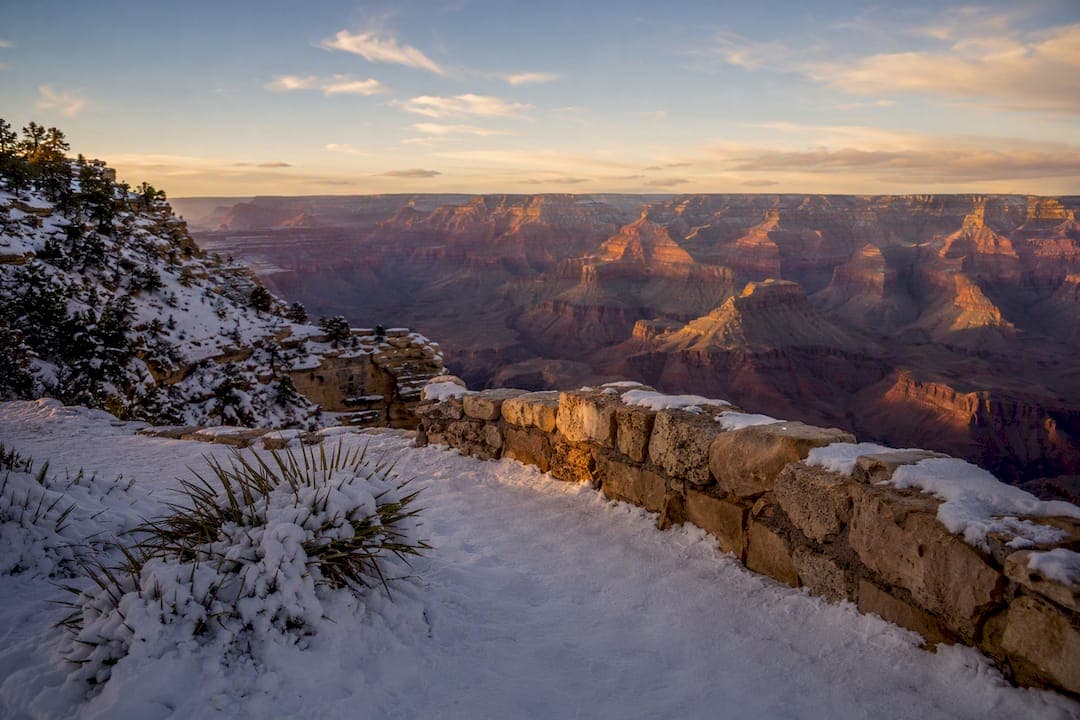
Winter at the Grand Canyon rewards photographers, solitude seekers, and prepared hikers with empty overlooks and dramatic light, but it demands real planning. The South Rim stays open all year; the North Rim shuts down to vehicles for the season. Ice and sudden road closures are the biggest risk, so check the NPS road hotline and webcams before you leave home.
- Best for: Photographers, quiet-seekers, hikers comfortable with cold and traction gear.
- Skip it if: You need North Rim access or you can't handle freezing mornings and short daylight.
- Non-negotiable: Verify road status the morning you travel, not the night before.
Key Takeaways
Winter at the Grand Canyon rewards prepared visitors with dramatic light and real solitude, but it demands checking road and trail conditions before every trip.
| Point | Details |
|---|---|
| South Rim stays open | The North Rim closes to vehicles roughly mid-October through mid-May, so plan South Rim access only. |
| Temperatures swing by elevation | Rim highs near 45°F can pair with canyon-floor temperatures around 60°F on the same day. |
| Traction devices are essential | NPS guidance recommends over-the-shoe traction and trekking poles for icy trail sections. |
| January and February mean solitude | The Christmas to New Year's week draws crowds; the following weeks are the quietest of the year. |
| Guided tours reduce risk | Grandcanyonjourneys offers private, WFR-guided winter tours that handle road monitoring and logistics for you. |
Table of Contents
- Winter At Grand Canyon Weather And The Best Time To Go
- Which Parts Of The Park Are Open In Winter?
- How Should You Prepare To Drive To The Canyon In Winter?
- What Can You Actually Do At The Canyon In Winter?
- What Safety Gear Do You Need For A Winter Visit?
- Where Should You Stay And When Should You Book?
- How Do You Avoid Hypothermia And Ice Hazards While Hiking?
- What Wildlife Might You Encounter In Winter?
- What Photography Gear Works Best In Winter Light And Snow?
- Are Food And Water Available At The Canyon In Winter?
- Book A Private Winter Tour Instead Of Managing The Logistics Yourself
- Where To Check Conditions Before You Go
- Frequently Asked Questions About Winter At Grand Canyon
- Sources
Winter At Grand Canyon Weather And The Best Time To Go
Rim temperatures in December through February run cold with overnight lows below freezing and daytime highs in the mid-40s Fahrenheit. Descend into the canyon and the picture changes fast. Thanks to the roughly 7,000-foot elevation drop, canyon-floor temperatures often climb 15 to 20 degrees warmer than the rim, sometimes reaching 60°F even while snow sits on the South Rim.
Snowfall varies wildly by location. The South Rim averages about 58 inches per season while the North Rim gets roughly 142 inches, and sunny days often melt South Rim snow by early afternoon.
December through February is the core winter window, but not all of it feels the same. The week between Christmas and New Year's draws crowds close to summer levels, while January and February deliver the quietest, most solitary rim experience of the year.
Pro Tip: Winter's low sun angle throws long shadows and pulls purples, pinks, and oranges out of the rock that summer's flat overhead light never shows. Shoot within an hour of sunrise or sunset for the strongest color.
Which Parts Of The Park Are Open In Winter?
The South Rim runs year-round, with the visitor center, most lodges, and select campgrounds operating on full or lightly reduced schedules. The North Rim is a different story: it typically closes to vehicles from mid-October through mid-May, taking its lodging, dining, and most facilities offline until spring.
- Hermit Road generally stays open to private vehicles in winter, since the free shuttle season has ended, but snow can close it without notice.
- Shuttle buses run a limited winter schedule on other routes; don't assume summer frequency.
- Trail status changes daily. Confirm conditions before committing to a route.
- Check road and trail status through park webcams and the roads hotline, plus Arizona's 511 system for regional highway conditions.
Call ahead if your plans depend on a specific facility. Winter hours shift with staffing and weather, and posted schedules online don't always catch same-day closures.
How Should You Prepare To Drive To The Canyon In Winter?
Grand Canyon road crews spread crushed cinders rather than chemical salt for traction, which means icy patches can linger in shaded or high-elevation spots well after a storm passes. Treat every curve near the rim as potentially slick, even on a clear day.
Bring chains or traction devices if you're driving a vehicle without four-wheel drive, and slow down well below posted limits on approach roads. Towing response can take longer than you'd expect in a rural area during a storm, so don't count on quick roadside help.
Pack an emergency kit built for this terrain:
- Snow shovel and ice scraper
- Tow rope or tow strap
- Extra warm layers and blankets
- Shelf-stable food and bottled water
- Fully charged phone and a printed map as backup
Call the NPS roads hotline at 928-638-7496 and check webcams before you leave.
What Can You Actually Do At The Canyon In Winter?
Rim walks stay the most accessible option. Mather Point, Yavapai Point, and the paved Rim Trail sections near the village need minimal elevation change and reward you with the same views as summer, minus the tour buses.
Short hikes are doable with the right gear, but trail conditions vary by exposure. The first mile of Bright Angel Trail often holds packed, north-facing snow and ice, while South Kaibab is more exposed to sun and wind. Below a feature called the Chimney, South Kaibab can warm and dry out during the day, but the Chimney itself stays icy through winter. Higher, north-facing routes like Grandview and Tanner hold ice longest and demand the most caution.
Photography and stargazing both peak in winter. Clear air, early sunsets, and that low golden light make for some of the best shots of the year, and longer nights mean more time under genuinely dark skies.
- Rim Trail sections near the village: easiest access, paved, minimal risk.
- Bright Angel or South Kaibab first mile: doable with traction devices, not without them.
- Sunset and sunrise sessions: bring a headlamp for the walk back.
- Stargazing: dress warmer than you think you need to.
Pro Tip: If ice or timing has you second-guessing a solo winter hike, a guided trip removes the guesswork entirely. Guides who know the terrain that day, not last week, make the call on where it's safe to go.
For travelers who'd rather skip the trail research altogether, a private guided hiking tour puts someone with current, on-the-ground knowledge in charge of the route.
What Safety Gear Do You Need For A Winter Visit?
Winter turns fitness into only one part of the safety equation. The National Park Service is direct about this: hikers should carry over-the-shoe traction devices and trekking poles, and being in good shape doesn't protect you from a fall on black ice or a hypothermia scare if you're underdressed.
Layer for two different climates in one hike. Start with a moisture-wicking base layer, add insulation, and top it with a wind-and-water shell you can shed as you drop toward the warmer canyon floor. Footwear matters as much as jackets: waterproof boots with real tread, paired with traction devices for icy sections near the rim.
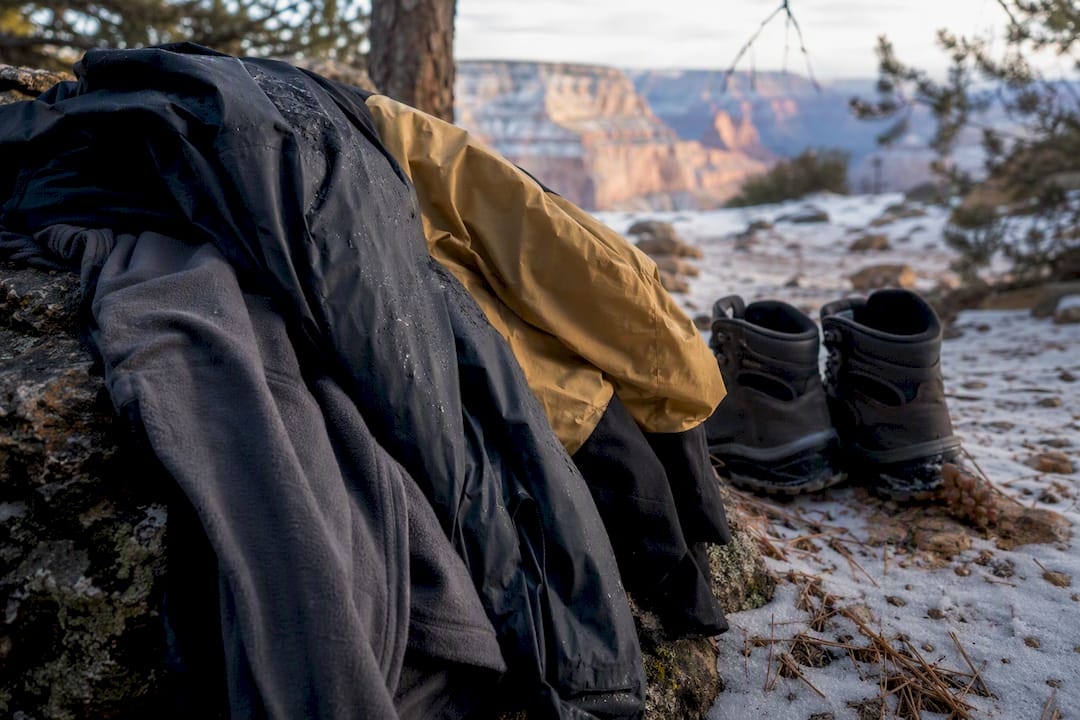
Watch for early hypothermia signs: shivering that won't stop, slurred speech, and clumsiness. Daylight runs short in winter, often ending well before 6 p.m., so budget your turnaround time with margin to spare.
| Item | Why it matters |
|---|---|
| Over-the-shoe traction devices | Prevents falls on packed snow and ice near the rim and trailheads. |
| Trekking poles | Adds stability on uneven, icy, or slush-covered terrain. |
| Headlamp | Covers you if a hike runs past the early winter sunset. |
| Extra warm layers and hot liquids | Buffers against sudden temperature drops and slows hypothermia onset. |
| First-aid kit | Basic coverage for cuts, blisters, or minor falls far from help. |
Pro Tip: Pack one more layer than feels necessary at the trailhead. It's easier to carry a jacket you don't use than to wish you'd brought one two miles in. For a full layer-by-layer breakdown, the Grand Canyon packing guide covers gear specifics by trip type.
Where Should You Stay And When Should You Book?
On-rim lodging stays open through winter, though room counts are limited compared to peak season. Tusayan, just outside the entrance, and Flagstaff, about 90 minutes south, both offer solid backup options if rim lodging is full or outside your budget.
Booking timing depends on your dates. The Christmas through New Year's stretch fills up fast and deserves early reservations, sometimes months ahead. Outside that window, January and February often allow for last-minute flexibility, since demand drops sharply once the holidays pass.
- Campground reservations, including Mather Campground, run through Recreation.
- Book holiday-week lodging as early as you can manage.
- Mid-January and February often allow booking just days ahead.
A guided winter tour solves a specific problem: you don't have to become your own road-conditions expert. WFR-certified guides, heated vehicles, and itineraries timed around light and weather take the uncertainty out of a season that punishes improvisation. Check the Grand Canyon travel planner if you're weighing lodging locations against a fully planned alternative.
How Do You Avoid Hypothermia And Ice Hazards While Hiking?
Avalanche risk at the Grand Canyon is minimal compared to true mountain terrain. The bigger threats are ice underfoot and cold catching you off guard, especially since canyon microclimates can lull hikers into a false sense of security.
Here's the trap: you start a hike on a 45°F rim morning, feel warm from exertion within twenty minutes, and shed a layer. Then wind picks up at an exposed switchback, or you slow down waiting out an icy patch, and your core temperature drops fast. That's how hypothermia sneaks up on otherwise fit hikers.
Watch for the early signs in yourself and hiking partners: persistent shivering, fumbling hands, slurred words, or unusual irritability. Any of those mean it's time to add layers, eat something calorie-dense, and consider turning around rather than pushing on.
Ice hazards cluster in predictable spots: north-facing switchbacks, shaded canyon walls, and the first mile of trails like Bright Angel that see little direct sun in winter. Traction devices aren't optional gear on these stretches. Test your footing before committing your weight, especially on descents where a slip carries more consequence than on flat ground.
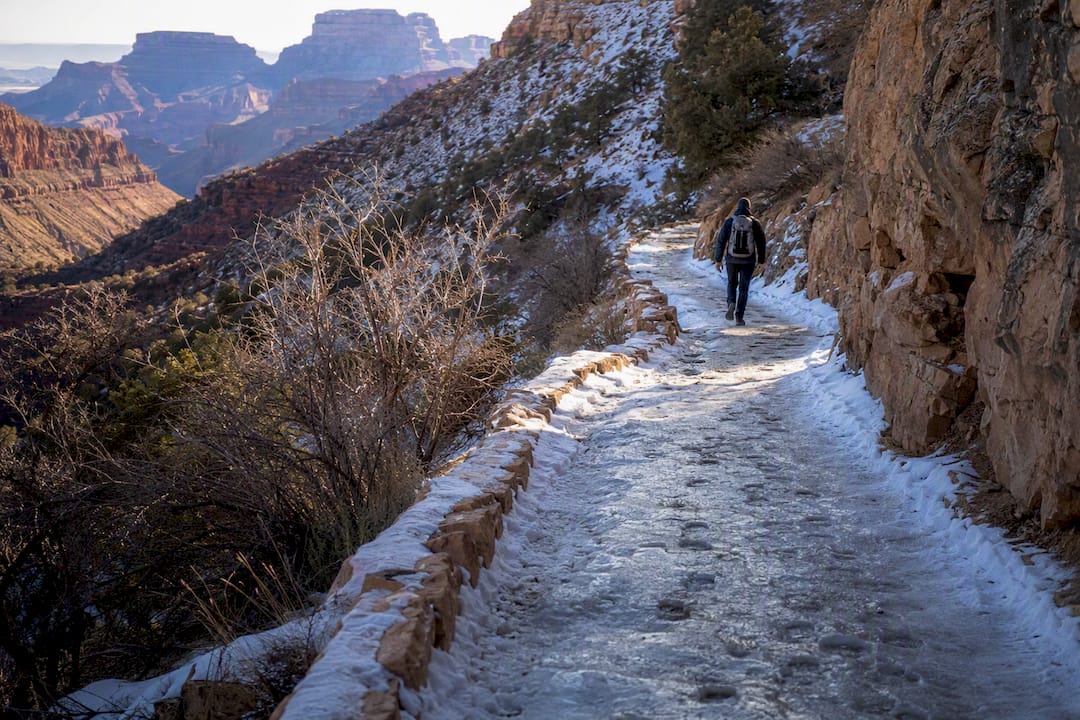
Turnaround time matters more in winter than any other season. With sunset arriving well before 6 p.m. for much of the season, hikers who push toward a summit or a farther viewpoint risk finishing in the dark, cold, and disoriented. Set a hard turnaround time before you start, and honor it regardless of how good conditions feel in the moment.
What Wildlife Might You Encounter In Winter?
Wildlife activity drops noticeably in winter compared to summer, but it doesn't disappear. Elk and mule deer remain active at the South Rim year-round, and cold weather actually pushes some animals toward the village area, where nearby ornamental plants and food scraps draw attention despite park guidance against feeding.
California condors, one of the canyon's signature sightings, are present sporadically through winter, though sightings cluster less predictably than in warmer months. Ravens stay highly visible everywhere, especially around parking areas and lodges, and they're bold enough to open unattended bags or coolers if given the chance.
Elk encounters deserve real caution. Bull elk are less aggressive outside the fall rut, but a startled or cornered elk near a trail or parking lot can still charge. Keep at least 25 yards of distance, never approach for a photo, and give any elk with calves nearby extra room.
Smaller mammals like coyotes and bobcats remain active but far less visible, mostly moving at dawn and dusk. The real precaution in winter isn't a specific animal. It's storing food securely in your vehicle, never leaving trash accessible at a viewpoint, and giving every animal you spot plenty of space to move without feeling cornered by curious visitors with cameras.
What Photography Gear Works Best In Winter Light And Snow?
Winter light at the Grand Canyon is genuinely different from summer's flat midday glare, and your gear list should reflect that. A camera capable of manual exposure control matters more here than in any other season, since snow reflects light unpredictably and can fool automatic metering into underexposing your shots.
Bring a polarizing filter to cut glare off snow-covered rock and manage the contrast between bright snow and shadowed canyon walls. A sturdy tripod earns its weight for the low-light windows around sunrise and sunset, when shutter speeds slow and hand-holding produces blur. Cold drains batteries faster than usual, so carry at least one spare and keep it in an inner pocket close to your body heat.
Compositionally, shoot for contrast: dark rock against fresh snow, warm light against cool shadow. The low winter sun angle stretches shadows across canyon terraces in a way summer's overhead sun never does, and that extra depth is worth arriving early to catch. Shoot the golden hour twice a day if your schedule allows it, since both sunrise and sunset run through that same rich color range in winter.
For anyone building out a kit specifically for these conditions, the Grand Canyon photography guide walks through lens choices and composition strategy suited to snow and low light.
Are Food And Water Available At The Canyon In Winter?
Concessions run on a reduced schedule in winter, and it catches some visitors off guard. Several restaurants and snack bars near the South Rim scale back hours or close entirely during the slowest weeks of January and February, while flagship options like the dining room at El Tovar generally stay open year-round.
Water availability shrinks too. Some seasonal water stations along rim trails and at trailheads shut off completely once temperatures drop low enough to risk pipes freezing, particularly stations serving the more remote overlooks. That means you can't count on refilling a bottle at every stop the way you might in summer.
Carry more water than you think you'll need, and don't assume a hike will pass a working fountain. A thermos of something hot doubles as both hydration and a small comfort against the cold, and it's worth the extra weight on any hike longer than an hour. Pack calorie-dense snacks as well. Cold weather burns more energy than most hikers expect, and running low on fuel accelerates both fatigue and the onset of hypothermia symptoms.
If you're staying at a lodge or driving in from Tusayan, stock up before you head to the rim. Grocery options thin out the closer you get to the park, and winter hours at nearby stores tend to run shorter than you'd expect from a tourist gateway town.
Why A Winter Visit At The Rim Stays With You
There's a particular quiet at the rim in January that summer never offers: crisp air, snow catching the low sun, and no crowd noise competing with the view. It's the kind of stillness that makes the canyon feel personal rather than crowded. Get the planning right, layers, traction, a checked road report, and winter turns from a risk into the most memorable way to see this place.
Book A Private Winter Tour Instead Of Managing The Logistics Yourself
Planning a safe winter visit means tracking road closures, trail ice, shifting daylight, and gear needs all at once, and that's before you've picked a viewpoint. Grandcanyonjourneys handles all of it with private, door-to-door pickup from Sedona in a heated luxury vehicle, so you're never the one calling the roads hotline at 6 a.m. wondering if Hermit Road is open.
Every guide is Wilderness First Responder certified, and itineraries get timed around winter's short daylight and best light windows rather than a fixed departure time that ignores conditions. That flexibility matters most in a season where storms and road status can change your plans on short notice.
If you want the rim experience without the self-managed risk, the private Grand Canyon day tour from Sedona includes park entry, a sit-down lunch at El Tovar, and a guide who already knows which viewpoints are clear that day. Reach out to check winter availability and lock in dates before the holiday window fills.
Where To Check Conditions Before You Go
Confirm conditions the morning of travel, not the night before, since winter weather at the Grand Canyon shifts fast.
- NPS winter visits page for current road and facility status.
- Park webcams and road conditions plus the roads hotline at 928-638-7496.
- Recreation for campground and permit reservations.
- Arizona's 511 system for statewide highway conditions on your drive in.
Save the roads hotline number in your phone before you leave, and check webcams the morning you travel rather than relying on a forecast from days earlier.
Frequently Asked Questions About Winter At Grand Canyon
Is the Grand Canyon worth visiting in winter? Yes, especially for photographers and travelers who want fewer crowds. The tradeoff is cold temperatures, shorter daylight, and the need for real winter gear and planning.
Does it snow at the Grand Canyon in winter? Yes. The South Rim averages about 58 inches of snow per season, while the North Rim gets far more, though South Rim snow often melts by afternoon on sunny days.
Is the North Rim open in winter? No. It typically closes to vehicle traffic from mid-October through mid-May, while the South Rim stays open year-round.
What should I pack for a winter hike at the Grand Canyon? Over-the-shoe traction devices, trekking poles, layered clothing, a headlamp, extra warm liquids, and a first-aid kit are the core essentials.
Is Grand Canyon weather in March still cold? March trends milder than deep winter but can still bring snow and icy trail sections at higher elevations, so treat it with the same caution as December through February.
Sources
- Winter hiking - Grand Canyon National Park (U.S. National Park Service)
- Weather, conditions and webcams - Grand Canyon National Park (U.S. National Park Service)
- Recreation
- CPE winter guide to Grand Canyon - Grand Canyon Trust