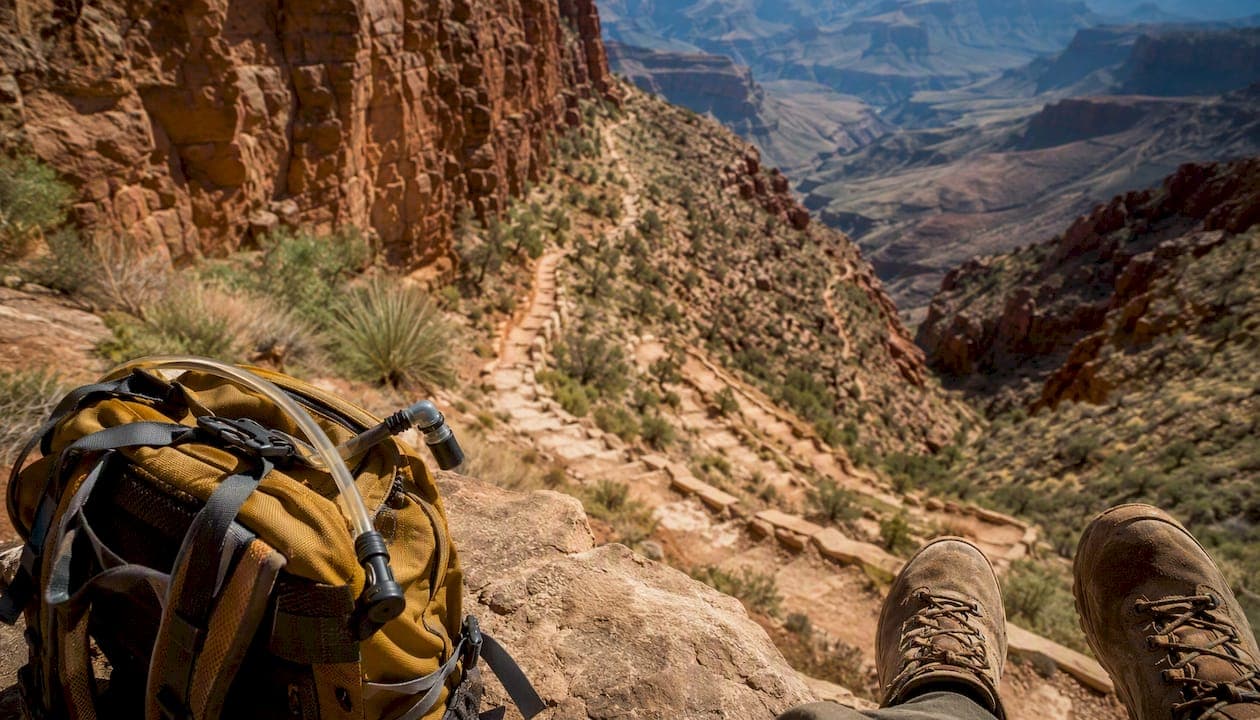
Yes — a Bright Angel day hike is realistic for a moderately fit hiker, but only if you choose the right turnaround point. The trail descends from the South Rim at Grand Canyon Village and drops steeply into the canyon, which means the return climb is where most hikers underestimate the effort. According to the National Park Service, plan for at least twice as long to climb out as it took to descend. That single rule shapes every decision below.
The four standard day-hike turnaround points, with one-way distances and approximate elevation change from the rim:
- Mile-and-a-Half Resthouse: 1.5 miles one-way, ~1,100 ft descent. Best for beginners or anyone testing canyon hiking for the first time.
- Three-Mile Resthouse: 3.0 miles one-way, ~2,100 ft descent. The sweet spot for moderately fit hikers with a full morning.
- Havasupai Gardens: 4.5 miles one-way, ~3,050 ft descent. Ambitious day hike for experienced, well-conditioned hikers starting at dawn.
- Plateau Point: 6.1 miles one-way from the rim (1.6 miles beyond Havasupai Gardens), a descent suitable only for fit, experienced hikers and recommended only in cooler months.
These figures come from the NPS Bright Angel Trail PDF, which is the most precise source for planning distances and elevation.
Key Takeaways
A successful Bright Angel day hike comes down to one principle: choose a turnaround point that matches your fitness and the season, start early, and carry more water than you think you need.
| Point | Details |
|---|---|
| Choose the right turnaround | Mile-and-a-Half suits beginners; Three-Mile fits moderate hikers; Havasupai Gardens and Plateau Point require experience and cool weather. |
| Start before the heat builds | In summer, begin at or before sunrise and reach your turnaround by 9:00 AM to climb out before peak heat. |
| Carry adequate water | Bring at least 1 liter per hour of hiking in summer; treat resthouse stations as backup, not your primary supply. |
| Plan for double the ascent time | The climb out takes at least twice as long as the descent — set a hard turnaround time, not just a destination. |
| Grandcanyonjourneys guided hikes | Private, WFR-certified guided hikes on Bright Angel with door-to-door transport from Sedona for travelers who want expert oversight. |
Table of Contents
- What is the Bright Angel Trail really like to hike?
- How far should you go on a Bright Angel day hike?
- Getting to the trailhead: parking, shuttles, and park entry
- When should you start and how long will each turnaround take?
- Where can you find water and toilets on the trail?
- How do you stay safe on a Bright Angel day hike?
- What gear do you need for a Bright Angel hike?
- Do you need a permit for a Bright Angel day hike?
- When should you hire a guide for a Bright Angel hike?
- What it actually feels like to hike Bright Angel as a day trip
- What the conventional wisdom on Bright Angel gets wrong
- Grandcanyonjourneys: private guided hikes below the rim
- Official resources to check before you go
- Sources
What is the Bright Angel Trail really like to hike?
The Bright Angel Trail is the Grand Canyon's most-traveled corridor route, running from the South Rim down to the Colorado River. It is well-maintained and wide enough for mule traffic, with a surface that ranges from packed dirt to rocky switchbacks. The upper four miles carry the bulk of the elevation change through a series of tight switchbacks — this is where the trail earns its reputation on the way back up.
Key characteristics at a glance:
- Total length (one-way to river): Approximately 9.5 miles
- Total elevation change (rim to river): Significant elevation change over the distance
- Resthouses: Mile-and-a-Half and Three-Mile Resthouses have toilets and seasonal water; Havasupai Gardens has year-round water, toilets, and a ranger station
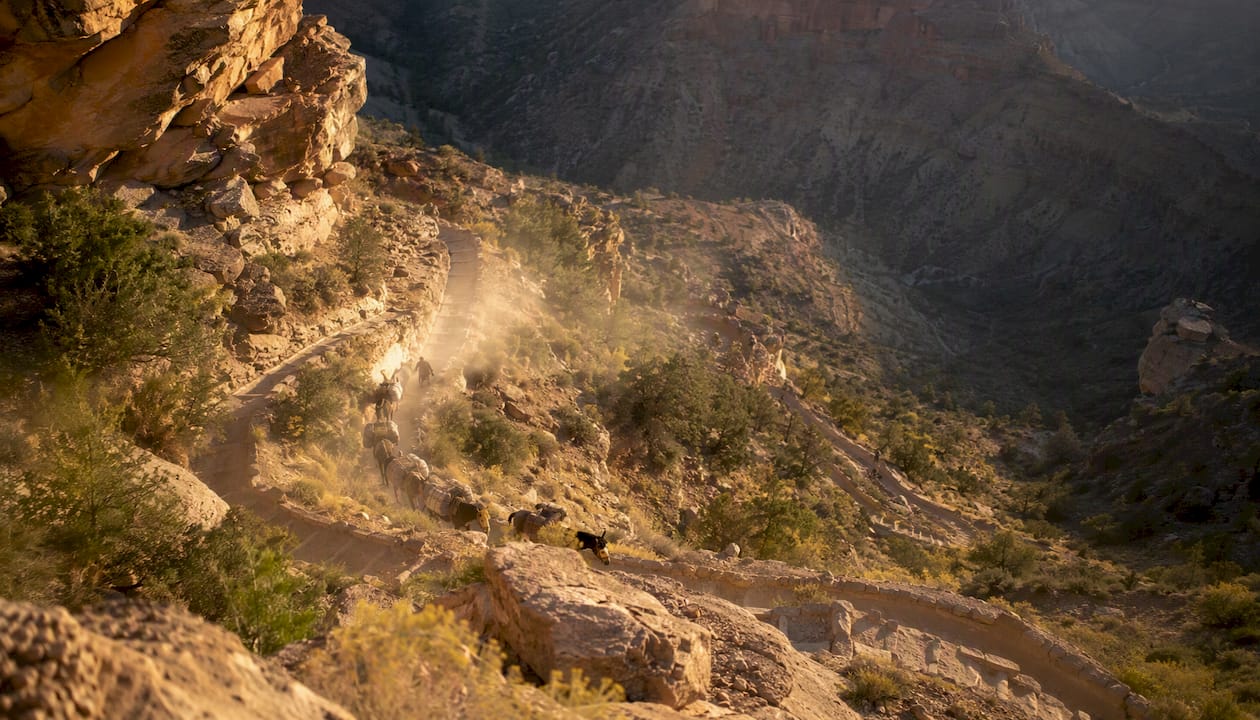
- Mule traffic: Mules have the right of way — step to the canyon wall side of the trail and stand quietly until the entire pack passes
- Crowds: Expect heavy foot traffic near the trailhead, especially on weekends; it thins noticeably below Three-Mile Resthouse
The trail's "corridor" designation means it receives regular maintenance and ranger patrols, which makes it the most forgiving option for first-time canyon hikers. That said, forgiving is relative. The canyon's scale and heat create conditions that catch underprepared hikers off guard every season.
How far should you go on a Bright Angel day hike?
The table below covers the four main turnaround options for a day hike on the Bright Angel Trail, using official NPS trail distances.
| Destination | One-way distance | Round-trip distance | Elevation change (one-way) | Typical round-trip time | Water/Toilets |
|---|---|---|---|---|---|
| Mile-and-a-Half Resthouse | 1.5 mi | 3.0 mi | ~1,100 ft descent | 2–3 hours | Seasonal water; toilets |
| Three-Mile Resthouse | 3.0 mi | 6.1 miles | ~2,100 ft descent | 4–6 hours | Seasonal water; toilets |
| Havasupai Gardens | 4.5 mi | 9.5 miles | ~3,050 ft descent | 6–9 hours | Year-round water; toilets |
| Plateau Point | 6.1 mi | 12.2 mi | ~3,050 ft descent | 8–12 hours | No water at Plateau Point |
Who should stop where:
- Mile-and-a-Half Resthouse suits first-time canyon hikers, families with children, or anyone hiking in warm weather who wants a taste of the inner canyon without overcommitting.
- Three-Mile Resthouse is the most popular full-morning destination for moderately fit hikers. It gives a genuine canyon experience and leaves enough energy for a safe climb out.
- Havasupai Gardens is worth targeting if you have strong aerobic fitness, start before sunrise, and are hiking in spring or fall. The cottonwood grove at the gardens is one of the trail's most striking spots.
- Plateau Point should only be attempted by experienced hikers in October through April. The NPS advises consulting a ranger before planning any destination at or beyond Havasupai Gardens, especially in summer.
Note: hiking to the Colorado River and back in a single day is not recommended by the NPS for most hikers. Ranger consultation is strongly advised before attempting it.
Getting to the trailhead: parking, shuttles, and park entry
The Bright Angel Trailhead sits at the western end of Grand Canyon Village, adjacent to Bright Angel Lodge on the South Rim. Parking directly at the trailhead is extremely limited and fills before 7:00 AM on busy days.
Practical logistics:
- Parking: Use the large parking areas near the Backcountry Information Center (Lot D) or the Visitor Center Plaza. Both are within easy walking distance of the trailhead via the Rim Trail.
- Park shuttles: The Village Route (Blue Line) stops near Bright Angel Lodge. The NPS shuttle system runs frequently from the Visitor Center and is the most reliable way to reach the trailhead without fighting for parking.
- Park entrance fee: Grand Canyon National Park charges an entrance fee; check current rates at the NPS website before arrival. An America the Beautiful annual pass covers entry.
- Day hiking: No permit required. You can walk down Bright Angel Trail any day without advance paperwork.
- Overnight camping below the rim: A backcountry permit is required. These are quota-managed and must be applied for in advance through the NPS Backcountry Information Center or via Recreation.
Grand Canyon Village has restrooms, water fill stations, and food options near the trailhead. Stock up before you descend.
When should you start and how long will each turnaround take?
Timing is the single biggest variable in whether a Bright Angel day hike goes smoothly or becomes an emergency. The canyon floor can reach temperatures 20°F or more above the rim, and the NPS advises avoiding strenuous activity between 10:00 AM and 4:00 PM from May through September.
Season-sensitive start times:
- May through September (summer heat season): Start at or before sunrise, ideally 5:00–6:00 AM. Be at your turnaround point no later than 9:00 AM to begin the climb before peak heat.
- October through April (cooler season): A 7:00–8:00 AM start works for most turnarounds. Watch for ice on the upper switchbacks from November through March — microspikes or traction devices are strongly recommended.
- Check the National Weather Service forecast for Grand Canyon Village the morning of your hike. Afternoon thunderstorms are common in July and August.
Sample itineraries by fitness level:
- Short/easy (Mile-and-a-Half Resthouse): Start at 7:00 AM. Reach the resthouse by 8:15–8:30 AM. Rest 20–30 minutes. Back at the rim by 10:00–10:30 AM. Total time: 2.5–3 hours.
- Moderate (Three-Mile Resthouse): Start at 6:00 AM in summer, 7:00 AM in cooler months. Reach Three-Mile by 8:00–9:00 AM. Rest and eat. Begin climb by 9:00 AM at the latest in summer. Back at the rim by 12:00–1:00 PM. Total time: 4–6 hours.
- Ambitious (Havasupai Gardens or Plateau Point): Start at 5:00–5:30 AM. Reach Havasupai Gardens by 8:00–9:00 AM. If continuing to Plateau Point, add 1.5–2 hours. Begin the return climb by 10:00 AM at the absolute latest. Back at the rim by 2:00–4:00 PM. Total time: 8–12 hours.
Pro Tip: Set a hard turnaround time before you leave the trailhead — not a turnaround destination. If you haven't reached your goal by that time, turn around anyway. The canyon will be there on your next trip.
Where can you find water and toilets on the trail?
Water availability on Bright Angel is better than on most Grand Canyon trails, but it is not guaranteed year-round at every station. Always verify before you go.
Water and toilet locations:
- Mile-and-a-Half Resthouse: Seasonal water (typically May–September); toilets year-round
- Three-Mile Resthouse: Seasonal water (typically May–September); toilets year-round
- Havasupai Gardens: Year-round water and toilets; ranger station on-site
How to verify water status: Check the NPS Bright Angel Trail page for current water-station status updates, or call the Backcountry Information Center at (928) 638-7875 the morning of your hike. Water line breaks happen without warning, especially in hot months.
Water quantity guidance: carry a minimum of 1 liter per hour of hiking in summer, and at least half a liter per hour in cooler months. A 3-mile round trip in July can easily require 2–3 liters per person. Treat resthouse water as a supplement, not your primary supply. Carry enough to complete your hike even if every station is dry.
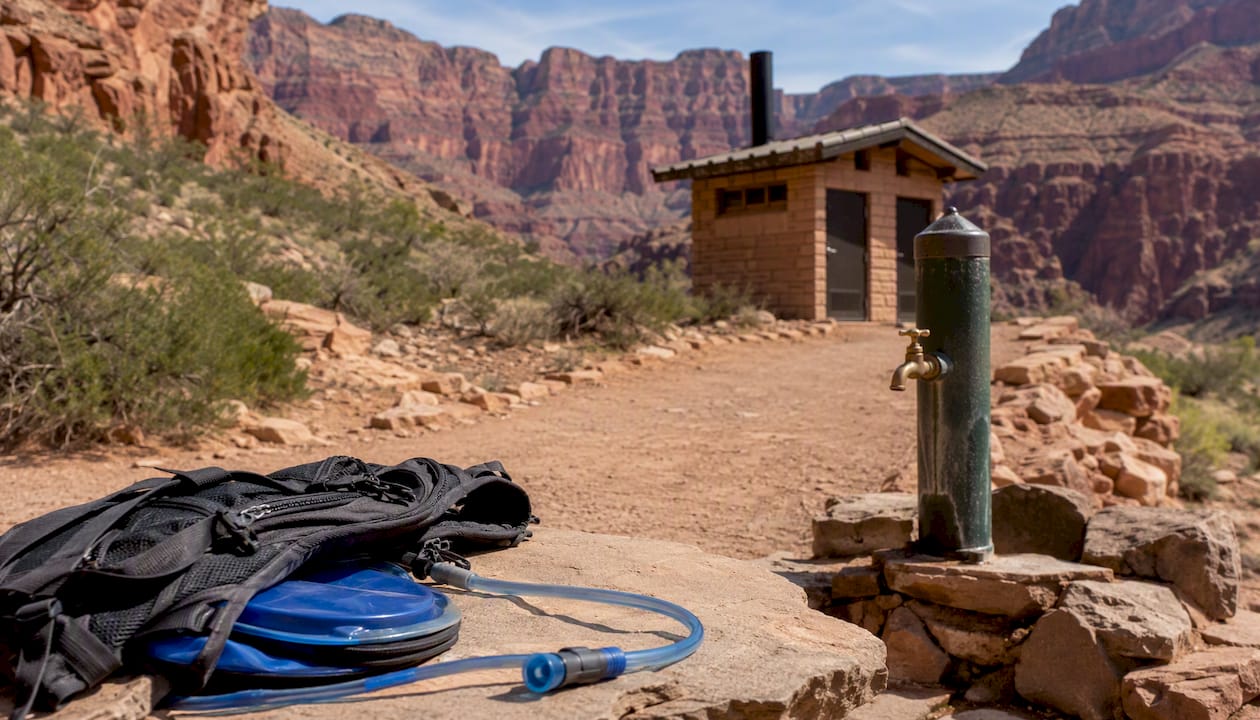
Pro Tip: A soft-sided collapsible water bottle lets you carry extra capacity without the bulk. Pair it with a hydration bladder for hands-free drinking on the switchbacks.
How do you stay safe on a Bright Angel day hike?
Heat illness is the leading cause of emergency rescues on the Bright Angel Trail. The NPS runs a "Hike Smart" campaign specifically because the trail's easy descent lures hikers deeper than their fitness or water supply can support.
The four safety priorities:
- Heat management: Avoid hiking between 10:00 AM and 4:00 PM in summer. Seek shade at resthouses. Wet your hat and neck at water stations.
- Pacing and turnaround discipline: The climb out takes at least twice as long as the descent. If you feel tired going down, you are not ready to go further.
- Water management: Drink before you feel thirsty. Thirst is a late signal. Eat salty snacks to retain fluids.
- Mule etiquette: When you hear or see mules approaching, step immediately to the canyon wall side of the trail. Stand still and stay quiet until the entire pack has passed. Never approach or feed mules.
Symptoms of heat illness to watch for: heavy sweating followed by sudden cessation of sweating, nausea, confusion, rapid heartbeat, or skin that feels hot and dry. If any of these appear, stop hiking immediately, move to shade, apply cool water to skin, and send someone for a ranger.
Emergency resources: Emergency phones are located at the Mile-and-a-Half Resthouse and Three-Mile Resthouse. Rangers patrol the trail regularly, particularly in summer. For serious emergencies, call 911 — Grand Canyon dispatch is staffed 24 hours.
Check trail closures before departure; temporary closures due to rockfall, flooding, or maintenance do occur.
Pro Tip: On the climb out, adopt a slow, steady pace you can hold for 30 minutes without stopping rather than pushing hard and resting frequently. Short, consistent effort in the shade beats sprinting between rest stops.
What gear do you need for a Bright Angel hike?
The gear list for this trail is short but non-negotiable. Every item below has a direct safety function.
Core gear checklist:
- Footwear: Sturdy trail runners or hiking boots with ankle support and grippy soles. No sandals, flip-flops, or casual sneakers.
- Water: Minimum 2–3 liters capacity per person; more in summer. A hydration bladder plus a backup bottle is the most practical setup.
- Sun protection: Sunscreen (SPF 30+), sunglasses, and a wide-brim hat or sun hat. The canyon walls reflect heat and UV.
- Layered clothing: Lightweight moisture-wicking base layer plus a wind layer for the rim. Temperature drops significantly as you ascend back to 6,800 feet.
- Salty snacks and food: Trail mix, crackers, jerky, or energy bars. Electrolyte packets or sports drink powder help replace sodium lost through sweat.
- Trekking poles: Optional but genuinely useful on the descent and especially on the switchback climb out. Reduces knee strain significantly.
- Headlamp: Required for early starts or if you're running behind schedule. Bring spare batteries.
- Map or downloaded trail app: Cell service is unreliable below the rim. Download the NPS Grand Canyon app or a trail map offline before you leave.
- Personal first-aid kit: Blister treatment, moleskin, ibuprofen, and an emergency whistle at minimum.
Fitness preparation: The Bright Angel Trail's upper section is a sustained climb. If you're targeting Three-Mile Resthouse or beyond, train with weighted stair climbs or hill repeats for at least three to four weeks beforehand. A solid aerobic base — think 30–45 minutes of continuous cardio without stopping — is the minimum for the moderate turnarounds.
Altitude note: The South Rim sits at approximately 6,800 feet. If you're arriving from sea level, spend at least one night at the rim before hiking. Altitude reduces aerobic capacity and accelerates dehydration, both of which compound the canyon's heat challenge. See the Grand Canyon hiking guide for a more detailed packing breakdown.
Do you need a permit for a Bright Angel day hike?
Day hiking on the Bright Angel Trail requires no permit. You can show up, pay the park entrance fee, and start hiking the same morning.
Overnight camping below the rim is a different matter. Any stay at Bright Angel Campground, Havasupai Gardens Campground, or any other below-rim site requires a backcountry permit from the NPS. These permits are quota-managed and in high demand.
Key permit rules for overnight trips:
- Applications open four months before the intended start date
- Permits are issued by the Backcountry Information Center; some transactions are managed through Recreation
- Camping is allowed only at designated sites — no dispersed camping below the rim
- Campfires are prohibited below the rim
If your day-hike goal is Plateau Point or the Colorado River, consult a ranger at the Backcountry Information Center before you go. These destinations push the limits of a single day and rangers can give you a current, honest assessment of conditions and your plan.
When should you hire a guide for a Bright Angel hike?
A guided hike makes sense when any of these apply: you have limited canyon experience, you're hiking with seniors or children, you want logistics handled without stress, or you simply want someone qualified to manage the unexpected.
What a professional operator provides goes well beyond a friendly face on the trail. Wilderness First Responder (WFR)-certified guides carry emergency equipment, know the canyon's heat patterns by season, set group pacing that prevents the most common mistakes, and can make real-time decisions about turnaround points based on conditions that morning. Private transport, permit handling, and pre-hike trail-status checks are typically included.
Who benefits most from a guided option:
- Travelers visiting the Grand Canyon for the first time who want to go below the rim safely
- Small private groups (couples, families) who prefer a curated, unhurried experience over a crowded group tour
- Hikers with health considerations who want WFR-certified oversight throughout
- Anyone who wants to reach Havasupai Gardens or Plateau Point without carrying the full logistical burden themselves
Book a private guided hike below the rim directly through Grandcanyonjourneys.
What it actually feels like to hike Bright Angel as a day trip
The descent is deceptively pleasant. The first mile feels like a walk in a park that happens to have extraordinary walls — the trail is wide, the views open up fast, and the temperature drops noticeably as you lose elevation. By the time you reach Three-Mile Resthouse, you've passed through two distinct rock layers and the rim feels surprisingly far above you.
Then you turn around.
The climb out is where the canyon reveals its character. The switchbacks in the upper section are relentless, and the heat radiating off the canyon walls in the afternoon is a different animal than what you felt on the way down. Shade pockets at the resthouses feel genuinely earned. Mule trains pass with a smell and a sound that snaps you back to the trail's working history. The last half-mile to the rim, when your legs are tired and the elevation is back above 6,500 feet, is the stretch that makes every piece of planning advice in this article feel less like a suggestion and more like a rule.
The practical upshot: if you followed the timing and water guidance above, the climb out is hard but manageable. If you didn't, it's a different story entirely.
What the conventional wisdom on Bright Angel gets wrong
Most hiking content treats the Bright Angel Trail as a beginner-friendly introduction to the Grand Canyon. That framing is half-right and half-dangerous.
The trail itself is well-maintained and clearly marked. But "beginner-friendly" implies a margin for error that the canyon does not offer. Heat illness does not care how fit you are if you started at noon in July. The descent is so easy that it actively encourages poor decisions — every extra quarter-mile down feels effortless, right up until it doesn't. The NPS rescue statistics are dominated by people who were physically capable of the hike they attempted but made one bad timing or water decision.
The other thing most guides understate: Plateau Point is a genuinely serious undertaking as a day hike. The round-trip distance of 12.2 miles with nearly 4,000 feet of elevation change puts it in the same category as many backcountry routes that would never be described as a casual day trip. Attempting it in summer, or without significant canyon experience, is a decision that regularly ends with a ranger extraction.
The Bright Angel Trail rewards preparation more than fitness. A moderately fit hiker who starts at 5:30 AM with three liters of water and a hard turnaround time will have a better day than a strong athlete who starts at 9:00 AM with a single bottle and a vague plan to "see how far it goes."
Grandcanyonjourneys: private guided hikes below the rim
Bright Angel is one of the most spectacular trails in North America, and the difference between a stressful day and an extraordinary one often comes down to who's managing the details.
Grandcanyonjourneys offers fully private, below-the-rim guided hikes on the Bright Angel Trail, led by WFR-certified guides who know the canyon's conditions by season and by hour. Door-to-door pickup from Sedona, real-time trail-status checks before departure, and pacing calibrated to your group means you spend the day focused on the canyon, not the logistics. No shared buses, no group strangers, no uncertainty about whether the water stations are running.
This is the right option for travelers who want to reach Havasupai Gardens or Plateau Point with expert oversight, or for anyone who simply wants the below-rim experience without carrying the full planning burden alone. Book your private Grand Canyon day tour and let Grandcanyonjourneys handle the rest.
Official resources to check before you go
Verify conditions the morning of your hike, not the night before. These are the sources that matter:
- NPS Bright Angel Trail page: Current water-station status, trail conditions, and seasonal advisories.
- NPS Bright Angel Trail PDF: Exact mileages, elevation figures, and resthouse details for planning turnaround points.
- NPS trail distances page: Official distance reference for all Grand Canyon corridor trails.
- NPS backcountry permit page: Permit requirements and application process for overnight trips below the rim.
- Recreation: Transactional portal for backcountry permit management and reservations.
- NPS trail closures page: Current temporary closures, rockfall advisories, and seasonal restrictions.
Sources
- Bright Angel Trail (U.S. National Park Service)
- Bright Angel Trail (pdf) (NPS)
- Backcountry permits (NPS)
- Recreation
- Trail distances (NPS)