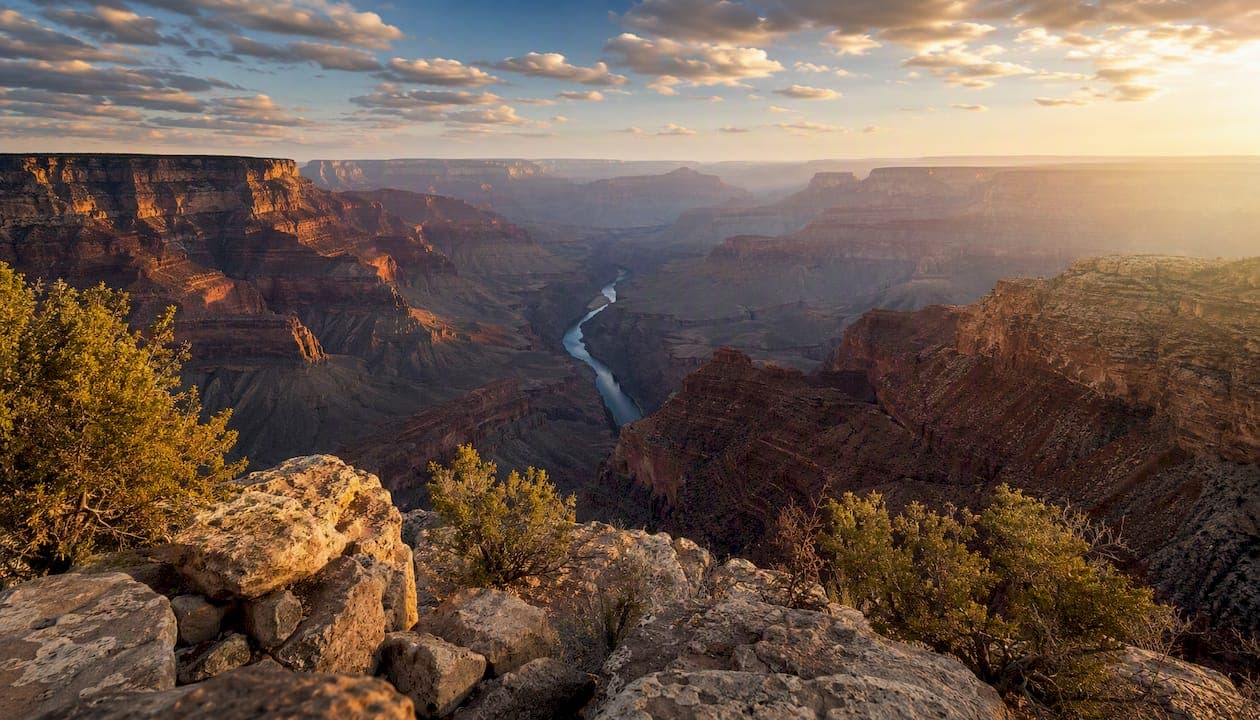
Desert View Drive is the 23-mile scenic stretch of Arizona SR-64 running east from Grand Canyon Village to the Desert View settlement and East Entrance. According to the National Park Service, the route passes six developed canyon overlooks, four picnic areas, and multiple unmarked pullouts, with parking at every developed stop. No NPS shuttle covers the full route, so you need a private vehicle or a guided transfer to experience it properly.
Here's what to know before you go:
- Distance: a scenic route of moderate length one way, roughly an hour of pure driving
- Recommended time: several hours with stops; a half-day if you want to linger at the Watchtower
- Key stops (west to east): Pipe Creek Vista, Duck on a Rock, Grandview Point, Moran Point, Lipan Point, Navajo Point, Desert View Point and Watchtower
- Services at the east end: pay-at-pump gas, market/deli, restrooms, trading post, and a seasonal campground
- Best approach: self-drive for flexibility, or book a private guided tour if you want door-to-door logistics, expert commentary, and no parking stress
Key Takeaways
Desert View Drive's 23-mile route delivers six developed overlooks, the historic Desert View Watchtower, and full visitor services at the East Entrance, making it the South Rim's most complete self-contained half-day experience.
| Point | Details |
|---|---|
| Route length and time | 23 miles one way; allow 3–5 hours with stops, or a half-day for a full visit. |
| Watchtower access | Free same-day tickets are limited; arrive by mid-morning to improve your chances. |
| Lipan Point closure | Closed June 22–December 23, 2026; use Navajo Point or Desert View Point instead. |
| Services and camping | Desert View has gas, a market/deli, and restrooms; campground reservations require Recreation.gov. |
| Grandcanyonjourneys option | Private guided tours from Sedona cover the full route with door-to-door pickup and included park logistics. |
Table of Contents
- What does Desert View Drive cover, and how long does it take?
- Where should you stop? A west-to-east viewpoint guide
- What's at Desert View, and how does the Watchtower work?
- How should you plan your visit for safety and comfort?
- Should you self-drive or book a private tour?
- What a guide notices that most visitors miss
- See Desert View Drive the way it's meant to be seen
- Sources
What does Desert View Drive cover, and how long does it take?
The drive follows SR-64 along the South Rim's eastern corridor, a section that Travel + Leisure calls one of the Grand Canyon's most underrated routes precisely because it draws fewer crowds than the main Village overlooks. Pure driving time runs about one hour. Add stops and you're looking at 3–5 hours minimum; a full half-day is realistic if you plan to climb the Watchtower and browse the Desert View market.
| Route detail | Specifics |
|---|---|
| Total distance | a scenic route of moderate length one way |
| Driving time (no stops) | approximately one hour |
| Recommended visit time | several hours |
| Road type | Paved, Arizona SR-64 |
| Western trailhead | Grand Canyon Village |
| Eastern terminus | Desert View / East Entrance |
| Developed viewpoints | 6 |
| Picnic areas | 4 |
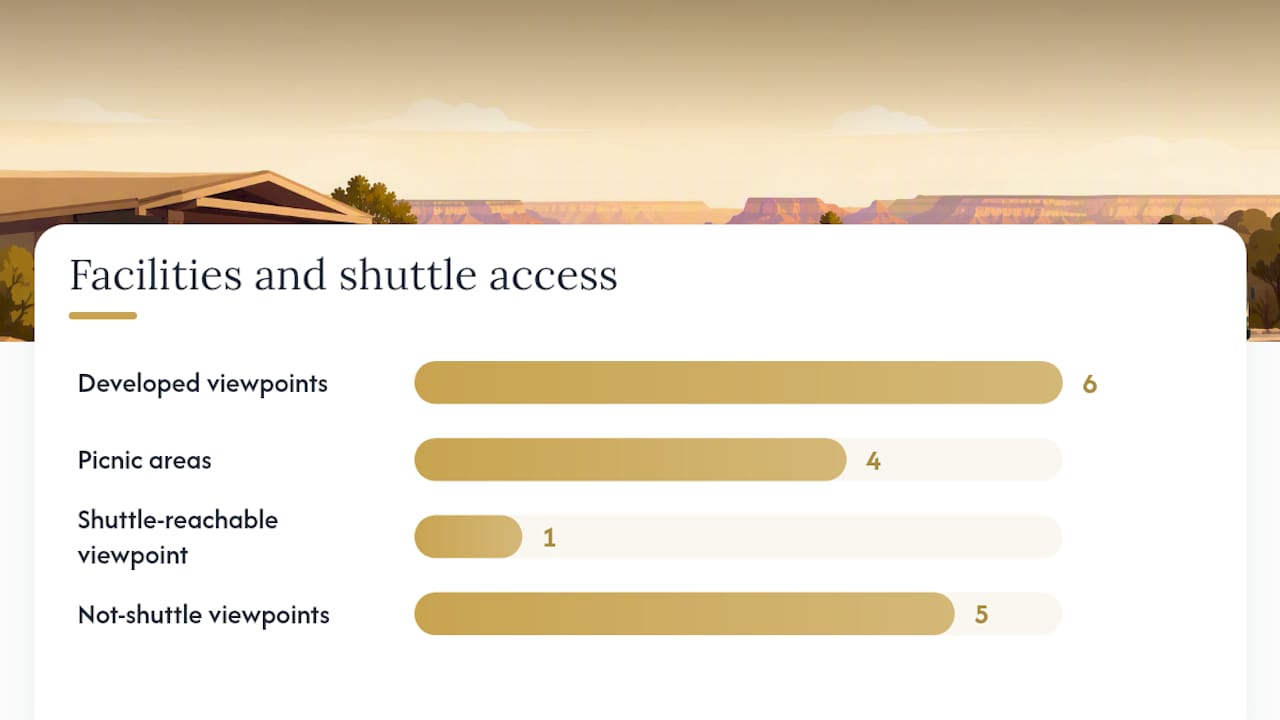
Access rules matter here. Private vehicles are allowed year-round when the road is open. The NPS Orange Route shuttle reaches only as far as Pipe Creek Vista, so the remaining five developed overlooks are inaccessible by shuttle. Commercial tours and private transfers cover the full route.
Winter brings real risk. Snow and ice can close sections temporarily, and NPS posts alerts on the park's main site when conditions deteriorate. Check NPS alerts before heading out between November and March.
Lipan Point closure note: NPS has scheduled Lipan Point for rehabilitation between June 22 and December 23, 2026. During that window, Navajo Point, Moran Point, and Desert View Point are the recommended alternatives.
Where should you stop? A west-to-east viewpoint guide
The six developed overlooks each offer something distinct. Rushing through all of them in 90 minutes is possible but misses the point. Below is each stop in order, with the details that actually help you decide where to spend your time.
Pipe Creek Vista (mile marker ~2)
The first pullout east of the Village, Pipe Creek Vista sits close enough to the main rim area that it often gets skipped. That's a mistake for photographers. The angle here looks directly into the inner gorge, and the paved path makes it one of the more accessible stops on the route. Spend 10–15 minutes; it's a strong opener before the crowds thin out.
Duck on a Rock (mile marker ~4)
Named for a boulder formation that resembles a duck perched on the rim, this stop is brief but memorable. Parking is limited, so pull in if there's space and spend five minutes. The formation itself is the draw; the canyon view is secondary.
Grandview Point (mile marker ~12)
Grandview is the widest, most sweeping panorama on the entire drive, and many photographers consider it the best composition on the South Rim. The point juts out like a peninsula, giving you canyon views in three directions simultaneously. Parking is larger than most stops, and a short paved path leads to the overlook. Budget 20–30 minutes here, more if the light is good. Sunrise turns the Redwall limestone a deep amber from this angle.
Moran Point (mile marker ~17)
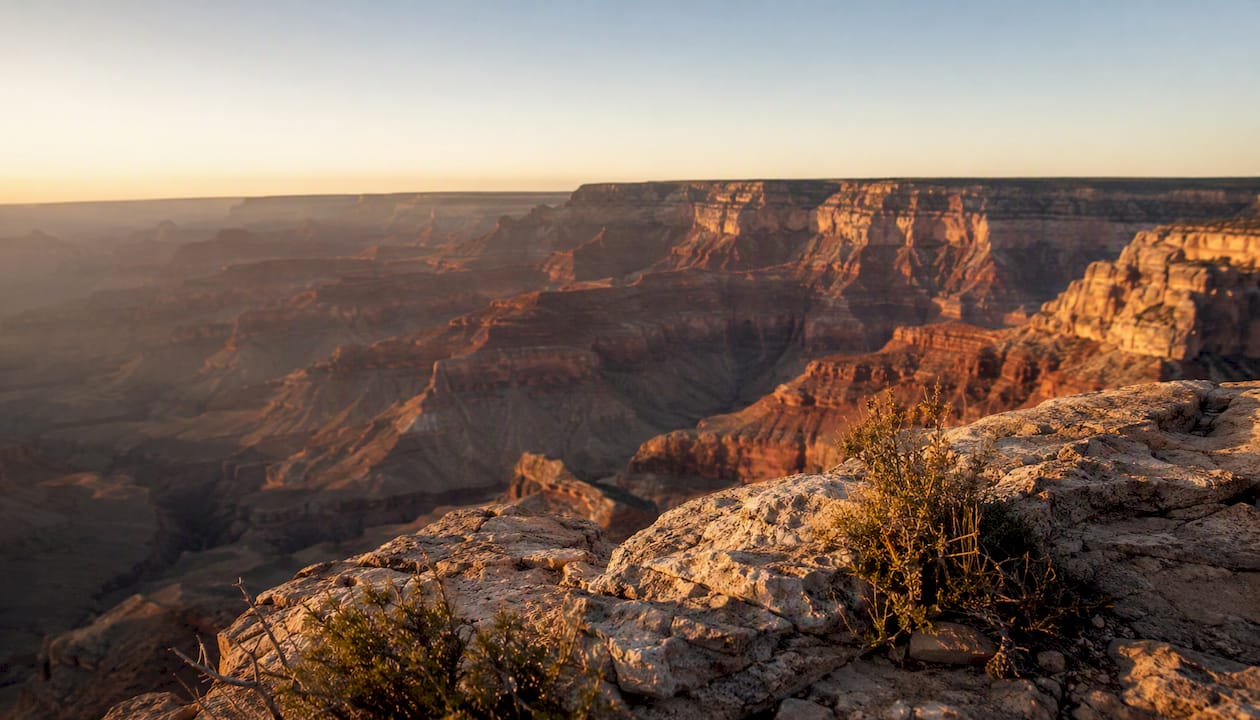
Named for painter Thomas Moran, whose 1873 canvas helped convince Congress to protect the canyon, this overlook frames a dramatic section of the Colorado River. The river is visible from the rim here, which isn't true at every stop. Paved path, accessible parking, 15–20 minutes recommended.
Lipan Point (mile marker ~19)
Arguably the best sunset spot on the entire South Rim. The wide, unobstructed western exposure catches the last light longer than any other overlook on this route. Note: Lipan Point is closed for rehabilitation during summer and fall 2026. During that period, head to Navajo Point or Desert View Point for comparable sunset views.
Navajo Point (mile marker ~20)
At roughly 7,461 feet, Navajo Point is the highest elevation overlook on Desert View Drive. The extra altitude gives a slightly different perspective on the canyon's layered geology, and on clear days you can see the Painted Desert stretching northeast. Parking is modest; 15–20 minutes is enough unless you want to photograph the full 360-degree horizon.
Desert View Point and Watchtower (mile marker ~23)
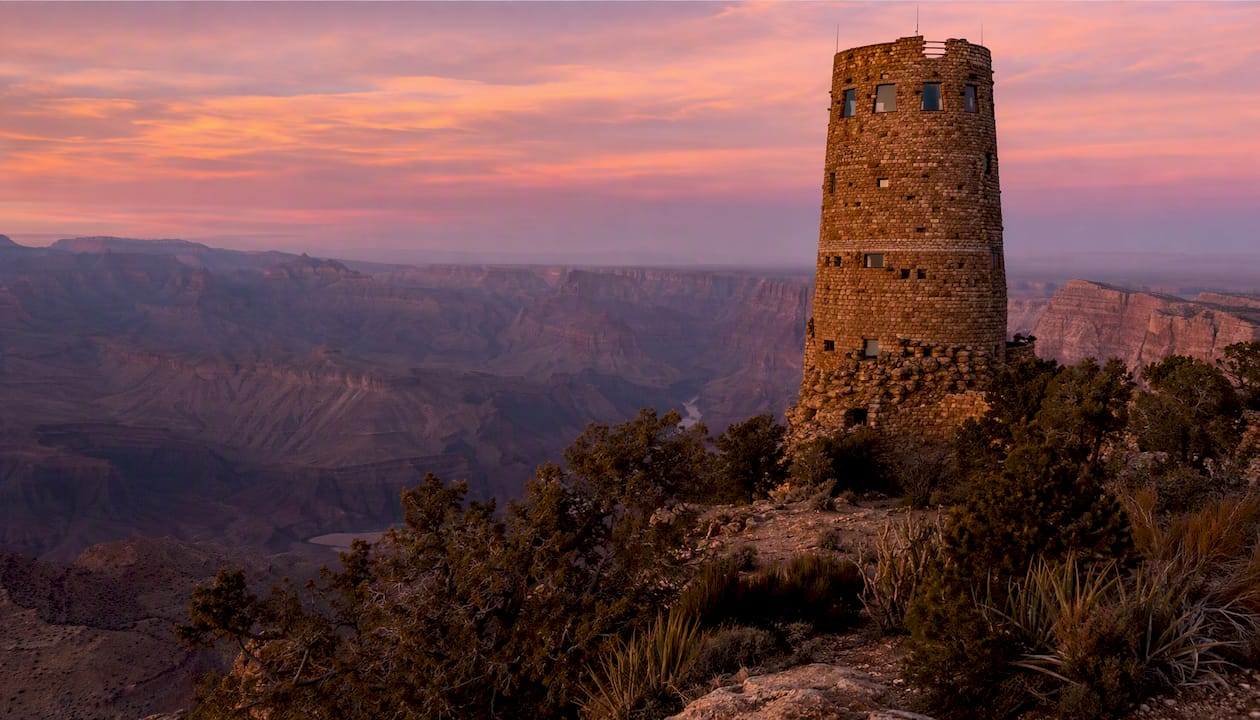
The eastern terminus and the route's signature stop. The Desert View Watchtower dominates the skyline here, and the surrounding plaza includes restrooms, the market, and the trading post. Plan at least 45 minutes, longer if you want Watchtower access (see the next section for ticketing details).
Tusayan Pueblo site sits just west of Desert View and opens seasonally. A short, flat trail leads to the 800-year-old ancestral Puebloan ruins, and interpretive signs explain the site's history. It's worth 20 minutes if the gate is open when you pass.
Unmarked pullouts appear throughout the drive, particularly between Grandview and Moran Points. These gravel shoulders offer solitude that the developed overlooks rarely provide. Pull over safely, step out, and you may have a canyon view entirely to yourself.
Pro Tip: For photography, Grandview Point at sunrise and Lipan Point (or Navajo Point during the 2026 closure) at sunset give you the two best light windows on the route. If you can only pick one, Grandview in the morning is the stronger composition.
What's at Desert View, and how does the Watchtower work?
The Desert View settlement is the park's eastern gateway, and it packs more services into a small footprint than most visitors expect.
The Desert View Watchtower
Built in 1932 and designed by architect Mary Colter, the Desert View Watchtower is a Puebloan-inspired stone tower that rises 70 feet above the rim. Colter modeled it on ancient towers found at sites like Hovenweep, and the result is one of the most photographed structures in the American Southwest.
Inside, the Kiva Room sits at the base of the tower. NPS restoration work returned the room to Mary Colter's original intent: a quiet, contemplative rest space. The room contains murals and reflectoscopes, optical devices that frame specific canyon views through small openings in the walls. It's a genuinely unusual way to see the canyon, and most visitors walk past it without stopping.
The upper floors offer panoramic views that include a bend in the Colorado River and, on clear days, the distant North Rim. On a good morning, the Painted Desert spreads out to the northeast.
Ticketing: NPS manages upper-floor access through a free, same-day ticket system with limited capacity. Tickets can run out before the tower closes, especially in summer. Arriving by mid-morning gives you the best chance of getting in.
Pro Tip: If Watchtower tickets are gone by the time you arrive, the Kiva Room at the base remains open and is genuinely worth your time. Most visitors skip it entirely, which means you'll often have it nearly to yourself.
Visitor services at Desert View
- Gas: 24-hour pay-at-pump station, the only fuel on the eastern South Rim
- Market and deli: typically open 8 AM–8 PM, though hours vary by season; check current hours before relying on it for a meal
- Restrooms: available at the plaza, year-round
- Trading post: sells souvenirs, Native American crafts, and basic supplies
- Desert View Campground: seasonal operation; Recreation are required, and booking windows apply. If you prefer a nearby alternative with full amenities, the Grand Canyon South Rim KOA Holiday is a well-documented option with detailed site specs.
- No overnight lodging: there is no hotel or lodge at Desert View; the nearest rooms are back in Grand Canyon Village or in Tusayan
How should you plan your visit for safety and comfort?
A few practical points separate a smooth Desert View Drive day from a frustrating one.
What to bring:
- At least one liter of water per person; the rim is dry and the elevation amplifies dehydration
- Sun protection: hat, sunscreen, and sunglasses are non-negotiable at 7,000+ feet
- Layered clothing; rim temperatures can swing 20–30°F between morning and afternoon, and wind is constant
- Snacks or a packed lunch if you plan to be out more than three hours
- A paper map or downloaded offline map; cell coverage is spotty to nonexistent along most of the route
Parking and timing:
Grandview Point and Desert View fill fastest, typically by 9:30–10 AM in summer. Arriving before 8 AM or after 3 PM avoids the worst of it. Smaller pullouts between Moran and Navajo Points rarely fill at all. Never block the road shoulder or park on vegetation to create your own pullout.
Fees and reservations:
The standard NPS entrance fee applies; an America the Beautiful pass covers it. Desert View Campground reservations open through Recreation.gov on a rolling window, so check availability early if you plan to camp.
Safety on the road:
- Mule deer, elk, and California condors appear along the route without warning; slow down when you see animals near the road
- Stay well back from rim edges at all overlooks; there are no guardrails at several of the smaller pullouts
- Winter driving between November and March can involve black ice and sudden snow; check NPS road conditions before departure
- Cell service is unreliable for most of the 23 miles; download offline maps and carry a written emergency contact. The park's emergency number is 911; NPS rangers patrol the route regularly
Should you self-drive or book a private tour?
Both options work. The right choice depends on what you're optimizing for.
Self-drive advantages:
- Complete flexibility on timing and how long you linger at each stop
- Lower upfront cost (entrance fee plus gas)
- Easy to add or skip stops based on conditions
- Works well for travelers who enjoy navigating independently
Self-drive drawbacks:
- Parking at Grandview and Desert View can be genuinely stressful in peak season
- No local context at each overlook unless you research in advance
- You're responsible for all logistics: fuel, food, navigation, and weather monitoring
- Cell dead zones mean you're on your own if something goes wrong
When a private guided tour makes more sense:
- You have half a day and want to maximize what you see without spending 20 minutes circling for parking
- You're traveling with seniors or guests who prefer not to drive on unfamiliar roads; the Grand Canyon for seniors guide covers accessibility considerations in detail
- You want a photographer's-eye itinerary, with stops timed to the light rather than to parking availability
- Weather or road conditions make self-driving stressful
- You're arriving from Sedona or Flagstaff and would rather not add driving fatigue to a long canyon day
A private transfer in a late-model luxury vehicle handles parking, route timing, and local knowledge in one booking. For travelers combining Desert View Drive with a broader one-day South Rim itinerary, having a guide sequence the stops around light and crowds makes a measurable difference in what you come home with.
What a guide notices that most visitors miss
Most people drive Desert View Drive west to east, which means they hit Grandview Point mid-morning with decent light and arrive at the Watchtower around noon, the worst possible time for photography and the busiest window for Watchtower tickets. Flip the sequence when you can. Start at Desert View early, pick up same-day Watchtower tickets before the crowds arrive, then work back west toward Grandview as the afternoon light builds.
The unnamed pullouts between Moran and Navajo Points are where the drive gets genuinely quiet. There's no interpretive sign, no parking lot, just a gravel shoulder and a canyon view that most visitors blow past at 35 mph. Stop at two or three of them. The solitude alone changes how the canyon feels.
For photographers: Grandview Point rewards a wide-angle lens because the peninsula geometry lets you include foreground rock in the frame without losing the canyon depth. At Navajo Point, a longer focal length isolates the river bend and compresses the layered geology into something that reads clearly in a single frame. At the Watchtower, shoot from the base looking up before you go inside; the stone texture against the sky is a stronger image than most of the interior shots.
Travelers who move slowly do better here than those who rush. The canyon doesn't reward efficiency.
See Desert View Drive the way it's meant to be seen
Grandcanyonjourneys offers fully private, door-to-door tours from Sedona that cover Desert View Drive with none of the parking stress and all of the local context. Your guide sequences stops around the light, handles park logistics and fees, and knows exactly which unnamed pullouts are worth the detour. The vehicles are late-model luxury SUVs and custom vans with panoramic windows, so the canyon is in view before you even step out.
Custom itineraries are available for couples, families, and small groups who want to combine Desert View Drive with Tusayan Pueblo, a below-the-rim hike, or a broader Northern Arizona loop. Use the Grand Canyon travel planner to check availability and build your itinerary, or browse the private South Rim day tour for a ready-made option that includes everything.
Sources
Before you go, confirm current road conditions, viewpoint closures, and campground availability through these official sources: