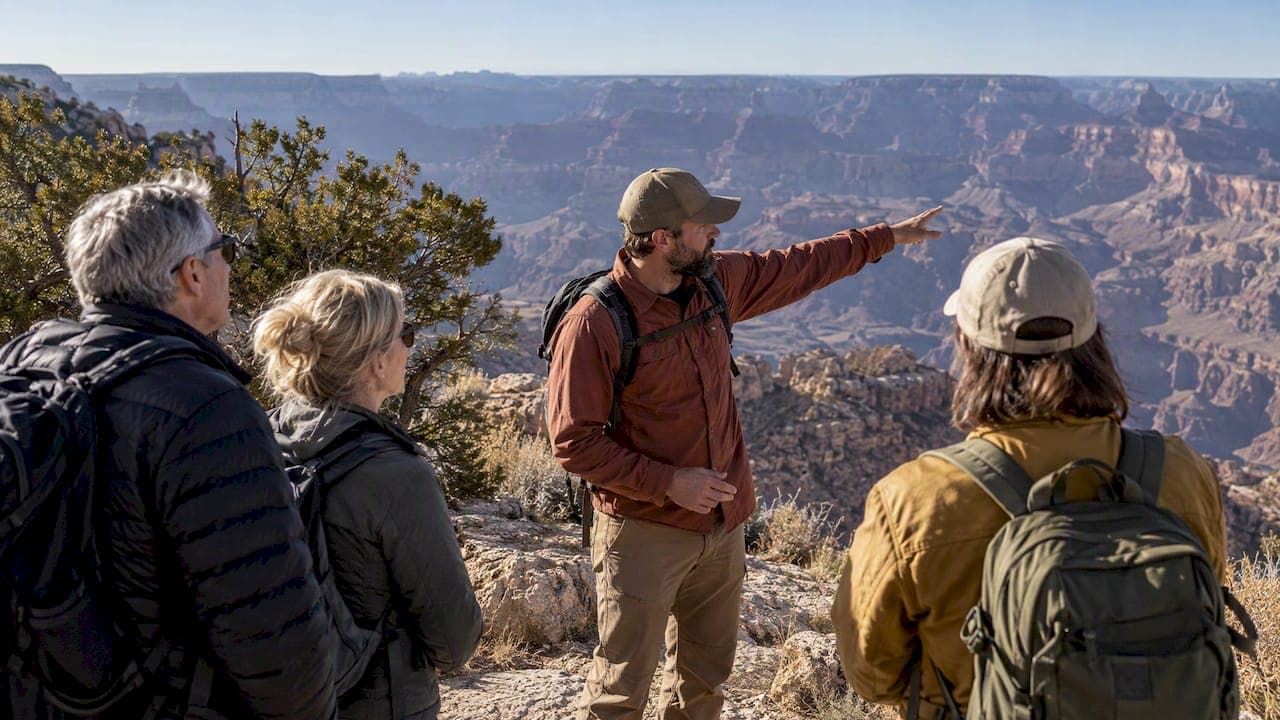
Yes, fall is one of the best seasons for a private Grand Canyon visit: cooler air, crisper light, and quieter viewpoints make golden hour and guided rim walks especially rewarding. South Rim highs slide from the 60s°F in September into the 50s°F by November, so check shuttle schedules and weather updates before you lock in pickup times.
TL;DR:
- Temperatures at the South Rim fall from the 60s°F in September to the 50s°F by November, with early snow possible at higher elevations.
- Fall photography benefits from early morning and late afternoon light, with clearer visibility and less haze after the monsoon season.
- Private tours allow flexible timing for sunset, shorter stops, and better access to quieter viewpoints, especially as days shorten.
- Shuttle routes operate through fall, but access to Hermit Road depends on shuttles or permits, and arriving before 9 a.m. helps avoid lines.
- Layered clothing, sturdy shoes, and water intake are essential for handling temperature swings and altitude, with safety tips emphasizing early hikes and rim caution.
Table of Contents
- Fall weather and seasonality at the Grand Canyon
- What fall looks like: foliage, plants, and photography tips
- Fall activities and private-tour options for discerning travelers
- Logistics that matter: shuttles, roads, and travel times in fall
- Packing, clothing, and altitude tips for a fall visit
- Safety and hiking etiquette for fall visits
- A local guide's take on touring the canyon in fall
- Plan your private fall tour with Grand Canyon Journeys
- Sources
- FAQ
Fall weather and seasonality at the Grand Canyon
Fall at the Grand Canyon is a season of transition. September still carries a hint of summer warmth, but by November, the South Rim settles into a crisper, more wintry rhythm. According to the National Park Service, South Rim daytime highs cool from the 60s°F in September to the 50s°F by November, while the inner canyon stays noticeably warmer even as rim nights regularly dip below freezing.
Fall also marks the tail end of the summer monsoon, so afternoon storms become less frequent as the season progresses. That said, early snow is a real possibility by late October and into November, particularly at the 7,000-foot South Rim elevation.
- September days tend to feel mild and clear, ideal for long rim walks.
- October brings cooling afternoons and the first real chance of overnight frost.
- November can deliver a dusting of snow on the rim even while trails near the river stay dry and warm.
Shifting weather affects more than comfort. Early snow or ice can slow shuttle operations and change the feel of late-afternoon and evening touring, so flexible timing matters more here than in peak summer.
What fall looks like: foliage, plants, and photography tips

Autumn color at the Grand Canyon is subtler than a New England hillside, but it rewards travelers who know where to look. The South Rim's pinyon-juniper woodland dominates much of the landscape, holding steady green tones through fall, while Gambel oak stands turn rust and gold in pockets along the rim trails.
Ponderosa pines growing in higher-moisture microhabitats provide some of the strongest color contrast against the canyon's red rock, especially where they cluster near drainages and shaded overlooks.
- Early morning and late afternoon light brings out the canyon's layered reds and oranges most dramatically.
- Overlooks away from the main shuttle stops tend to offer clearer sightlines and fewer people in your frame.
- Fall's drier air after the monsoon season often means sharper, haze-free visibility for photography than midsummer.
Spring blooms bring wildflowers and new growth along the rim, but fall's muted palette and longer shadows give photographers a different kind of canyon entirely, one defined by texture and light rather than color saturation.
Fall activities and private-tour options for discerning travelers
A private tour in fall means you set the pace. Sunset arrives earlier than summer, so a private guide can adjust pickup times daily rather than locking you into a fixed group schedule, and quieter viewpoints make a real difference when the goal is an uninterrupted photo or a peaceful moment at the edge.
- Request a golden-hour pickup timed to the day's actual sunset, not a generic summer schedule.
- Ask for a heated vehicle and flexible return time if you want to linger past dusk.
- Build in a stop for a short, guided rim walk rather than rushing between overlooks.
A half-day fall itinerary might pair a late-afternoon drive to the rim with a sunset viewpoint stop and a short walk along a quieter stretch of trail. A full-day version could add a scenic morning drive, a guided short hike with a local expert, and a relaxed viewpoint picnic before the afternoon light turns gold.
Pro Tip: Ask your guide which overlooks tend to empty out fastest after 4 p.m.; fall's shorter days mean the crowds thin earlier than you'd expect.
Logistics that matter: shuttles, roads, and travel times in fall
Fall logistics hinge on the park's shuttle system. From mid-September through November, the Village (Blue), Kaibab (Orange), Hikers' Express, and Hermit (Red) routes all operate, and Hermit Road itself stays closed to private vehicles from March 1 through November 30, so access there depends on the shuttle or a permitted commercial tour.
- Check the Tusayan area webcam and NPS road-status line the morning of your visit for current conditions.
- Confirm shuttle first and last departure times before planning an evening sunset stop.
- Weekend fall mornings can still bring long entrance lines, so arriving before 9 a.m. helps.
Travel times from the main gateway towns vary by route and conditions:
| Departure point | Approximate drive distance to South Rim |
|---|---|
| Sedona | About 110 miles |
| Flagstaff | Varies around 1 hour drive depending on route |
| Williams | About 60 miles |
A private operator coordinating pickup from Sedona, Flagstaff, or Williams can time departures around these distances and the shuttle schedule, which matters more in fall when daylight runs shorter. For a closer look at how the shuttle system fits into a day's plan, see this guide to Grand Canyon shuttle routes.
Packing, clothing, and altitude tips for a fall visit
Temperature swings between a sunny fall afternoon and a near-freezing evening on the rim can exceed 30 degrees in a single day. Layering is the simplest fix: a moisture-wicking base layer, an insulating mid-layer like a fleece or light puffer, and a waterproof shell for wind or unexpected flurries.
- Sturdy, broken-in walking shoes or light hikers work for most rim trails.
- Trekking poles or microspikes become useful once early snow or ice shows up on shaded trail sections.
- Gloves and a warm hat earn their space in your bag for sunrise or sunset stops.
At roughly 7,000 feet, the South Rim's elevation can leave unacclimated visitors a little short of breath on longer walks. Drink water steadily throughout the day and pace hikes conservatively, especially on your first few hours after arrival. Grand Canyon Journeys' travel planner page can help tailor packing and timing advice to your specific fall dates.
Pro Tip: Pack layers you can shed quickly. Fall mornings at the rim often start near freezing and warm up fast once the sun clears the canyon wall.

Safety and hiking etiquette for fall visits
Fall's cooler temperatures make hiking more comfortable, but the shorter days and occasional ice demand more planning, not less. The park's own Hike Smart guidance applies year round: never hike alone, check backcountry trail updates before you go, know where water sources are, and start any strenuous hike early in the day.
- Confirm the shuttle's last departure time before heading out so you are not stranded after dark.
- If shuttle service is suspended for weather, wait at a marked stop or contact your guide rather than walking the road.
- Stay well back from unfenced rim edges, especially where fall leaf litter or frost can make footing unpredictable.
Leave no trace applies at every overlook. Fall's smaller crowds make it easier to enjoy a quiet trail responsibly, but that same quiet means help can be farther away if something goes wrong.
A local guide's take on touring the canyon in fall
Fall rewards local knowledge more than any other season. Knowing which overlooks catch morning shade longest, where Gambel oak turns first, and which shuttle stops empty out by mid-afternoon makes the difference between a good visit and a memorable one.
Private tours run from Sedona, Flagstaff, Williams, and Tusayan offer this kind of flexibility: adjusting pickup times as sunset shifts earlier, swapping a crowded overlook for a quieter one, or extending a stop when the light is working. Fall's changeable weather is one more reason pre-booking with a flexible itinerary pays off. The travel planner and hiking guide pages are good next steps for working out the details.
— Chris
Plan your private fall tour with Grand Canyon Journeys
A fall visit rewards travelers who can move with the weather and the light, and that is exactly what a private tour gives you that a fixed-departure bus cannot. Private tours can be built around your schedule, not a roster of strangers, with door-to-door pickup from several gateway towns near the Grand Canyon.
- The Private Grand Canyon Day Tour suits travelers who want a flexible, full-day fall itinerary.
- The Grand Canyon Hiking Tour pairs a guided short hike with the cooler fall temperatures.
- The Grand Canyon Sunset Tour is built around fall's earlier golden hour.
If you want a golden-hour pickup time or a flexible return built around the day's actual sunset, mention it when you reserve your Grand Canyon Visitor Center IMAX Tickets for a fuller Grand Canyon experience alongside your private tour. Check availability and book your private fall Grand Canyon tour through Grand Canyon Journeys today.
FAQ
Does it snow at the Grand Canyon in fall?
Light early-season snow is possible on the South Rim by late October or November, though it is not guaranteed and usually melts quickly. The National Park Service notes rim temperatures can drop below freezing overnight well before measurable snow typically arrives.
What is the weather like at the Grand Canyon in October?
October weather trends cooler and drier than September, with South Rim highs trending toward the 50s°F by November and clear skies common after the summer monsoon fades. Mornings can feel crisp, so layers help.
Are Grand Canyon shuttles still running in the fall?
Yes, the Village (Blue), Kaibab (Orange), Hikers' Express, and Hermit (Red) shuttle routes operate through fall, and Hermit Road stays closed to private vehicles until November 30, so shuttle or commercial tour access is required there.
What should I pack for a fall Grand Canyon tour?
Pack layers: a base layer, an insulating mid-layer, and a waterproof shell to handle the swing between a mild afternoon and a near-freezing evening on the rim. Sturdy walking shoes and a hat or gloves for sunrise and sunset stops round out a practical fall packing list.
Is fall a good time to avoid crowds at the Grand Canyon?
Fall generally brings lighter crowds than summer, especially on weekdays, making quieter overlooks and rim trails easier to enjoy. Weekends can still draw steady visitor numbers, so arriving early in the day still helps.