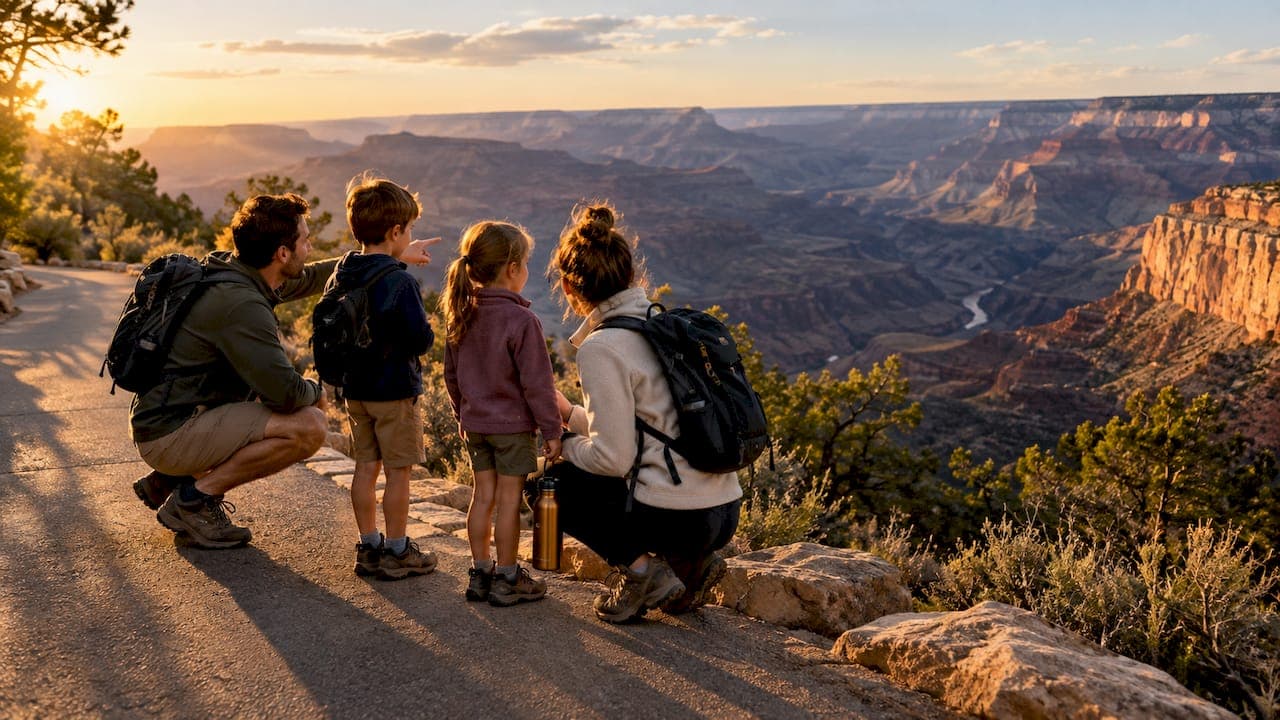
For most families, a focused 2 to 3 day South Rim itinerary hits the sweet spot: enough time for a real hike, a Junior Ranger badge, and a sunset view, without pushing tired kids past their limit. The South Rim wins as your home base thanks to easy shuttle access and the widest range of family amenities. Two hooks make it easy to plan around: the free shuttle system and a Junior Ranger program that turns sightseeing into an engaging activity for children.
TL;DR:
- Most families should plan for at least two days at the South Rim to see key viewpoints, hike a short trail, and enjoy the Junior Ranger program.
- The three-day itinerary allows for more relaxed pacing, including a longer hike like Bright Angel to the Mile and a Half Resthouse or South Kaibab to Ooh Aah Point.
- Visiting during shoulder seasons like spring or fall helps avoid extreme heat and crowded conditions, with rim temperatures around 50 to 70°F.
- Parking near the visitor center fills early in busy months, so using the free shuttle system is essential for convenience and safety.
- For families with limited time, guided tours from Grand Canyon Journeys simplify logistics and ensure activities are tailored to children’s ages and energy levels.
Table of Contents
- Sample Grand Canyon Family Itineraries: 2, 3, and 5 Days
- Costs, Shuttles, and Safety Rules Every Family Should Know
- Matching Activities to Your Kids' Ages
- Packing Checklist for Families and Stroller Accessibility Notes
- Tips for Dining With Children at the Grand Canyon
- Accommodation Options for Families Near the Grand Canyon
- Rest and Play Spots to Manage Kids' Energy
- Getting To and Around the Grand Canyon With Kids
- When a Private Guided Tour Is Worth It
- How Grand Canyon Journeys Fits Your Family's Plan
- Sources for Verifying Fees, Shuttles, and Seasonal Details
- FAQ
Sample Grand Canyon Family Itineraries: 2, 3, and 5 Days
The itinerary you pick should match the time you actually have, not the time you wish you had. Below are three tested structures. Each assumes you're staying near the South Rim, since it offers the most family infrastructure of any entry point to the park.
The 2-day itinerary (tight but complete)
Day 1: Arrive by mid-morning and head straight for the Rim Trail, a paved, stroller-friendly path connecting Mather Point to Grand Canyon Village. Walk a manageable 0.5 to 1.2 mile stretch, then break for lunch. In the afternoon, take the shuttle to the Bright Angel Trailhead and walk a short distance down and back. Turning around after 20 to 30 minutes keeps this safe and fun for almost any age. Catch sunset at Mohave Point, one stop past the more crowded Hopi Point on the Hermit Road shuttle, arriving 45 to 90 minutes early to claim a good spot.
Day 2: Start early while it's cool, pick up a Junior Ranger booklet, and let kids work through a few activities at an overlook before you drive Desert View Drive toward the Watchtower. This is a good half-day option if you're heading east afterward.
The 3-day itinerary (the one we recommend)
This is the version that gives kids room to breathe between activities, which matters more than cramming in extra viewpoints. Travel experts generally recommend focusing on two or three meaningful experiences a day rather than chasing every overlook on the map.
- Day 1: Settle in, walk an easy Rim Trail segment, and start the Junior Ranger booklet at the visitor center. Use the Village shuttle to hop between viewpoints without hunting for parking. End with an early dinner and an easy bedtime.
- Day 2: This is your active day. Older kids and teens can handle the Bright Angel Trail to the Mile and a Half Resthouse, roughly a 3 mile round trip with real elevation change. Families with younger children should try South Kaibab Trail to Ooh Aah Point instead. It's steep but short, around 1.8 miles round trip, with dramatic views that reward the climb almost immediately.
- Day 3: Keep the morning relaxed. Finish the Junior Ranger booklet and let a ranger present the badge, a genuinely proud moment for most kids. Spend the afternoon at a scenic overlook watching mule trips depart, noting that mule rides carry age, height, and weight requirements worth checking before you promise anything to an excited 7-year-old.
The 5-day itinerary (for a slower Northern Arizona trip)
Five days lets you treat the canyon as one stop on a bigger loop rather than the entire trip. Use the first three days exactly as outlined above, then expand:
- Day 4: Ride the Grand Canyon Railway from Williams, which turns transportation into an activity kids actually look forward to, or take a scenic drive along Desert View Drive with stops at Lipan Point and the Tusayan Museum.
- Day 5: Build in a full rest day, or drive to Sedona for red rock views and a change of scenery. A detailed South Rim itinerary can help you decide which day gets trimmed if weather or energy levels force a change.
Weather contingencies matter here. If a storm rolls in or a heat wave hits, swap an outdoor day for the Tusayan Museum or the visitor center's exhibits rather than pushing through in bad conditions.
Costs, Shuttles, and Safety Rules Every Family Should Know
Budgeting for a Grand Canyon trip is simpler than most destinations because the biggest fixed cost is the entrance fee. As of 2026, a private vehicle pays $35 for a 7-day pass, which covers the whole family regardless of group size inside one car. Beyond that, a typical family should plan for a daily budget in the mid-hundreds of dollars, excluding lodging, once you factor in food, park shuttle-adjacent parking fees near gateway towns, and the odd souvenir or snack.
By the numbers: $35 covers your vehicle for a full week, and the South Rim shuttle system itself is free. That combination is what makes a multi-day family trip here more affordable than most national park visits with comparable scenery.
Three shuttle routes do the heavy lifting on the South Rim: the Village (Blue) Route, the Kaibab Rim (Orange) Route, and the Hermit (Red) Route. The Hermit Road shuttle runs March through November, when that road closes to private vehicles entirely, and the Village Route arrives roughly every 9 to 15 minutes during peak season. Parking lots near the visitor center fill by mid-morning in busy months, so ride the shuttle rather than circling for a spot with cranky kids in the back seat.
Timing your trip well solves half your crowd and comfort problems before you even arrive. March through May and September through October bring rim temperatures in the 50 to 70°F range and noticeably thinner crowds than summer, when July traffic runs about 1.5 times the yearly average.
Heat is the real safety issue, not the trails themselves. Inner-canyon temperatures can top 110°F in summer even when the rim feels pleasant, a gap that catches unprepared families off guard every year. The rule of thumb: avoid hiking down and back up during peak summer heat, carry more water than feels necessary, and treat any hike below the rim as a there-and-back trip where turning around early is always the right call with kids.
Where you sleep shapes your whole trip:
- Grand Canyon Village (inside the park): the shortest walk to viewpoints and the Rim Trail, but book far ahead.
- Tusayan: just outside the south entrance, a short drive in.
- Williams: about an hour south, cheaper, and home to the Grand Canyon Railway depot.
Before you finalize dates, check the park's current conditions and closures since road work or seasonal closures can shift your plan.
Matching Activities to Your Kids' Ages
A toddler and a 12-year-old do not want the same day at the Grand Canyon, and pretending otherwise is how trips fall apart by lunchtime.
- Toddlers: stick to Rim Trail walks and stroller-friendly viewpoints; keep outings to 45 minute windows with frequent breaks.
- Preschoolers (4 to 5): Junior Ranger activities and the Desert View Watchtower work well; pick short hikes with a firm, pre-decided turnaround point.
- School-age (6 to 12): Bright Angel Trail to the Mile and a Half Resthouse is a real achievement at this age, and shuttle-hopping between overlooks keeps energy up.
- Teens: longer below-rim hikes and more active days work fine, but hydration reminders still matter more than teens will admit.
Pro Tip: With a wide age range in one group, split up for the steepest stretch. One adult takes younger kids back to the rim while another pushes on with older kids, then everyone reunites by shuttle at a set time and viewpoint.
Packing Checklist for Families and Stroller Accessibility Notes
Pack light but pack right. Bring more water than you think you need, at least a liter per person for a half-day outing, plus wide-brim hats, high-SPF sunscreen, and salty snacks to help with electrolyte balance in the dry heat. Sturdy closed-toe shoes matter even for rim-only days since gravel and sudden drop-offs line most viewpoints.
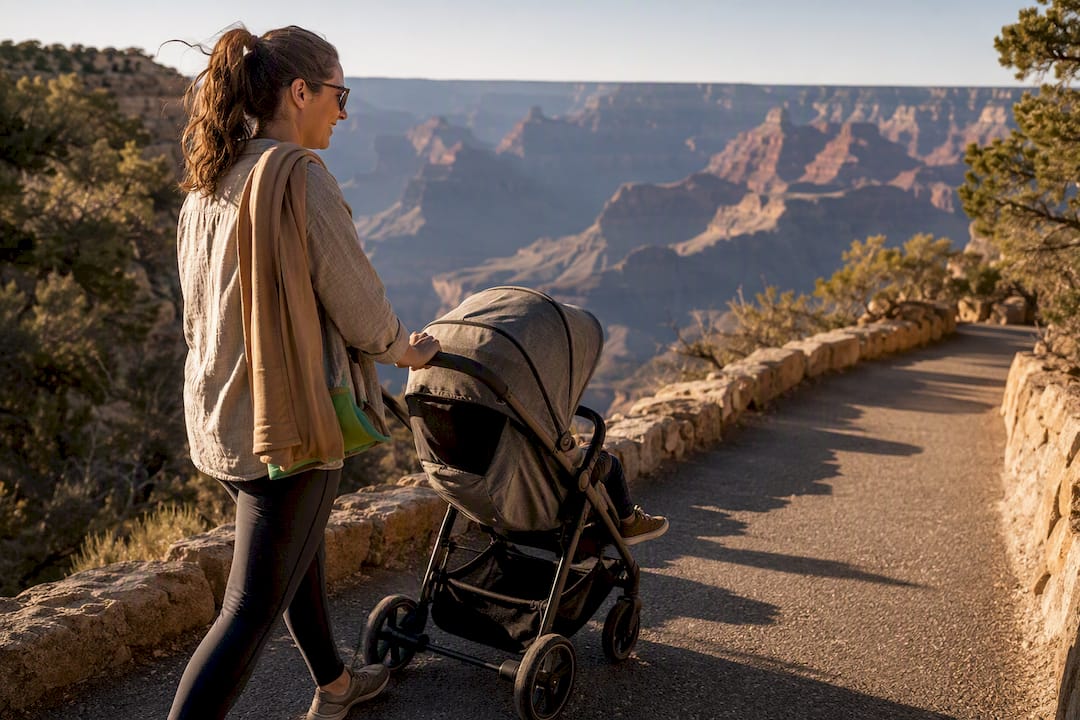
For stroller users, the Rim Trail is genuinely paved and stroller-friendly along its main stretches, particularly between Mather Point and Grand Canyon Village. Jogging strollers with larger wheels handle the terrain better than compact umbrella strollers, which can struggle on gravel side paths near some overlooks. A soft-structured carrier is worth packing as a backup for uneven sections or crowded viewpoint railings where a stroller becomes a liability rather than a help.
Other essentials: a small first-aid kit, blister pads, a paper map as backup since cell service is unreliable throughout the park, and a headlamp or flashlight if you're staying for sunset viewing and walking back after dark. Layer clothing regardless of season. Rim mornings run cool even in summer, and afternoon sun can be intense within an hour.
Pro Tip: Freeze few water bottles the night before. They stay cold for hours and double as an ice pack if a scraped knee needs one.
Tips for Dining With Children at the Grand Canyon
Meal planning around the South Rim is straightforward once you know the rhythm. Grand Canyon Village has several sit-down and cafeteria-style options that welcome families, ranging from quick-service counters good for a fast lunch to full-service dining rooms with kid menus for a slower dinner after a long day of hiking.
Picnic spots work well for lunch, especially with younger kids who need a break from sitting still in a restaurant. Many overlooks along the Rim Trail have benches or open grassy areas suited to a packed lunch, and eating with a canyon view tends to buy you an extra 20 minutes of good behavior you wouldn't get at an indoor table.
Pack a cooler if you're driving in, since grocery options near the park are limited and pricier than what you'd find in a larger town. Stopping in Williams or Flagstaff on the way in to stock up on sandwiches, fruit, and snacks saves money and gives you flexibility for spontaneous picnic lunches rather than waiting on a restaurant table with hungry kids. Bring snacks that don't require refrigeration for hiking days, since a rest stop with a granola bar is often what gets a tired 6-year-old through the last quarter mile back to the trailhead.
Accommodation Options for Families Near the Grand Canyon
Where you sleep determines how much of your trip gets eaten up by driving. Lodging inside Grand Canyon Village puts you steps from the Rim Trail and shuttle stops, which matters enormously with young kids who tire out fast. It books up months ahead for peak season, so reserve as early as your dates allow.
Tusayan, just outside the south entrance, offers hotels with pools, a genuine bonus for kids after a hot day of hiking, and a shorter drive into the park than most alternatives. Williams sits about an hour south and tends to run cheaper, with the added draw of the Grand Canyon Railway depot for families building train travel into their trip.
Families who want a wilderness feel without backcountry permits can consider developed campgrounds near the South Rim, which offer restrooms and camp stores and suit families comfortable with tent or RV camping. Camping keeps costs down considerably compared to in-park lodges, though it trades away some convenience since you're managing meals and gear yourself rather than walking to a dining room.
Whichever base you pick, book as far ahead as your schedule allows. Rooms and campsites near the park fill quickly during the March through May and September through October shoulder seasons that also happen to offer the best weather for family hiking.
Rest and Play Spots to Manage Kids' Energy
Kids hit a wall fast in dry heat at elevation, and the smartest itineraries build in recovery time before that wall gets hit, not after. Plan a midday break of an hour or two back at your lodging or campsite, especially on hiking days, letting younger kids nap and older kids decompress with a snack and shade.
Grand Canyon Village has grassy areas and benches near the visitor center where kids can run around without any risk near canyon edges, a useful release valve after a morning of careful trail walking. The Tusayan Museum's outdoor spaces work similarly for a quieter break with some shade and open air.
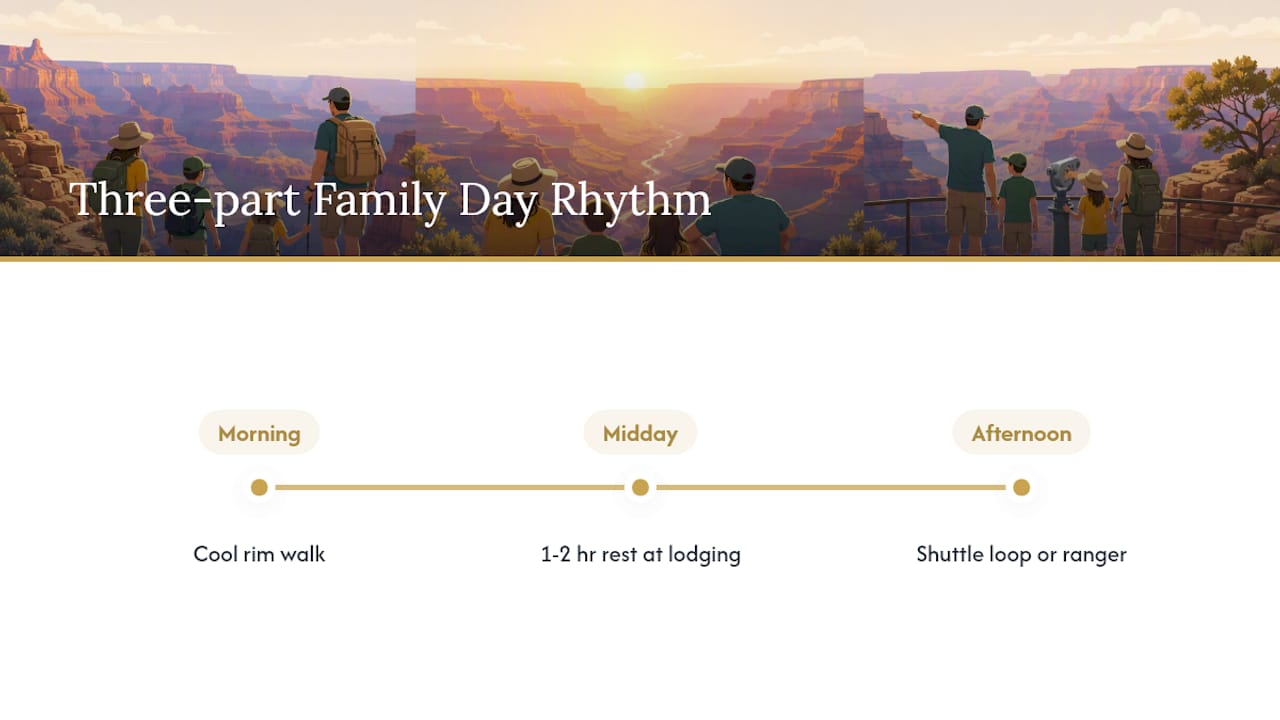
Structure your day around the free shuttle system: early morning rim walks while it's cool, a midday rest back at base, then shuttle-powered viewpoint loops or a ranger program in the late afternoon once energy levels bounce back. This three-part rhythm mirrors what most families naturally fall into anyway, so building it into the plan from the start avoids the meltdown that comes from ignoring it.
Getting To and Around the Grand Canyon With Kids
Most families drive in, and a rental car with reliable air conditioning and enough trunk space for a cooler and stroller is worth prioritizing over a smaller economy option. Flagstaff and Williams both sit within reasonable driving distance of the South Rim entrance and work well as fuel and grocery stops on the way in.
Once you're in the park, skip the idea of driving between viewpoints entirely. The free shuttle system is built for exactly this, and Hermit Road closes to private vehicles from March through November anyway, making the shuttle your only option along that stretch during peak family travel months. Parking near the visitor center fills early on busy days, so arriving by shuttle from your lodging avoids that frustration altogether.
For families who'd rather not manage driving, navigation, and pacing themselves, a private guided option removes that layer of logistics completely, worth considering if road-tripping with kids isn't your idea of a relaxing vacation.
When a Private Guided Tour Is Worth It
Self-planning works well for most families with three or more days to spend. Where a private guide earns its keep is different: a single day at the canyon, a family juggling a stroller and a teenager who wants to hike, or anyone managing a mobility need that makes shuttle timing and trailhead logistics genuinely stressful to plan alone.
A good guide handles the timing for best light, paces stops around your youngest child rather than the group average, and tailors the geology and history talk to whoever's actually listening. Ask yourself: do you want to spend your trip researching shuttle schedules, or standing at the rim? If it's the latter, hiring a guide solves a real problem, not an imagined one.
— Chris
How Grand Canyon Journeys Fits Your Family's Plan
If your family has a single day or two to work with, Grand Canyon Journeys handles the parts that eat up planning time. That means door-to-door pickup, paced stops built around kids rather than a fixed bus schedule, and a guide who already knows which viewpoint will hold a toddler's attention and which one is just for the adults.
For a single-day visit, the private day tour from Sedona covers the South Rim highlights without the shuttle-and-parking puzzle. Families wanting a below-rim experience without managing trail logistics themselves should look at the private hiking tour below the rim, which keeps pacing and turnaround points in a guide's hands rather than a stressed parent's. If your trip stretches longer, the Grand Canyon Travel Planner is the place to start mapping out how a guided day fits alongside self-planned days. Reach out to talk through your kids' ages and energy levels, and the pacing gets built around your family, not a generic group schedule.
Sources for Verifying Fees, Shuttles, and Seasonal Details
Always double-check current schedules and fees before you travel:
- NPS Plan Your Visit: basic info and entrance fees
- South Rim shuttle bus routes and schedules
- Junior Ranger program details
- Rim Trail map and accessibility notes
- Mule trip age and height requirements
- Current park conditions and closures
FAQ
How Many Days Do You Need at the Grand Canyon With Kids?
Two full days covers the essential viewpoints and a short hike, while three days gives room for the Junior Ranger program and a longer trail without exhausting younger kids.
Is the Grand Canyon a Good Place to Take Kids?
Yes. The Rim Trail, Junior Ranger program, and free shuttle system make it manageable for toddlers through teens, provided you plan around heat and pace activities to your youngest child.
Which Part of the Grand Canyon Is Best for Kids?
The South Rim is the most kid-friendly area thanks to its paved Rim Trail, shuttle access, visitor centers, and lodging options, all within a compact, walkable area.
How Many Days Do You Need for the Grand Canyon Overall?
For a family trip focused on the South Rim, 2 to 3 days is enough; 5 days works well if you're adding the Grand Canyon Railway, Sedona, or a full rest day into the mix.