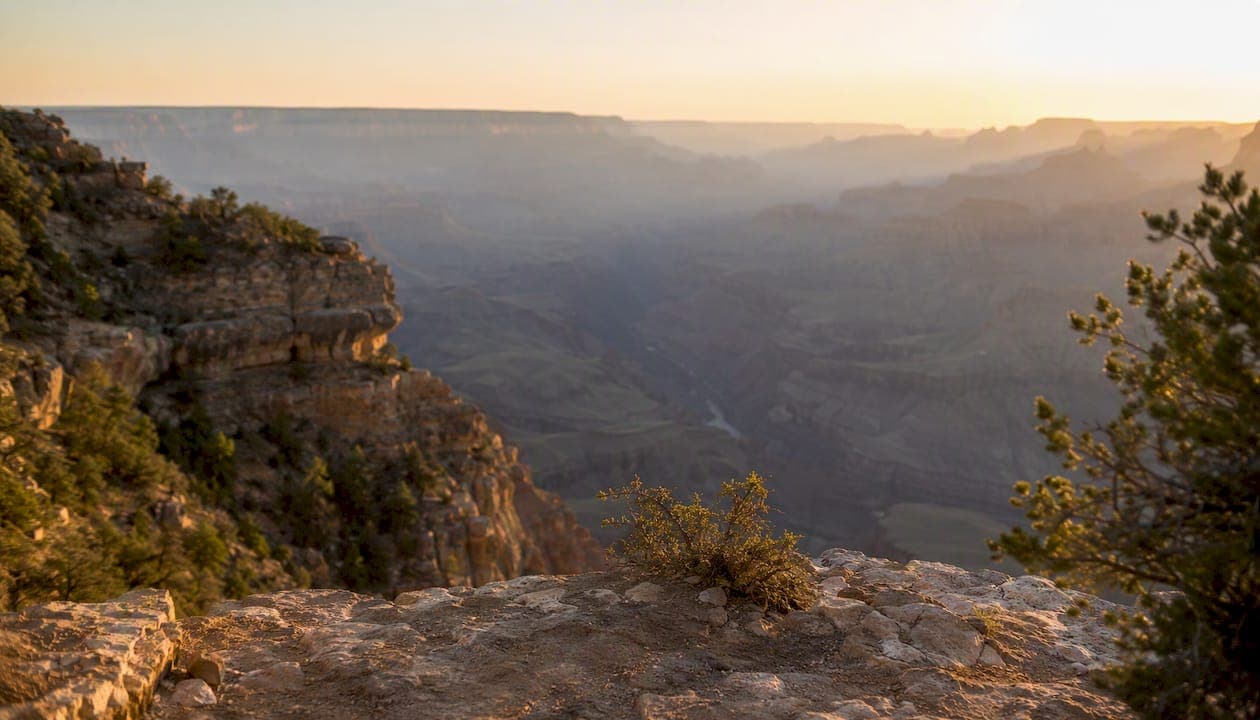
The best Grand Canyon South Rim itinerary anchors every visit to sunrise or sunset at Mather Point, then builds outward from there. Here is the fast pick by visit length:
- Half-day: Mather Point at sunrise, Rim Trail walk to Yavapai Point, Grand Canyon Village browse. (Half-day timing guide)
- Full day: Add a Hermit Road shuttle loop and Hopi Point at sunset. (Full-day itinerary)
- 2 days: Layer in a short below-rim hike on Bright Angel or South Kaibab Trail, plus Desert View Drive.
- 3 days: Extend with ranger programs, a scenic flight, or a longer Bright Angel descent with an overnight permit.
Pro Tip: Arrive by 7:30–8:00 AM in peak season. Visitor Center lots fill by 9:00 AM, and circling for parking eats the best morning light. Park once, then ride the free shuttle.
Key Takeaways
A well-timed South Rim itinerary built around sunrise or sunset at Mather Point, combined with smart shuttle use and early arrival, gives you the best views with the least friction.
| Point | Details |
|---|---|
| Anchor to sunrise/sunset | Mather Point at first or last light gives the best photos and cooler temperatures. |
| Arrive by 7:30–8:00 AM | Visitor Center lots fill by 9:00 AM in peak season; early arrival secures parking. |
| Match hike to fitness | Ooh Aah Point (South Kaibab) suits most visitors; Bright Angel to 1.5-Mile Resthouse is the next step up. |
| Best visit window | March–May and September–October balance mild weather with manageable crowd levels. |
| Grandcanyonjourneys option | Private South Rim day tours include transport, park fees, WFR-certified guides, and El Tovar dining. |
Table of Contents
- How long do South Rim hikes actually take?
- What should you pack for a safe South Rim visit?
- Where to eat and stay on the South Rim
- When is the best time to visit the South Rim?
- How to photograph the Grand Canyon South Rim
- Accessibility at the South Rim
- Ranger programs worth adding to your itinerary
- Why a guided itinerary changes the South Rim experience
- See the South Rim the way it deserves to be seen
- Authoritative sources to check before you go
How long do South Rim hikes actually take?
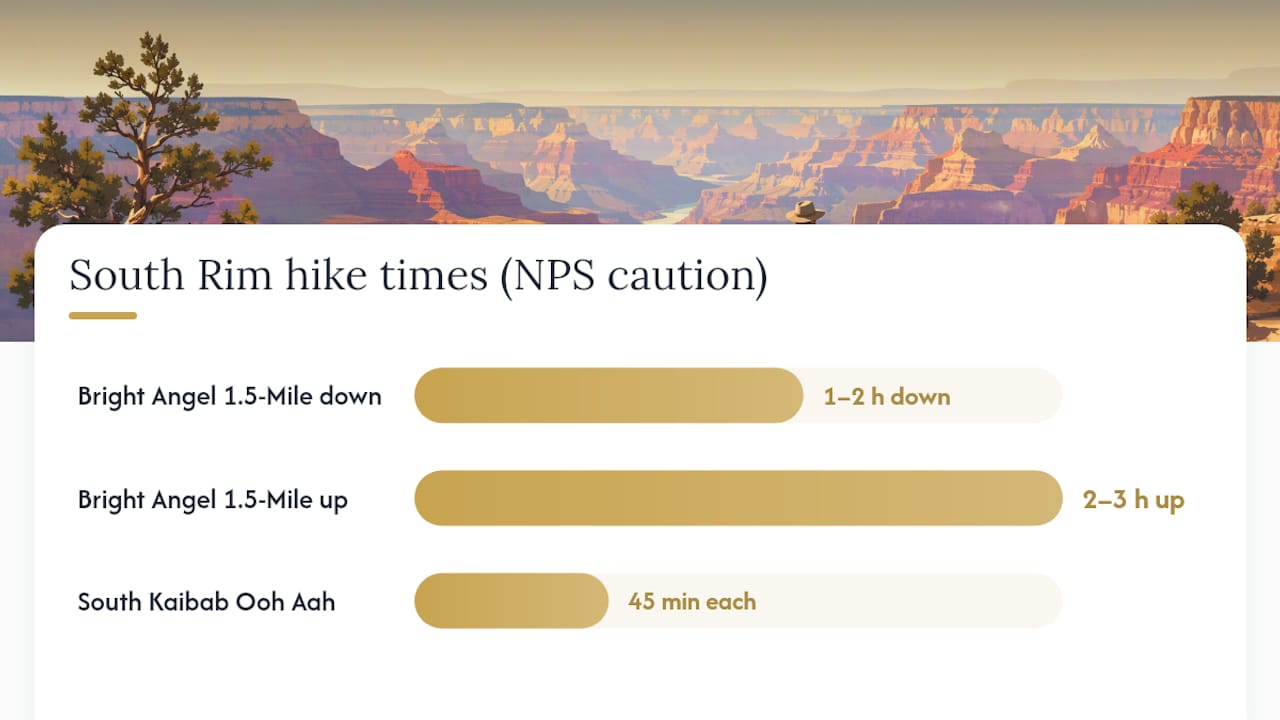
Bright Angel Trail to the 1.5-Mile Resthouse takes roughly 1–2 hours down and 2–3 hours back up. South Kaibab to Ooh Aah Point is about 45 minutes each way and stays manageable for most fitness levels. The NPS advises against attempting a rim-to-river-and-back hike in a single day. Budget at least double your downhill time for the return climb.
What should you pack for a safe South Rim visit?
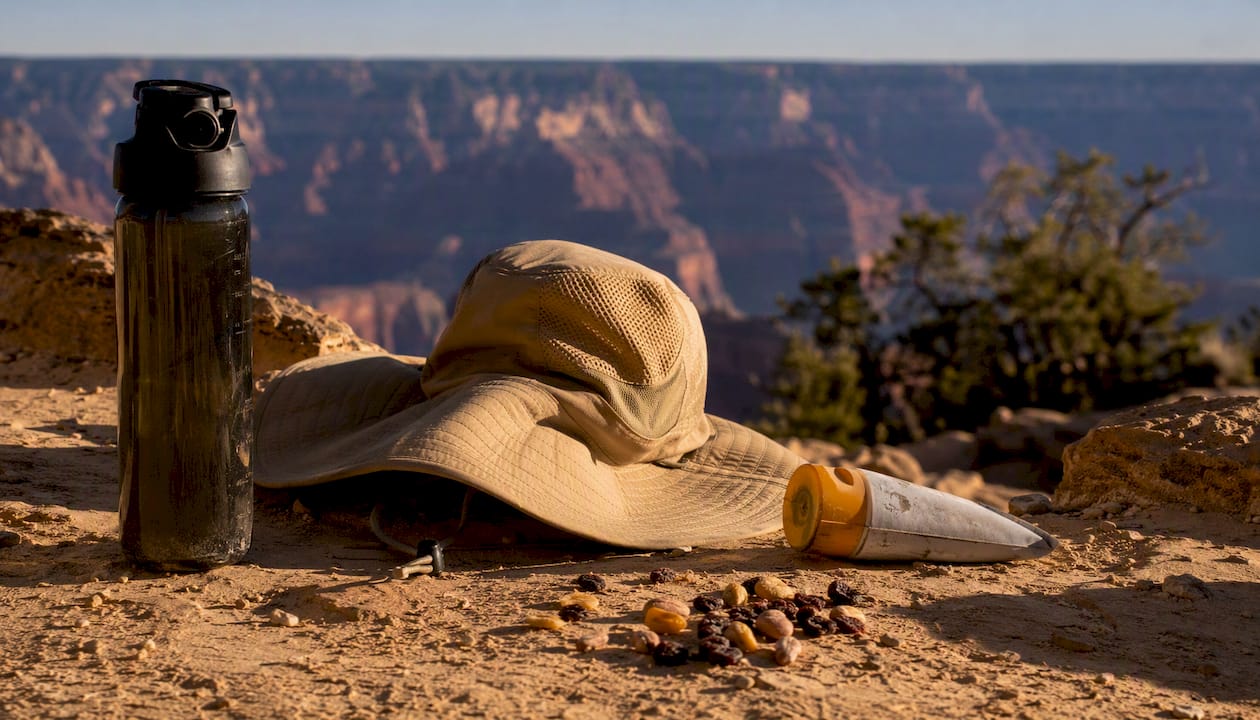
Carry one liter of water per hour of hiking minimum. Heat and altitude hit harder than most visitors expect, especially on exposed South Kaibab. Download the NPS mobile app before you arrive since cell service is unreliable inside the park. Pack sunscreen, a hat, salty snacks, and layers for early mornings. Follow Leave No Trace: stay on marked trails, pack out all waste, and keep noise low near wildlife.
Where to eat and stay on the South Rim
The El Tovar Dining Room sits directly on the rim and is the South Rim's most atmospheric meal. Reserve months ahead for dinner; lunch walk-ins are sometimes available. Bright Angel Lodge and Maswik Lodge offer more accessible price points inside the park. Staying in-park eliminates the daily parking scramble entirely and puts you steps from sunrise overlooks.
When is the best time to visit the South Rim?
The South Rim draws more than four million visitors annually, with peak crowds from late May through early September. March through May and September through October offer the best balance of mild temperatures and manageable crowds. Winter visits are quieter and often stunning with snow on the rim, though some roads and facilities close seasonally. Summer mornings before 10:00 AM are tolerable; midday heat on exposed trails is not.
How to photograph the Grand Canyon South Rim
Mather Point and Yavapai Point deliver classic wide-angle compositions at both sunrise and sunset. For sunset, Hopi Point on Hermit Road is spectacular but crowded. Pima Point and Mohave Point offer nearly identical light with far fewer people. Desert View Watchtower frames the canyon's east end beautifully in morning light. Shoot in RAW if your camera allows; the contrast range between shadowed canyon walls and lit rims is extreme.
Accessibility at the South Rim
The Rim Trail between Mather Point and Maricopa Point is paved and largely flat, making it one of the most accessible rim walks in any national park. The Kaibab/Rim Route shuttle accommodates wheelchairs. Accessible restrooms are available at the Visitor Center, Yavapai Geology Museum, and Desert View. Most overlooks along Desert View Drive are reachable by personal vehicle with accessible parking.
Ranger programs worth adding to your itinerary
Free ranger-led talks run daily at the Visitor Center Plaza and Yavapai Geology Museum. Evening programs at Mather Campground Amphitheater cover geology, wildlife, and Indigenous history. The Junior Ranger program keeps kids engaged and earns a badge. Check the park's current schedule on arrival since times shift seasonally.
Why a guided itinerary changes the South Rim experience
The parking paradox is real: you spend the first hour of a self-drive visit circling lots, not watching the canyon. Unreliable cell service means navigation gaps at the worst moments. And the most popular sunset overlooks, Hopi Point especially, are genuinely shoulder-to-shoulder by golden hour.
A private, guided itinerary solves all three. The guide handles timed arrivals, routes you to quieter overlooks with equivalent light, and coordinates El Tovar dining without the walk-in lottery. WFR-certified guides on below-rim hikes carry emergency equipment and know when to turn a group around, which matters more than most visitors realize until they are already too deep into Bright Angel at noon.
Four things a quality private itinerary delivers that self-guided visits rarely match:
- Timed arrivals at viewpoints before crowds peak
- Door-to-door transport in a climate-controlled vehicle, no parking stress
- A curated viewpoint sequence that balances light, distance, and group energy
- On-tour meal coordination, including El Tovar reservations handled in advance
See the South Rim the way it deserves to be seen
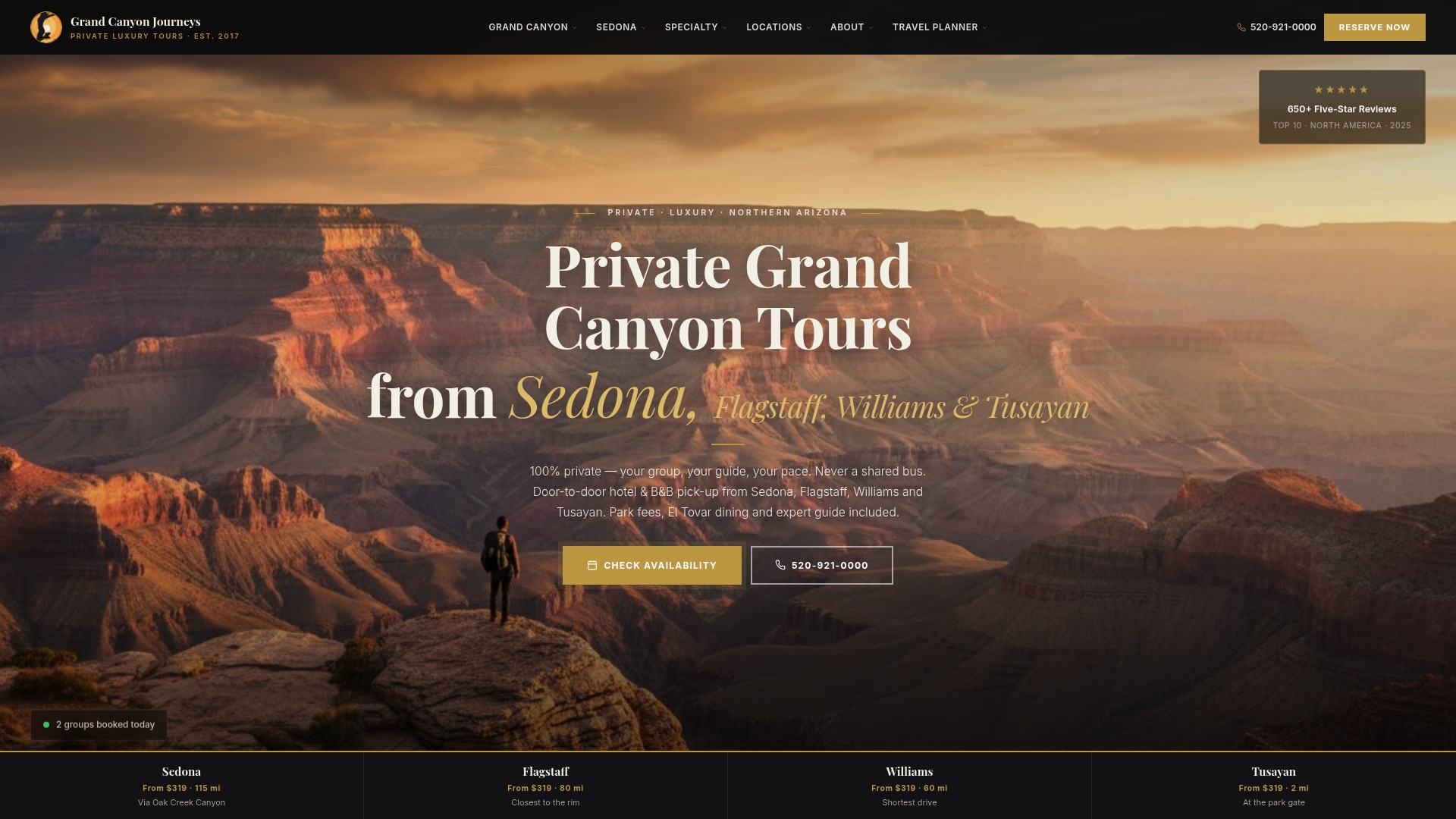
Grandcanyonjourneys runs fully private South Rim day tours and sunset expeditions from Sedona, with WFR-certified guides, luxury vehicle transport, park fees included, and a sit-down lunch or rim-side dinner at El Tovar built into the day. No group buses, no parking stress, no logistics to manage on your end.
Tour options include the private Grand Canyon day tour, guided below-rim hikes on Bright Angel or South Kaibab, and sunset dinner experiences timed to golden hour at west-facing overlooks. Each tour fits couples, families, and small groups.
Ready to stop planning and start going? Use the Grand Canyon travel planner to check availability and build your itinerary.
Authoritative sources to check before you go
Confirm fees, shuttle hours, road conditions, and sunrise times from these official sources before your trip.
| Source | What to use it for |
|---|---|
| NPS Plan Your Visit | Entrance fees, shuttle maps, NPS app download, current conditions |
| NPS Directions & Parking | Parking lot locations, arrival guidance, East Entrance option |
| Mather Point (NPS) | Shuttle stop info, sunrise/sunset overlook details |
| Hermit Road (NPS) | Shuttle-only access periods, viewpoint overcrowding warnings |
| Frommer's South Rim Guide | Seasonal crowd levels, lodging overview |
| TheCanyon.com South Rim | Stay-length recommendations, activity planning |
| 2-Day Itinerary Guide | Practical timing structure for a two-day visit |
Before you arrive, confirm these six items:
- Mather Point (U.S. National Park Service)
- Plan Your Visit - Grand Canyon National Park (U.S. National Park Service)
- Grand Canyon South Rim directions and parking (NPS)
- Hermit Road (U.S. National Park Service)
- Grand Canyon South Rim Travel Guide (Frommer's)
- Grand Canyon South Rim - Plan an Epic Trip!
- Grand Canyon Itinerary: 2 PERFECT Days in the South Rim