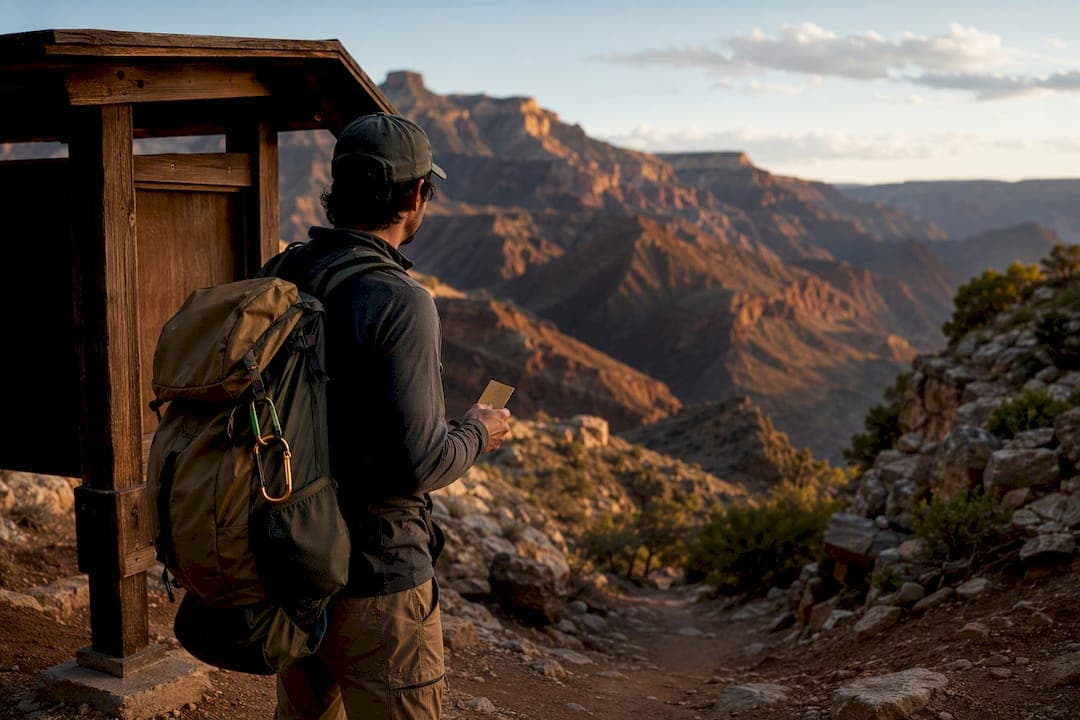
Yes, you need a permit for overnight backcountry camping anywhere in Grand Canyon National Park outside a developed campground or Phantom Ranch. Your first move depends on timing: if your trip is more than four months out, enter the Recreation.gov Early Access Lottery now. If it's closer, check public availability three months before your start date. If you'd rather skip the paperwork entirely, book a guided trip where the operator holds the permit.
TL;DR:
- Applying for backcountry permits requires planning ahead, with early access lotteries opening around four months before your trip and public booking available three months prior.
- Permit costs include a non-refundable $10 application fee and nightly participant charges of $15 below the rim and $4 above, with the fees refundable if canceled at least 30 days in advance.
- Group size, specific campsites, and exact itineraries are locked to the permit and are non-transferable, with strict enforcement and consequences for violations.
- Last-minute permits are scarce and mostly available for single-night stays through in-person visits, with early-season shoulder months less competitive.
- Guided tours handle permits for you, simplifying planning for those who prefer to avoid the administrative process or have limited time.
Table of Contents
- Do You Actually Need Grand Canyon Hiking Permits?
- What Do Grand Canyon Backcountry Permits Cost?
- When Should You Apply for a Grand Canyon Permit?
- How Do You Book a Permit on Recreation.gov Step by Step?
- Can You Get a Last-Minute Grand Canyon Permit?
- How Do Printing, Cancellations, and Permit Rules Work?
- Where Do Backcountry Permits Actually Apply?
- How Do Guided Operators Handle Permits for You?
- What Does a Local Guide Actually Recommend?
- Skip the Lottery: Private Guided Grand Canyon Hiking
- Sources
Do You Actually Need Grand Canyon Hiking Permits?
Grand Canyon backcountry permits cover any overnight stay off the beaten path: camping below the rim, horseback trips, cross-country ski routes, and off-river camping for rafting groups. Day hikes don't need one, no matter how far you go down and back in a single push. Staying at Mather Campground, Desert View, or the seasonal North Rim campground doesn't require a backcountry permit either, since those are developed sites booked through the standard campground reservation system.
A few situations catch people off guard. Phantom Ranch lodging (the cabins and dorms at the bottom) runs on its own separate reservation lottery through Xanterra, not the backcountry permit system, even though it sits inside the same use area. Commercial guided trips need their own authorization. Organized non-commercial groups of 12 to 30 people doing extended inner-canyon day hikes need a Special Use Permit, even without an overnight stay. Private stock use (horses, mules you're bringing yourself) has its own rule set too.
Whatever permit you land, it's locked to specifics:
- The named trip leader
- Your exact itinerary and campsites
- Your dates
- Your group size
Permits are non-transferable. You can't hand yours to a friend, swap dates informally, or split one group's permit across two smaller parties.
What Do Grand Canyon Backcountry Permits Cost?
Every permit application, whether it wins a lottery slot or not, carries a $10 fee that's non-refundable. On top of that, you pay nightly participant charges: $15 per person for each night camped below the rim, and $4 per person for each night camped above the rim (in the more accessible rim-adjacent zones).
Cost Snapshot: A solo hiker spending 3 nights below the rim pays $10 + (3 × $15) = $55 total. A group of 4 doing the same trip pays $10 + (4 people × 3 nights × $15) = $190.
The nightly charges are refundable if you cancel at least 30 days before your permit start date. The $10 application fee is not refundable in most cases; the permit fee policies include waivers for certain lottery winners during their early access month. Budget for both pieces before you start picking campsites, especially if you're planning a longer traverse like rim to rim.
When Should You Apply for a Grand Canyon Permit?
Timing decides whether you get the itinerary you want or scramble for scraps. The park runs a monthly Early Access Lottery that awards up to 750 applicants a timeslot to log in and reserve an itinerary for that specific lottery month, ahead of the general public.
- Enter the lottery about four months out. The application window opens roughly four months before your target month and stays open for about two weeks.
- Wait for your assigned timeslot. If you win, Recreation.gov gives you a specific date and time to log in and book, not open access whenever you feel like it.
- Use your timeslot immediately. Miss it, and it expires. There's no makeup window.
- Watch for public booking day. On the first of the month, three months before your trip, whatever wasn't claimed during early access opens to everyone.
- Keep checking closer to your date. Online bookings remain possible up to 5 days before your start date, since cancellations trickle in the whole time.
Cancellations cluster around a predictable point. The 30-day mark before a permit's start date is when nightly fees stop being refundable, so that's exactly when hikers who changed plans pull out. Set a calendar reminder to check availability right around then.
Pro Tip: Build three backup itineraries in different use areas and seasons before your lottery window opens. If your first-choice campsite is gone, you won't be scrambling to invent a plan B on the spot.
How Do You Book a Permit on Recreation.gov Step by Step?
Get your account squared away before anything opens. Create your Recreation.gov login, verify your email, and have a payment card ready. Permit windows move fast, and you don't want to be resetting a forgotten password while your timeslot ticks away.
- Enter the lottery blind. When you apply during the open window, you're not selecting specific campsites or dates yet, just entering the drawing for a chance at early access.
- Check your results and timeslot. Winners get notified with a specific login window for the Early Access Availability tool.
- Build your itinerary live. Select your entry point, pick your first-night campsite from the availability grid, then map out the rest of your route night by night.
- Pay and confirm. Enter your payment details to lock the permit and pay the fees outlined above.
- If you didn't win, wait for public booking. On the first of the following month, use the "Check Availability" tool to grab whatever's left.
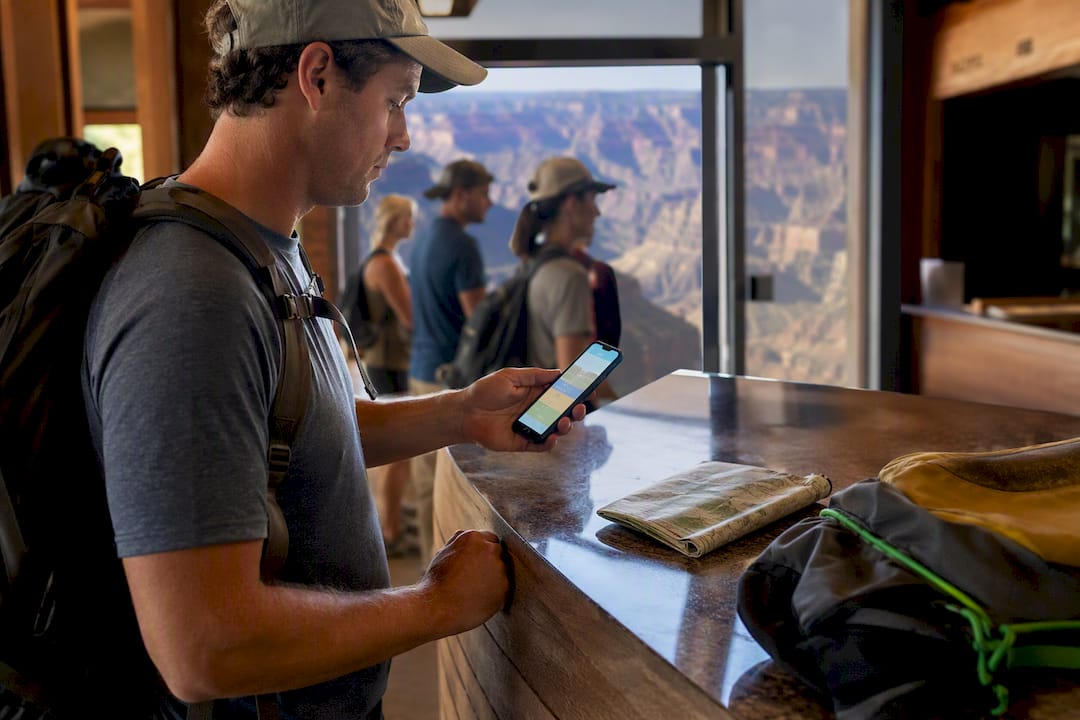
- Handle the final stretch by phone. Within the last four days before a trip, online booking closes and you'll need to work with the Backcountry Information Center directly by phone or in person.
If the system stalls or you're unsure whether an itinerary is legal (mileage, elevation gain, campsite capacity), call the Backcountry Information Center rather than guessing. Rangers there review itineraries daily and can flag a plan that's unrealistic before you're stuck with it.
Can You Get a Last-Minute Grand Canyon Permit?
Sometimes, but don't count on it. The Backcountry Information Center holds back a limited number of walk-up permits for Havasupai Gardens and Cottonwood campgrounds, with the exact holdback count shifting by season. Which rim gets priority for which site also varies, so a permit available from the South Rim office isn't always mirrored on the North Rim side.
Realistically, last-minute space:
- Comes in one-night increments, not multi-night blocks
- Requires showing up in person, often before the office opens
- Sometimes takes multiple days of trying before something opens up
If you're going this route, a few things help. Shoulder seasons (spring and fall) run less competitive than summer. Arrive early and be flexible on which campground you'll take. Keep a mental list of alternate routes so you're not fixated on one site that never frees up.
Pro Tip: If the walk-up line isn't working out, check Recreation.gov from your phone at the same time. Permits released online from the 30-day cancellation window sometimes appear before the in-person waitlist updates.
How Do Printing, Cancellations, and Permit Rules Work?
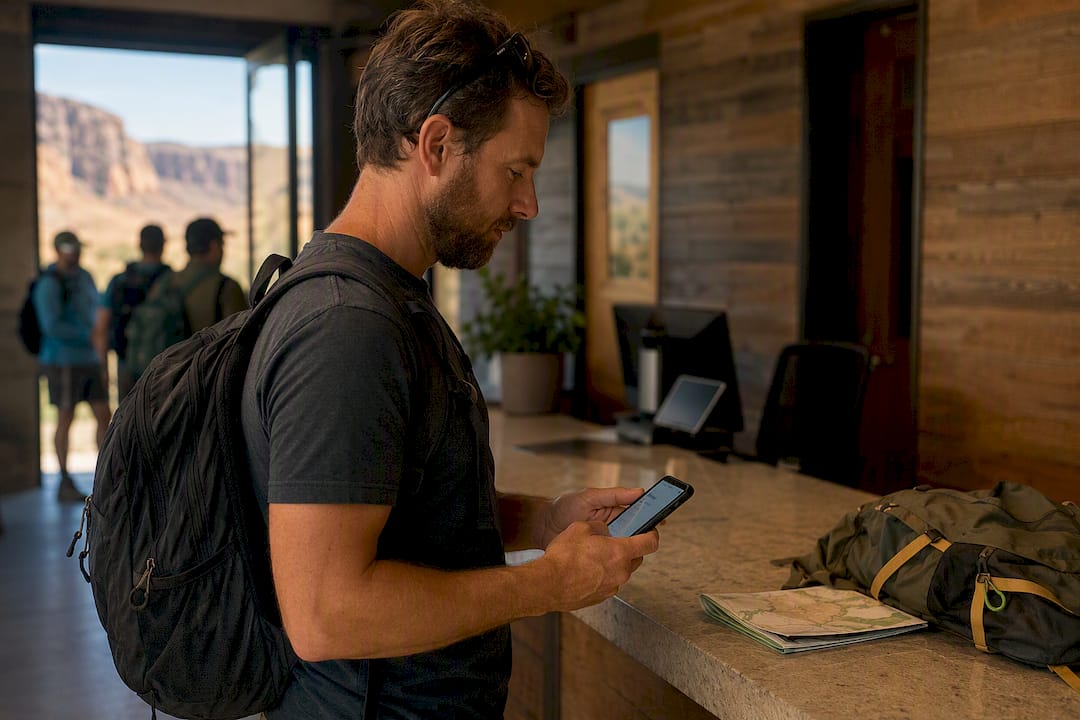
You can print your permit as early as one month before your start date, and once it's printed, it's not refundable. If you never print it, the system automatically cancels the permit 3 days before your start date, so don't sit on it hoping to decide later.
Key rules to keep in mind:
- Cancel through Recreation.gov for a refund on nightly fees, as long as you're outside the 30-day window
- Call the Backcountry Information Center if you need to modify a printed permit
- Permits are strictly non-transferable, tied to the named leader and group
- Camping outside your designated site, or exceeding your permitted group size, both carry real enforcement consequences
Rangers do check permits in the field, and violations can affect your ability to get future permits, not just result in an on-the-spot warning.
Where Do Backcountry Permits Actually Apply?
Corridor campgrounds along the main maintained trails are the most requested sites: Havasupai Gardens (below the rim, roughly halfway down Bright Angel Trail), Bright Angel Campground, and Cottonwood Campground, all requiring a backcountry permit for any overnight stay.
A few seasonal and structural quirks matter:
- North Rim overnight permits are required specifically from October 16 through May 14, when the rim's developed campground closes for the season
- Phantom Ranch lodging (cabins and dormitories) runs on its own separate reservation lottery, not the backcountry permit system, even though it's steps from Bright Angel Campground
- River trip participants need permits for any off-river camping outside their float itinerary
- Packstock use (horses, mules) has separate regulations layered on top of the standard permit
How Do Guided Operators Handle Permits for You?
Authorized commercial operators, including organizations like the Grand Canyon Conservancy Field Institute, secure backcountry permits under their own company name, which means individual trip participants typically don't apply for anything separately.
That arrangement carries real practical upside:
- The operator manages lottery timing, itinerary logistics, and permit renewals
- Water and food resupply planning happens on their end, not yours
- It removes the single biggest source of anxiety for first-time inner-canyon hikers: not knowing if your dates will actually come through
DIY permits still make sense if you want full control over your route and want to keep costs to the fee schedule alone, but it's wise to do some physical conditioning for elevation hikes to prepare for the climb back out. Guided trips make more sense if your time is limited, this is your first unsupported overnight descent, or you'd rather have someone else worry about the physical toll of the climb back out while you focus on the experience.
What Does a Local Guide Actually Recommend?
Set up your Recreation.gov account and payment info weeks before any lottery window opens. Have three backup itineraries ready across different use areas, since your first choice will often be gone by the time your timeslot comes up. Shoulder season trips (April, May, September, October) consistently beat summer for both permit odds and hiking comfort.
Call the Backcountry Information Center for anything permit-specific: itinerary legality, water source status, trail closures. If you're on a guided trip, your guide handles that layer entirely. Either way, treat the permit system as what it actually is: a tool that keeps a fragile desert ecosystem from getting trampled and keeps rescue teams from getting overwhelmed on a 110-degree afternoon.
— Chris
Skip the Lottery: Private Guided Grand Canyon Hiking
If reading through lottery timeslots, cancellation windows, and fee schedules made you want a simpler path, that instinct is worth listening to. Certain private guided hikes below the rim include handling the permit process, route planning, and trail logistics in advance. You're not refreshing Recreation.gov at midnight hoping a Havasupai Gardens site opens up.
For hikers who want the inner-canyon experience without the administrative gamble, the private Grand Canyon hiking tour from Sedona covers below-the-rim terrain with a guide managing the permit and pace. If an overnight backcountry trip isn't in the cards this trip but you still want to see the canyon up close, the private day tour from Sedona covers the South Rim without any permit application at all. Still mapping out dates and logistics? The Grand Canyon travel planner is a solid place to start narrowing down what kind of trip actually fits your timeline. Reach out and mention your itinerary questions, and we'll help you figure out whether a guided hike or a day tour fits what you're after.