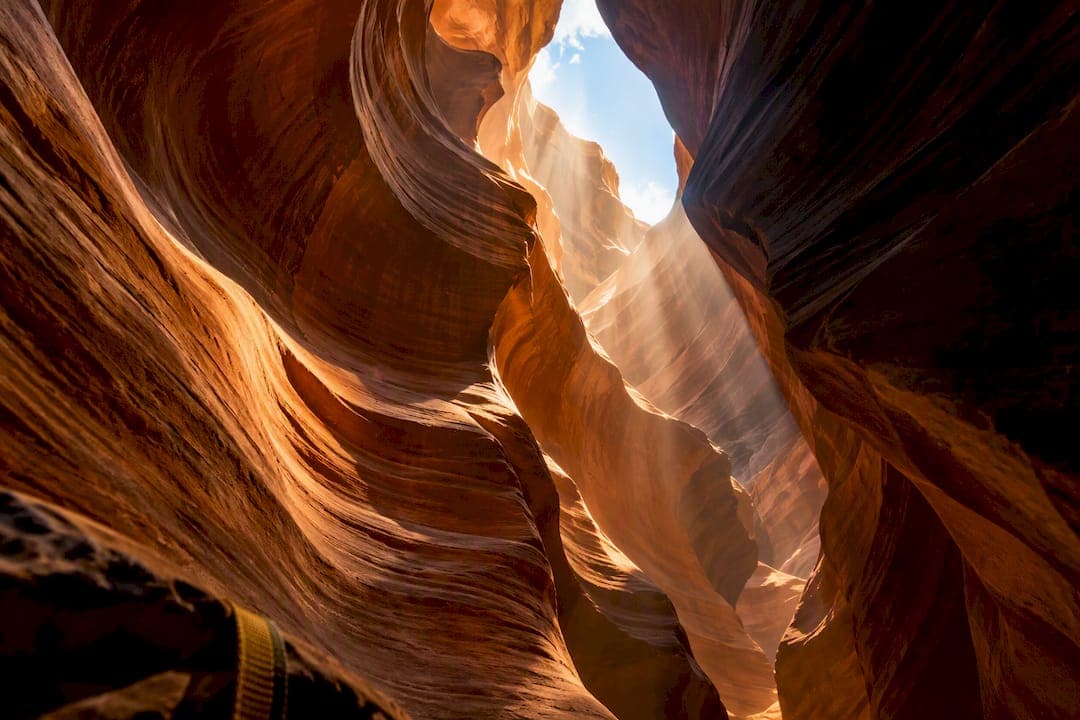
The best way to see both sights in one day: book a Navajo-guided Antelope Canyon tour between 8 and 10 a.m., then drive the six miles to Horseshoe Bend for golden hour, arriving by 4:30 p.m. or so before sunset. Antelope Canyon requires an authorized guide, and Horseshoe Bend charges roughly $10 per vehicle to park. If you can spare it, base yourself in Page for at least one night so the schedule never feels rushed.
TL;DR:
- Booking your Antelope Canyon tour two to four weeks in advance is essential, especially during peak season from May to September.
- Antelope Canyon requires an authorized Navajo guide, with an entry permit fee of $15 per person, per location, per day; Horseshoe Bend parking costs around $10 per vehicle.
- The best time to photograph Antelope Canyon's light beams is between 10:30 a.m. and noon from late March through early October, with July and August being the most reliable.
- Visiting Horseshoe Bend is optimal late in the afternoon before sunset when the canyon walls turn deep orange, creating ideal conditions for photography.
- A guided private tour simplifies logistics, guarantees park access, and aligns sightseeing with optimal lighting conditions for photos.
Table of Contents
- Horseshoe Bend and Antelope Canyon Itinerary at a Glance
- How to Plan an Hour-by-Hour Antelope Canyon and Horseshoe Bend Day
- What Permits, Parking, and Booking Cost
- When Is the Best Time to Photograph Antelope Canyon and Horseshoe Bend?
- Safety and Accessibility at Both Sites
- What to Pack and When to Leave
- Why a Navajo-Guided Private Tour Simplifies This Whole Day
- An Editor's Take on Getting This Itinerary Right
- Book Your Antelope Canyon and Horseshoe Bend Day the Easy Way
- Sources
- FAQ
Horseshoe Bend and Antelope Canyon Itinerary at a Glance
The rhythm of this trip comes down to light. Antelope Canyon looks best when the sun sits high overhead, sending shafts of light down into the slot. Horseshoe Bend looks best when the sun drops low and paints the canyon walls orange, which happens in the last two hours before sunset. That's why nearly every combo itinerary built around these two sites runs canyon first, rim overlook second, not the other way around.
If you're working with a single day, the plan looks like this:
- Morning (8:00–10:30 a.m.): Guided tour through Antelope Canyon, Upper or Lower depending on what you booked
- Midday (11:00 a.m.–3:30 p.m.): Lunch in Page, a stop at Glen Canyon Dam or Lake Powell, rest before the afternoon push
- Late afternoon (4:00–6:30 p.m.): Drive to Horseshoe Bend, walk the trail, shoot golden hour, watch sunset
Travel time between the canyon operators (most are based in or near Page) and the Horseshoe Bend parking lot runs about 10 to 15 minutes. If a single day feels tight, a two-day version gives you breathing room. Split the canyon tour and Horseshoe Bend across separate afternoons, and add a slower morning at Lake Powell or Glen Canyon Dam in between.
How to Plan an Hour-by-Hour Antelope Canyon and Horseshoe Bend Day
Here's a schedule you can copy almost exactly, built around a mid-morning canyon slot and a late golden-hour finish at the rim.
- Book your canyon tour two to four weeks ahead, especially if you're traveling between May and September. Slots fill fast, and walk-up availability during peak season is unreliable. Check the Navajo Nation Parks operators list before you book anywhere, since only authorized guides can legally take you into the canyon.
- Check the weather the night before. Monsoon season (July through September) brings flash-flood risk, and tours get canceled with little notice when storms roll in.
- Arrive 20 to 30 minutes before your tour time. Operators check in guests, assign groups, and shuttle everyone to the canyon entrance, which eats time you don't want to lose.
- Take your canyon tour between roughly 8 and 10:30 a.m. Upper Antelope Canyon runs mostly flat and wide, easy walking, big open chambers, ideal if you want the classic wide-shot look. Lower Antelope Canyon involves stairs and narrow ladders through a tighter, winding slot, which rewards patience with more dramatic, twisting rock. If you'd rather skip the crowds altogether, Secret Canyon or Canyon X run smaller groups through similarly striking formations.
- Use the midday block for lunch and a low-key stop. Page has enough quick-service restaurants that you won't burn your whole afternoon eating. A short visit to Lake Powell or Glen Canyon Dam fills the gap between your canyon tour and the golden-hour push at Horseshoe Bend.
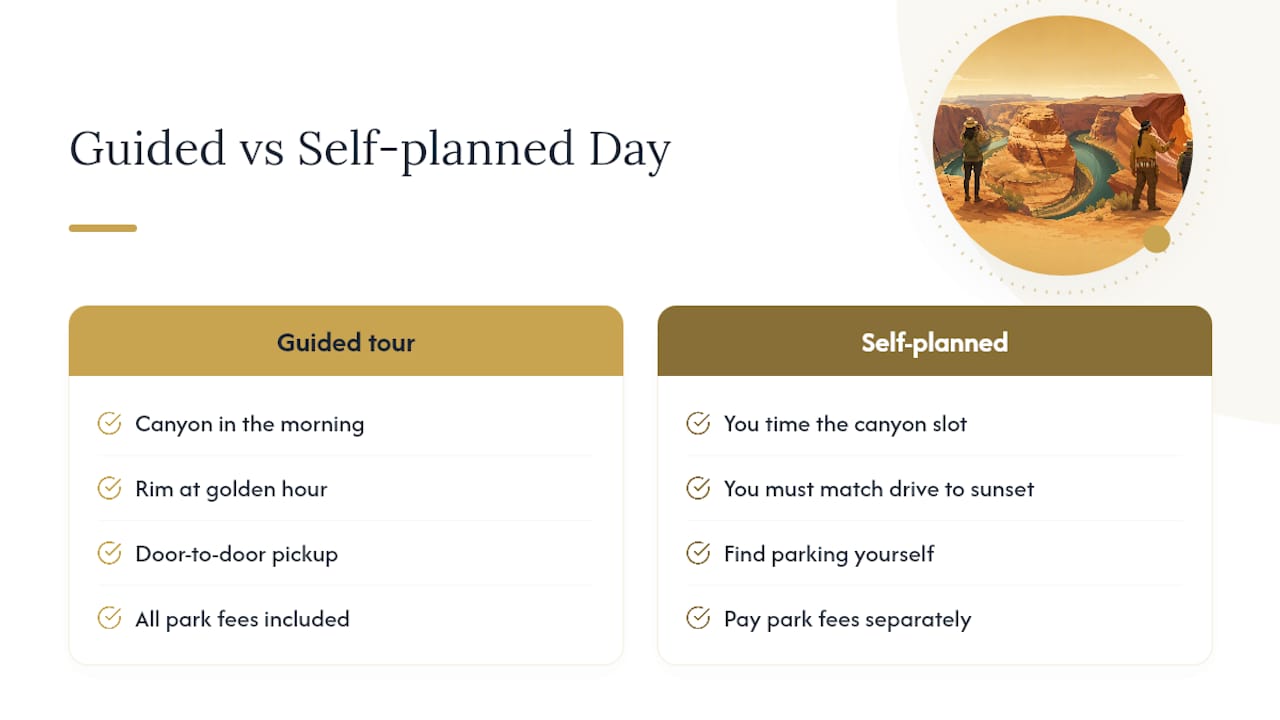
- Head to Horseshoe Bend by 4:00 p.m. Give yourself time to park, walk the trail, and find a spot before the light turns. If you booked a private combo tour instead, some operators drive you to an overlook within about 100 meters of the rim in a 4x4, skipping the public trail entirely.
- Stay through sunset. The colors keep shifting for 20 to 30 minutes after the sun drops behind the horizon, and that afterglow often produces the best shots of the whole day.
That single fixed point, your canyon tour time, is what everything else in the day gets built around. Lock that in first, then fill in the rest.
What Permits, Parking, and Booking Cost
Antelope Canyon sits entirely on Navajo Nation land, and every visitor needs an authorized Navajo guide to enter. There's no self-guided or independent access, period. The Navajo Nation Parks system charges an entry fee of $15 per person, per location, per day, on top of whatever your tour operator charges for the guided experience itself.
Quick numbers: Antelope Canyon entry runs $15 per person, per location, per day. Horseshoe Bend parking runs about $10 per vehicle, and the public trail to the overlook is about 1.4 miles round trip.
Budget for a few predictable costs beyond the tour price itself:
- Antelope Canyon permit fee: $15 per person, per location, per day
- Horseshoe Bend parking: about $10 per vehicle
- One or two nights of lodging in Page if you're not doing a rushed day trip
- Meals, which run cheaper if you stick to quick-service spots near the canyon operators
Book your canyon tour two to four weeks out during the busy season. If you're stitching this into a larger Arizona trip, a travel budget guide can help you sort tour costs from lodging and food before you commit.
When Is the Best Time to Photograph Antelope Canyon and Horseshoe Bend?
Timing separates a forgettable snapshot from the shot everyone recognizes from Instagram. Inside Antelope Canyon, light beams show up strongest around 10:30 a.m. to noon during peak months, when the sun sits high enough to punch straight down through the narrow opening above the slot. That window is short, and it only exists at all from late March through early October, with July and August delivering the most reliable beams.
Horseshoe Bend works on the opposite clock. Morning light hits the canyon walls flat and washed out, which is exactly why guides steer this stop to late afternoon. The hour or so before sunset turns the sandstone a deep orange and gives the river below real contrast and color.
Pro Tip: Shoot Antelope Canyon on a smartphone or with a wide lens set to a slower shutter speed if your tour allows tripods; the beams photograph better with a touch of motion blur in the dust than with a frozen, flat exposure.
A few practical notes for both stops:
- Tripods are restricted on many Antelope Canyon tours, so check your operator's rules ahead of time
- Wide-angle lenses (16 to 24mm on a full-frame equivalent) capture Horseshoe Bend's full curve better than a standard zoom
- Arrive at Horseshoe Bend early enough to claim a clear spot along the rim before the crowd thickens near sunset
Safety and Accessibility at Both Sites
Slot canyons flood fast, and Antelope Canyon has a real history of flash-flood danger during monsoon season. Guides monitor weather constantly and will cancel or reroute tours when storms threaten, so build a little flexibility into your schedule during July through September.
Access differs quite a bit between the two Antelope Canyon options. Upper Antelope stays mostly flat, fine for most fitness levels. Lower Antelope involves narrow stairs and steep metal ladders, which makes it tougher for visitors with mobility issues or young kids.
Horseshoe Bend carries its own risk: the overlook sits on an exposed sandstone rim with limited railing in spots, and the drop to the river below is significant.
- Bring at least one liter of water per person for the canyon tour and the Horseshoe Bend walk combined
- Wear closed-toe shoes with real grip, not sandals
- Keep a close hand on children near the Horseshoe Bend rim at all times
- Check park alerts and weather before you leave your hotel that morning
What to Pack and When to Leave
A short checklist beats a scramble at 7 a.m., especially if your canyon tour has a fixed check-in time.
- Government-issued ID (some Navajo-guided tours ask to see one at check-in)
- Water bottle, sun hat, and sunscreen for both stops
- Closed-toe shoes for canyon stairs and the Horseshoe Bend trail
- A lightweight camera or phone, plus cash or a card for parking and any add-on fees
- Confirm your tour booking the night before, and leave your hotel with a 20 to 30 minute buffer built in
- Aim to arrive at Horseshoe Bend 60 to 90 minutes before sunset for the best light and an easier parking spot
Why a Navajo-Guided Private Tour Simplifies This Whole Day
Every one of the logistics above, timing the canyon slot, coordinating the drive to Horseshoe Bend, finding parking, hitting golden hour, gets easier when someone else is running the clock. Grandcanyonjourneys operates a Navajo-guided Antelope Canyon & Horseshoe Bend tour built around this exact sequence: canyon in the morning, rim at golden hour, with door-to-door pickup and all park fees folded into the booking. That structure removes the guesswork of matching your own drive time to sunset, and it opens up private overlook access at Horseshoe Bend that public-trail visitors don't get. For travelers who'd rather focus on photos than logistics, that's the version of this itinerary worth checking availability for.
An Editor's Take on Getting This Itinerary Right
Most advice on this trip treats Antelope Canyon and Horseshoe Bend as two separate errands you happen to knock out on the same day. That's backwards. The two sites run on opposite light schedules, high sun for the slot canyon, low sun for the rim, and that single fact should drive every other decision you make about this day, not just the order you visit them in.
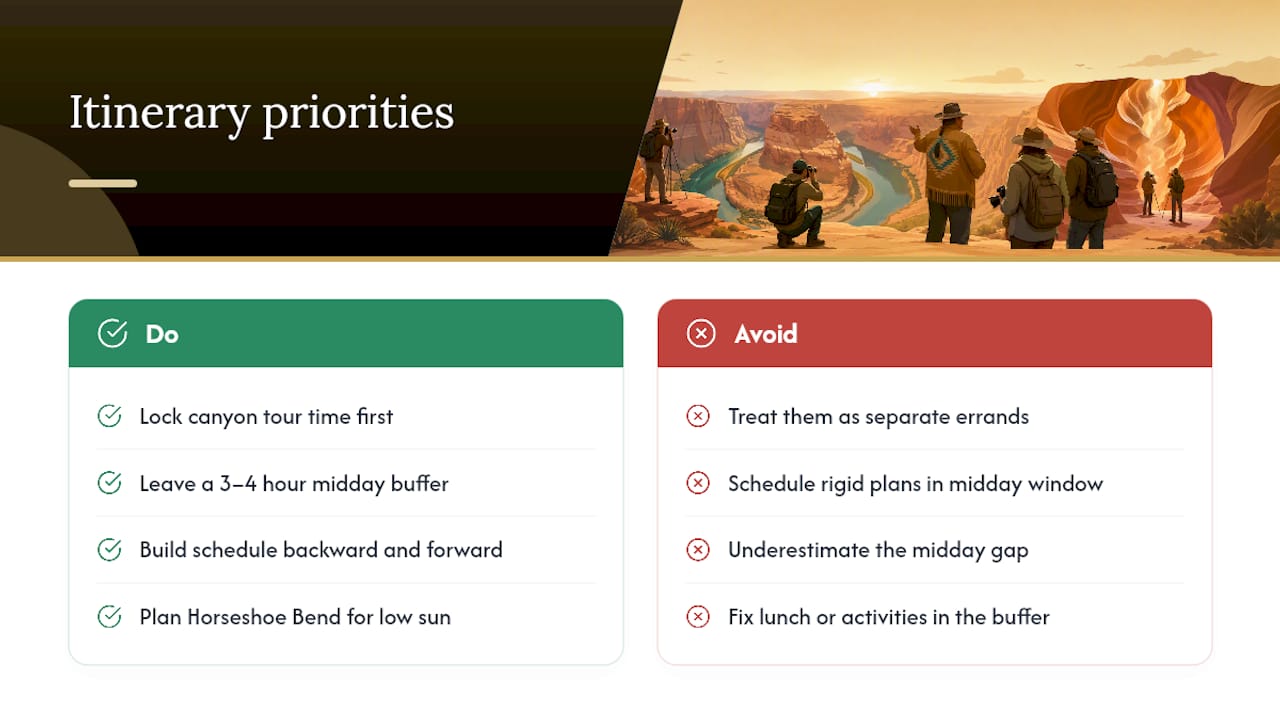
Where most itineraries fall short is underestimating the midday gap. Three to four hours between a mid-morning canyon tour and a late-afternoon Horseshoe Bend visit sounds like dead time, but it's actually the buffer that keeps the whole day from collapsing if your canyon tour runs long or a monsoon cell rolls through. Don't schedule anything rigid in that window.
If I had to prioritize one thing, it's this: lock your canyon tour time first, then build backward and forward from it. Everything else, lunch, Lake Powell, even Horseshoe Bend, bends around that one fixed appointment.
*— Chris
Book Your Antelope Canyon and Horseshoe Bend Day the Easy Way
Grandcanyonjourneys is the alternative to piecing together your own permits, parking, and drive times for this trip. Every private, Navajo-guided Antelope Canyon & Horseshoe Bend tour runs on the exact sequence this article lays out, morning canyon light, late-afternoon golden hour at the rim, with door-to-door pickup, an expert local guide, and park fees built into the booking instead of tallied up at three separate checkout counters.
If you're extending the trip toward the South Rim afterward, a Private Grand Canyon Day Tour picks up where this itinerary leaves off, same private, no-stranger-shuttle-bus approach, just a different canyon. Check tour dates and availability now to lock in your preferred morning canyon slot before peak season fills up.
Sources
Verify permit rules directly through the Navajo Nation Parks operators list before booking any canyon tour. Cross-check seasonal timing against month-by-month Antelope Canyon guidance, and review combo logistics through the Antelope Canyon to Horseshoe Bend planning guide.
- Navajo Nation Parks — Guided tour operators (Antelope Canyon)
- Best time to visit Antelope Canyon (Navajo Tours)
- Antelope Canyon and Horseshoe Bend combo guide (Slot Canyon Guide)
FAQ
Can You Do Horseshoe Bend and Antelope Canyon in One Day?
Yes, and it's the most common way visitors see both. Book your Antelope Canyon tour for mid-morning, then head to Horseshoe Bend in the late afternoon for golden-hour light, with roughly 10 to 15 minutes of drive time between the two.
Do You Need a Guide to Visit Antelope Canyon?
Yes, a guide is mandatory. Antelope Canyon sits on Navajo Nation land, and only authorized Navajo guides can bring visitors into the canyon, with a $15 per person, per location, per day entry fee added on top of the tour price.
What Is the Best Time of Day to See Antelope Canyon's Light Beams?
The strongest beams appear roughly between 10:30 a.m. and noon during peak season, when the sun sits high enough to shine directly down into the slot. That window shrinks or disappears outside the late March through early October beam season.
Is Horseshoe Bend Better in the Morning or Evening?
Evening, without question. Morning light hits the canyon walls flat and gray, while the hour or so before sunset lights the sandstone up in deep orange tones and gives the river far more contrast.
How Much Does It Cost to Visit Horseshoe Bend and Antelope Canyon?
Expect a $15 per person, per location, per day permit fee for Antelope Canyon plus your guided tour price, and about $10 per vehicle to park at Horseshoe Bend. Grandcanyonjourneys lists current pricing for its Navajo-guided combo tour directly on its tour page.