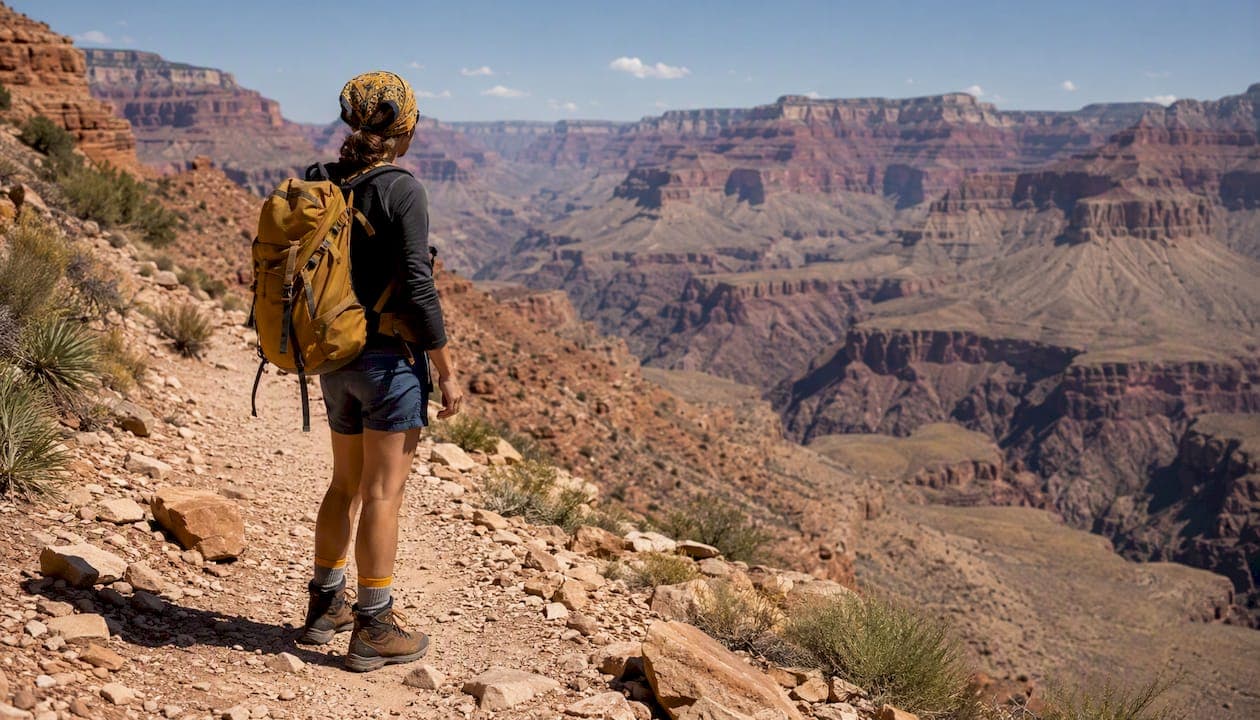
The Ooh Aah Point hike is about 1.8 miles roundtrip on the South Kaibab Trail, with roughly 790 feet of elevation change and a typical finish time of typically 1 to 2 hours. For most day visitors, it's the single best short hike in Grand Canyon National Park: panoramic ridgeline views, manageable distance, and a turnaround point that rewards you long before the trail gets serious. The catch is real, though. There is zero shade and zero water on the entire South Kaibab Trail, and the climb back out hits harder than the descent suggests it will.
Quick facts:
- Distance: about 1.8 miles roundtrip (approximately 0.9 miles one-way to Ooh Aah Point)
- Elevation change: an elevation change of approximately 790 feet roundtrip
- Time: typically 1 to 2 hours for most hikers
- Trailhead: South Kaibab Trailhead, shuttle access only (Orange Route from Grand Canyon Visitor Center)
- Water: None on trail. Bring everything you need from the rim.
- Shade: None.
Three decisions before you go: hike self-supported with careful prep, book a private guided hike through an operator like Grandcanyonjourneys, or skip it entirely if you're arriving without water, sun protection, or sturdy footwear. The first two are both solid choices. The third is how people end up calling for a ranger.
Table of Contents
- What does the Ooh Aah Point trail actually look and feel like?
- How do you get to the South Kaibab Trailhead?
- How hard is this hike, and how far should you go?
- What safety risks should you prepare for?
- What gear do you need for the Ooh Aah Point hike?
- When is the best time to hike to Ooh Aah Point?
- When does hiring a private guide actually make sense?
- Key Takeaways
- What most hikers get wrong about this trail
- See Ooh Aah Point with a private guide from Grandcanyonjourneys
- Useful sources for planning your visit
What does the Ooh Aah Point trail actually look and feel like?
The name comes from the moment it earns. You drop off the South Rim and within the first quarter-mile, the canyon opens in a way that stops most hikers mid-step. That's the "ooh." The "aah" comes a few minutes later when you round a ridgeline bend and the full depth of the inner canyon spreads out below you, with the Colorado River corridor visible on clear days.
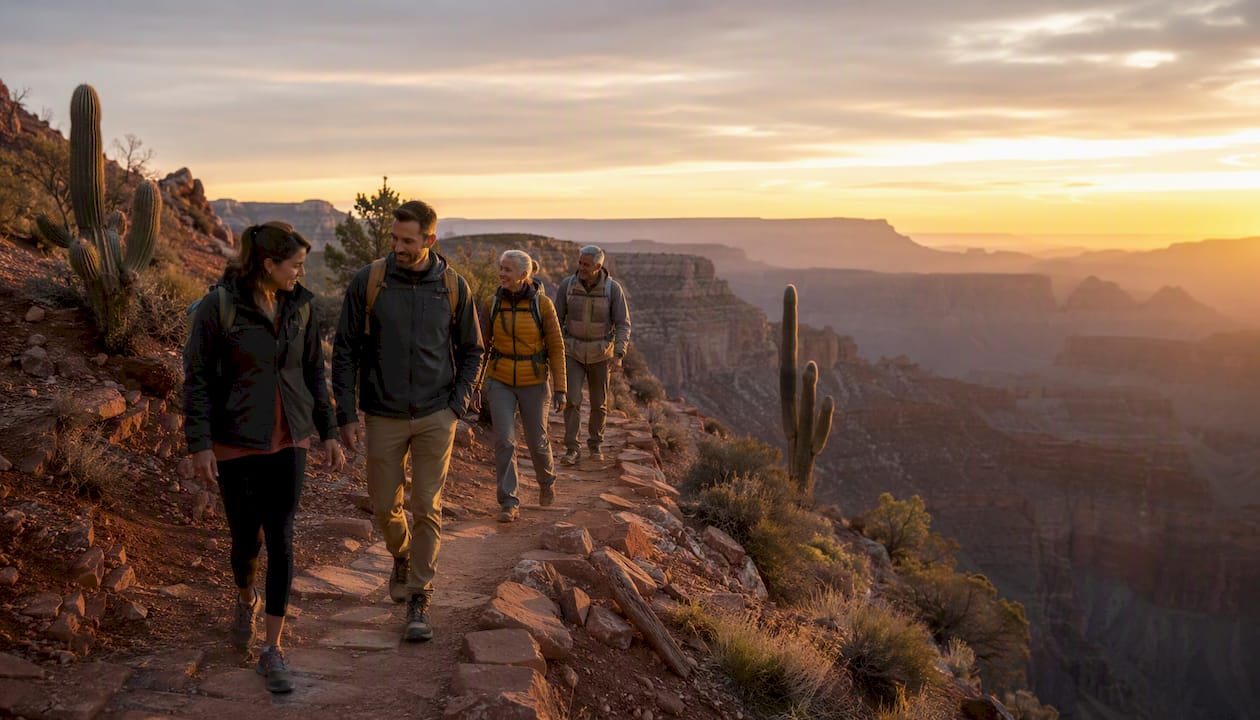
The trail follows a narrow ridgeline rather than a canyon wall, which is what makes the South Kaibab Trail's exposure so striking and so unforgiving. Views shift with every switchback. You're not walking alongside the canyon — you're walking down into it, with open air on both sides of the ridge for long stretches.
Underfoot, expect packed dirt mixed with sections of cobbled stonework. The cobbled surfaces help with erosion control but turn slick after rain, so wet-weather footing deserves extra attention. Loose gravel appears on steeper pitches. The descent feels deceptively easy; the switchbacks on the return are where most hikers feel the effort compound.
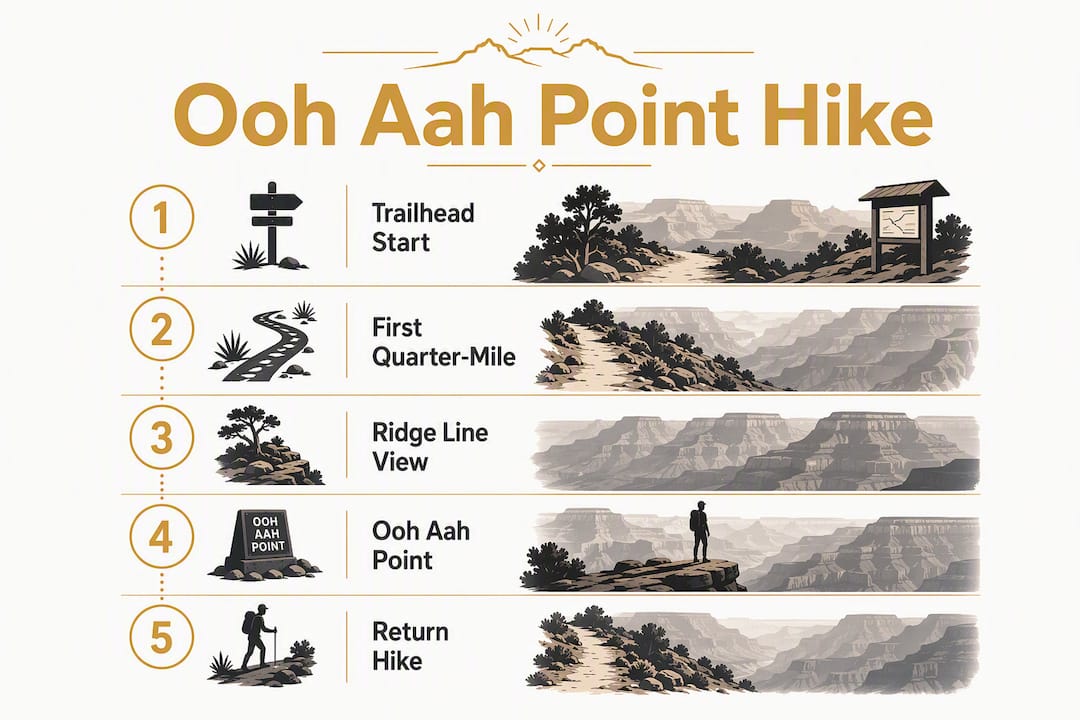
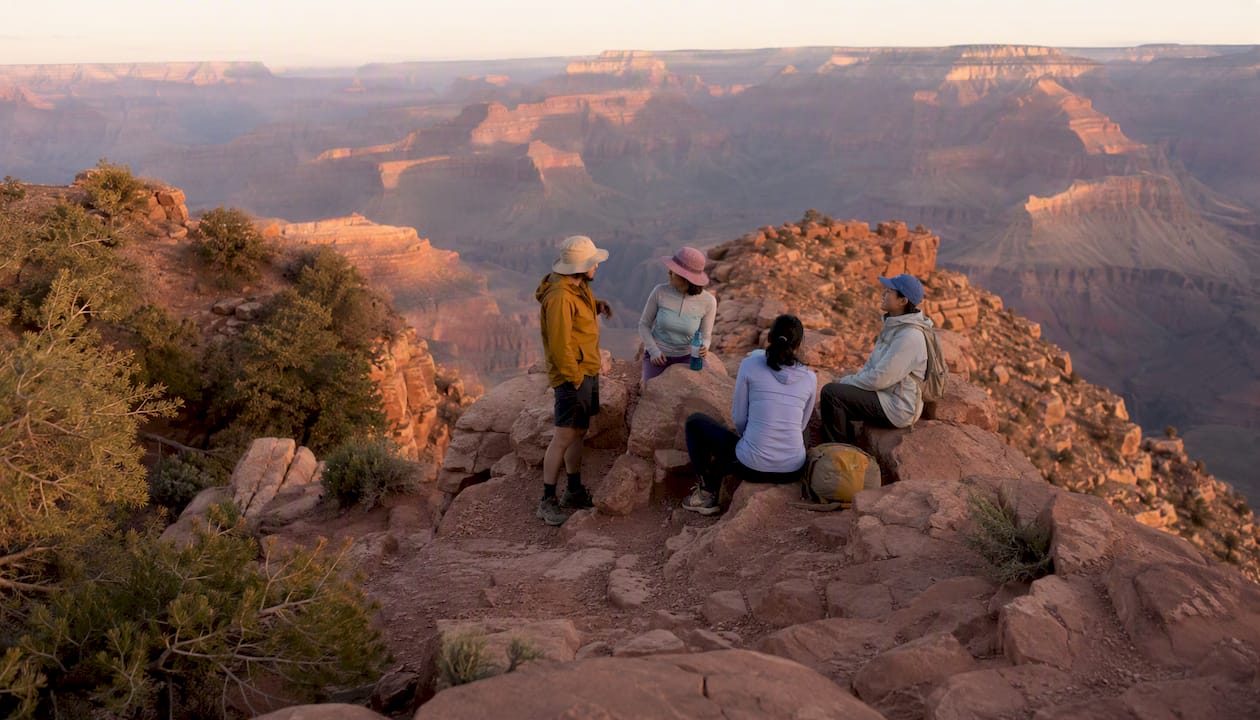
At Ooh Aah Point itself, the flat space is limited. The viewpoint sits on a narrow ridge with steep drop-offs on both sides, so crowding at peak times means you'll be sharing a small area. Step carefully near the edges and stay off the fragile cryptobiotic soil marked by signage. For photos, the best angle frames the canyon layers straight ahead rather than looking straight down. Sunrise light hits the upper canyon walls from the east and creates layered shadows that make the geology pop. Late afternoon reverses the light but adds warm color to the Redwall limestone.
The South Kaibab Trailhead sits at approximately 6,860 feet elevation. Ooh Aah Point drops to around 6,070 feet, a descent of roughly 790 feet over that 0.9-mile one-way stretch.
How do you get to the South Kaibab Trailhead?
There is no parking at the South Kaibab Trailhead. That rule applies year-round, including winter. Personal vehicles are not permitted at the trailhead, full stop. The only way to reach it is via the NPS Orange Route shuttle, which departs from the Grand Canyon Visitor Center near the park's south entrance.
Getting there step by step:
- Enter the park through the South Entrance Station and pay the entrance fee (or show your America the Beautiful pass).
- Drive to the Grand Canyon Visitor Center and park there.
- Board the Orange Route (Kaibab/Rim Route) shuttle. The shuttle runs frequently during peak season, with stops at the Visitor Center, Yavapai Geology Museum, and the South Kaibab Trailhead.
- Ride to the South Kaibab Trailhead stop. Toilets are available at the shuttle stop near the trailhead.
During peak summer months and spring break, check current shuttle schedules and park alerts before you leave your lodging. Shuttle frequency increases in high season but lines at the Visitor Center can be long by mid-morning. Arriving before 7:00 AM gives you the shortest wait and the coolest temperatures. The NPS Kaibab/Orange Route page posts current schedules and any service changes.
For current trail status, closures, and park-wide alerts, the Grand Canyon National Park main page is the authoritative source. Trail conditions can change after storms, and the NPS posts closures there before they appear anywhere else.
If you're staying in Sedona or coming from outside the park, the Grand Canyon Travel Planner from Grandcanyonjourneys is a useful resource for coordinating arrival timing and shuttle logistics around your itinerary.
How hard is this hike, and how far should you go?
The Ooh Aah Point hike is rated moderate for most adults, easy-to-moderate for fit hikers, and a genuine challenge for anyone not used to elevation or steep descents. The difficulty isn't the distance — it's the combination of altitude, full sun exposure, and a return climb that often takes about twice as long as the descent for average hikers.
| Turnaround Point | One-Way Distance | Roundtrip Distance | Elevation Change | Typical Roundtrip Time |
|---|---|---|---|---|
| Ooh Aah Point | 0.9 miles | 1.8 miles | ~790 ft | typically 1 to 2 hours |
| Cedar Ridge | about 1.8 miles | — | ~790 feet | 2–4 hours |
| Skeleton Point | — | — | — | 4–6 hours |
Ooh Aah Point is the right turnaround for families with older children, first-time canyon hikers, and visitors with limited time. Cedar Ridge adds meaningful distance and a broader view of the inner canyon without committing to a full-day effort. Skeleton Point is a serious undertaking that requires extra water, food, and a very early start.
The descent lulls you. Legs feel fresh, the views are distracting, and the grade doesn't feel punishing on the way down. The climb back is a different conversation. The switchbacks that felt like a gentle staircase going down become a cardiovascular test going up, especially after 10:00 AM when the sun has had time to heat the exposed ridgeline.
Know when to turn around early:
- You've used more than half your water before reaching the viewpoint.
- The temperature is climbing faster than expected and you have no sun protection.
- Any hiker in your group is showing signs of fatigue, dizziness, or slowing pace.
- You started late and the midday sun will be overhead on your return.
The NPS advises against hiking below Skeleton Point as a day hike due to distance and exposure. For Ooh Aah Point, the distance is forgiving — the conditions are not.
What safety risks should you prepare for?
The South Kaibab Trail has no water sources and no shade from trailhead to river. That combination makes it one of the most heat-exposed short hikes in the American Southwest, even at a distance of under two miles.
Water and hydration
Bring at least 1 liter of water per person for the Ooh Aah Point roundtrip, and more in summer or if you're hiking with children. There is no opportunity to refill after you leave the rim. Electrolyte tablets or salty snacks help prevent hyponatremia, which is a real risk when hikers drink large amounts of plain water without replacing sodium. A small bag of trail mix or crackers costs nothing and matters more than most people expect.
Heat and sun
Start before 8:00 AM in summer, ideally at or before sunrise. Wear a wide-brim hat, apply sunscreen to exposed skin before you leave the trailhead, and wear lightweight, light-colored long sleeves if you run hot. Heat exhaustion signs include heavy sweating, pale skin, weakness, and nausea. If anyone in your group shows these symptoms, stop immediately, move to any available shade (even a rock overhang), and have them drink water slowly. If symptoms don't improve within 15–20 minutes, flag down another hiker or ranger.
Footing
Trekking poles are worth carrying for the return climb. The cobbled sections and loose gravel are manageable going down but become ankle-twisting hazards when legs are tired on the way back up. Wear shoes with a firm sole and ankle support — trail runners or light hiking boots, not sandals or sneakers with smooth soles.
Emergency contacts and cell coverage
Cell coverage on the South Kaibab Trail is inconsistent. Do not rely on your phone for navigation or emergency calls below the rim. The park emergency number is 911, and rangers are stationed at the Visitor Center and along the rim. If someone in your group cannot continue, send another hiker back to the trailhead to notify rangers rather than waiting for a signal.
Pro Tip: On the climb out, use short, consistent intervals rather than pushing hard and stopping for long rests. Sitting down for five minutes cools your muscles quickly and makes the next push harder. Keep moving at a slow, steady pace with brief standing rests at each switchback instead.
What gear do you need for the Ooh Aah Point hike?
The hike is short, but the exposure means your pack needs to cover the basics without exception.
Core gear checklist:
- Water: a minimum amount of water per person, more in summer or for longer hikes like Cedar Ridge or Skeleton Point
- Sun protection: sunscreen SPF 30+, wide-brim hat, UV-blocking sunglasses
- Footwear: trail runners or light hiking boots with traction; no sandals or flat-soled shoes
- Layers: a light jacket or fleece for early morning starts (rim temperatures can be 20°F cooler than the canyon floor in shoulder seasons)
- Snacks: salty trail mix, crackers, or energy bars for electrolytes and energy
- Small first-aid kit: blister pads, bandages, pain reliever, moleskin
- Trekking poles: optional but recommended, especially for the return climb
- Headlamp: required if starting before sunrise for a sunrise hike
Seasonal adjustments:
- Summer (June–August): Add extra water (2+ liters per person), wear moisture-wicking clothing, and start no later than 7:00 AM. Consider turning back at Ooh Aah Point regardless of how you feel.
- Winter (November–February): Carry microspikes or traction devices. Ice forms on the cobbled sections and shaded switchbacks and is invisible until you're on it. Layers are non-negotiable.
- Spring and Fall: Morning temperatures at the rim can be cold enough for a down jacket; afternoon temperatures on the exposed ridgeline can reach the 80s°F. Pack for both in the same bag.
Keep your camera or smartphone in a zippered pocket or small bag. Dust is constant on dry days, and a dropped phone on a narrow ridgeline is a bad outcome. A small dry bag or zip-lock inside your pack protects electronics from both dust and the occasional unexpected rain shower.
When is the best time to hike to Ooh Aah Point?
Best months: March through May and September through November. Temperatures are cooler, crowds are lighter than peak summer, and the light quality for photography is exceptional. Spring brings occasional wildflowers on the rim and dramatic cloud formations over the canyon. Fall turns the canyon walls a deeper amber in late afternoon.
Summer (June–August): Possible, but only with an early start. The South Kaibab Trail becomes genuinely dangerous after 10:00 AM in July and August. If you're visiting in summer, treat sunrise as your deadline to be back at the trailhead, not your start time.
Winter: Quieter, colder, and beautiful in a completely different way. Snow on the rim against the red canyon walls is one of the more striking sights in the Southwest. The shuttle runs year-round, and the trail is open, but traction gear is required after any snowfall.
Daily timing: Sunrise is the best single window for the Ooh Aah Point hike. The light hits the canyon walls at a low angle, the temperature is at its coolest, and the viewpoint is less crowded than it will be two hours later. Plan to be at the South Kaibab Trailhead at or just before first light. That means catching an early shuttle or, if you're with a private guide, arranging a pre-dawn pickup.
For crowd management, the shuttle from the Visitor Center fills up fast between 8:00 AM and 11:00 AM. Arriving at the Visitor Center by 6:30 AM in peak season puts you ahead of the rush. If you're staying in Sedona or nearby, hotels in Sedona with early checkout flexibility make the pre-dawn logistics significantly easier.
When does hiring a private guide actually make sense?
Self-guided hiking to Ooh Aah Point is straightforward for prepared hikers. But there are situations where a private guide changes the experience from logistically stressful to genuinely memorable.
Families with limited canyon experience benefit most. The shuttle timing, trailhead navigation, and pacing decisions that feel obvious to experienced hikers are genuinely confusing on a first visit, especially with children. A guide handles all of it and keeps the focus on the experience rather than the logistics.
Visitors with tight schedules — one day at the Grand Canyon, sunrise as the goal — also get clear value. Coordinating a pre-dawn shuttle, arriving at the right time, and knowing exactly where to stand for the best light requires local knowledge that takes time to research and easy to get wrong.
Grandcanyonjourneys runs private guided hikes below the rim on the South Kaibab Trail led by Wilderness First Responder (WFR)-certified guides. That WFR certification matters on an exposed ridgeline with no water and variable cell coverage. Private pickup from your lodging, all park fees covered, and flexible timing for sunrise or midday visits are included. The pacing is tailored to your group, not a fixed schedule built around a bus.
For visitors who want cultural and geological interpretation alongside the hike — understanding what they're actually looking at when they stand at Ooh Aah Point — a guided experience adds a layer that no trail sign delivers.
Key Takeaways
The Ooh Aah Point hike is a 1.8-mile roundtrip on the South Kaibab Trail that delivers some of the Grand Canyon's best short-hike views, but zero water and zero shade make preparation non-negotiable.
| Point | Details |
|---|---|
| Distance and time | about 1.8 miles roundtrip, about 790 feet elevation change, typically 1 to 2 hours for most hikers. |
| No water, no shade | Bring at least 1 liter of water per person from the rim; there are no refill points on the trail. |
| Shuttle access only | Park at the Grand Canyon Visitor Center and take the NPS Orange Route shuttle year-round. |
| Pace the return climb | The climb out often takes about twice as long as the descent; use short intervals, not long seated rests. |
| Guided option | Grandcanyonjourneys offers private, WFR-certified guided hikes on the South Kaibab Trail with door-to-door pickup and all park fees included. |
What most hikers get wrong about this trail
The Ooh Aah Point hike looks easy on paper. Under two miles, a couple of hours, suitable for families. That framing is accurate but incomplete, and the gap between "accurate" and "complete" is where most visitor mistakes happen.
The trail doesn't punish distance. It punishes unpreparedness. A fit hiker who forgets water on a 90°F July morning is in more danger on this short route than an average hiker on a longer trail with water sources. The South Kaibab's ridgeline design, which is what makes the views so extraordinary, is also what removes every natural shelter. There is nowhere to duck out of the sun, no creek to refill from, no tree line to retreat into.
The second thing people underestimate is the return. Descending 790 feet over less than a mile feels like a warm-up. Climbing it back out, after standing at the viewpoint longer than planned, in warming temperatures, on tired legs, is a different physical event. Experienced guides at Grandcanyonjourneys consistently note that pacing and hydration separate the hikers who float back to the rim from the ones who struggle. That's not a warning to scare you off the trail. It's a reason to take the prep seriously so the hike becomes what it should be: one of the most rewarding short walks in the American West.
See Ooh Aah Point with a private guide from Grandcanyonjourneys
The logistics of the South Kaibab Trailhead — shuttle-only access, no parking, early timing for sunrise — are manageable when you know the system. When you don't, they eat into the experience before you've taken a single step on the trail.
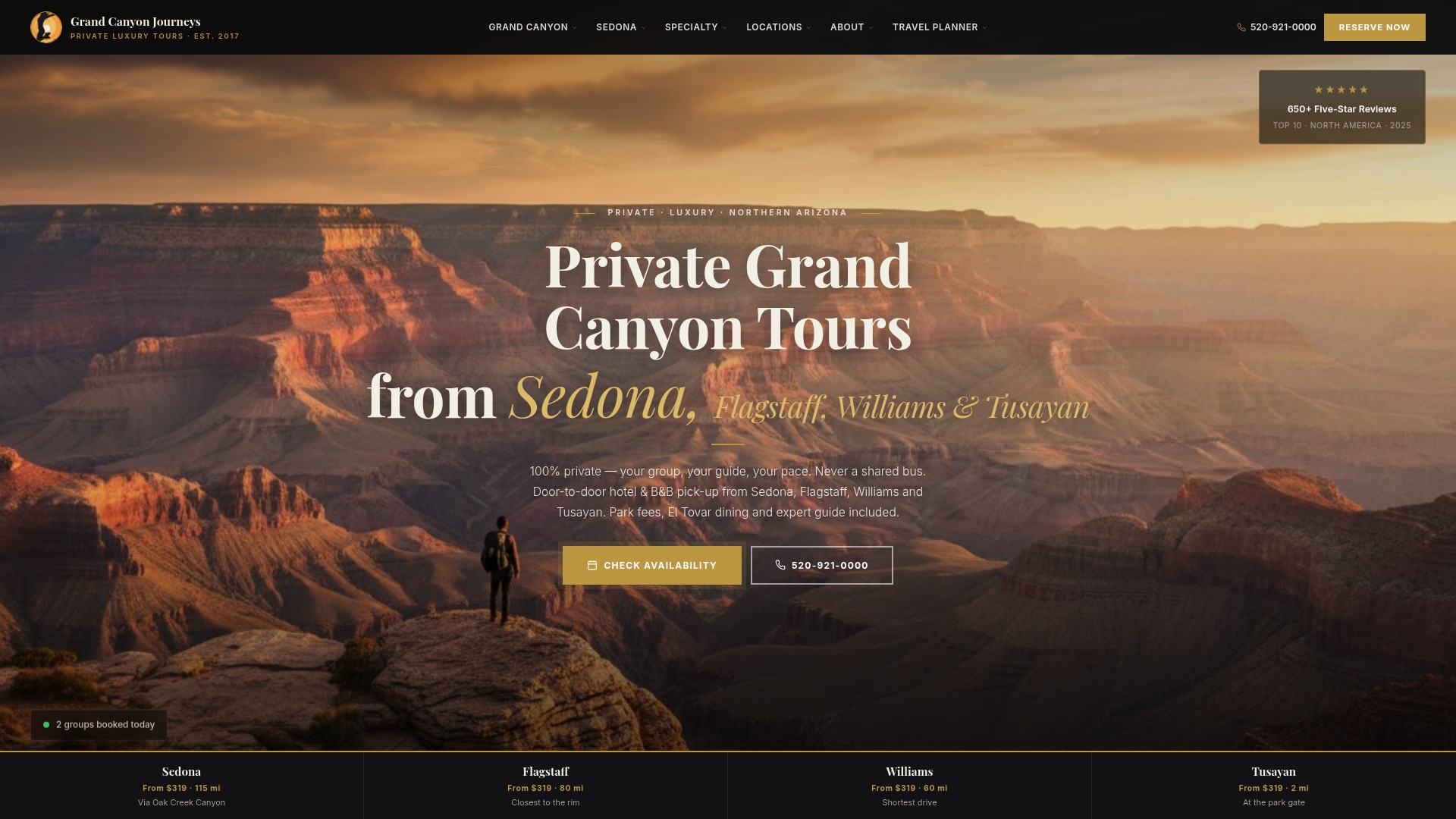
Grandcanyonjourneys handles every piece of it. Private door-to-door pickup from Sedona, Flagstaff, or Williams. WFR-certified guides who know the South Kaibab Trail in every season. Customizable timing for sunrise starts or midday visits. All park fees covered. No shuttle lines, no parking stress, no guesswork on pacing or turnaround decisions.
The private Grand Canyon hiking tour covers guided hikes below the rim on the South Kaibab Trail, with options to extend into a full South Rim day or combine with other Northern Arizona experiences. For visitors who want the full picture of what a single day at the Grand Canyon can be, the Grand Canyon Travel Planner is a good starting point for building your itinerary around the hike.
Useful sources for planning your visit
Before you go, these are the resources worth bookmarking:
- South Kaibab Trail — NPS: Official trail page with current conditions, distance markers, and the no-parking rule. Check this the day before your visit.
- NPS South Kaibab Trail PDF: Downloadable trail map with distance markers and elevation notes. Useful offline.
- NPS Kaibab/Orange Route Shuttle: Current shuttle schedules, stops, and seasonal frequency updates.
- Grand Canyon National Park — NPS: Park-wide alerts, entrance fee information, and closures. The authoritative source for anything that changes.
- NPS Getting Around Grand Canyon: Full transportation guide covering all shuttle routes, parking areas, and seasonal road access.
- National Weather Service — Grand Canyon: Rim-level forecast. Check it the morning of your hike, not the night before.