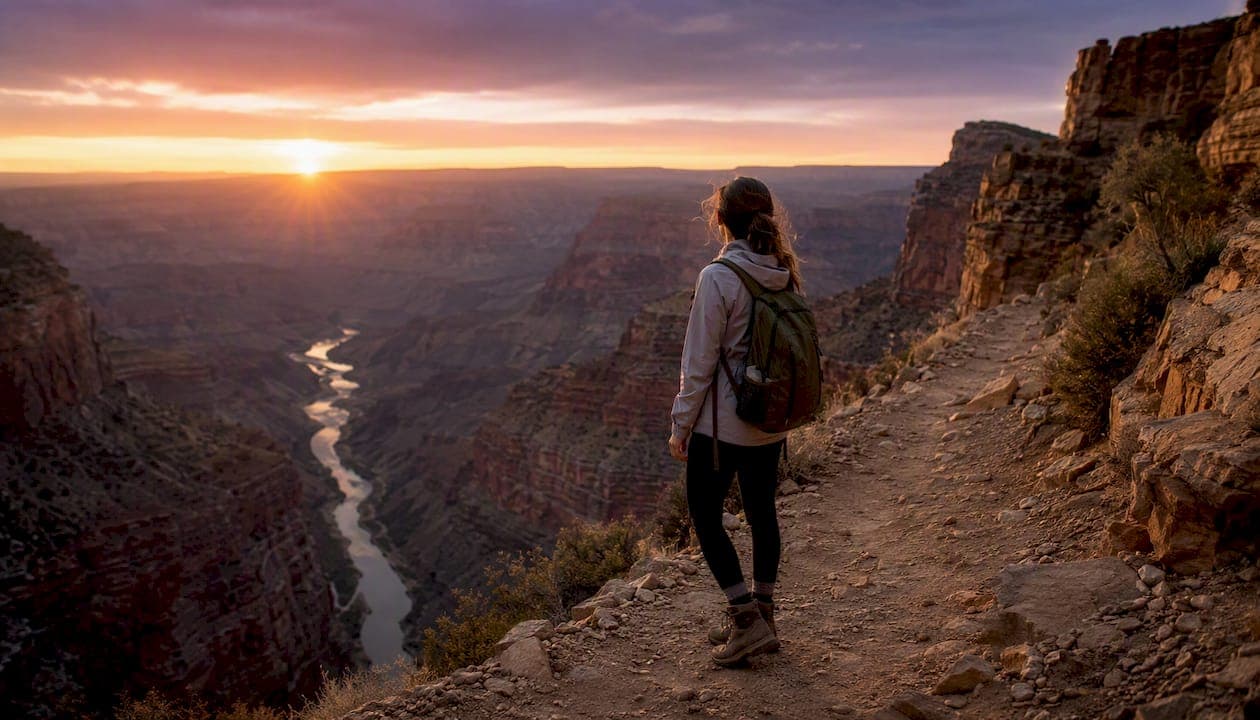
A fit, well-prepared hiker can absolutely complete the Skeleton Point hike as a day trip. The route follows the South Kaibab Trail from the rim to Skeleton Point and back, covering roughly six miles roundtrip with significant elevation change. Most hikers in good condition finish within a half day. Three things matter more than anything else before you go:
- No water on the trail. Carry everything you need from the top. There is not a single water source between the trailhead and Skeleton Point.
- Shuttle-only access. You cannot drive to the South Kaibab Trailhead. Plan your shuttle timing before you plan your start time.
- The climb out is the real challenge. The descent feels manageable. The 2,000-plus-foot climb back to the rim is where hikers get into trouble.
Skeleton Point is the safe turnaround. Treat it as the destination, not a waypoint.
Table of Contents
- What does the Skeleton Point hike look like mile by mile?
- How do you get to the South Kaibab Trailhead?
- Why is the climb out harder than it looks on paper?
- What should you pack for a Skeleton Point day hike?
- How should you pace yourself and when should you start?
- When does hiring a guide make sense for this hike?
- Key Takeaways
- Why Skeleton Point is worth every step — and why the rules exist
- Private guided hikes to Skeleton Point with Grandcanyonjourneys
- Authoritative sources to check before you go
What does the Skeleton Point hike look like mile by mile?
The South Kaibab Trail drops off the South Rim on an exposed ridgeline with no trees and no shade from the first step. That is not a complaint — the panoramic views open immediately and stay with you the entire way down. Here is how the route breaks down:
| Landmark | Approximate Distance | Description |
|---|---|---|
| Ooh Aah Point | 0.9 miles one-way | First major viewpoint and popular short turnaround |
| Cedar Ridge | 1.5 miles one-way | Recommended moderate turnaround with rest facilities |
| The Tipoff (saddle) | 2.7 miles one-way | Area where trail swings around the canyon structure |
| Skeleton Point | 3.0 miles one-way | Main turnaround for most day hikers with dramatic views |
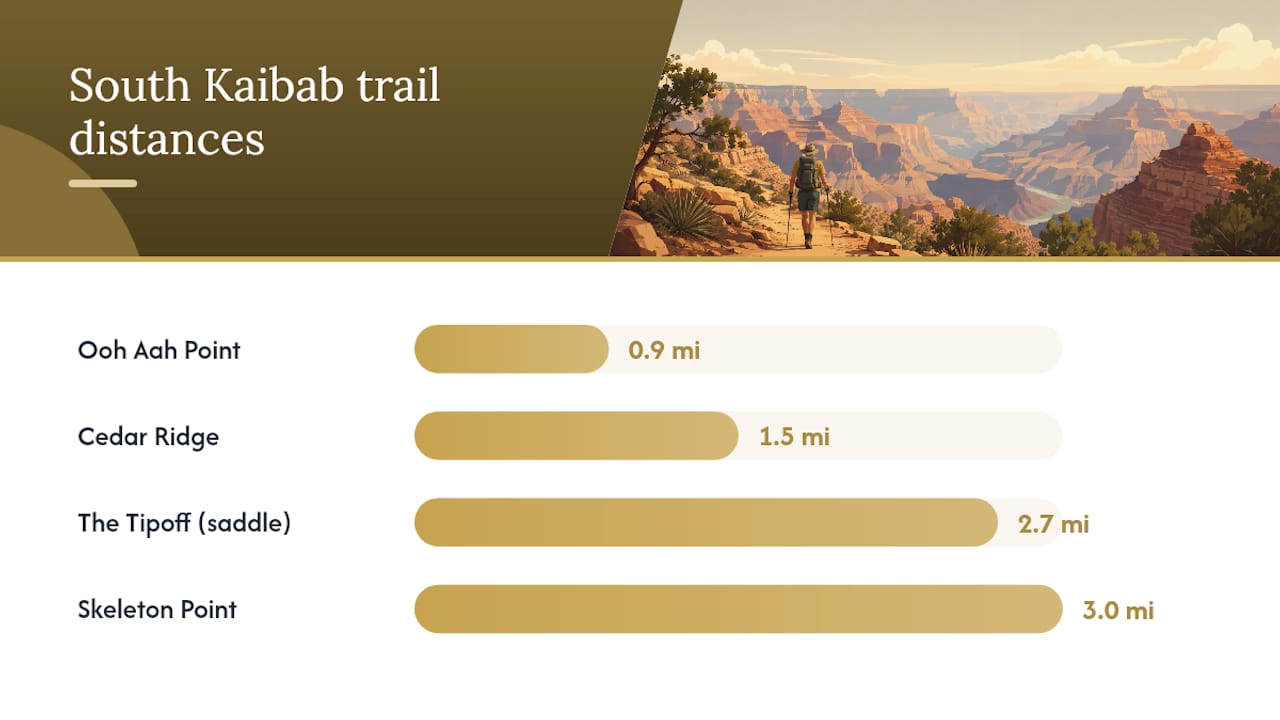
Ooh Aah Point arrives fast, at less than a mile in, and delivers the first jaw-dropping canyon panorama. Most hikers stop here for photos. It is a legitimate turnaround for anyone who wants a short rim-edge experience without committing to the full descent.
Cedar Ridge at 1.5 miles one-way is the recommended moderate turnaround for hikers who are not ready for the full day. There are pit toilets here, a flat rest area, and views that already feel enormous. For the Skeleton Point day hike, Cedar Ridge is your first real rest stop and a good place to assess how you feel before continuing.
Past Cedar Ridge, the trail narrows and the ridgeline character intensifies. You cross a dramatic saddle near the Tipoff at roughly 2.7 miles, where the trail swings around the canyon's inner structure and the Colorado River first comes into view far below. The switchbacks tighten here, the surface gets looser, and the exposure increases. This section demands attention underfoot.
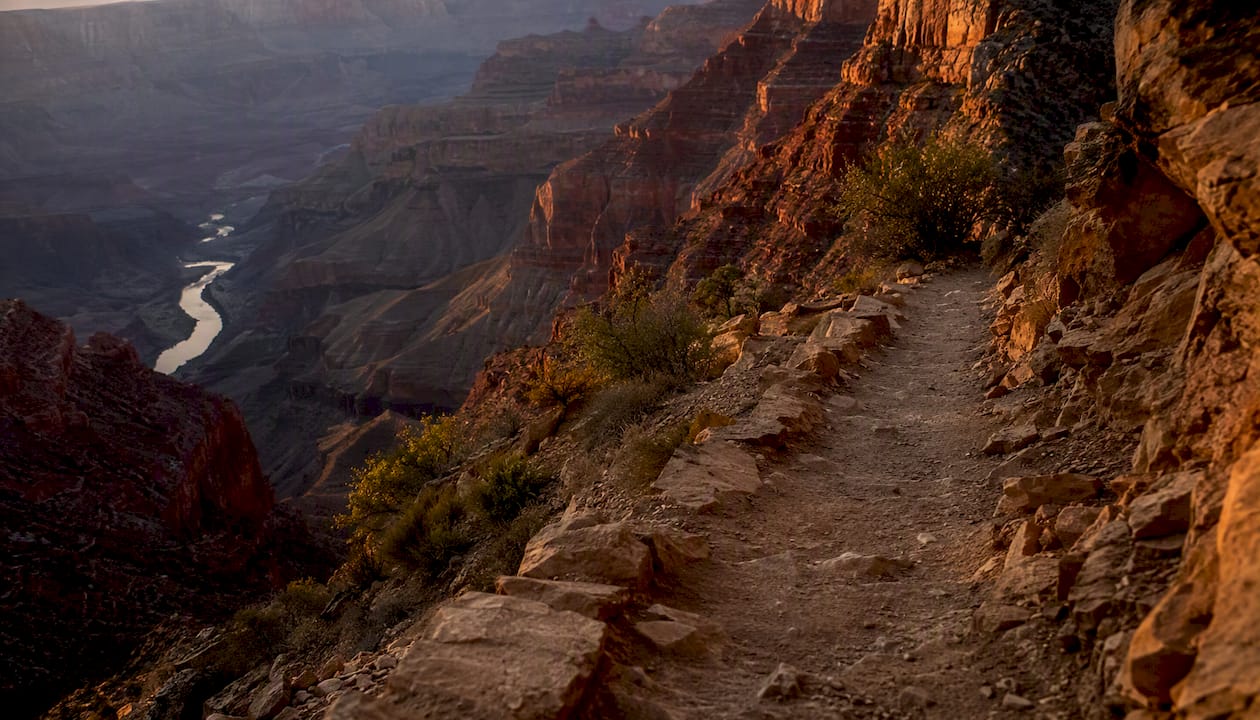
Skeleton Point sits at 3 miles one-way, perched on a rocky promontory with a direct sightline down to the Colorado River. The Grand Canyon Trust describes this as one of the most dramatic viewpoints accessible on a day hike in the canyon. It earns that description. The river looks impossibly far below, and the layered canyon walls stretch in every direction.
How do you get to the South Kaibab Trailhead?
The South Kaibab Trailhead has no public parking. Period. Getting there requires the park's shuttle bus system, and that single fact shapes everything about your start-time planning.
- Hiker Express shuttles — run in the early morning hours during peak season, specifically timed for hikers who want to reach the trailhead before sunrise. Check the NPS shuttle schedule page for current departure times, as they shift seasonally.
Pro Tip: Arrive at the Visitor Center parking lot before the first shuttle departs. In summer, that means being in the lot by 4:30–5:00 AM. The Hiker Express fills up fast, and a late start in July or August can put you in dangerous heat on the climb out.
Why is the climb out harder than it looks on paper?
The descent to Skeleton Point takes most fit hikers around 1.5–2 hours. The climb back takes 2.5–3.5 hours or more. That asymmetry surprises almost everyone doing this trail for the first time.
Going down feels easy because it is, aerobically. Your legs absorb the descent, your heart rate stays moderate, and the views keep you moving. The problem is that your leg muscles accumulate fatigue the whole way down without you feeling it. By the time you reach Skeleton Point and turn around, you are already partially spent — and then you face 2,000-plus feet of sustained climbing in full sun with no shade.
Experienced hiking guides are consistent on this: the descent is deceptive. Hikers who push the pace going down almost always struggle on the climb out. Treat the descent as a warmup, not a sprint.
The specific hazards on this trail are worth naming clearly:
Heat and exposure. The South Kaibab runs along an open ridgeline with zero tree cover. Inner-canyon temperatures routinely run 20°F or more above the rim. In summer, the inner canyon can exceed 110°F by midday. Check the National Weather Service forecast for both rim and inner-canyon conditions before every hike.
No water. There is no water anywhere on the trail between the trailhead and Skeleton Point. A seasonal spigot may exist at the trailhead from May through October, but once you step onto the trail, you are entirely self-sufficient.
Loose surface and winter ice. The trail surface is compacted dirt and rock, with loose sections on the switchbacks below Cedar Ridge. In winter, ice forms on shaded sections and can make the descent genuinely dangerous. Microspikes are not optional in January or February — they are necessary.
Mule trains. The South Kaibab is an active mule corridor. When a mule train approaches, step to the uphill side of the trail, stand still, and wait until the animals have fully passed. Do not try to squeeze past.
The NPS is unambiguous: Skeleton Point is the safe turnaround for a day hike. Continuing beyond requires overnight permits, significant backcountry experience, and a very different level of preparation.
What should you pack for a Skeleton Point day hike?
Pack light, but do not cut corners on water or sun protection. This is not a trail where you can improvise.
Hydration
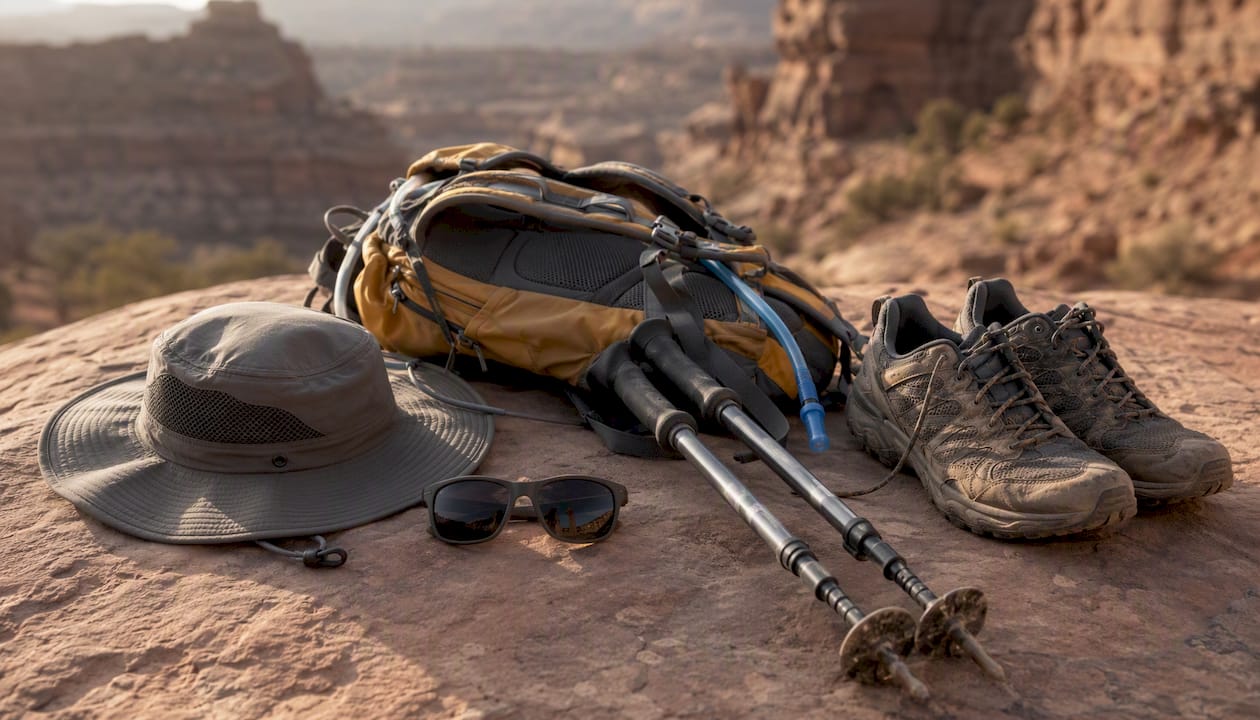
Carry a minimum of 3 liters of water for the roundtrip. In summer, or if you hike slowly, carry 4 liters or more. Drink on a schedule — roughly half a liter every 30–45 minutes — rather than waiting until you feel thirsty. Thirst is a lagging indicator of dehydration, especially in dry desert air. An electrolyte supplement (Nuun tablets, Liquid IV, or similar) helps replace what you sweat out.
Footwear and poles
Wear trail running shoes or light hiking boots with solid grip. Road running shoes are not adequate on the loose switchbacks below Cedar Ridge. Trekking poles make a meaningful difference on the climb out — they shift load to your arms and reduce knee stress on the descent. In winter, add microspikes to your pack before you leave the car.
Sun protection
Sunscreen, a wide-brim hat, and UV-blocking sunglasses are non-negotiable. The ridgeline exposure means full sun from the moment you step onto the trail. A lightweight long-sleeve shirt adds protection without much weight.
Layers
Rim temperatures in spring and fall can be 40°F at dawn and 75°F by midday. Bring a packable layer you can shed and stow. In winter, add insulated gloves and a beanie.
Emergency essentials
- Headlamp with fresh batteries (in case your return runs long)
- Small first-aid kit with blister treatment and pain relief
- Trail map or downloaded offline GPS (Maps.me or Gaia GPS work well)
- Whistle
- Energy-dense snacks: nuts, bars, or jerky — at least 300–400 calories per person
Leave No Trace
The South Kaibab has no trash cans below the rim. Pack out everything, including food wrappers and orange peels. Stay on the marked trail — the canyon's biological soil crust is fragile and does not recover from foot traffic. Human waste must be packed out below the rim; WAG bags are available at the Visitor Center.
How should you pace yourself and when should you start?
For a fit hiker, the descent to Skeleton Point takes roughly 1.5–2 hours. Budget 2.5–3.5 hours for the climb back, plus rest time at Skeleton Point. Total roundtrip: 4–6 hours, depending on fitness and pace.
The single most important timing decision is your start time.
Summer (June–August): Start at or before sunrise, ideally by 5:00–6:00 AM. Aim to reach Skeleton Point by 8:00–9:00 AM and be back on the rim by 11:00 AM at the latest. Midday heat in the inner canyon is genuinely dangerous. If you are not at Skeleton Point by 9:00 AM, consider turning around at Cedar Ridge instead.
Spring and fall (March–May, September–November): A 6:00–7:00 AM start works well. Temperatures are more forgiving, but the climb out still generates significant body heat. Plan to be back on the rim by early afternoon.
Winter (December–February): Start at sunrise, which arrives later. The cold is manageable, but ice on the trail is the primary risk. Check conditions the night before.
Pacing on the descent: Walk at a conversational pace. If you cannot hold a short conversation, slow down. Eat a small snack at Cedar Ridge and drink before you feel thirsty. At Skeleton Point, rest for at least 10–15 minutes, eat, drink, and honestly assess how your legs feel before turning around.
Pacing on the ascent: Short, steady steps beat long strides. Rest for 2–3 minutes every 20–30 minutes of climbing. Do not sit for extended periods — muscles stiffen quickly in the heat. Keep moving at a sustainable pace rather than pushing hard and stopping repeatedly.
When does hiring a guide make sense for this hike?
Most experienced hikers do the Skeleton Point day hike independently. But there are situations where a certified guide genuinely changes the outcome.
If this is your first time hiking below the rim, a guide handles the decisions you do not yet know to make: when to slow down, when to turn around, how much water you actually need versus how much you think you need, and what to do if someone in your group shows signs of heat exhaustion. That last point matters more than it sounds. Heat illness progresses fast in the inner canyon, and the nearest ranger station is not close.
High heat season is another clear case. In July and August, the margin for error on this trail narrows significantly. A guide who knows the canyon's temperature patterns and has managed groups in those conditions is not a luxury — it is a meaningful safety upgrade.
Groups with mixed fitness levels benefit from guided pacing. A guide can manage the group's pace, identify who needs to turn around early, and make that call without the social awkwardness of a friend group trying to reach consensus at 8,000 feet of exertion.
Grandcanyonjourneys runs private guided hikes below the rim on the South Kaibab Trail with Wilderness First Responder (WFR)-certified guides. WFR certification is the field standard for backcountry emergency response — it covers everything from heat illness management to fracture stabilization. Beyond safety, the private format means door-to-door pickup from Sedona or Flagstaff in a climate-controlled vehicle, park entry handled, and a guide who has done this route dozens of times and knows exactly where to stop, what to watch for, and how to read the group's condition in real time.
For anyone who wants the full Skeleton Point experience without the logistics overhead, that combination is hard to replicate on your own.
Key Takeaways
The Skeleton Point hike is a roundtrip on the South Kaibab Trail covering 6 miles with roughly 2,040–3,260 feet of elevation change — doable as a day hike for fit, prepared hikers who start early and carry enough water.
| Point | Details |
|---|---|
| Distance and elevation | 6 miles roundtrip with 2,000-plus feet of elevation change to Skeleton Point. |
| No water on trail | Carry sufficient water for the entire hike; no water sources exist between the trailhead and Skeleton Point. |
| Shuttle-only access | Park at the Visitor Center and take the Orange Route shuttle; confirm current schedules on the NPS shuttle page before your trip. |
| Start early | In summer, start early at or before sunrise; plan your hike to avoid the midday heat and be back on the rim well before noon. |
| Grandcanyonjourneys guided option | Private below-the-rim guided hikes with WFR-certified guides, door-to-door pickup, and park entry included. |
Why Skeleton Point is worth every step — and why the rules exist
The view from Skeleton Point is one of those rare moments where the Grand Canyon actually exceeds its reputation. You are standing on a rocky ledge with the Colorado River directly below, canyon walls rising in every direction, and nothing between you and the geology but air. It is worth the effort.
The NPS turnaround guidance exists because the canyon has a way of making hikers feel more capable than they are. The descent is genuinely easy. The views are genuinely spectacular. And then the climb back starts, and the heat builds, and the water runs lower than expected, and suddenly a trail that felt manageable becomes a medical situation. Rangers perform rescues on this trail every season, almost always from hikers who went further than they should have or started later than they should have.
Grandcanyonjourneys's WFR-certified guides operate on this trail with a clear protocol: conservative pacing, scheduled hydration, and a non-negotiable turnaround policy. That structure is not there to limit the experience. It is there because the canyon does not negotiate.
Private guided hikes to Skeleton Point with Grandcanyonjourneys
For hikers who want the full South Kaibab experience without managing every logistical detail themselves, Grandcanyonjourneys offers private guided below-the-rim hikes built around exactly this route.
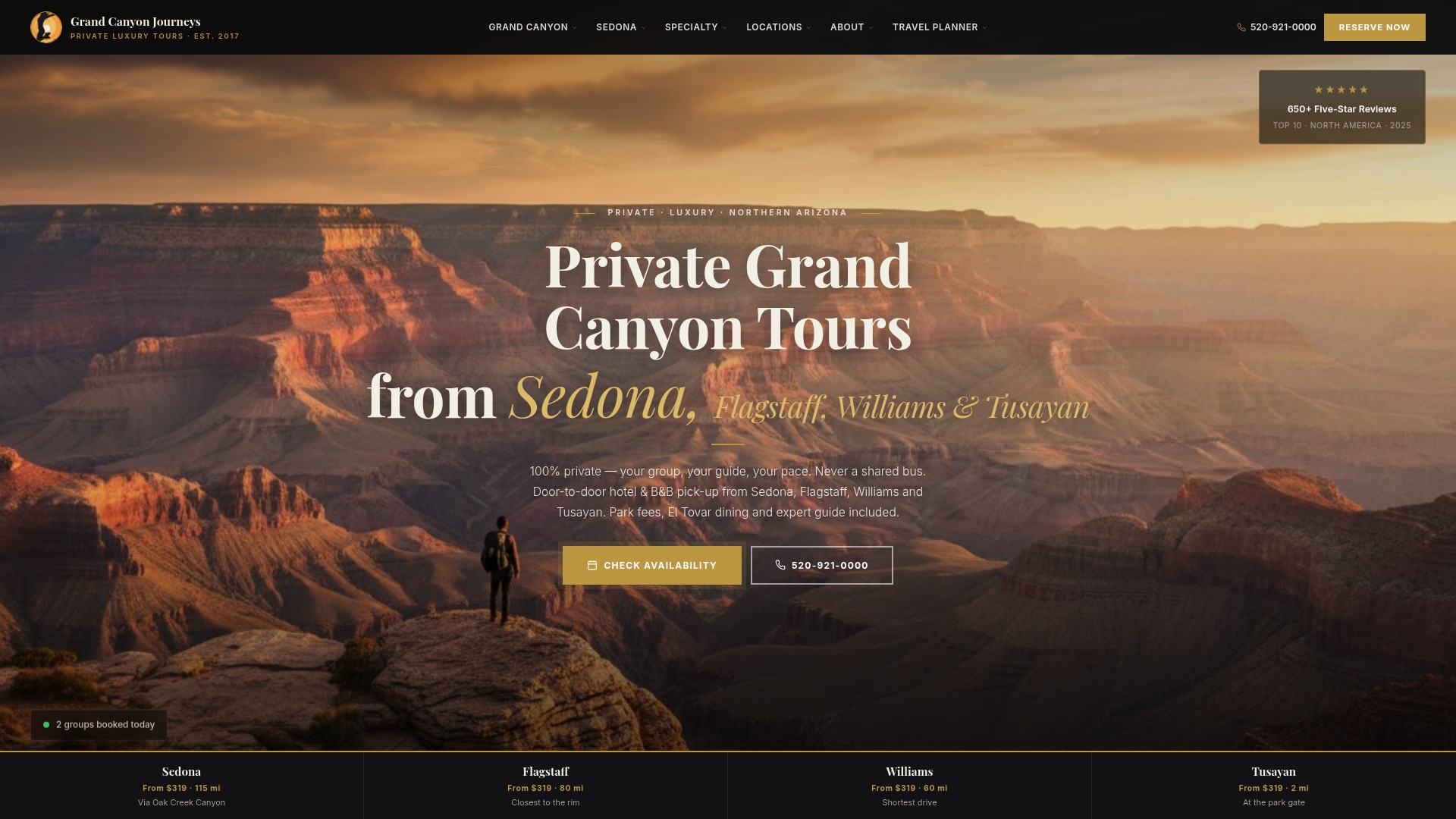
The guided format includes door-to-door pickup from Sedona in a climate-controlled luxury vehicle, park entry fees handled, and a WFR-certified guide who manages pacing, hydration, and emergency response for your group. Groups are kept small and private, which means the pace is set for your fitness level, not a crowd's average. Itineraries can be customized to include Ooh Aah Point and Cedar Ridge as dedicated stops, or pushed to the full Skeleton Point turnaround depending on your group's experience and the day's conditions.
This is the right option for first-time below-the-rim hikers, groups with mixed fitness levels, and anyone hiking in summer who wants a guide with real heat-management experience. To check availability or customize your itinerary, visit grandcanyonjourneys.com/tour/grand-canyon-hike.
Authoritative sources to check before you go
Conditions on the South Kaibab change with the season, and shuttle schedules shift throughout the year. Verify the following before your trip:
- South Kaibab Trail (U.S. National Park Service)
- https://www.nps.gov/grca/planyourvisit/upload/southkaibabtrail.pdf
- South Kaibab Trail: Hiking Guide for the Grand Canyon's Best Views | HikeDesert
- South Kaibab Trail Guide | HikingGuy
- South Kaibab Trail | Grand Canyon Trust
- nps.gov
- forecast.weather.gov