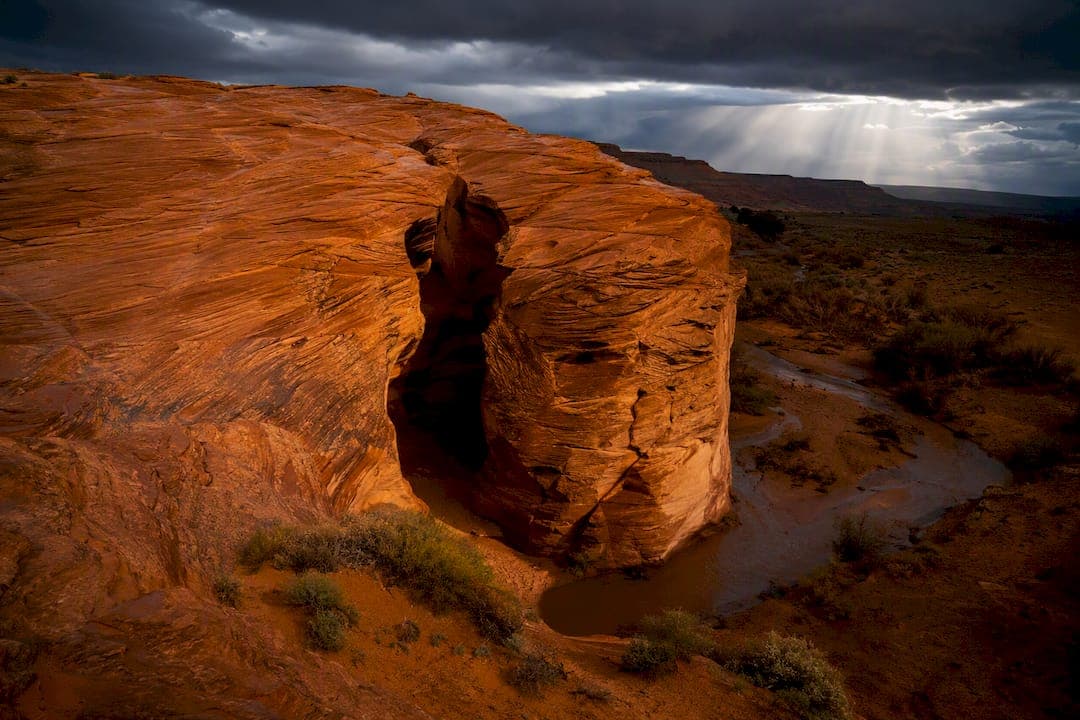
Late March through May and mid-September through October give you the most reliable mix of comfortable temperatures and strong light, while mid-July through mid-September brings monsoon season and real flash-flood risk. Light beams appear inside Upper Antelope Canyon from late March into early October, peaking in intensity around midday from May through July. Everything else about timing your trip flows from those three facts.
TL;DR:
- Visiting between late March and early October offers the best chance to see light beams, with peak midday intensity from May to July.
- Booking mid-April to October requires reserving several weeks to months in advance, especially for midday beam slots in May and June.
- Summer months bring the highest flash-flood risk due to monsoons, so morning tours are safer during July and August.
- October provides comfortable temperatures, weaker crowds, and still decent light, making it a top shoulder-season choice.
- Winter visits have minimal crowds and stable weather, but no light beams and shorter tour hours require flexible planning.
Table of Contents
- Antelope Canyon Seasonal Weather Patterns at a Glance
- Antelope Canyon Weather By Month: Averages, Beams, and Crowds
- How to Book and Pack Around Antelope Canyon's Weather
- Local Expertise Behind This Weather Planning
- Why Most Trip-Timing Advice Misses the Point
- Sources
Antelope Canyon Seasonal Weather Patterns at a Glance
Each season trades one advantage for another, and knowing the trade-off before you book saves you from a disappointing visit.
- Spring (March–May): Mild days, cool mornings, and the season's first light beams starting in late March. Crowds build but stay manageable through early May.
- Summer/monsoon (June–September): Peak beam intensity hits midday in May through July, but extreme heat and monsoon storms bring the highest flash-flood risk of the year, plus the year's biggest crowds and longest booking lead times.
- Fall (mid-September–October): Temperatures drop to comfortable ranges once the monsoon clears, light stays strong, and crowds thin out noticeably.
- Winter (November–February): Cold mornings, shortened tour hours, and the thinnest crowds of the year. Beams don't form, but soft, muted light gives the canyon a different kind of photogenic quality.
If you're weighing this against other regional stops, the seasonal calculus is similar for aerial tours over nearby canyons, where visibility and wind patterns swing just as hard between spring and monsoon season.
Antelope Canyon Weather By Month: Averages, Beams, and Crowds
Page, Arizona sits at roughly 4,300 feet, and that elevation drives sharper temperature swings than you'd expect from a desert town this far south, according to Slot Canyon Guide's climate breakdown. Here's what each month actually looks like, based on timeanddate's climate averages for Lower Antelope Canyon.
- January — Cold temperatures with minimal precipitation. No beams. Crowds are light and you can often book within a week or two. Pack a heavy coat, gloves, and layers for the morning cold.
- February — Slightly warmer, but still cold. No beams, and afternoons are more comfortable for walking. Bring a warm midlayer since morning tour groups start before the sun clears the canyon walls.
- March — Temperatures rise moderately. Beams begin appearing in the latter part of the month, per Slot Canyon Guide's seasonal analysis. Book two to four weeks out. Pack a light jacket for morning slots.
- April — Mild temperatures with reliable beams and increasing visitor numbers. Reserve a month or more ahead. A hat and sunglasses matter more than a coat now.
- May — High near 79°F, low around 49°F. This is peak beam season, with the strongest shafts of light appearing between 11 AM and 1 PM, according to Navajo Tours' photography guide. Book several weeks to a couple of months out. Bring water and sun protection; midday heat is climbing.
- June — Hot and dry conditions with excellent beam visibility. This is one of the hottest months to stand in a stone corridor at noon, so hydrate before you go in. Slots for peak hours book out fast; reserve well in advance.
- July — Hottest month with the onset of monsoon season lasting through mid-September, per Visit Arizona's guide to visiting the canyon. Beams are still strong at midday, but afternoon storms upstream can trigger flash floods and abrupt closures. Morning slots carry less risk. Book months ahead; this is peak season.
- August — Very hot with full monsoon activity. This month also shows some of the year's highest average precipitation alongside July, based on the timeanddate dataset. Choose morning tours when possible and build a backup day into your itinerary. Loose, breathable clothing and a dust-proof camera bag help.
- September — Monsoon risk tapers off mid-month; temperatures become more comfortable. Beams taper off by month's end. Booking lead time shortens to a few weeks once the season turns. Pack layers, since mornings start cooling again.
- October — Comfortable temperatures with slightly higher average precipitation but generally good weather, though storms are less violent than midsummer monsoon activity. This is one of the two best all-around months: comfortable temperatures, fading but still visible light, and thinner crowds. Reserve two to four weeks out.
- November — Cooler temperatures with no beams; soft light provides good photography conditions. Tours often run reduced hours. A day or two of lead time is usually enough.
- December — Coldest month with quiet conditions and limited tour availability. Holiday closures are common, so confirm operating days ahead of a trip. Dress for genuine winter cold, especially in the shaded canyon interior.
How to Book and Pack Around Antelope Canyon's Weather
Peak months (April through September) fill up fastest, so reserve your Page slot canyon tour two to four weeks ahead at minimum, and closer to two months out if you want a specific midday beam slot in May or June. Shoulder and winter months are more forgiving. Bookings often open up just one to four weeks prior, per Slot Canyon Guide's monthly planning notes.
- Choose morning slots from mid-July through mid-September to lower flash-flood exposure.
- Choose midday slots (roughly 11 AM to 1 PM) from late March through early October if beams are your priority.
- Expect operators to cancel or reschedule tours when storms build upstream, even under clear skies over Page itself, since the canyon is a watershed and distant rain still floods it.
- Pack layers for cold mornings in fall through spring, sun protection and water for summer midday heat, and a dust bag for your camera during monsoon months.
Pro Tip: If beams are the whole point of your trip, build in a second tour day. Storms can bump your original slot, and a backup day is the only real insurance against a wasted trip during monsoon season.
For the full seasonal picture beyond Antelope Canyon itself, Grandcanyonjourneys' Grand Canyon weather guide breaks down how the same monsoon and shoulder-season patterns affect a broader Northern Arizona itinerary.
Local Expertise Behind This Weather Planning
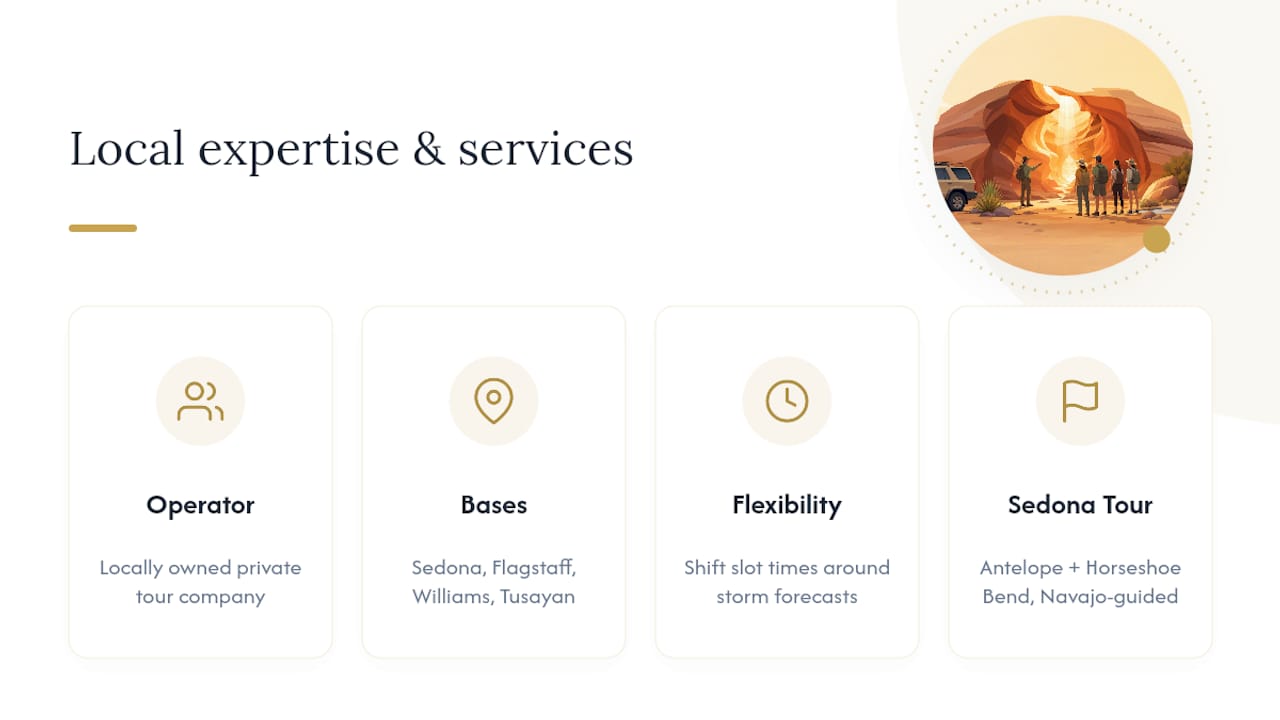
Grandcanyonjourneys is a locally owned Northern Arizona private tour operator running trips out of Sedona, Flagstaff, Williams, and Tusayan, which means guides watch these weather patterns firsthand every season. That local vantage point lets private itineraries shift slot timing around storm forecasts instead of locking you into a fixed group schedule. If you're pairing Antelope Canyon with a broader trip, the Antelope Canyon and Horseshoe Bend tour from Sedona builds that flexibility into a Navajo-guided itinerary.
Why Most Trip-Timing Advice Misses the Point
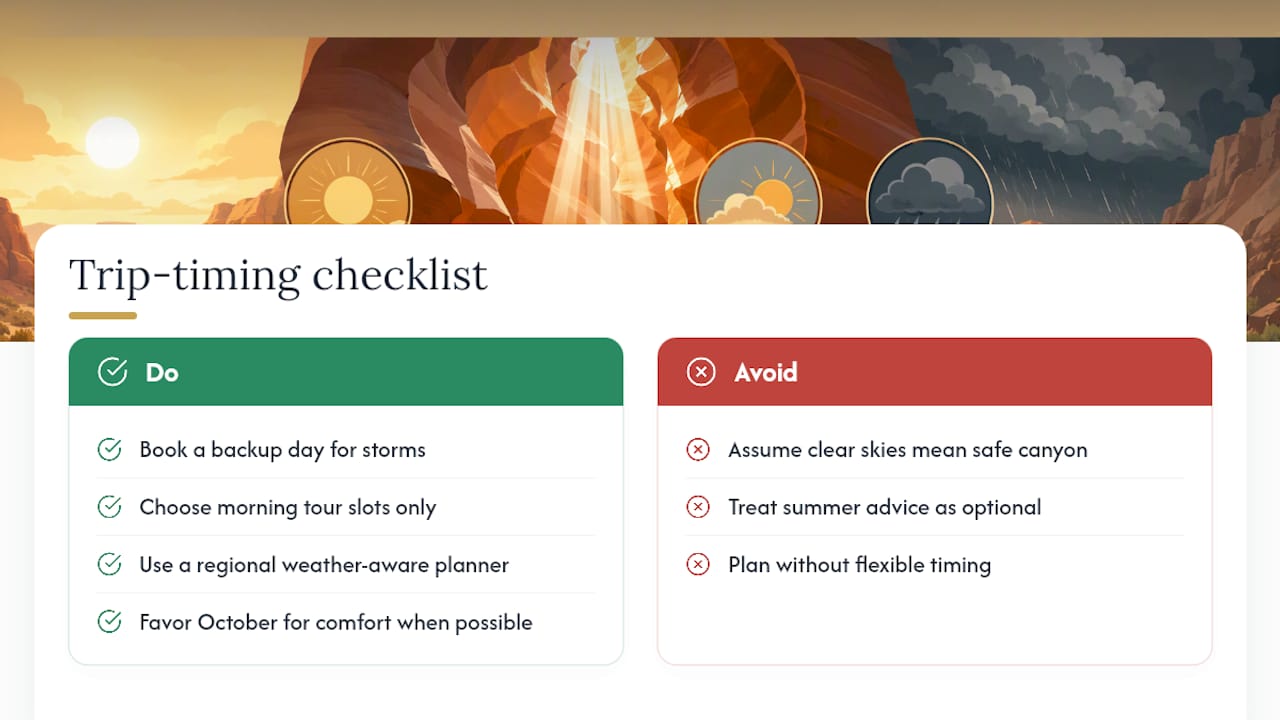
Most guides treat Antelope Canyon weather involves a complex trade-off between light quality, heat, and storm risk: is it hot, is it cold, go or don't go. That framing undersells the real decision, which is a three-way trade-off between light quality, heat, and storm risk that shifts week by week, not season by season. Certain months deliver the best beams of the year but are also marked by high heat and tight booking windows. October quietly beats both of them for overall comfort, even though it rarely gets mentioned in the same breath as "peak season."
The bigger blind spot is treating clear skies over Page as a safety signal. They aren't. The canyon is carved by water that falls somewhere else entirely, so a storm forty miles upstream can flood a corridor under a cloudless sky. Anyone booking a summer trip should build in a backup day and prioritize morning slots without exception, not treat that advice as optional caution. If you're planning multiple stops, a Grand Canyon travel planner that accounts for this kind of regional weather variability will save you more grief than any packing list.
— Chris
Sources
This article draws its monthly temperature and precipitation figures from timeanddate's Lower Antelope Canyon climate records, safety guidance from Visit Arizona's canyon visiting guide, and seasonal timing analysis from Slot Canyon Guide, along with photography-specific advice from Navajo Tours.
- Timeanddate
- A guide to visiting Antelope Canyon the right way — Visit Arizona
- Best Time to Visit Antelope Canyon (Slot Canyon Guide)
- Page, Arizona weather: month-by-month guide — Slot Canyon Guide