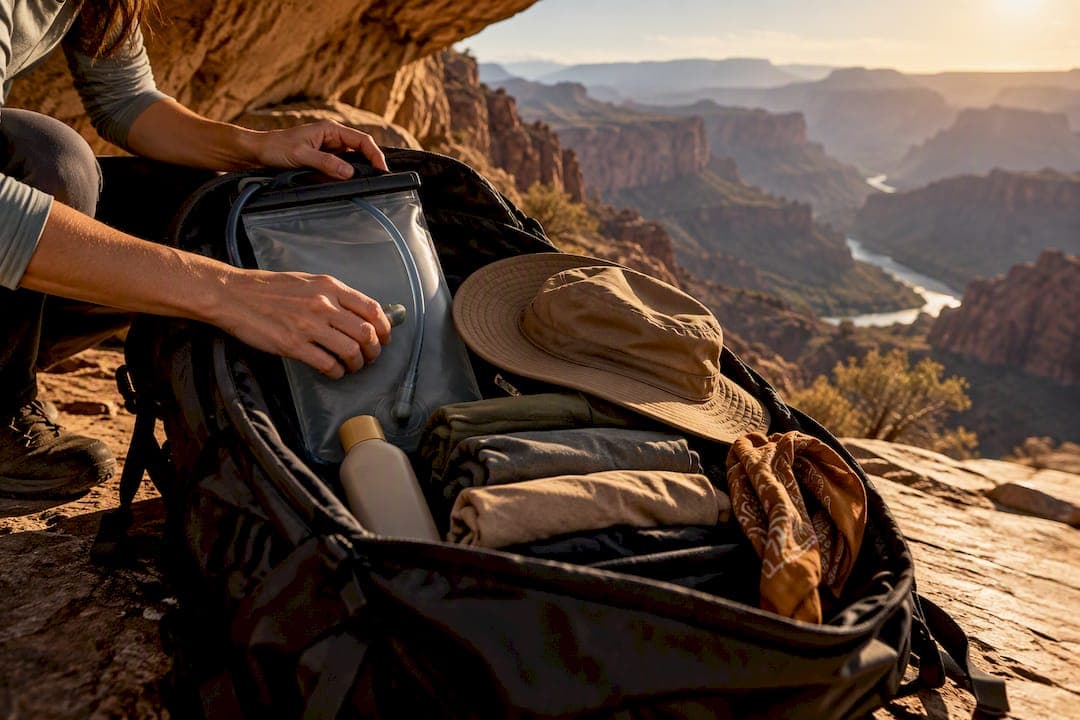
Water, sun protection, breathable layers, real hiking shoes, and electrolytes: that's your Arizona summer packing list in one sentence. Everything else in your bag is negotiable. The details that matter most, how much water, which fabrics, when to add a rain shell, come down to hydration math and elevation swings most visitors never plan for.
TL;DR:
- Hydration needs are extreme, with a minimum of 6 to 8 liters required for a full rim-to-river hike in summer heat.
- Use only UPF-rated synthetic or merino fabrics to protect against UV, and pack layered clothing for temperature swings from desert day to mountain night.
- Pack a 15 to 20 liter daypack with quick-dry clothes, safety gear, and extra water, especially during monsoon season when flash floods can occur unexpectedly.
- Prioritize electrolyte tablets and sufficient water over clothing variety, as hydration and sun protection are vital for safe Arizona summer trips.
- Consider booking guided private tours to simplify planning, as guides manage hydration, route, and safety, reducing the risk of heat exhaustion or flash floods.
Table of Contents
- What Should Be On Your Arizona Summer Packing List?
- How Much Water Do You Actually Need in Arizona Heat?
- What Fabrics and Layers Actually Work in Arizona Summer?
- What Shoes and Gear Do You Need for Grand Canyon Trails?
- How Does Monsoon Season Change What You Should Pack?
- How Many Days of Clothes Should You Actually Pack?
- Why Trust This Arizona Summer Packing Guide?
- What Food and Snacks Actually Hold Up in Arizona Heat?
- Should You Pack Light or Pack Heavy for Arizona Summer?
- What Should You Pack Differently for Kids or Older Travelers?
- The Real Priority Order Nobody Tells You
- Want to Skip the Packing List Altogether?
- Where This Guide's Safety Information Comes From
- Sources
- FAQ
What Should Be On Your Arizona Summer Packing List?
A full Arizona trip checklist breaks down into seven categories, and skipping any one of them is how people end up cutting a hike short or nursing a sunburn through dinner. Here's the complete breakdown, organized so you can pack by category instead of hunting through a single giant list.
Clothing:
- Two to three UPF-rated shirts (long-sleeve for hiking, short-sleeve for town)
- Convertible pants that zip into shorts
- One or two pairs of shorts for low-desert afternoons
- A light midlayer (fleece or packable puffer) for high-elevation evenings
- Swimwear if your hotel has a pool, which most do in summer
- Breathable sleepwear, since desert nights don't always cool off as much as you'd expect
Sun protection kit:
- SPF 50+ sunscreen, mineral or chemical, applied generously and often
- Lip balm with SPF built in
- A wide-brim hat with at least a 3-inch brim
- UV-blocking sunglasses rated for 100% UVA/UVB protection
- Extra UPF clothing pieces to reduce how much sunscreen you actually need
Hydration and electrolytes:
- A 2 to 3 liter hydration bladder or two large refillable bottles
- Electrolyte tablets or powder packets, enough for every day you'll be active outdoors
- A backup collapsible bottle for the car
Safety and first aid:
- Compact first-aid kit with blister pads, adhesive bandages, and antiseptic wipes
- Headlamp with spare batteries
- Whistle (genuinely useful if you're hiking below the rim)
- Any prescription medications in their original containers
Electronics and navigation:
- Phone charger and a power bank rated for at least one full charge
- Offline maps downloaded before you lose signal
- A paper map as backup, since cell service disappears fast in canyon country and on tribal lands
- Car charger
Documents and money:
- Photo ID
- Any park passes or permits you've already booked
- Printed copies of tour or lodging reservations, in case your phone dies or signal drops
Car kit and daypack essentials:
- Shelf-stable snacks and a small cooler with ice
- Spare water beyond what's in your pack
- Jumper cables and a basic tire-repair kit for remote highway stretches
That's the full inventory. For a longer, printable version organized by trip length, Grandcanyonjourneys' Arizona packing guide covers seasonal variations in more detail.
How Much Water Do You Actually Need in Arizona Heat?
The National Park Service recommends roughly 1 liter of water per hour of activity during summer months, and a 6 to 8 hour rim-to-river hike requires a minimum of 6 to 8 liters. That's not a suggestion for the ambitious. It's the floor.
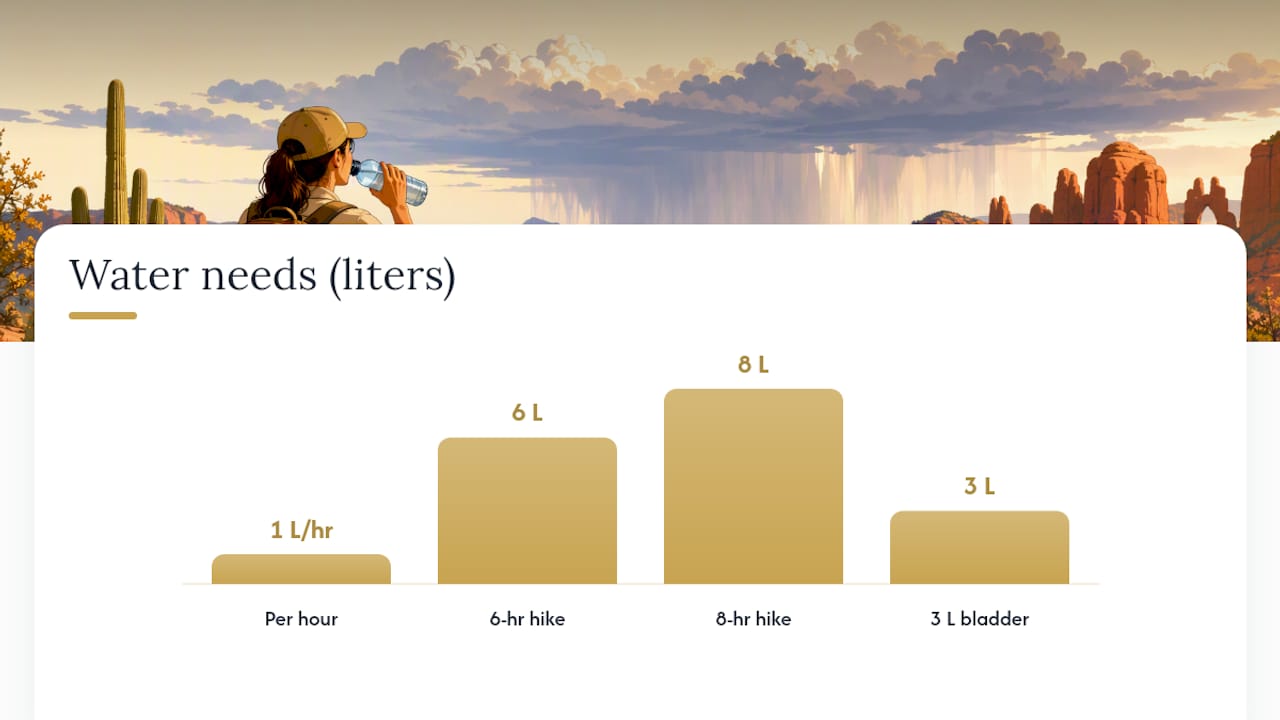
Here's a practical plan that works whether you're doing a short rim walk or a full-day hike:
- Pre-hydrate the night before and morning of any hike, don't wait until you're thirsty
- Sip water every 15 to 20 minutes rather than gulping it during breaks
- Replace electrolytes alongside water, since plain water without sodium can trigger hyponatremia in extreme heat
- Follow the NPS's own turn-back rule: head back once half your water supply is gone
- Never count on emergency water stations. They can be offline, and rangers still rescue dehydrated visitors every summer
A 3-liter hydration bladder beats carrying two bottles for anything longer than an hour outdoors. It's easier to sip from while walking, and you're less likely to skip drinking just because reaching for a bottle feels like a hassle.
What Fabrics and Layers Actually Work in Arizona Summer?
Skip the cotton. It absorbs sweat, dries slowly, and offers close to zero UV protection once it's damp. UPF-rated synthetics and merino-blend fabrics block far more sun and dry in a fraction of the time, which matters when you're sweating through three outfits a day.
Temperature swings by elevation catch a lot of visitors off guard. Low-desert spots can push past 110°F in the afternoon, while high-country hubs like Flagstaff drop into the 50s at night even in July, according to regional travel guides. Pack accordingly:
- Low desert days: UPF shirt, convertible pants or shorts, wide-brim hat, sunglasses
- High-elevation evenings (South Rim, Flagstaff, Williams): add a packable midlayer over your daytime shirt
- Town or dinner: a clean short-sleeve shirt and lightweight pants are plenty; Arizona dress codes stay casual almost everywhere, even in upscale Scottsdale
Your hat needs at least a 3-inch brim to shade your neck and ears, not just your face. Sunglasses should block 100% of UVA and UVB, full stop, since the glare off canyon rock and pale desert sand is stronger than most people expect.
Pro Tip: Pack two or three UPF shirts instead of six cotton tees. Fewer technical pieces beat more casual ones, and you'll do less laundry math trying to figure out what's clean.
What Shoes and Gear Do You Need for Grand Canyon Trails?
Trail runners work for maintained paths and short rim walks, where you want lighter shoes and better breathability. Switch to ankle-support boots for below-the-rim hikes with loose gravel, since a rolled ankle miles from the trailhead turns a good day bad fast.
Whatever you choose, break shoes in before your trip; new boots on a canyon trail is how blisters happen. Pack blister pads, a small tube of anti-chafe balm, and moisture-wicking socks as backup.
- Trail runners: better for South Rim walks, paved overlooks, short day trails
- Ankle-support boots: better for Bright Angel, South Kaibab, or any rim-to-river route
- Hydration bladder: easier sipping, higher capacity, best for hikes over an hour
- Bottles: simpler to refill at known water stations, fine for short walks
Size your daypack around the day, not the trip. A 15 to 20 liter pack with a rain cover handles a full hiking day; pack water and snacks near the top for quick access, with layers and first aid below. Grandcanyonjourneys' Grand Canyon packing guide breaks down rim-to-river gear specifics if you're planning anything below the rim.
How Does Monsoon Season Change What You Should Pack?
Arizona's monsoon season runs roughly mid-June through September, and storms that looked harmless an hour ago can flood a dry wash without warning. That changes what belongs in your bag from July onward.
Add these once monsoon season starts:
- A packable rain shell, not an umbrella, which is useless in canyon wind
- A waterproof phone pouch
- Quick-dry clothing instead of anything cotton-heavy
- A cheap emergency poncho stashed in your daypack as backup
The bigger change is behavioral, not gear-based. Skip slot canyons and dry washes entirely if there's any storm risk on the forecast, since flash floods there move fast and give almost no warning. Check local ranger alerts and the National Weather Service's monsoon page before committing to any route between June and September.
How Many Days of Clothes Should You Actually Pack?
Pack for 5 to 7 days, no matter how long your trip actually runs. Most Arizona towns, including Flagstaff and Williams, have laundromats, and rewashing UPF shirts and quick-dry layers costs less time and suitcase space than hauling 12 days of clothes across the state.
- Roll technical pieces into compression cubes to free up daypack room
- Build 2 to 3 repeatable outfit formulas rather than packing single-use items
- Choose double-duty pieces, like a sun shirt that also works as a light evening layer
- Do a laundry run midweek instead of overpacking from day one
Pro Tip: Before any long drive between Sedona, Flagstaff, and the canyon, top off your car's water supply, grab ice for the cooler, charge your power bank, and print your route in case you lose signal on the highway.
Why Trust This Arizona Summer Packing Guide?
Grandcanyonjourneys runs private tours out of Sedona, Flagstaff, Williams, and Tusayan every summer, which means seasonal heat and monsoon timing aren't abstract concerns, they're daily planning realities. This guide draws on that same operational knowledge, paired with NPS and EPA safety standards.
For deeper planning, three resources go further than this list:
- The Arizona packing guide for a full seasonal inventory
- The Arizona desert safety guide for heat and wildlife specifics
- The Grand Canyon travel planner for building a full itinerary
Planning a day hike below the rim? Start with the desert safety guide. Booking a private tour instead? The travel planner covers logistics start to finish.
What Food and Snacks Actually Hold Up in Arizona Heat?
Anything that melts, spoils, or gets crushed easily is off the list. Chocolate bars turn to soup in a hot car within 20 minutes, and soft bread gets flattened in a daypack by lunchtime.
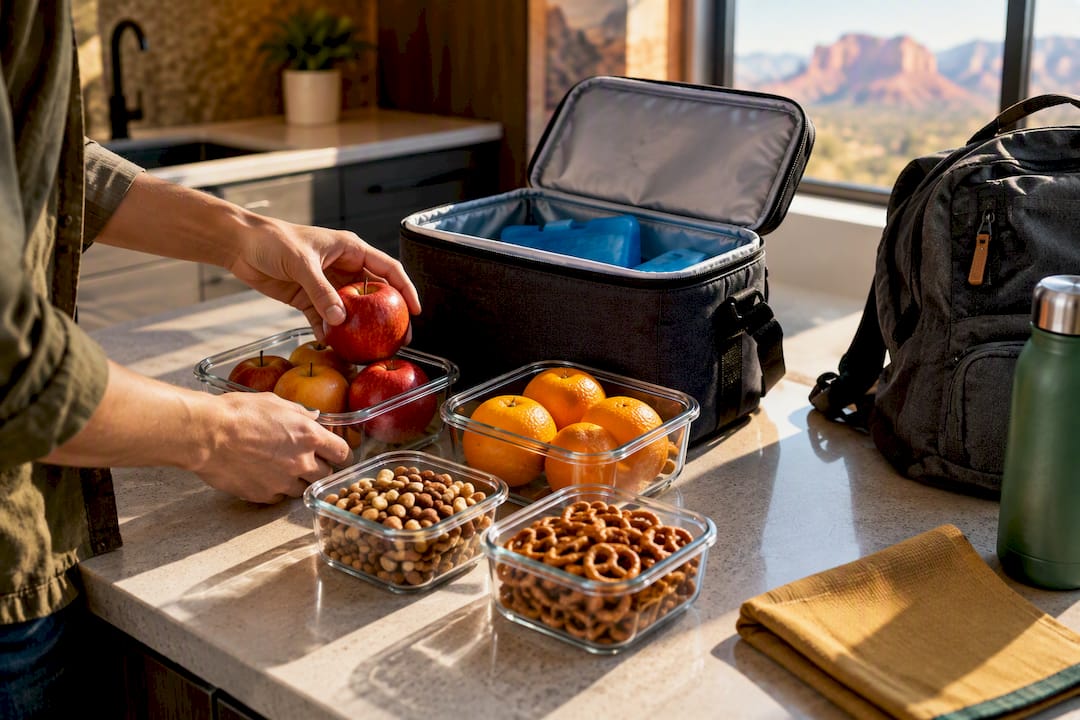
Pack shelf-stable, salt-forward snacks instead: trail mix, pretzels, jerky, and salted nuts all travel well and help replace sodium lost through sweat, which matters as much as the electrolyte tablets in your hydration kit. Dried fruit and granola bars work too, though they soften fast in direct heat, so keep them in an insulated pocket of your daypack rather than an outer mesh pouch.
For car snacks, a small cooler with ice packs earns its space, especially for cheese sticks, hummus cups, or anything that needs to stay below room temperature. Fresh fruit like apples and oranges holds up better than bananas or grapes, which bruise and overheat quickly.
Skip heavy, greasy foods before a hike. They sit poorly in extreme heat and can make nausea worse if you're already pushing your hydration limits. A light breakfast, steady snacking through the day, and a real meal once you're back in air conditioning beats trying to eat a big lunch on the trail.
If you're staying somewhere with a kitchen, stocking up on groceries early in your trip saves money and gives you more control over what you're eating in the heat. Resources on self-catering during travel cover smart provisioning strategies that apply well to a hot-weather Arizona trip.
Should You Pack Light or Pack Heavy for Arizona Summer?
Pack light on clothes, pack heavy on water and sun protection. That's the core tradeoff every Arizona summer trip comes down to, and most first-time visitors get it backward.
The instinct is to bring more outfits "just in case." But extra clothes take up space that should go to a bigger hydration bladder, backup electrolytes, or a second sunscreen tube. Five to seven days of technical clothing, supplemented with a midweek laundry run, beats a suitcase full of cotton tees you'll barely wear twice.
Where minimal packing fails is safety gear. Don't cut corners on your first-aid kit, headlamp, or backup water capacity to save space, since those items rarely take up much room anyway. A whistle and blister pads weigh almost nothing.
The smartest packers treat clothing as the flexible category and hydration, sun protection, and safety gear as fixed. If you're deciding what to leave behind, cut a shirt before you cut a liter of water capacity.
What Should You Pack Differently for Kids or Older Travelers?
Children dehydrate faster than adults and often don't recognize thirst until they're already behind on fluids, so pack extra water specifically earmarked for kids and prompt them to drink on a schedule rather than waiting for them to ask. A wide-brim hat with a chin strap keeps toddlers from tossing it off mid-hike, and UPF swim shirts double as sun cover for pool time and short walks alike.
Older travelers face a different risk profile. Certain medications increase sensitivity to heat and sun, so check with a doctor before a summer Arizona trip if that applies, and pack any prescriptions in original labeled containers. A collapsible walking stick and a wider-brim hat than you'd normally choose both help on uneven terrain and longer sun exposure.
For both groups, shorter activity windows matter more than gear. Plan hikes and outdoor time for early morning or the two hours before sunset, and treat midday as strict shade-and-rest time regardless of how the itinerary looks on paper. A hat, water bottle, and electrolyte packet clipped to a kid's daypack does more good than any amount of extra clothing.
The Real Priority Order Nobody Tells You
Most Arizona packing lists treat every item as equally important, and that's the mistake. Hydration capacity and sun protection aren't just line items on this arizona summer packing list, they're the two things that determine whether your trip goes well or ends in a clinic visit. Everything else, from your third pair of shorts to your phone charger, is comfort, not survival.
The conventional advice oversells clothing variety and undersells electrolyte planning. Water alone doesn't cut it in extreme heat; without sodium replacement, you can drink plenty and still feel terrible. That's the gap most packing guides skip entirely.
If you're deciding where to spend your prep time, spend it on your hydration system and your sun kit first. Nail those two categories, and the rest of this list is just efficient logistics.
— Chris
Want to Skip the Packing List Altogether?
A guided private tour with Grandcanyonjourneys cuts your packing list down to almost nothing, because the water, route knowledge, and heat-safety planning are handled for you. Instead of calculating liters per hour and tracking monsoon forecasts yourself, you show up with sunscreen and a hat, and a local guide handles the rest.
That matters most for readers who don't want to manage hydration math on a rim-to-river route or second-guess a monsoon forecast alone. The Private Grand Canyon Day Tour includes park fees and a guide who already knows where the shade is and when to turn back. If hiking below the rim is on your list, the Grand Canyon Hiking Tour pairs an experienced guide with the exact heat-safety judgment this article just walked you through. Check available dates and book your private tour before your summer trip fills in around it.
Where This Guide's Safety Information Comes From
This packing list leans on federal guidance rather than guesswork. The National Park Service's Hike Smart page sets the hydration math, the EPA's UV Index guide backs the sun-protection recommendations, and the National Weather Service's monsoon overview covers flash-flood timing and risk. All three are worth bookmarking before any Arizona summer trip, guided or not.
Sources
- Grand Canyon National Park — Hike Smart
- National Weather Service — Monsoon Overview
- National Park Service — Plan Ahead (Arizona)
FAQ
What Is the 5-4-3-2-1 Packing Method?
It's a rough packing formula: 5 tops, 4 bottoms, 3 pairs of shoes, 2 accessories, and 1 hat, though the exact numbers vary by source. For Arizona summer, adapt it toward fewer bottoms and more UPF tops, since heat and sweat wear through shirts faster than pants.
What Should I Wear in Arizona Right Now?
Lightweight, breathable UPF clothing works best year-round in summer conditions, paired with a wide-brim hat and UV-blocking sunglasses. Layer a packable midlayer for evenings at higher elevations like Flagstaff or the South Rim, where temperatures drop sharply after sunset.
What Are the Must-Do Things in Arizona During Summer?
Early-morning hikes, a Grand Canyon rim visit, and a Sedona day trip top most summer itineraries, since cooler morning hours make outdoor activities safer and more comfortable. A guided Sedona Highlights Tour or the Grand Canyon Sunset Tour both work around the day's heat rather than fighting it.
What Are the 10 Essential Travel Items for an Arizona Trip?
The core list is water (2 to 3 liters minimum), electrolyte tablets, SPF 50+ sunscreen, a wide-brim hat, UV-blocking sunglasses, UPF clothing, sturdy trail shoes, a basic first-aid kit, offline maps, and a phone charger. Every item on this arizona summer packing list ties back to one of those ten categories.
How Much Does a Private Grand Canyon Tour Cost?
Private Grand Canyon Day Tour pricing and inclusions can be found on the client's current tour pages. Pricing for hiking, sunset, and other regional tours is listed on the current tour pages, since rates vary by itinerary.