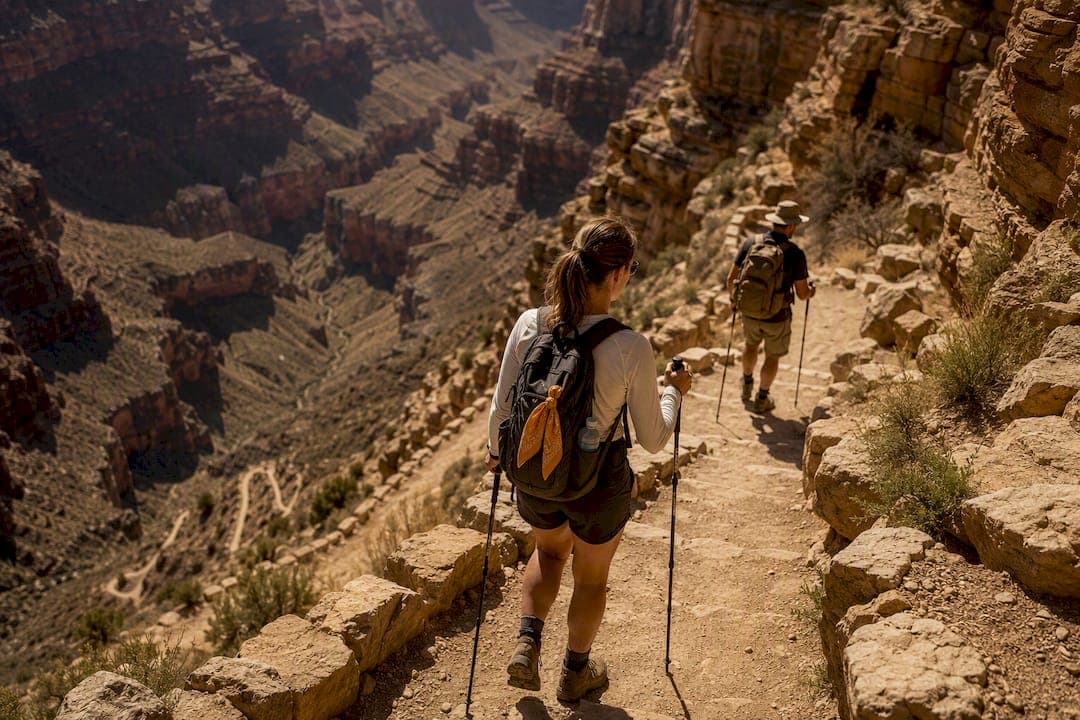
For a first hike into the canyon, the safest and simplest route is a guided program: a free ranger-led walk, a Grand Canyon Conservancy Field Institute day hike, or a private guided tour such as those run by Grand Canyon Journeys. Guides handle the shuttle logistics, timing, and pacing that trip up most first-timers. Match the option to your schedule and comfort level, then check the safety and booking sections below before you go.
TL;DR:
- Guided hikes for beginners should focus on well-maintained, ranger-patrolled trails like the Rim Trail or short below-rim routes such as South Kaibab to Ooh Aah Point, to ensure safety and manageable elevation changes.
- Weather conditions heavily influence hike safety, with high heat from May through September requiring early starts, electrolyte management, and hydration; winter snow and ice may necessitate traction devices.
- Private guided tours provide maximum flexibility, including customized pacing, door-to-door pickup from nearby towns, and comprehensive safety support, making them ideal for first-timers who want to avoid logistical hassles.
- Preparation is critical; training with hill walks and stamina-building exercises, along with appropriate gear such as moisture-wicking layers, proper footwear, sun protection, and extra water, enhances safety and enjoyment.
- Booking early with reputable providers and confirming park and safety credentials ensures a more seamless experience, especially during peak seasons when demand for guided hikes is highest.
Table of Contents
- Beginner-Friendly Guided Hikes at the Grand Canyon
- What a Beginner Guided Hike Actually Looks Like
- Grand Canyon Hiking Safety: NPS Rules Beginners Should Follow
- How to Choose and Book a Beginner Guided Hike
- Getting in Shape Before Your First Canyon Hike
- Gear and Clothing for a First Grand Canyon Hike
- How Weather Changes the Plan for Beginners
- Where to Stay Near the Trailheads
- What Guided Hikes Typically Cost
- Why I'd Point a First-Timer Toward a Private Guide
- Book a Private Guided Hike With Grand Canyon Journeys
- Sources
- FAQ
Beginner-Friendly Guided Hikes at the Grand Canyon
Three categories cover almost every beginner scenario, and each solves a different problem. Ranger-led programs solve the "I don't know where to start" problem. The Field Institute solves the "I want to actually learn something" problem. Private guided tours solve the "I don't want to deal with logistics at all" problem.
- Ranger-led programs: Free, run by the National Park Service on the South Rim year-round, with schedules that shift by season and rim. These are short walks and talks, built for orientation rather than serious elevation change, and they're a smart first move for families or anyone who wants a feel for the canyon before committing to anything below the rim. Check the Guided Hikes page for current offerings.
- Grand Canyon Conservancy Field Institute: A nonprofit partner of the park that runs instructor-led educational day hikes and short below-rim programs. These trips lean into desert ecology, geology, and trail etiquette, which makes them a strong pick for hikers who want context along with exercise. Details are on the Conservancy's guided tours page.
- Private guided tours: Companies like Grand Canyon Journeys build a hike around your group's pace instead of a fixed roster, with pickup from Sedona, Flagstaff, Williams, or Tusayan and an itinerary shaped around what your group can realistically handle.
The trade-off is straightforward. Ranger walks cost nothing but offer the least flexibility. Field Institute programs add depth but run on a set calendar. Private tours cost more but remove almost every logistical decision from your plate, which matters more than people expect on a first visit.
What a Beginner Guided Hike Actually Looks Like
"Beginner" at the Grand Canyon has a specific meaning, and it's not about fitness level alone. The National Park Service is direct about this: a rim-to-river-and-back hike in a single day is not recommended for anyone, regardless of how fit they are, because of the elevation change and heat exposure. Beginner-appropriate routes stay on the Corridor trails, the maintained, ranger-patrolled paths with water stations and emergency infrastructure.
Here's what those routes typically look like on a guided beginner hike:
- Rim Trail: Paved and largely flat, running along the South Rim with canyon views the entire way. This is the true starting point for anyone who has never set foot near the edge of the canyon.
- South Kaibab to Ooh Aah Point: About 1.8 miles round trip, typically 1 to 2 hours, with steep switchbacks and no shade but some of the best panoramic views in the park.
- Bright Angel toward the 1.5 Mile or 3 Mile Resthouse: A gentler grade than South Kaibab, with seasonal water and shade in spots, making it more forgiving for a first below-rim attempt.
South Kaibab has no shuttle stop of its own for casual parking. Access runs through the park's shuttle system, and timing that shuttle around your hike is one of the more common headaches for first-time visitors. This is exactly the kind of detail a guide manages so you're not standing at a shuttle stop wondering if you missed the last bus of the morning. GCJ's hiking guide breaks down more of these logistics if you're planning ahead.
Grand Canyon Hiking Safety: NPS Rules Beginners Should Follow
The Grand Canyon's biggest hazard isn't the terrain. It's heat, and beginners consistently underestimate it. A significant number of people are rescued from the canyon each year for heat illness and related emergencies, most of them during the hottest stretch of the year.
Follow these rules on any beginner hike, guided or not:
- Avoid hiking between 10 a.m. and 4 p.m. from May through September. Pre-dawn starts and late-afternoon finishes are the standard recommendation, and most guided hikes are scheduled around exactly this window.
- Plan your water and electrolytes together. Water alone isn't enough. The NPS warns that over-hydrating without electrolytes can lead to hyponatremia, so pair water with salty snacks. Bright Angel and North Kaibab have seasonal or year-round water at some points; South Kaibab has none at all.
- Rest 10 minutes every hour, and expect the climb out to take roughly twice as long as the walk down. This single habit, propping your feet up and eating something salty during the break, makes a measurable difference in how beginners handle the ascent.
- Carry the 10 essentials and make sure someone outside your group knows your planned route and return time.
Pro Tip: Soak your hat or shirt at a water station before you keep moving. The evaporative cooling effect is a trick experienced desert hikers use, and it works just as well for a first-timer.
How to Choose and Book a Beginner Guided Hike
Not every guided hike is run the same way, and a few questions upfront save you from a bad match. Before booking, ask the provider:
- What's the group size, and is the pace set by the slowest or fastest hiker?
- What's the guide's experience level and certification?
- Is water, food, or gear included, or do you need to bring your own?
- What are the pickup and drop-off details, especially if you're staying in Sedona, Flagstaff, or Williams?
- What's the cancellation policy if weather or health issues come up?
For commercial operators, confirm they hold a valid Commercial Use Authorization from the park, which is the NPS's official list of companies cleared to run guided hikes below the rim. A legitimate operator should also walk your group through a safety briefing before you start, covering heat signs, pacing, and what to do if someone feels unwell.
On timing: ranger-led programs run on fixed park schedules, so check the calendar close to your visit. Private tours generally need more lead time, especially during spring and fall when demand peaks, so book a few weeks out if you can. Whatever you book, bring layered clothing, sturdy shoes, sun protection, and more water than you think you'll need.
Getting in Shape Before Your First Canyon Hike
You don't need to train like you're prepping for a marathon, but showing up cold is how beginners end up struggling on the climb out. Start walking regularly in the weeks before your trip, ideally on hills or stairs, since the canyon's grade is unlike flat neighborhood sidewalks.
Focus on leg strength and cardio endurance rather than speed. Squats, lunges, and stair climbs build the muscles you'll actually use going back up, and steady walks of 30 to 45 minutes a few times a week build the stamina to keep moving without long recovery stops. If you can comfortably walk uphill for an hour without stopping, you're in reasonable shape for a short Corridor trail hike with a guide.
Altitude matters too. The South Rim sits around 7,000 feet, so visitors coming from sea level often notice they tire faster than expected, even on flat ground. Give yourself a day to acclimate if your schedule allows it, and don't schedule a strenuous hike for your first afternoon in town. A guide who's used to working with beginners will usually pace the hike with this in mind, checking in more often on a first below-rim attempt than on a repeat visit.
Gear and Clothing for a First Grand Canyon Hike
The desert punishes underdressed hikers, and the gear list for the Grand Canyon is more specific than a generic hiking checklist. Footwear matters most: broken-in hiking shoes or boots with real tread, not sneakers or sandals, since loose gravel on the switchbacks catches people off guard.
Dress in moisture-wicking layers rather than cotton, which holds sweat and stays damp. A wide-brimmed hat and sunglasses cut down on sun exposure that's more intense than most visitors expect, even in cooler months. Sunscreen applied before you start, and reapplied if you're out for more than a couple of hours, is not optional here.
For your pack, carry more water than feels necessary, salty snacks for electrolyte balance, a small first-aid kit, a headlamp if there's any chance you're finishing near dusk, and a lightweight rain layer if you're hiking during monsoon season. Trekking poles help more than people expect on the descent, where knees take the brunt of the grade. If you're on a guided tour, ask ahead what's provided versus what you need to bring. Some providers supply water and snacks; others expect you to carry your own.

How Weather Changes the Plan for Beginners
Weather at the Grand Canyon isn't a background detail. It's the main variable that determines whether a beginner hike goes well. Summer temperatures on the inner canyon floor regularly climb well above what the rim feels like, since temperature rises roughly 3 to 5 degrees for every 1,000 feet you descend. A pleasant 75 degree morning at the rim can feel like a different climate a few hundred feet down.
Winter brings its own complications. Ice and snow are common on the upper sections of Corridor trails from late fall through early spring, and some sections require traction devices. Spring and fall offer the most forgiving conditions for beginners, with milder temperatures and less risk of afternoon monsoon storms, which tend to arrive in July and August with lightning that makes exposed rim areas genuinely dangerous.

Check conditions before you go rather than assuming the forecast from a nearby town applies inside the canyon. A guided provider will typically adjust start times or shorten a route if conditions turn, which is one more argument for going with a guide on a first attempt rather than winging it solo.
Where to Stay Near the Trailheads
Where you sleep the night before matters more than most beginners realize, mainly because it determines how early you can realistically start. Staying inside Grand Canyon Village on the South Rim puts you within walking distance of the Bright Angel and South Kaibab trailheads, which is ideal if your hike starts before sunrise.
Tusayan, just outside the south entrance, offers more lodging options and often better rates, with only a short shuttle or drive to the rim. Williams and Flagstaff sit farther out, roughly an hour to an hour and a half from the South Rim, but they work well if you're combining your canyon trip with other Northern Arizona stops or booking a private tour with hotel pickup. Sedona is a similarly popular base for travelers stacking a canyon day with red rock sightseeing.
If you're booking a private guided hike, door-to-door pickup from nearby towns removes the lodging decision from the safety equation entirely, since you're not the one calculating drive time against a pre-dawn trailhead start.
What Guided Hikes Typically Cost
Costs vary widely depending on the type of program you choose. Ranger-led walks through the National Park Service are free, which makes them the obvious starting point if budget is a concern or you just want a low-commitment introduction. Grand Canyon Conservancy Field Institute programs charge a fee that varies by trip length and educational content, with pricing listed directly on their program pages.
Private guided tours sit at a different price point because they include far more than the hike itself. Grand Canyon Journeys' Grand Canyon Hiking Tour starts from $349 USD per person, which typically covers private transportation, a dedicated guide, and park fees bundled into one booking rather than paid separately. Compare that against a park entrance fee, a rental car, and hours spent figuring out shuttle routes on your own, and the private option starts to look less like a splurge and more like paying to eliminate the parts of the trip most likely to go wrong for a first-timer.
Why I'd Point a First-Timer Toward a Private Guide
The mistake I see beginners make most often isn't picking the wrong trail. It's underestimating how much mental energy shuttle schedules, water planning, and heat timing eat up on a first visit, energy that should be going toward actually enjoying the hike. A private guide absorbs all of that. They know which shuttle to catch, when the rim is too crowded for an easy start, and how to read a group's pace before someone's struggling on the climb out.
That said, a guide isn't required to have a good first hike. The Rim Trail is genuinely accessible without one, and a self-guided walk with a good map and an early start works fine for cautious, well-prepared hikers. Where a guide earns its cost is below the rim, where heat, timing, and elevation change stop being abstract concerns and start being the whole trip.
— Chris
Book a Private Guided Hike With Grand Canyon Journeys
Private guided tours are an option for beginners who'd rather not build their own itinerary around shuttle schedules and heat timing. Every hike is private, meaning your group's pace sets the plan instead of a stranger's, with door-to-door pickup from nearby towns and a safety briefing before you set foot on the trail.
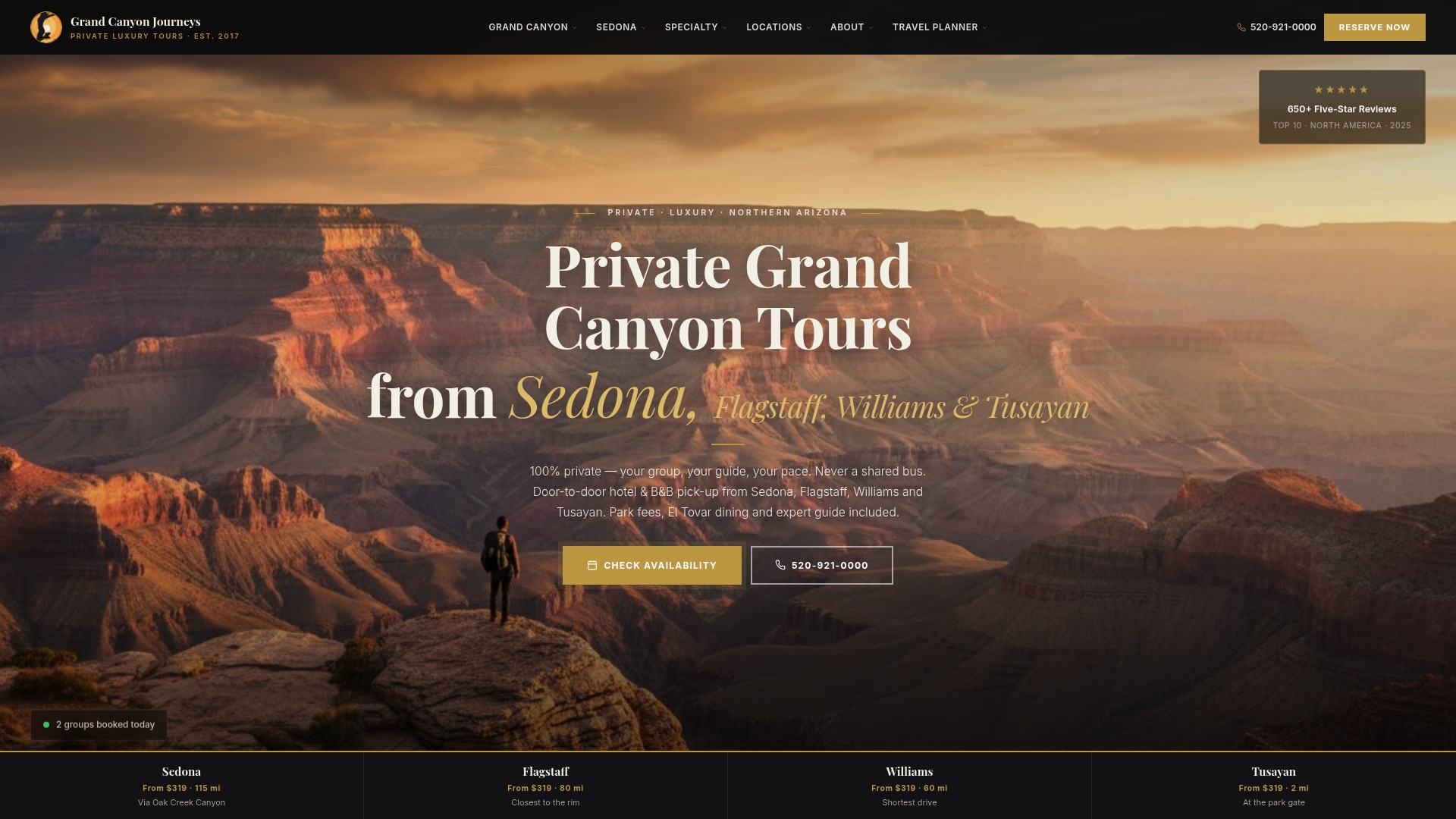
The Grand Canyon Hiking Tour starts from $349 USD per person and bundles transportation, a dedicated guide, and park fees into one booking, so there's no separate shuttle to figure out or entrance line to manage on your own. If you're still mapping out your visit, the Grand Canyon Travel Planner walks through timing, lodging, and route options before you commit to a date. Reach out directly if your group needs a custom pace or a pickup location outside the standard route, and a private hike can be built around exactly what your first canyon visit needs to look like.
Sources
Confirm current trail and safety conditions directly with the National Park Service before you go: the Hike Smart and Day Hiking pages, the Introduction to Backcountry Hiking PDF, and the Grand Canyon Conservancy Field Institute's program listings.
- Hike Smart - Grand Canyon National Park
- Grand Canyon Guided Tours, Hikes & Camping | Grand Canyon Conservancy
- Hiking Tips - Hike Smart - Grand Canyon National Park
- Guided Hikes - Grand Canyon National Park
FAQ
What is the easiest hike at the Grand Canyon for beginners?
The Rim Trail is the easiest option, since it's paved and largely flat along the South Rim with no significant elevation change. For a short below-rim taste of the canyon, South Kaibab to Ooh Aah Point is a common beginner choice at roughly 1.8 miles round trip.
What are some good guided hikes at the Grand Canyon?
Ranger-led walks through the National Park Service, educational day hikes through the Grand Canyon Conservancy Field Institute, and private guided tours like Grand Canyon Journeys' Hiking Tour all count as solid guided options, each suited to a different budget and comfort level.
What is the best way to visit the Grand Canyon for the first time?
Start with a guided option rather than winging it solo, since guides handle the timing, shuttle logistics, and pacing that trip up most first-time visitors. A private tour adds door-to-door pickup from nearby towns, which removes even more of the planning burden.
What's the best month to hike the Grand Canyon?
Spring and fall generally offer the most forgiving conditions, with milder temperatures and lower risk of monsoon storms than summer. If you're hiking during summer, the National Park Service recommends avoiding the trail entirely between 10 a.m. and 4 p.m.
How much does a guided hike at the Grand Canyon cost?
Ranger-led walks are free, and Field Institute programs charge fees that vary by trip length. Grand Canyon Journeys' private Grand Canyon Hiking Tour starts from $349 USD per person, with transportation, a guide, and park fees included.