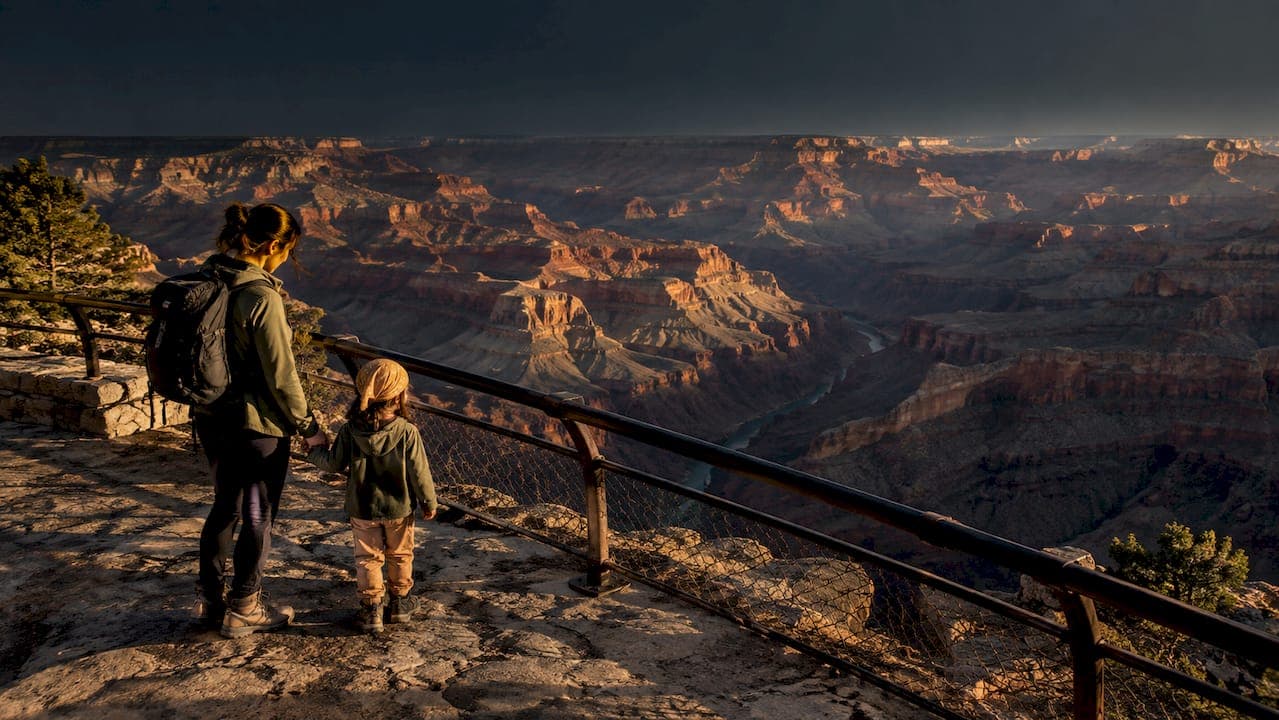
Yes, the Grand Canyon is safe for kids when parents set and enforce simple rules the moment they step out of the car: keep children back from unfenced edges, hold toddlers' hands or use a carrier, and stick to a strict water and shade schedule. The single rule that matters most is distance from the rim. Enforce that rule consistently and the rest of the visit gets a lot easier.
TL;DR:
- Keep children at least six feet from the edge in developed areas and follow the same distance guideline consistently at every viewpoint.
- Supervise toddlers with hands or harnesses, avoid running or climbing on railings, and have a clear, rehearsed plan for maintaining safe distances.
- Plan hikes early in the day with strict water and turnaround rules, and never attempt major descents without assessing terrain, weather, and children's fitness.
- Maintain vigilant supervision around unfenced viewpoints, use physical cues like "two big steps back," and enforce immediate consequences if a child breaches safety rules.
- Consider guided tours that handle logistics, pacing, and viewpoints, especially for families with young children or those unfamiliar with park safety protocols.
Table of Contents
- Grand Canyon Safety for Kids: The Checklist to Memorize
- What Can Kids Safely Do at Each Age?
- How Do You Supervise Kids at the Rim?
- Should Kids Hike Below the Rim?
- How Do Heat and Altitude Affect Children?
- What Wildlife Rules Should Kids Follow?
- What Should Families Pack for a Safe Visit?
- How Do You Prep Kids Before You Arrive?
- Where Do You Get Help in an Emergency?
- Why Private Guided Tours Reduce Risk for Families
- An Honest Take on Canyon Safety and Kids
- Grand Canyon Journeys: A Safer Way to See the Rim
- Where to Verify Current Grand Canyon Safety Rules
- Sources
- FAQ
Grand Canyon Safety for Kids: The Checklist to Memorize
Print this or screenshot it before you leave the hotel. Most family incidents at the canyon trace back to one of these five things being skipped.
- Set the edge rule out loud. Many parents use a "25-foot rule" for unfenced areas, a distance recommended in Grand Canyon family guidance, while NPS safety guidance specifies at least six feet from the edge in developed areas. Pick one number and repeat it at every viewpoint.
- Hands or harness for toddlers. No free-roaming near any rim, fenced or not.
- No running, climbing, or sitting on railings. Ever, even for a photo.
- Water every 15 to 20 minutes, sunscreen reapplied every two hours, hats on before you leave the car.
- Pick a meeting point at every stop and pack a basic first-aid kit in the car and daypack.
Pro Tip: Say the edge rule as a question, not a statement. Ask "How far back do we stand?" at each new viewpoint. Kids remember rules they had to answer, not rules they just heard.
What Can Kids Safely Do at Each Age?
Age changes almost everything about how a Grand Canyon day should run. Here's a realistic breakdown by stage.
- Infants (under 2). Carriers work well on the paved Rim Trail, but ranger guidance warns that babies overheat inside carriers faster than adults realize, so check skin temperature and shade frequently. Keep outings short, plan around nap windows, and skip anything below the rim.
- Toddlers (2 to 4). A stroller or carrier handles the paved sections of the Rim Trail fine, but hands stay held near any unfenced viewpoint. Escape-artist toddlers do better with a wrist tether or harness than a verbal reminder alone.
- Kids 6 to 8. This is the sweet spot for railed viewpoints, easy Rim Trail walking, and short supervised descents on maintained trails. The Junior Ranger program fits this age range well and gives kids a structured reason to slow down and pay attention to rangers instead of the edge.
- Kids 9 and up. Short below-rim hikes become realistic if you enforce strict water and turnaround rules. Make sure they understand the return climb is harder than the way down before they set the pace going out.
For families wanting a day-by-day framework that matches pacing to age, a family itinerary built around age-adjusted plans takes the guesswork out of this.
How Do You Supervise Kids at the Rim?
Not every viewpoint at the Grand Canyon has a rail, and that's the detail that trips up first-time visitors. Mather Point and much of the developed South Rim have solid barriers. Plenty of popular photo spots along the Rim Trail and at Yaki Point do not. Assume no rail until you've confirmed one with your own eyes.
Crowds and wind make supervision harder, not easier, because both pull attention away from where a child's feet actually are. A few tactics work better than constant verbal reminders:
- Keep kids at arm's reach in any unfenced area, not just in sight.
- Use "two big steps back" as a physical cue before anyone takes a photo.
- Assign one adult as the designated photo monitor whose only job is watching feet and the edge, an approach supported by reporting on rim incidents tied to visitors backing up for a better shot.
- Agree on a whistle or hand signal for "stop and come here now" before you're in a crowd and can't get a kid's attention by voice.
If a child ignores the edge rule once, that's a warning. If it happens twice, the consequence is immediate: no more unfenced viewpoints for the rest of the day, full stop, no negotiation. Falls remain one of the leading causes of death at the park, and most cases involve someone stepping past a barrier or edge for a photo. That statistic is the reason the consequence has to be immediate rather than a warning you forget by the next stop.
Should Kids Hike Below the Rim?
Going down is the easy part. The climb back out in full sun is what turns a fun morning into a rescue call, and that asymmetry is the single most misunderstood risk at the canyon.
- Start before 7 a.m. in warmer months and plan to turn around by 10 a.m. on hot days, well before inner-canyon temperatures peak.
- Carry at least one liter of water per person per hour of hiking, a guideline that holds even for short descents in hot weather.
- Pick a resthouse or landmark as the turnaround point, not a distance or time goal. Turn around when you reach it, regardless of how the kids feel in that moment.
- Stick to short, kid-tested options like the first mile or so of Bright Angel Trail toward the 1.5-Mile Resthouse. Never attempt a river round trip in a single day with kids; that hike overwhelms fit adults, let alone children.
- Run a go/no-go check before you start: current temperature, forecast, each child's fitness and mood that morning, and how much water you're actually carrying.
Pro Tip: If a child asks "are we there yet" before you've even reached your turnaround point, that's your answer about whether to keep going down.
Families who want a supervised version of this with an experienced guide setting the pace can book a guided Grand Canyon hiking tour instead of self-managing the water and turnaround math alone.
How Do Heat and Altitude Affect Children?
The South Rim sits above 7,000 feet, high enough that some kids feel fatigue, headaches, or unusual irritability on the first day. If a child seems unusually cranky or slow, that's often altitude and dehydration working together, not just a bad mood. Slow the schedule down rather than pushing through.
Heat is the bigger daily risk, especially since inner canyon temperatures can run 20 to 30 degrees Fahrenheit hotter than the rim. Know the warning signs before you need them:
- Heat exhaustion: heavy sweating, pale skin, nausea, weakness, headache. Move to shade, remove excess clothing, offer small sips of water, and cool with a wet cloth.
- Heat stroke: confusion, hot dry or flushed skin, rapid pulse, or loss of consciousness. This is an emergency; call for help immediately and cool the child however you can while waiting.
- Prevention that actually works: water every 15 to 20 minutes, a wet bandana around the neck, planned shade breaks every 30 minutes, and sunscreen reapplied roughly every two hours.
Afternoon thunderstorms are common in summer, and lightning risk rises fast once storms build, which is another reason to front-load activity into the morning. If a child shows heat stroke symptoms or doesn't improve within minutes of cooling and water, get to a ranger or call for emergency help right away.
What Wildlife Rules Should Kids Follow?
Elk and mule deer around the South Rim look calm right up until they aren't, and squirrels that seem friendly are usually just used to people feeding them, which makes them bite more readily, not less. The animals that cause the most trouble are the ones visitors assume are harmless.
- Keep a safe distance from elk and bighorn sheep, especially during fall rutting season.
- Never feed any animal, no exceptions, even ones that approach you first.
- If an animal comes toward your child, teach them to stay calm, back away slowly, and find an adult immediately rather than running.
- Seal food and trash in the car or a closed container. Loose snacks in a backpack are what draw squirrels and ravens in the first place.
What Should Families Pack for a Safe Visit?
The right gear prevents most of the small problems that turn a good day bad. Pack water bottles or a hydration pack, a carrier for toddlers, closed-toe shoes for everyone, broad-spectrum sunscreen, hats, and electrolyte snacks alongside a basic first-aid kit.
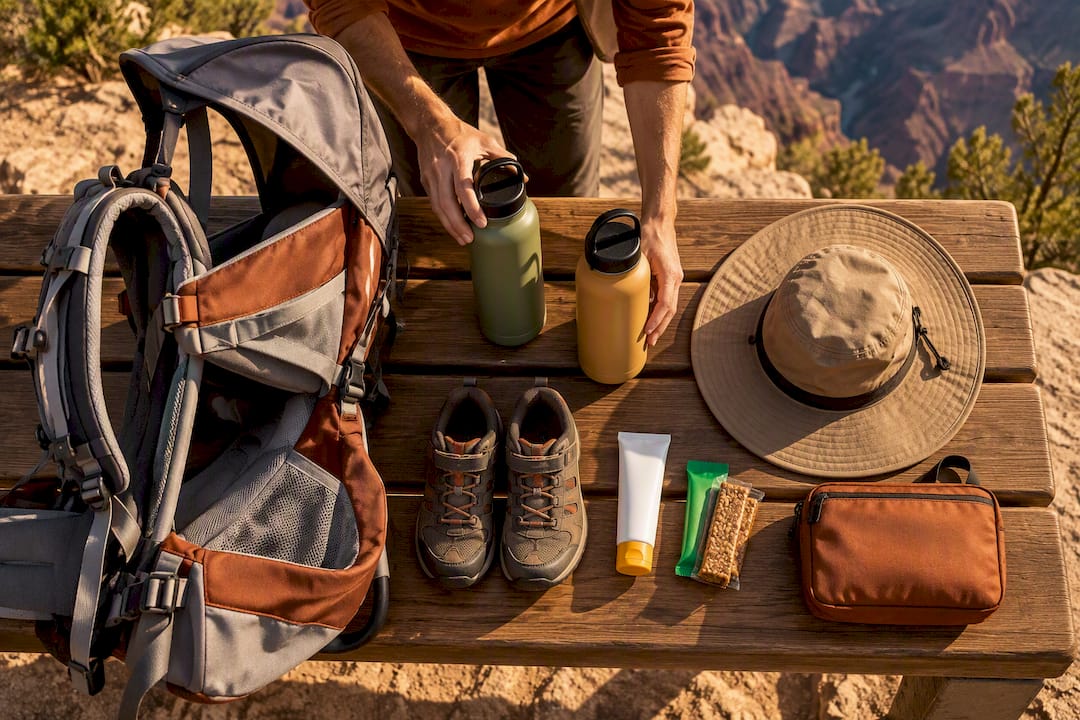
Logistics matter as much as gear. Water fill stations and bathrooms are spaced along the main Rim Trail corridor, but not everywhere, so check a map before setting out. The shuttle system covers most developed viewpoints, and several Rim Trail segments near the Village are paved and stroller-friendly if you'd rather skip the shuttle with a napping toddler.
A few small extras make a real difference: an ID wristband with a phone number for kids old enough to wander a few steps ahead, spare socks for wet feet, and a small tethered toy for stroller rides. A detailed packing guide covers the full list if you want to build one before you leave.
How Do You Prep Kids Before You Arrive?
Rules kids hear once in the car window rarely survive contact with an actual canyon view. Rehearse them like a drill instead.
- Pick two or three rules max and practice them out loud in the hotel room: "How far back do we stand?" "What do we do if we get separated?"
- Run a lost-child drill. Pick a bright, obvious meeting point at each stop, like a specific bench or sign, and have kids repeat it back before you get out of the vehicle.
- Have older kids memorize a parent's phone number and know that a ranger station or uniformed employee is the first place to go if separated.
- Role-play the photo rule before you're standing at an actual overlook, so "two big steps back" is muscle memory by the time it matters. This kind of rehearsed supervision routine works the same way at beaches and other open hazard settings, where distracted crowds create the same risk pattern as a canyon overlook.
Pro Tip: Practice the meeting-point drill at your hotel first. If a 6-year-old can find the lobby bench from across the pool, they can find the visitor center bench from the parking lot.
Where Do You Get Help in an Emergency?
Visitor centers and ranger stations are staffed at the main developed areas and are the fastest resource for anything short of a true emergency, from a lost child to a basic medical question. For anything urgent, call 911; it routes to park dispatch inside Grand Canyon National Park boundaries. Have your specific viewpoint or trail marker ready so responders can find you fast.
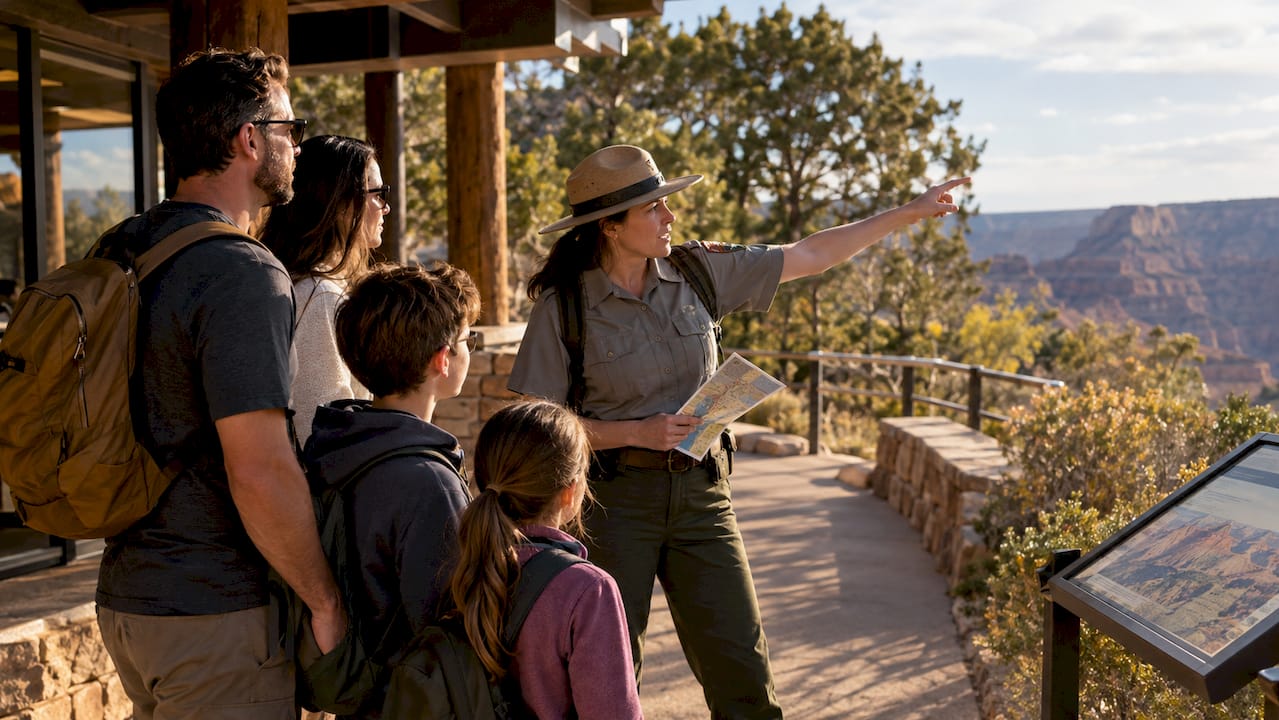
Save the National Poison Control hotline, 1-800-222-1222, in your phone before you go, and consider a quick CPR refresher if it's been a few years. Shuttle drivers and park staff can also help with non-emergency issues like directions to the nearest bathroom or water station.
Why Private Guided Tours Reduce Risk for Families
A private guide who knows the park removes a lot of the guesswork that leads to trouble: which viewpoints have rails, when crowds peak, and when heat makes a below-rim hike a bad idea that day. A guided vehicle also cuts out shuttle waits and parking hunts with tired kids in tow.
Before booking any operator, ask directly about group size, carrier or stroller accommodations, and what their emergency plan actually looks like. Those answers tell you more about real-world child safety than any brochure will.
An Honest Take on Canyon Safety and Kids
The canyon isn't dangerous because it's unpredictable. It's dangerous because it's calm right up until someone steps six inches too close for a photo. Every family trip I've watched go smoothly had one thing in common: parents who picked a boring, specific rule on day one and never let it slide, even when the kids complained.
— Chris
Grand Canyon Journeys: A Safer Way to See the Rim
A private tour operator that offers guided experiences can be an alternative to managing shuttles, parking, and unfamiliar trail edges on your own. Such tours are private, so families do not share a vehicle or itinerary with strangers, and the guide handles pacing, timing, and viewpoint choices around the group's needs rather than a fixed schedule.
Ask about carrier and car seat needs when you book, and your guide can plan around nap times, heat windows, and which viewpoints work best for younger kids that day. The Private Grand Canyon Day Tour covers the classic South Rim experience with door-to-door pickup, while the Grand Canyon Hiking Tour is built for families who want a short below-rim walk with a guide managing water breaks and turnaround timing instead of leaving that math to mom and dad. Check current departure times and reserve your date directly on either tour page.
Where to Verify Current Grand Canyon Safety Rules
- NPS Grand Canyon safety page for official rim rules and current alerts.
- Grandcanyon for age-based tips.
- CDC parent safety resources for heat and first-aid basics.
Sources
- Safety - Grand Canyon
- Grand Canyon with Kids: Ages 2-17 Family Guide (2026)
- Grand Canyon with kids: an honest planning guide
FAQ
What is the best age to take kids to the Grand Canyon?
Ages 6 and up tend to do best because kids that age can follow rim rules, handle short walks, and enjoy structured activities like the Junior Ranger program. Younger kids can absolutely visit safely too, provided they stay in a carrier or stroller near the rim and skip below-rim hiking.
How many tourists have fallen into the Grand Canyon?
Exact annual numbers vary by year, but falls remain one of the leading causes of death at the park, and many cases involve visitors stepping past barriers or unfenced edges for photos. That's the core reason a firm, consistently enforced edge rule matters more than any other single safety step.
What is the top predator in the Grand Canyon?
Mountain lions are the top predator in the canyon ecosystem, though sightings near developed areas and popular trails are rare. The wildlife risks families actually encounter day to day are smaller animals like elk and squirrels that approach looking for food, which is why a strict no-feeding rule matters more in practice.
Is Grand Canyon safe to visit right now?
Yes, the park remains open and safe to visit when families follow standard rim and heat precautions. Check the NPS weather and conditions page before your trip for current alerts on trail closures, storms, or extreme heat advisories.
Does Grand Canyon Journeys offer tours suited to families with young kids?
Yes, the Private Grand Canyon Day Tour is a common fit for families, since the itinerary and pacing are private rather than shared with a bus group. Current pricing and availability are listed directly on the tour page.