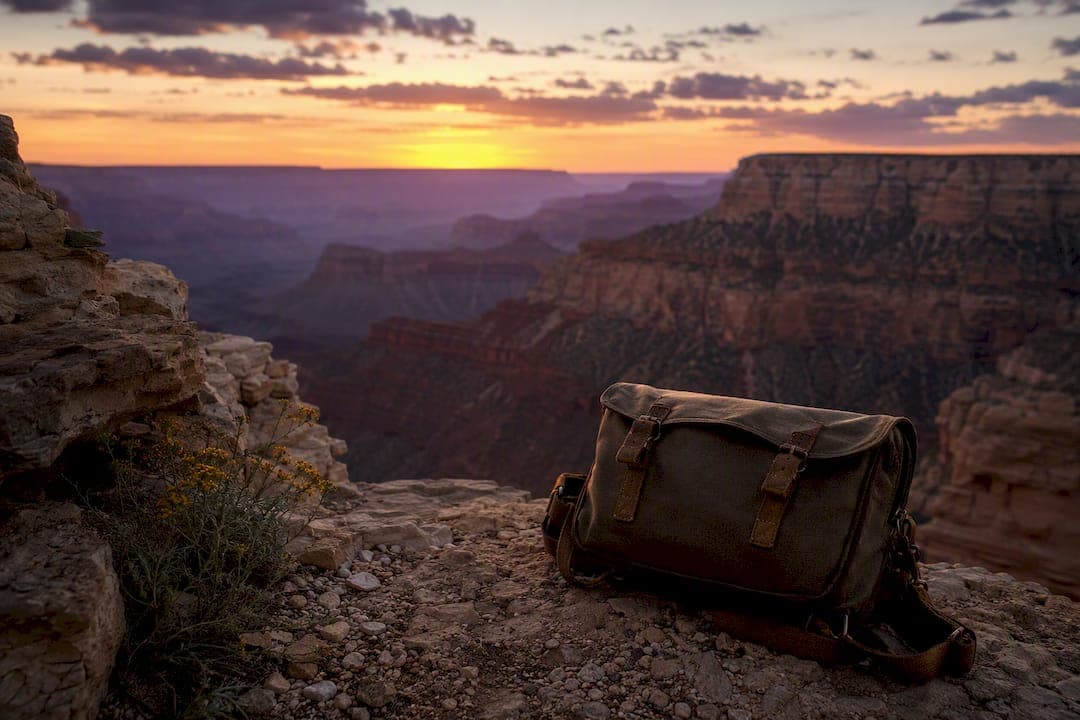
For a stress-free Grand Canyon sunset, pick one west-facing overlook, Hopi Point or Mohave Point, arrive 60 to 90 minutes before official sunset, and stay through blue hour. That window matters because the light show doesn't end when the sun drops below the horizon: the canyon walls keep shifting through amber, rose, and deep purple for another 10 to 30 minutes, and NPS photography guidance recommends staying at least 10 minutes past sunset to catch it.
Two things to sort out before you leave the room:
- Shuttle or drive? If you're headed to Hopi, Mohave, or Pima Point between March and November, take the free Hermit Road shuttle. Driving your own vehicle to Desert View Drive works better if you want to leave the instant the sky goes dark.
- Don't bolt after the sun dips. The 10 to 30 minutes of blue hour afterward often produce better photos than the sunset itself, and the crowds thin out fast once tourists start walking back to their cars.
Key Takeaways
A well-timed Grand Canyon sunset itinerary depends on choosing one west-facing overlook, arriving 60 to 90 minutes early, and staying through blue hour for the best light and thinnest crowds.
| Point | Details |
|---|---|
| Pick one overlook | Choose a single viewpoint like Hopi, Mohave, or Pima rather than moving between several during the same evening. |
| Arrive early | Show up 60 to 90 minutes before official sunset, especially at popular points like Hopi during peak season. |
| Stay for blue hour | The 10 to 30 minutes after sunset often produce better color and fewer crowds than sunset itself. |
| Match access to viewpoint | Use the Hermit Road shuttle for western overlooks in season, or drive Desert View Drive for a fast after-dark exit. |
| Consider a private expedition | Grand Canyon Journeys' sunset expeditions handle timing, viewpoint choice, and a rim-side El Tovar dinner without the shuttle-schedule guesswork. |
Table of Contents
- Recommended Timed Sunset Itinerary for the Grand Canyon
- Which Grand Canyon Viewpoint Should You Pick for Sunset?
- How Do You Get to and from Your Sunset Spot?
- What Are the Best Camera Settings for Sunset Photos?
- What Should You Pack and Know for Safety at Sunset?
- Three Ready-Made Grand Canyon Sunset Itineraries
- Why a Private Sunset Expedition Beats DIY Planning
- Are There Ranger-Led Programs for Sunset at the Grand Canyon?
- Where Can You Eat Dinner With a Sunset View?
- How Do You Avoid Crowds at Grand Canyon Sunset?
- What This Itinerary Gets Right That Most Advice Misses
- Book a Private Grand Canyon Sunset Expedition
- Frequently Asked Questions
- Sources
Recommended Timed Sunset Itinerary for the Grand Canyon
Building a Grand Canyon sunset itinerary around a fixed departure time backfires more often than not. Traffic on Hermit Road backs up, shuttle lines grow, and a "quick" walk to the rim eats more time than you'd guess. Work backward from sunset instead of forward from your hotel checkout.
Three to four hours before sunset: Leave Grand Canyon Village, your lodge, or wherever you're staying inside the park. If you're driving in from Williams, Tusayan, or Flagstaff, add your actual drive time on top of this. This buffer covers a stop at the Visitor Center, a restroom break, and the shuttle wait, none of which take as little time as you'd hope on a busy day.
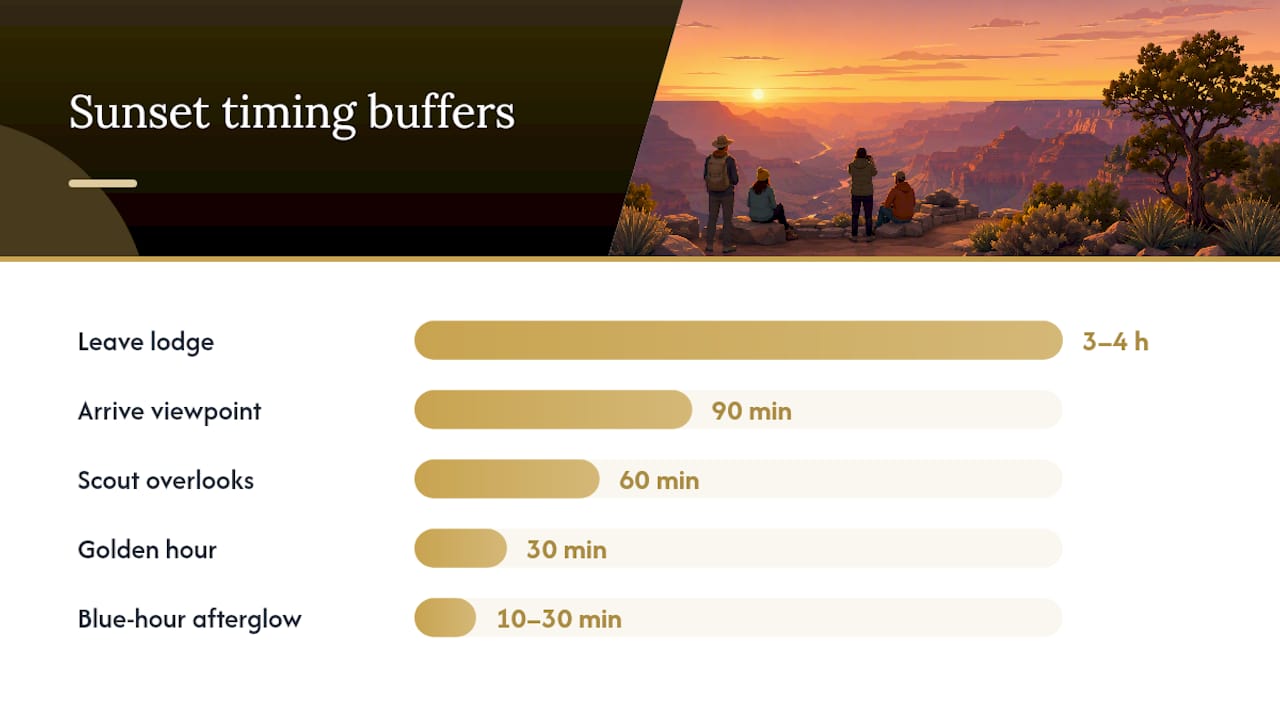
Ninety minutes before sunset: This is when you should be boarding the Hermit Road shuttle or parking your car near your chosen viewpoint. During peak season, arriving 60 to 90 minutes early at Hopi Point is often necessary just to secure a spot along the rail. Mohave and Pima typically need 30 to 60 minutes less lead time.
One hour before sunset: Walk the overlook. Don't just plant yourself at the first railing spot you find. Scout two or three vantage points along the rim, since a slightly different angle can put a dead tree, a rock outcropping, or a bend in the river into your frame.
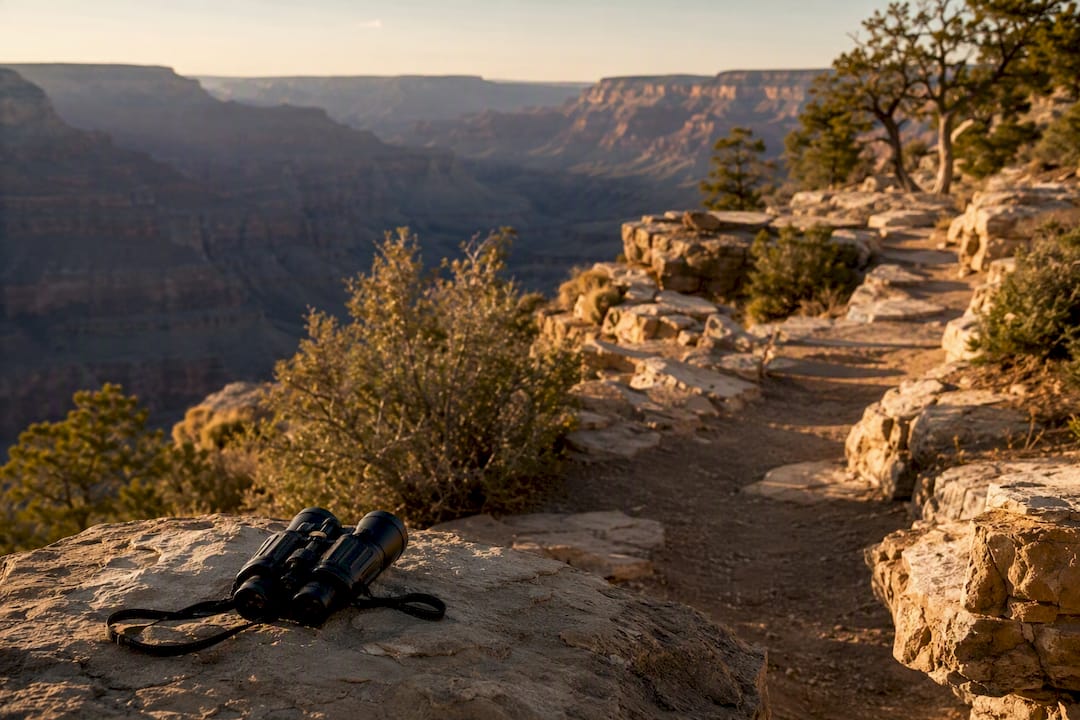
Thirty minutes before sunset (golden hour begins): Light turns warm and low, throwing long shadows across the canyon's buttes and mesas. Start shooting now, not at the moment the sun touches the horizon. The best color often builds gradually.
Sunset itself: Expect a crowd hush, then applause at a lot of the popular points. Keep your camera or phone ready; the seconds right after the sun disappears usually deliver the deepest color saturation.
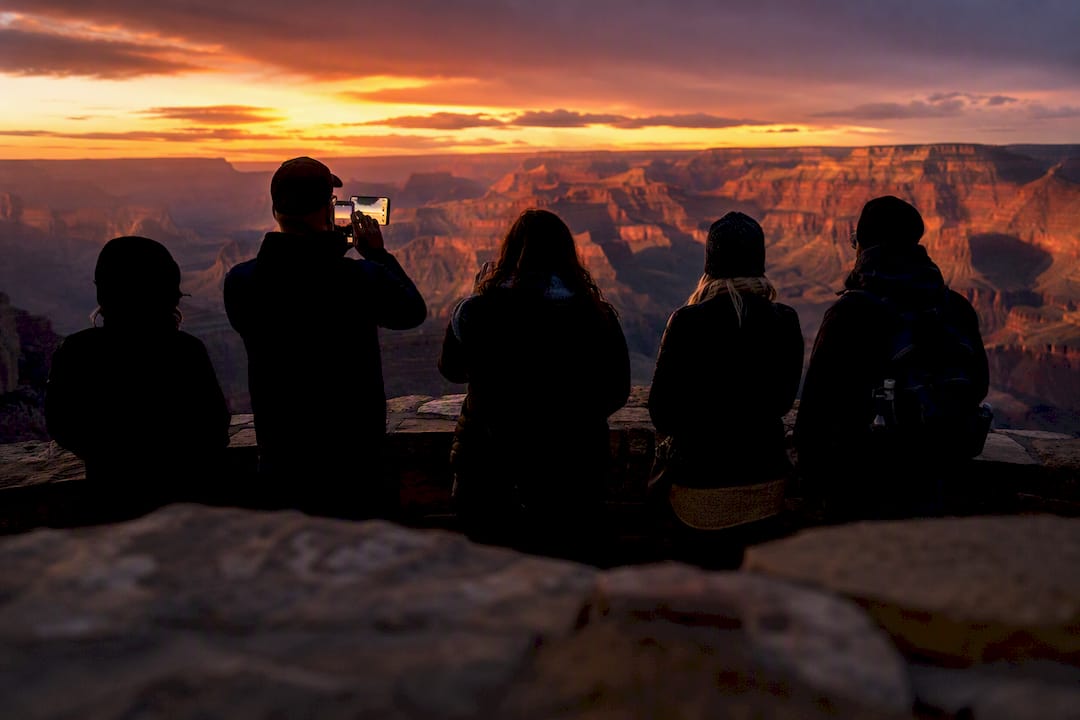
Ten to thirty minutes after sunset (blue hour): Don't leave yet. This stretch produces the cool blue and violet tones that separate a forgettable sunset photo from a striking one, and most casual visitors have already left, so you'll have more room at the rail.
Thirty to sixty minutes after sunset: Head back to the shuttle stop or your car. If you're on Hermit Road, confirm the last shuttle time for that day. It shifts by season, and missing it means a long walk in the dark.
Seasonal timing shifts the whole schedule. Sunset in winter lands around 5:15 PM, while summer stretches past 8:20 PM, and Arizona stays on Mountain Standard Time year-round since the state skips Daylight Saving Time. That gap means your entire itinerary needs adjusting by season, not just the sunset time itself. A winter visit compresses everything into a shorter afternoon window; summer gives you more daylight to work with but also more heat to plan around during the daytime hours before your evening arrival.
Here's a quick last-hour checklist once you're at the overlook:
- Park or exit the shuttle and note exactly where you'll return to catch your ride or car back.
- Walk the rim for two or three minutes to find your spot before the crowd settles in.
- Take a few test shots to check exposure and composition well before golden hour peaks.
- Once your gear is set, stop fiddling with settings and actually watch the sky change.
Pro Tip: Set a phone alarm for 15 minutes after official sunset. It's the easiest way to force yourself to stay for blue hour instead of packing up the moment the sun disappears, which is exactly what most day visitors do.
Which Grand Canyon Viewpoint Should You Pick for Sunset?
Every guide to Grand Canyon sunset spots eventually lands on the same advice: choose one overlook and commit to it. Bouncing between two or three points during the same evening means you'll spend your best light in transit instead of on the rim.
- Hopi Point. The classic choice and the most crowded by a wide margin. Reachable only by the Hermit Road shuttle in season, it delivers a panoramic, unobstructed sweep of the canyon that has made it the most popular sunset overlook on the South Rim. Arrive 60 to 90 minutes ahead if you want rail space.
- Mohave Point. A short shuttle ride from Hopi with comparable views and noticeably thinner crowds. It's also one of the better spots for photographing a glimpse of the Colorado River far below.
- Pima Point. Quieter still, with a more remote feel and river sounds carrying up from the canyon floor on a calm evening. Good pick if solitude matters more to you than the biggest possible crowd of fellow sunset watchers.
- Mather Point and Yavapai Point. Easiest to reach, close to the Visitor Center, and better known for sunrise. Both still work fine for sunset if accessibility or a shorter walk from parking is your priority.
- Yaki Point. Shuttle-only access via the Kaibab Rim Route, and often overlooked for evening visits since most guides point sunrise seekers there. That makes it a genuinely quieter option for sunset photography if you don't mind the extra shuttle transfer.
- Lipan Point and Desert View. Both sit on Desert View Drive at the park's east end, reachable only by private vehicle. They're the right call if a fast, unobstructed exit after dark matters more to you than the marginally better views to the west.
Pick based on what you actually want from the evening. Photographers chasing river views and slightly thinner crowds tend to prefer Mohave or Pima. Families or anyone managing mobility concerns often do better at Mather or Yavapai. Drivers who hate waiting for a shuttle in the dark should default to Desert View Drive.
How Do You Get to and from Your Sunset Spot?
Access planning is where most Grand Canyon sunset itineraries fall apart, usually because visitors assume they can drive anywhere on the South Rim. They can't.
- Hermit Road (Red Route): Runs March 1 through November 30 and is the only way to reach Hopi, Mohave, and Pima Points during that stretch, since private vehicles are barred from the road in season. Buses run frequently, but frequency drops off in the evening, so confirm the last-bus time posted at your boarding stop before you settle in for sunset.
- Kaibab Rim Route (Orange Route): Mainly known for sunrise access to Yaki and South Kaibab, though it also runs into the evening and works for a Yaki Point sunset if you want a quieter alternative to the Hermit Road crowd.
- Desert View Drive: Open to private vehicles year round, with parking at each overlook. This is the easiest route for a fast exit once the sky goes dark, since you skip the shuttle line entirely and walk straight to your own car.
- Winter workaround: Private vehicles are allowed on Hermit Road once the shuttle season ends, opening up Hopi, Mohave, and Pima to drivers from December through February.
If you miss the last Hermit Road shuttle, don't panic; ask a ranger at the nearest stop, since the park typically runs a sweep bus after the posted last departure to clear stragglers off the road. Park at the Grand Canyon Visitor Center if you're unsure which route you'll end up taking. It sits within walking distance of both shuttle systems.
What Are the Best Camera Settings for Sunset Photos?
Grand Canyon sunset photography tips usually boil down to two windows: golden hour, roughly the 30 minutes before sunset, and blue hour, the 10 to 30 minutes after. NPS guidance treats both as essential, not optional, since each produces a completely different palette across the canyon walls.
Keep your daytime ISO low to preserve detail in the rock texture, then raise it as blue hour sets in and the light drops fast. A tripod earns its weight during that low-light stretch, since hand-held shots blur easily once shutter speeds slow down. Bracket your exposures if your camera supports it; the dynamic range between a bright sky and a shadowed canyon floor is brutal on a single exposure. A wide-angle lens captures the scale better than a zoom, though a longer lens helps isolate a single butte or rock formation catching the last light.
One trick most first-timers miss: turn away from the sun. Side-lit and back-lit canyon faces often reveal more texture and color than shooting straight into the glare, and a foreground rock or tree branch gives your composition real depth instead of a flat horizon shot.
Pro Tip: Walk 50 to 100 feet along the rim before committing to a spot. A slightly different angle can put a bend in the river or a distant butte right where you need it, and that small move often makes a bigger difference than any camera setting.
Beyond gear, patience matters more than equipment. Watch the sky for smoke or haze, common during Arizona's dry season, since it changes the color palette entirely and sometimes for the better.
What Should You Pack and Know for Safety at Sunset?
Elevation at the South Rim sits above 7,000 feet, which catches a lot of visitors off guard when they get winded on a short walk. Pack at least one liter of water per person, a headlamp or flashlight for the walk back, sturdy closed-toe shoes, and layers since temperatures drop fast once the sun disappears.
Don't plan a below-rim hike, on Bright Angel Trail or anywhere else, that has you still descending as sunset approaches. Those trails take far longer to climb out of than most visitors expect, and doing it in fading light without a permit or proper gear is a real risk. Check the park's trail closures page before any hike, rim or below.
Summer monsoon season brings sudden thunderstorms, and lightning at an exposed overlook is genuinely dangerous. If you hear thunder, head to your vehicle or an indoor building immediately rather than waiting it out at the rail. Stay behind posted railings after dark, since the drop-offs are unmarked in a lot of places and easy to misjudge without daylight.
Three Ready-Made Grand Canyon Sunset Itineraries
Pick the one that matches how much time you actually have.
- Half-day sunset plan. Arrive at the park by mid-afternoon, reach Mohave or Pima Point 90 minutes before sunset, stay through blue hour, then head out. Good for a quick visit with minimal driving.
- One-day sunrise-to-sunset plan. Catch sunrise at Mather or Yaki Point, spend midday on a short rim walk or scenic drive, rest through the hot afternoon hours, then finish at Hopi or Mohave for sunset. This covers both ends of the light spectrum in a single visit.
- Overnight photographer's plan. Book a rim-adjacent lodge to cut driving time, shoot golden hour and blue hour the first evening, then consider a stargazing session once the sky fully darkens, since the South Rim's dark skies reward a longer stay.
Whichever plan you choose, pack the same basics: water, a headlamp, and a layer for the temperature drop after dark.
Why a Private Sunset Expedition Beats DIY Planning
Coordinating shuttle timing, overlook selection, and a fast exit after dark is doable solo, but it takes real trial and error to get right on a first visit. Grand Canyon Journeys runs private Grand Canyon Sunset Expeditions built entirely around this timing problem: door-to-door pickup, a west-facing viewpoint chosen for that day's golden hour, and a rim-side dinner at the historic El Tovar dining room after the light fades.
Guides are Wilderness First Responder certified, which matters most if your group includes older travelers, kids, or anyone less sure-footed near an unrailed drop-off in low light. Book a private sunset expedition if your schedule is tight, if you want a guide who already knows which rail spot at Mohave gets the best river reflection, or if you'd simply rather not manage shuttle schedules on vacation. Check availability through the Grand Canyon travel planner before locking in your dates.
Are There Ranger-Led Programs for Sunset at the Grand Canyon?
Park rangers run seasonal evening programs at the South Rim, including talks and short walks timed around sunset, though the exact schedule shifts throughout the year and by location. These programs typically post at the Visitor Center and on in-park bulletin boards a day or two ahead, so check when you arrive rather than assuming a fixed weekly schedule.
A ranger program adds real value beyond the view itself. Rangers often cover the geology behind the canyon's color shifts at dusk, why certain rock layers glow red while others stay muted, and can point out the exact overlook their program recommends for that evening's conditions. That kind of local knowledge is hard to replicate from a guidebook.
If you're traveling with kids, a ranger-led sunset walk is often a better fit than standing at a crowded rail for 90 minutes waiting for golden hour. It gives the wait purpose and keeps younger visitors engaged instead of restless.
Check the schedule board at the Visitor Center or Yavapai Geology Museum the same day you plan to watch sunset, since programs can be canceled for weather or staffing without much advance notice. Don't build your entire evening around one, but treat it as a bonus if the timing lines up with your chosen viewpoint.
Where Can You Eat Dinner With a Sunset View?
The most reliable rim-side dining option on the South Rim is the historic El Tovar dining room, which overlooks the canyon and books up fast during peak season, especially for a sunset-adjacent reservation. Reserve well ahead if you want a window table timed to the evening light.
For a more casual option, several South Rim lodges run cafeterias and grab-and-go counters within walking distance of the rim, letting you eat before or after your sunset viewing without a long drive. None match El Tovar's view, but they work fine if you'd rather not sit through a formal dinner on a tight schedule.
If dinner with an actual canyon view matters as much as the sunset itself, that's exactly the kind of detail a private tour handles better than a solo visit. Grand Canyon Journeys' sunset expeditions build the timing around a rim-side dinner at El Tovar after the light fades, so you're not racing a reservation window while also trying to catch blue hour.
How Do You Avoid Crowds at Grand Canyon Sunset?
Hopi Point draws the biggest crowd on the South Rim by a wide margin, so the simplest crowd-avoidance move is skipping it entirely in favor of Mohave or Pima Point, both a short shuttle ride away with comparable views and noticeably more elbow room.
Timing also matters more than most visitors realize. Arriving right at the posted sunset time means fighting for a spot among everyone else who had the same idea. Show up a full 60 to 90 minutes early instead, and you'll not only get a better position at the rail, you'll also catch the sky building through golden hour rather than just the final few minutes.
Staying through blue hour is the other underused trick. A large share of casual visitors leave the moment the sun touches the horizon, which means the 10 to 30 minutes right after sunset often thin out dramatically, even at Hopi. If solitude matters more to you than the exact viewpoint, Yaki Point and Pima Point both tend to stay quieter throughout the entire evening, not just after the crowd clears out.
What This Itinerary Gets Right That Most Advice Misses
Most Grand Canyon sunset advice treats viewpoint selection as the whole decision. It isn't. The bigger failure point is timing: showing up when you think you should rather than working backward from sunset with a real buffer for shuttle waits and rim scouting.
The conventional wisdom to "get to Hopi Point for sunset" ignores that Hopi is often the wrong call for anyone who values comfort over bragging rights. Mohave and Pima deliver nearly identical light with a fraction of the crowd, and that trade-off rarely gets mentioned until you're standing shoulder to shoulder with 200 strangers at the rail.
What the reader should prioritize first isn't the view at all. It's the arrival window and the exit plan. A gorgeous sunset ruined by a frantic scramble for the last shuttle, or a long walk in the dark without a headlamp, isn't a win. Nail the logistics first, then let the viewpoint choice follow from what you actually want out of the evening: solitude, photography, or an easy drive home.
Book a Private Grand Canyon Sunset Expedition
Planning your own timed sunset itinerary means juggling shuttle schedules, crowd forecasts, and a fast exit plan, all on a vacation where you'd rather be watching the sky than checking a bus timetable. Grand Canyon Journeys removes that entire logistics puzzle: a private guide who already knows which overlook fits the day's light and crowd levels, door-to-door pickup from your Sedona hotel, and a guaranteed rim-side dinner at El Tovar once blue hour fades.
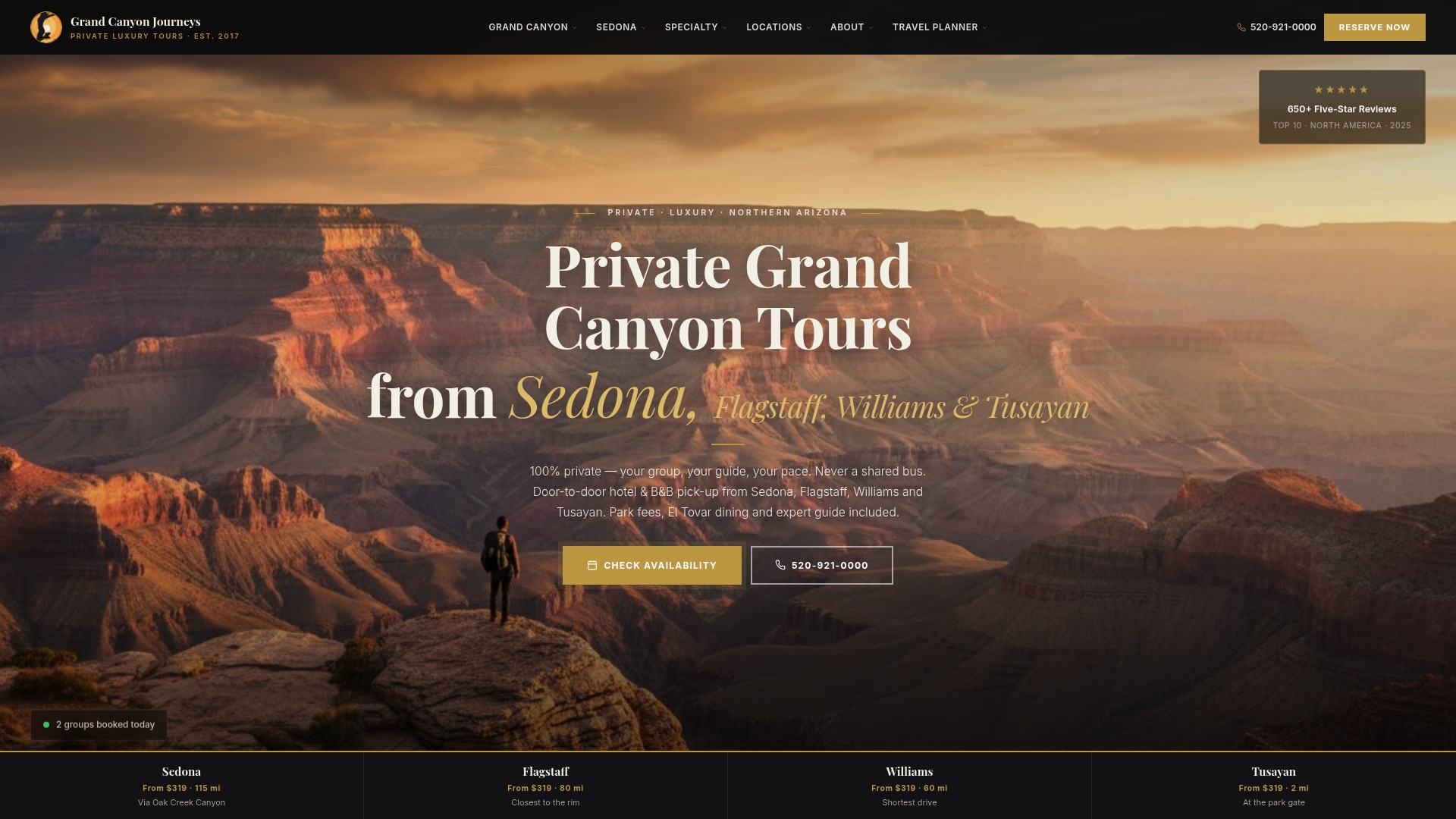
WFR-certified guides handle the safety side, from elevation pacing to the walk back after dark, so you're not the one deciding whether it's safe to linger past sunset with kids or older travelers in your group. If a guaranteed premium spot, zero shuttle stress, and photography guidance from someone who's stood at that rail dozens of times sounds better than a solo gamble on crowds, book a private Grand Canyon Sunset Expedition and lock in your preferred date before peak season fills up.
Frequently Asked Questions
What time should I arrive at the Grand Canyon for sunset? Arrive 60 to 90 minutes before the official sunset time, especially at popular overlooks like Hopi Point where rail space fills up fast during peak season.
Which viewpoint is best for a Grand Canyon sunset? Hopi Point offers the most iconic panoramic view but draws the biggest crowd. Mohave and Pima Points deliver comparable scenery with noticeably fewer people.
Can I drive to the sunset viewpoints, or do I need the shuttle? Hopi, Mohave, and Pima Points require the free Hermit Road shuttle from March through November; private vehicles can use that road in winter. Desert View Drive stays open to cars year round.
How long after sunset should I stay? Stay at least 10 to 30 minutes past sunset for blue hour, when the canyon often shows its most dramatic color, and the crowds have usually already left.
Does Arizona's time zone affect sunset planning? Yes. Arizona does not observe Daylight Saving Time, so sunset times follow Mountain Standard Time year round, shifting roughly from 5:15 PM in winter to 8:20 PM in summer.
Sources
Confirm current conditions with the NPS sunrise and sunset times page and the official shuttle schedule. Check both the same day you travel, since times and routes shift by season.