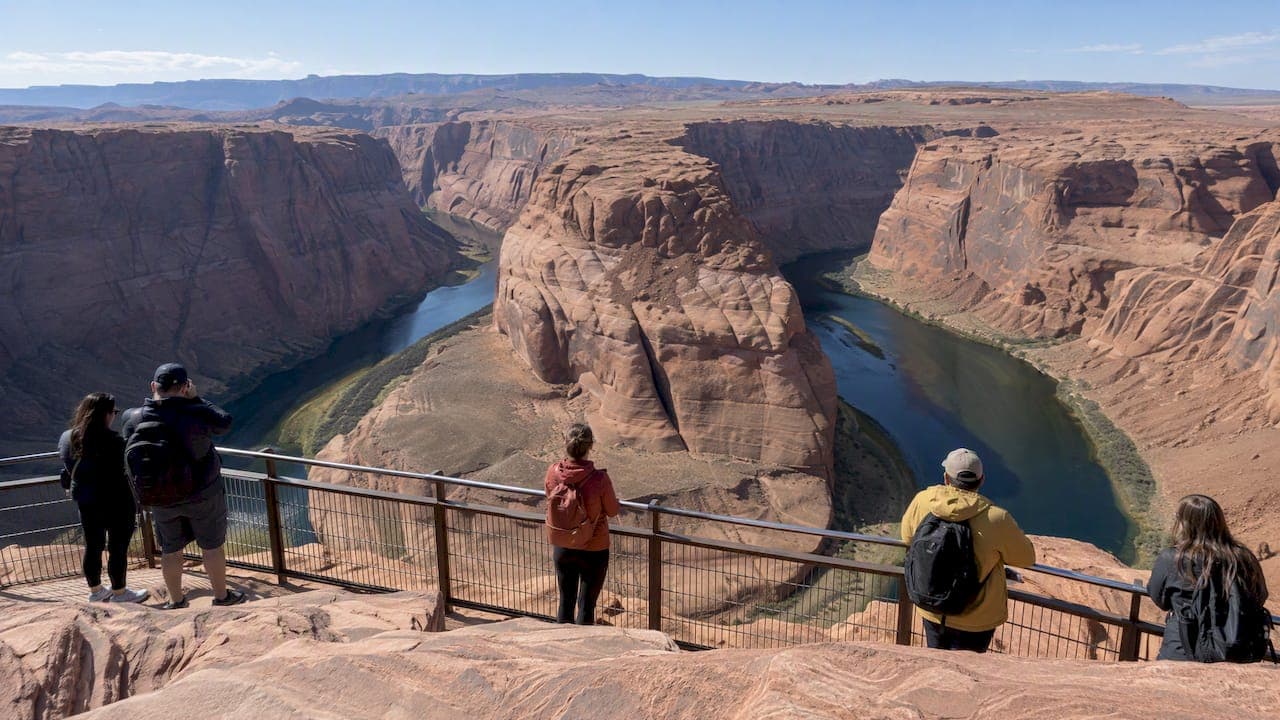
Horseshoe Bend is a 1.5-mile round-trip walk on a hardened path, roughly 2.4 kilometers total. Most people finish the actual walking in 20 to 40 minutes, but a realistic visit budget runs 45 to 90 minutes once you add parking, photos, and time at the overlook. Crowds, heat, and camera setups commonly stretch that window, so build in cushion rather than cutting it close.
TL;DR:
- Most visitors spend 45 to 90 minutes at Horseshoe Bend, factoring in parking, photos, and potential crowds, rather than just walking time.
- Parking is paid and managed by the City of Page, with fees separate from federal passes like America the Beautiful, and fills quickly during peak times.
- Early morning visits offer the best chances for lighter crowds, softer light, and easier parking, especially on weekdays in spring and fall.
- The trail is accessible for strollers and many mobility aids but lacks handrails along the rim and has a packed surface that can require assistance.
- Carrying extra water, avoiding the hottest midday hours, and preparing for queues at the railing help ensure a safe, efficient visit.
Table of Contents
- Quick facts: distance, parking, hours, and accessibility
- What makes your visit longer than the walk suggests
- A step-by-step timeline for your visit
- What to bring and safety basics that keep your visit on schedule
- How accessible is the trail for mobility aids and strollers
- Parking logistics: what the city charges and what passes don't cover
- When to visit for the best light and the fewest people
- A planner's take on the short hike that takes longer than it looks
- Let us handle the logistics for you
- FAQ
- Sources
Quick facts: distance, parking, hours, and accessibility
The trail distance is listed as 1.5 miles round-trip by the National Park Service, while AllTrails rounds it to 1.6 miles with about 193 feet of elevation gain, most of it on the uphill return. The surface is packed and hardened, not loose sand, which keeps footing predictable for most visitors.
| Detail | Information |
|---|---|
| Round-trip distance | 1.5 mi (NPS) / 1.6 mi (AllTrails) |
| Elevation gain | About 193 ft, mostly on the return |
| Trail surface | Hardened, packed path |
| Parking | City of Page lot, paid |
| Hours | Sunrise to sunset |
| Toilets | None on the trail |
A few things catch first-time visitors off guard:
- Federal passes like America the Beautiful do not cover the parking fee, since the lot sits on City of Page land.
- There are two shade structures along the trail but none at the overlook itself.
- Camping is not permitted, and the site closes at sunset.
What makes your visit longer than the walk suggests
The walk itself is short, but almost everything around it eats time. Midday crowds in spring and summer create a queue just to get a clear spot at the railing, and photographers often spend 15 to 30 minutes waiting for a clean shot of the bend. Heat adds another variable: the packed trail surface radiates warmth, and the NPS recommends pacing yourself and carrying water rather than rushing through in peak sun.
A few factors to watch:
- Groups with young children or pets usually walk slower on the uphill return.
- A full parking lot means circling or waiting for a spot, especially midday in summer.
- Photography at the overlook can easily double your time there compared to a quick look-and-go visit.
Pro Tip: If you're short on time, aim for early morning when the lot has open spots and the light is softer for photos.
A step-by-step timeline for your visit
A typical visit breaks down into predictable chunks, even though the hike itself is brief.
- Allow 15 to 30 minutes after arrival for parking and paying at the lot, longer if it's near capacity.
- Use the restroom and grab water before you start walking since there are no facilities on the trail.
- Budget 10 to 20 minutes for the outbound walk to the overlook on the hardened path.
- Plan 15 to 45 minutes at the railed viewing platform depending on crowds and how many photos you want.
- Budget another 10 to 20 minutes for the uphill return to the parking lot.
Added together, that lines up with the 45 to 90 minute range most visitors report, with the high end reserved for sunrise or sunset crowds and serious photography stops.
What to bring and safety basics that keep your visit on schedule
Water matters more than distance here. The NPS advises carrying extra water and avoiding the hottest part of the day, since Glen Canyon summer temperatures can climb fast and the packed trail holds heat. Sturdy shoes help on the uneven edges near the rim, and there's no shade at the overlook itself, only two shade structures along the trail.
A short checklist before you leave the lot:
- Use the restroom at the parking lot since the trail has none.
- Bring at least a liter of water per person, more in summer heat.
- Keep pets leashed and children within arm's reach near the unfenced rim edge.
Pro Tip: Pack a small first-aid item for insect bites, since desert trails can bring unexpected stings; a natural bug bite balm is worth tucking into a day pack. For a deeper look at rim safety and the drop-off near the overlook, our Horseshoe Bend safety guide covers what to know before you go.
How accessible is the trail for mobility aids and strollers
The hardened path and railed viewing platform are built to ADA-compatible standards, which makes the walk manageable for strollers and many mobility devices. That said, the surface is packed sand rather than pavement, there are no handrails along the trail itself, and the exposed rim beyond the platform has no barrier. Anyone using a wheelchair or walker should expect some resistance on the surface and plan for a companion to assist near the overlook, where the ground tilts and crowds can crowd the railing.

Parking logistics: what the city charges and what passes don't cover
The lot at Horseshoe Bend is managed by the City of Page, not the National Park Service, which is why a federal pass won't get you in free. The city's fee schedule lists separate rates for passenger and commercial vehicles, so it's worth checking current amounts before you arrive.
A few practical notes:
- Parking fees are paid directly to the City of Page, separate from any park entrance fee.
- The lot fills quickly on weekends and midday in peak season.
- If the lot is full, arriving an hour earlier or later usually solves it, or consider a guided tour with reserved timing.
Our parking guide for Horseshoe Bend breaks down the lot layout and payment process in more detail.
When to visit for the best light and the fewest people
Sunrise brings cooler temperatures, thinner crowds, and even light across the bend, which makes it the easiest time to get a clean photo without waiting. Sunset delivers dramatic color but draws the largest crowds of the day, and the parking lot often empties out slowly afterward as everyone leaves at once. Spring and fall offer milder temperatures than summer without the holiday crush of peak season. If you can only visit on a weekday, early morning midweek is usually the quietest window of the week.

A planner's take on the short hike that takes longer than it looks
The mile and a half fools people. It's the heat, the queue for the railing shot, and a packed lot at 11 a.m. that eat your morning, not the walking. I'd rather see someone arrive early with a liter of water than rush in at noon expecting a quick in-and-out. If logistics stress you out, a guided tour removes the parking guesswork entirely.
— Chris
Let us handle the logistics for you
If the parking fees, timing windows, and midday crowds sound like more planning than you want on vacation, our private Antelope Canyon & Horseshoe Bend tour folds both stops into one door-to-door day with a Navajo guide handling the details.
Trips are private without sharing buses with strangers, with hotel or B&B pickup. The timing is arranged to avoid the worst of the midday crowds, and parking is handled so you can spend more time at the rim rather than searching for parking. Check current availability and book your date directly on the tour page to lock in your preferred pickup time.
FAQ
How long is the Horseshoe Bend hike?
The round-trip hike is 1.5 miles according to the National Park Service, or 1.6 miles per AllTrails. Most people finish walking in 20 to 40 minutes, with a full visit including parking and photos running 45 to 90 minutes.
Why is Horseshoe Bend so famous?
Horseshoe Bend draws visitors for its dramatic horseshoe-shaped meander of the Colorado River, visible from a rim overlook near Page, Arizona. The combination of a short, accessible hike and a striking view makes it one of the most photographed stops in the region.
How deep is the water at Horseshoe Bend?
The overlook sits far above the river below, with the rim and river separated by a steep drop at the canyon wall. Exact water depth isn't something visitors can judge from the rim, and the site's main draw is the view rather than access to the water itself.
Do I need to bring water and sun protection?
Yes. The NPS recommends carrying extra water and avoiding the hottest part of the day, since there's no shade at the overlook and only two shade structures along the trail.
Does my park pass cover parking at Horseshoe Bend?
No. The parking lot is managed by the City of Page, not the National Park Service, so federal passes like America the Beautiful don't apply there.
Sources
- Horseshoe Bend - Glen Canyon National Recreation Area (U.S. National Park Service)
- Horseshoe Bend Trail, Arizona (AllTrails)
- City of Page 2026 consolidated fee schedule