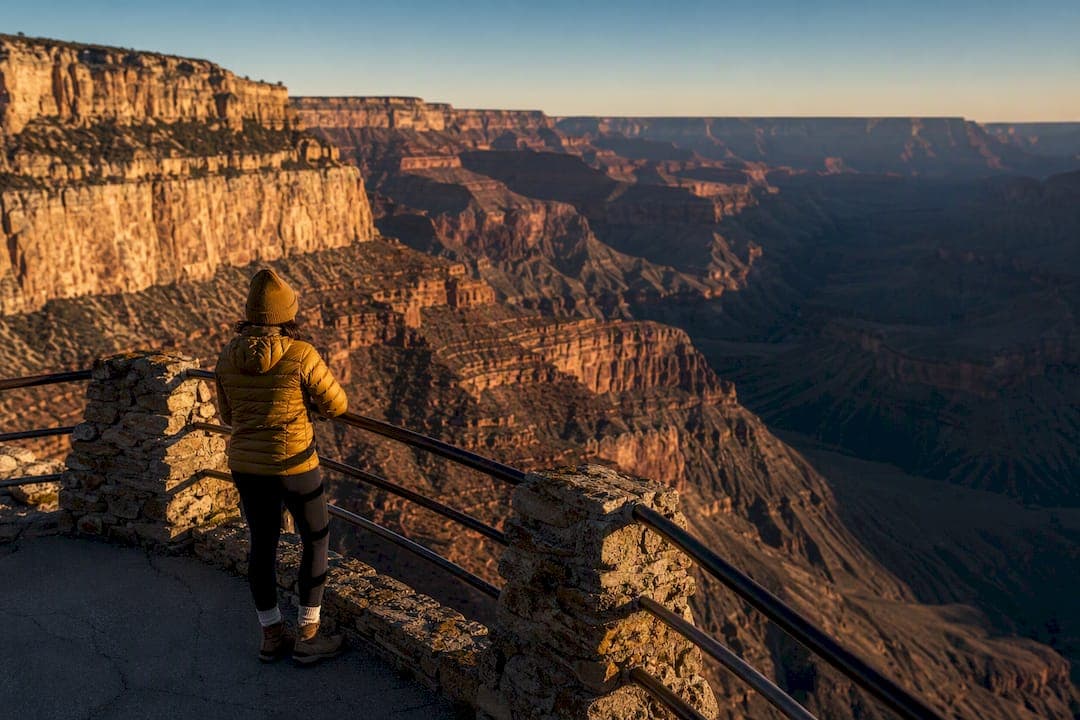
Mather Point, Yavapai Point, Desert View Watchtower, Ooh Aah Point, Grandview Point and the Hermit Road cluster of Hopi and Mohave Points make up the essential South Rim viewpoints. Each earns its spot for a different reason: sunrise light, sunset color, a short hike payoff, or a sweeping panorama you can reach without leaving the pavement. The list and planning notes below help you match the right overlook to your schedule.
TL;DR:
- Hopi Point and Mohave Point are the top sunset overlooks on Hermit Road, requiring shuttles during peak season and drawing large sunset crowds.
- Yavapai Point and Lipan Point offer clearer, less crowded views with easier parking, ideal for sunrise photography and less busy daytime visits.
- Short hikes like Ooh Aah Point on South Kaibab Trail provide unique below-the-rim vistas but demand early starts, water, and proper footwear.
- Desert View Drive is accessible to private vehicles year-round and features key viewpoints like Grandview Point and Desert View Watchtower, avoiding shuttle restrictions.
- Most major paved viewpoints are wheelchair and stroller accessible, while rougher areas below the rim require extra caution and are unsuitable for wheelchairs.
Table of Contents
- 1. The must-see South Rim viewpoints and what to expect
- 2. Best places for sunrise, sunset and photography
- 3. Viewpoints reachable by a short hike
- 4. Getting around: parking, shuttles and Hermit Road
- 5. Accessibility, safety and overlook etiquette
- 6. Stargazing and Milky Way viewing on the South Rim
- 7. What South Rim visitors often overlook
- Private tours that make South Rim viewpoints easy
- Sources
- FAQ
1. The must-see South Rim viewpoints and what to expect
These are the overlooks that repeatedly earn a spot on visitor itineraries, ordered roughly from the Village east toward Desert View Drive.
- Mather Point: The first view most visitors reach from the main entrance, with a wide canyon panorama, paved paths and railings, and heavy crowds at all hours. Come early morning or late evening for a calmer visit; parking fills quickly in the main lot.
- Yavapai Point: Home to the Yavapai Geology Museum, this spot offers one of the clearest views of the canyon's inner gorge and layered rock. It sits on the Rim Trail and is fully paved, making it an easy add-on to a Mather Point visit.
- Rim Trail (general access): The paved Rim Trail links most Village-area viewpoints, so you can walk between Mather Point, Yavapai Point and the Village overlooks without a car. Sections are flat and stroller friendly, though some stretches near Hermit Road narrow along the cliff edge.
- Ooh Aah Point: Reached via the first steep mile of the South Kaibab Trail, this overlook delivers a below-the-rim panorama that rivals views normally reserved for backcountry hikers. The trail has no shade and no water, so plan for an early start.
- Grandview Point: A less crowded stop on Desert View Drive with a historic mining-era backstory and a rugged, uneven overlook area. The view stretches toward Horseshoe Mesa, and the point marks the start of the unmaintained Grandview Trail.
- Desert View Watchtower: Anchoring the eastern end of Desert View Drive, the 70-foot stone tower designed by Mary Colter offers climbable interior views and a general store nearby. It is one of the few South Rim overlooks with a genuine architectural draw alongside the canyon itself.
- Lipan Point: A quieter overlook with one of the widest visible stretches of the Colorado River and a good look at the Grand Canyon's folded rock layers. The parking area is small, so arrive outside midday peaks.
- Moran Point: Named for painter Thomas Moran, this stop offers a classic wide-angle canyon view and tends to draw fewer cars than Mather or Yavapai. It works well as a sunset alternative when the main pullouts are full.
- Yaki Point: Reachable only by park shuttle (private vehicles are restricted here), Yaki Point rewards the extra step with a quieter panorama and access to the South Kaibab trailhead. It is a strong sunrise pick because of its east-facing exposure.
- Hopi Point and Mohave Point: These two stops along Hermit Road are considered the premier sunset overlooks on the South Rim, with unobstructed western views over the river. Both require the shuttle during peak season, and Hopi Point in particular draws large sunset crowds.
- Pipe Creek Vista: A smaller, often overlooked pullout on Desert View Drive with a straightforward canyon view and light foot traffic. It is a solid choice when you want a quick stop without the crowd of Mather Point.
2. Best places for sunrise, sunset and photography
Light direction matters more than the view itself when you are chasing color. For sunrise, Yaki Point and Mather Point face east and catch the first light hitting the canyon walls. For sunset, Hopi Point and Mohave Point along Hermit Road are the classic picks because they look directly into the setting sun over open canyon.
- Sunrise favorites: Yaki Point, Mather Point, and Yavapai Point, all with clear eastern exposure.
- Sunset favorites: Hopi Point and Mohave Point for unobstructed western views, with Moran Point as a quieter backup.
- Crowd trade-off: Mather Point and Hopi Point get the most cars and the least parking, so Yavapai Point or Lipan Point often deliver a similar experience with more breathing room.
- Photography window: The ten to fifteen minutes before and after actual sunrise or sunset produce the deepest color; arriving even a few minutes late means missing the best light.
Pro Tip: Bring a small tripod for low-light shots, but keep your footing well back from unmarked edges. Even a well-lit overlook has loose gravel and unfenced drop-offs in spots.
3. Viewpoints reachable by a short hike
A short walk below the rim changes the view completely and thins the crowd almost immediately.
- Ooh Aah Point via South Kaibab Trail: About 0.9 miles one way with roughly 200 feet of elevation change, this steep, exposed trail takes most hikers 30-minute to 45 minutes each way. Ooh Aah Point is a short, steep out-and-back popular with day hikers, and there is no shade or water on the route.
- Rim Trail segments near Hermit Road: Flat, paved sections connect several overlooks and take 15 to 30 minutes between stops, suitable for most fitness levels and strollers on the paved portions.
- Bright Angel Trailhead viewpoints: The first quarter mile below the rim offers a taste of below-rim scenery without committing to a long descent, typically 15 to 20 minutes round trip for a short look.
Carry at least one liter of water per person even for a 30 minute walk, and wear shoes with real tread. Summer heat on these exposed trails can turn a short hike uncomfortable fast, so start early and turn back at the first sign of dizziness or nausea.
4. Getting around: parking, shuttles and Hermit Road
Hermit Road is where most visitors run into logistics trouble. Hermit Road shuttle and vehicle rules restrict private cars during the shuttle season, which means Hopi Point, Mohave Point and the other Hermit Road overlooks are shuttle-only for much of the year. Desert View Drive, by contrast, stays open to private vehicles year-round, making it the practical choice for a self-driven visit to Grandview, Lipan, Moran and Desert View Watchtower.
- Use the Red Route shuttle for Hermit Road stops when private vehicles are restricted.
- The South Rim shuttle network connects major overlooks and reduces the need to hunt for parking at busy pullouts.
- Drive Desert View Drive directly if you want flexibility and are visiting Grandview, Lipan, Moran or Desert View Watchtower.
- Arrive before 9 a.m. or after 4 p.m. in peak season to avoid the worst of the Village parking crunch.
5. Accessibility, safety and overlook etiquette
Mather Point, Yavapai Point and most of the paved Rim Trail are wheelchair and stroller accessible, with smooth surfaces and railings at the main overlooks. Grandview Point, Lipan Point and anywhere below the rim involve uneven ground, loose rock or unmaintained trail, so they are not reliable options for wheelchairs or strollers.

Stay behind posted barriers, since canyon winds and loose soil have caused falls even a few feet from marked edges. Carry water and watch for heat exhaustion symptoms such as dizziness or nausea, especially between June and August. Drones are prohibited throughout the park, and quiet, respectful behavior at overlooks helps everyone get a clear view and a decent photo. Pack out anything you bring in, and keep noise down for other visitors trying to take in the silence.
6. Stargazing and Milky Way viewing on the South Rim
Overlooks away from Village lighting, such as Lipan Point, Moran Point and Desert View, tend to offer the darkest skies for night viewing. Moon phase and clear-sky windows matter most for Milky Way visibility from the South Rim, with new-moon nights in late spring through early fall generally giving the best results.
- Check the park's posted closing times before heading to a remote overlook after dark.
- Park only in designated areas and use a red-light flashlight to protect your night vision and avoid disturbing other stargazers.
- Bring a jacket even in summer, since rim elevation drops temperatures quickly after sunset.
For a guided version of this experience without the logistics, a private stargazing tour handles the timing and location choice for you.
7. What South Rim visitors often overlook
Most first-time visitors hit Mather Point, snap a photo, and leave without realizing Yavapai Point next door often has a clearer sightline and a smaller crowd. Working from east to west along Desert View Drive on a sunrise run, then circling back to the Village for Hermit Road at sunset, avoids the backtracking that eats up a lot of visitors' mornings. A private, guided visit can front-load the quiet overlooks before the shuttle lines build, then time the Hermit Road stops for the golden hour without the guesswork of checking shuttle schedules on your phone.
— Chris
Private tours that make South Rim viewpoints easy
Seeing the best of these overlooks without spending half the day on shuttle logistics is exactly what a private tour solves. Private day tours, hiking tours and sunset tours from Sedona, Flagstaff and Williams are available, typically including door-to-door pickup and a guide familiar with the best overlooks at different times.

- If sunset color at Hopi Point and Mohave Point is the goal, the Grand Canyon Sunset Tour is built around that window.
- If a short hike to a below-the-rim view like Ooh Aah Point appeals to you, the Grand Canyon Hiking Tour covers that ground with a guide.
- If you want the classic overlooks and Desert View Watchtower in one outing, the Private Grand Canyon Day Tour is the straightforward option.
Tours are typically private and include park fees, simplifying logistics for visitors. Check availability for your dates and let a local guide handle the timing.
FAQ
Where is the best view at Grand Canyon South Rim?
Hopi Point and Mohave Point along Hermit Road are widely considered the best sunset views, while Yavapai Point offers one of the clearest year-round panoramas with easy paved access. The right pick depends on time of day and how far you're willing to walk from the parking area.
Can you see the Milky Way in the Grand Canyon?
Yes, overlooks away from Village lighting such as Lipan Point, Moran Point and Desert View offer some of the darkest skies on the South Rim for Milky Way viewing. Visibility depends on moon phase and cloud cover, so checking conditions before heading out after dark makes a real difference.
What is the best place to watch sunset in South Rim Grand Canyon?
Hopi Point is the classic sunset overlook, with Mohave Point a close second, both reached via the Hermit Road shuttle during peak season. Moran Point on Desert View Drive is a quieter alternative with a similar western exposure.
What is the best free view of the Grand Canyon?
Mather Point and Yavapai Point are free, paved, easily accessible overlooks near the main park entrance that offer some of the widest panoramas on the South Rim. Both sit on the Rim Trail, so you can walk between them without needing a car or shuttle.