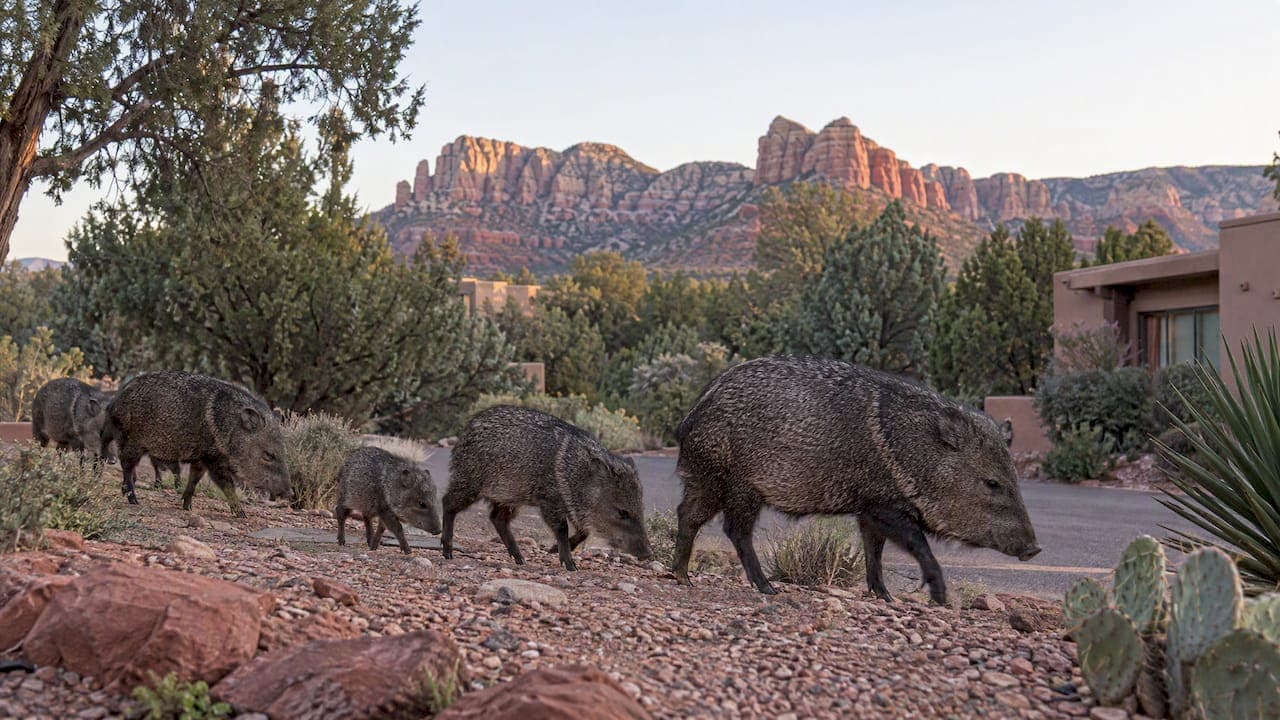
Yes, you can see javelina in Sedona, and your best odds come at dawn and dusk along washes, scrubby trail corridors and the edges of neighborhoods. Sightings are never guaranteed, so patience and distance matter. Feeding wildlife is banned in the city, and keeping well back from any herd is the smartest way to enjoy the encounter.
TL;DR:
- Prioritize shaded washes, dense cactus scrub, and trail corridors near Soldier Pass; Red Rock and Slide Rock state parks also have reported sightings.
- In colder months, scan slopes facing south or east; during dry late summer and fall, irrigated lawns and golf courses can draw herds.
- Javelina travel in herds of 2 to more than 20, and teeth clacking or bristling backs can signal defensiveness, especially near young animals or dogs.
- Sedona bans wildlife feeding, with repeat violations carrying $150 to $500 fines; leash dogs and back away slowly to leave herds an escape route.
Table of Contents
- Where to look for javelina in and near Sedona
- When to look: timing and seasonal patterns
- How to identify javelina and read their behavior
- Safety, Sedona rules and what to do if you meet one
- Viewing and photography tips that keep animals and people safe
- Why you can trust this guidance
- Coexisting with javelina in Sedona
- If you prefer a guided Sedona outing
- FAQ
- Sources
Where to look for javelina in and near Sedona
Javelina follow cover and water, so think about terrain before you think about a specific trailhead. Sedona's washes, rolling hills and dense vegetation work as travel corridors, and overlapping herd ranges in good habitat raise the odds of a sighting in parks and preserves.
- Washes and drainages: dry creek beds give herds a shaded, brushy highway between feeding areas.
- Dense desert scrub: prickly pear and other succulents are a staple food, so thick scrub is worth scanning.
- Trail corridors near Soldier Pass: hikers in this area report animals crossing paths in the early morning, though it varies by day.
- State parks: a local roundup lists Red Rock State Park and Slide Rock State Park among easier places near Sedona where sightings have been reported.
- Neighborhood edges: homes, golf courses and unsecured food can pull herds toward town, and sightings are increasing in parts of Arizona, Sedona included.
Local coverage shows how strongly food and water draw them in. Herds have been reported raiding discarded produce at a community food donation site, and they have damaged irrigated turf at a Sedona golf course. If you want a longer list of places to explore, our Sedona guide covers the area in more detail.
When to look: timing and seasonal patterns
Javelina are crepuscular, meaning most active in twilight near dawn and dusk. The National Park Service adds that there is no single reliable place to meet one, and that they are often seen crossing roads or at the edges of the day. Use these patterns to plan:
- Dawn and dusk: check local sunrise and sunset times and arrive early. Our Airport Mesa sunset guide is handy for timing the evening window.
- Colder months: javelina often feed and lounge in the sun on south- or east-facing hillsides, which makes daytime sightings more likely in winter.
- Dry late summer and fall: water and irrigated areas can attract them, so watch green spaces near homes and courses.
- Your approach: move slowly, stay quiet and let the animals come into view rather than chasing them.
How to identify javelina and read their behavior
Javelina look like small, coarse-haired pigs, but they are a different animal. Look for salt-and-pepper fur and a pale collar of hair around the shoulders, a stocky body and a long snout. They are more compact than most people expect.

They travel in herds called squadrons, and squadrons typically range from 2 to more than 20 animals. Expect them to browse roots, seeds, fruit and cactus pads as they move. Their eyesight is poor, but their sense of smell is excellent, so they often notice you by scent before they see you.
You may also smell them first. A musky, skunk-like odor from a scent gland marks territory and helps squadron members recognize each other. Defensive signals include teeth clacking and a bristling back. Javelina turn defensive when cornered, when guarding young, or when a dog looks like a predator, so give them space and a clear exit.
Safety, Sedona rules and what to do if you meet one
Feeding wildlife is illegal in the city. Sedona's ordinance took effect May 11, 2023, and repeat violations may carry fines of $150 to $500. The council acted after repeated feeding incidents and javelina bites led to relocations and community concern.
The reasoning is simple. Fed animals lose their wariness, and habituated animals are often relocated or euthanized. Arizona Game & Fish also reports that javelina bites are almost exclusively linked to people feeding them, so most conflicts are avoidable.
If you meet a javelina:
- Stop and stay calm, and do not run.
- Back away slowly and leave the animal a clear escape route.
- Keep your dog leashed, close and quiet, or move away with it.
- Secure food, trash and pet bowls so nothing draws the herd closer.
- Call local authorities if an animal seems aggressive or injured.
Pro Tip: Keep your dog on a short leash on any trail at dawn or dusk. Javelina can read a dog as a threat, and a leash is the easiest way to prevent a chase.
Viewing and photography tips that keep animals and people safe
Good photos come from restraint. Let the animals set the pace, and you will see more natural behavior than you would by moving in.
- Use binoculars or a telephoto lens instead of walking closer.
- Stay on the trail or in your vehicle, and never herd or corner an animal for a shot.
- Stay quiet and avoid sudden movements, especially near young animals.
- Drive slowly at dawn and dusk, watch for road crossings, and pull over only where it is safe.
- Pack out all food and trash, and keep food out of sight in parked cars.
Pro Tip: Arrive early, pick a spot with a view of a wash edge, and wait. A still, quiet observer often sees more than someone who keeps moving.
For general principles that carry across regions, this wildlife safety article from a partner site on bear encounters reinforces the same ideas: keep distance and never let animals associate people with food.
Why you can trust this guidance
I'm Chris, and I write Sedona travel guidance for our readers at Grand Canyon Journeys, a locally owned Northern Arizona tour operator. For wildlife facts and safety steps we lean on the Arizona Game & Fish Department, the National Park Service and Arizona State Parks, plus local reporting on Sedona's feeding ordinance. Where official sources describe behavior or rules, we follow them and link them, so you can check the details yourself.
Coexisting with javelina in Sedona
Sedona has done something right by choosing education and a feeding ban over a shrug. The animals were here first, and a good sighting is one where the javelina never changes what it was doing because of you. Enjoy the moment, keep your distance, and resist the urge to share a snack. If you spot a herd, note where and when you saw it. Shared sightings help other visitors know what to expect.
— Chris
If you prefer a guided Sedona outing
If you would rather leave the planning to someone local, we run private Sedona outings with door-to-door pickup and an expert guide. Our Sedona Highlights Tour and Sedona Highlights & Hike offer private guided outings, though wildlife sightings are never guaranteed. See all our Grand Canyon tours from Sedona and book your date.
FAQ
Can you eat a javelina in Arizona?
If you are considering hunting javelina, check Arizona Game & Fish regulations and local rules before making plans.
How aggressive is javelina?
Javelina are generally wary, and conflicts are mostly avoidable. Arizona Game & Fish reports that bites are almost exclusively associated with people feeding them. They can turn defensive if cornered or protecting young.
What kind of wildlife can be seen in Sedona, Arizona?
Javelina are among the wildlife visitors report around Sedona's washes, parks and neighborhood edges. Dawn and dusk give the best odds for most desert animals. Keep distance from everything you see.
Are there mountain lions in Sedona?
Mountain lions are a species Arizona wildlife agencies track across the state, though sightings are rare and they avoid people. Hike in groups, keep dogs leashed and follow local wildlife guidance. Contact local authorities if you see an animal behaving oddly.
Sources
- City passes new ordinance for feeding and protection of wildlife | News Releases | City of Sedona
- Javelina in Arizona | Arizona State Parks
- Javelina - Grand Canyon National Park (U.S. National Park Service)