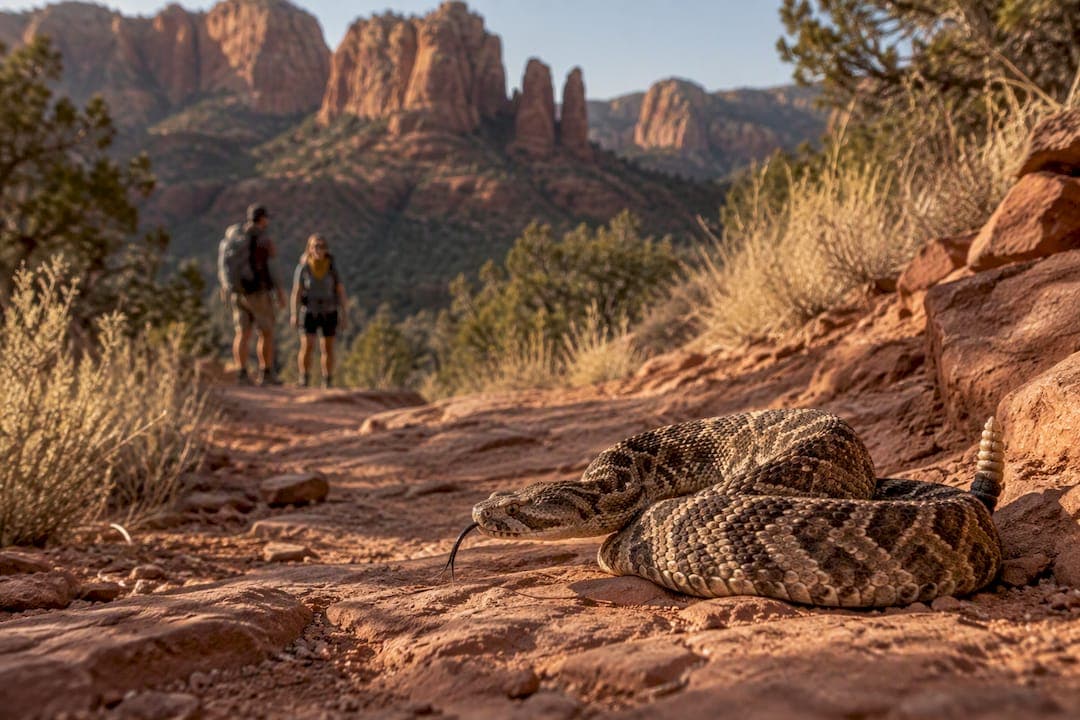
Stay on marked trails, watch where you place your hands and feet, and give any snake you see plenty of room. That single habit prevents most encounters. Yes, Sedona has both harmless snakes and several rattlesnake species, but bites are uncommon when hikers stay alert, and rattlesnake activity in Arizona generally runs from March through October, with spring being a season for extra caution.
TL;DR:
- Most snakes seen in Sedona trails are harmless, with key distinguishing features including slender bodies, round pupils, and narrow heads.
- Rattlesnakes are active mainly from March to October, especially during early spring and late summer, in shaded, rocky, or brush-covered areas.
- Wearing sturdy footwear, staying on marked trails, and avoiding reaching into unseen crevices significantly reduce the risk of bites.
- If a rattlesnake is encountered, back away slowly and give it several yards of space, as their warning signs include buzzing tails and coiled postures.
- In case of a bite, immediate medical attention is critical; keep the person calm, immobilize the limb, and avoid home remedies or ice.
Table of Contents
- Common nonvenomous snakes visitors are likely to see in Sedona
- Venomous rattlesnake species near Sedona: identification and realistic danger
- When snakes are most active around Sedona trails
- Trail safety checklist: how to reduce chance of an encounter or bite
- Emergency steps if a person is bitten
- Local context and contacts for snake sightings around Sedona
- ID quick-check: distinguishing rattlesnakes from lookalikes
- What Sedona guides do when a snake appears on the trail
- Respecting Sedona's wildlife while staying cautious
- Consider a guided hike if you'd rather not manage the risk alone
- Authoritative resources used
- Sources
- FAQ
Common nonvenomous snakes visitors are likely to see in Sedona
Most snakes you cross paths with on a Sedona trail are harmless. Recognizing them takes the fear out of an encounter and helps you tell them apart from the species that actually warrant distance.
- Gopher snake: a heavy-bodied, tan or yellow snake with dark blotches that often mimics a rattlesnake by hissing and vibrating its tail, though it has a narrow head and round pupils.
- Kingsnake: glossy black or dark brown with pale bands or a checkered pattern, often found near rock piles and creek edges.
- Coachwhip: long, slender, and fast moving, ranging from pinkish tan to nearly black, commonly seen crossing open trail sections in daylight.
- Groundsnake (Sonora semiannulata): small and secretive, usually under a foot long, hiding under rocks or leaf litter near creekbeds and other Sedona microhabitats.
- Garter and striped snakes: slim bodies with light stripes running the length of the back, typically found near water.
All of these share slender builds, narrow heads, and round pupils, the opposite of a rattlesnake's stocky body and triangular head. Look for them along rock ledges, under brush, and near the seasonal creeks that cut through Sedona's canyons.
Venomous rattlesnake species near Sedona: identification and realistic danger
Rattlesnakes are part of the landscape around Sedona, and knowing which ones you might see helps you react correctly instead of panicking.
- Western diamondback: a large, heavy bodied snake with dark diamond patterns and a black and white banded tail just above the rattle, often found in rocky terrain and washes.
- Mojave rattlesnake: similar in color to the diamondback but with a more potent venom profile, generally found in scrubby, open desert terrain at lower elevations.
- Black-tailed rattlesnake: identifiable by its solid black tail and olive or yellow body, often found near rocky outcrops and canyon walls.
- Sidewinder (Sonoran Desert sidewinder): small, with distinctive horn-like scales above the eyes, known for its sideways movement across loose sand.
Arizona is home to 13 rattlesnake species, more than any other state, and several of these overlap with the Western diamondback, Mojave, and black-tailed identified in state wildlife species records. A rattlesnake's warning signs are hard to miss: a raised, buzzing tail, a coiled posture, and a flattened defensive stance. These are signals to back away, not to investigate. Rattlesnakes generally do not chase people, and moving away calmly resolves the vast majority of encounters. Bites are serious and require immediate medical care, but modern antivenom and emergency treatment make fatalities rare in the United States.
When snakes are most active around Sedona trails
Snake activity in Sedona tracks temperature closely, and understanding the pattern helps you time your hike.
- Rattlesnakes are generally active from March through October, with April marking a peak as they emerge from winter dormancy.
- Early spring activity tends to happen during the day, then shifts toward dawn, dusk, and nighttime once summer heat sets in.
- Early morning and early evening hikes are common choices during hot months, since snakes and hikers alike avoid the peak midday sun.
- Rock crevices, shaded washes, creek edges, rock piles, and dense brush carry higher odds of a snake nearby, since these spots offer shade and cover.
Planning your hike around these windows lowers your odds of a surprise encounter without requiring you to skip the trail altogether.
Trail safety checklist: how to reduce chance of an encounter or bite
A few habits make a real difference on any Sedona trail, whether you're on a short red rock loop or a longer canyon route.
- Wear closed, sturdy boots and long pants, and choose maintained, well marked trails rather than bushwhacking.
- Watch where you place your feet and hands, especially near rocks, logs, and tall grass.
- Use trekking poles to probe blind spots like rock gaps or thick brush before stepping through.
- Keep dogs leashed and on the trail, since off leash pets are more likely to investigate a snake up close.
- Look before you sit down to rest, and keep packs and gear off the ground when possible.
- Avoid reaching into crevices or under rocks you can't see into.
- If you spot a snake, back away slowly, give it several yards of space, and never attempt to move or handle it.
Arizona Game and Fish frames this entire approach as rattlesnake awareness, a message built around coexistence rather than fear, since most encounters happen when someone steps off the trail or reaches into an unseen space.
Pro Tip: Carry a small first-aid kit and a charged phone with a saved location pin so you can direct emergency responders quickly if something goes wrong.

Emergency steps if a person is bitten
A snake bite is a medical emergency, and how you respond in the first few minutes matters.
- Call 9-1-1 immediately and note the time of the bite.
- Keep the person calm and as still as possible to slow the spread of venom.
- Remove rings, watches, or tight clothing near the bite site before swelling starts.
- Keep the affected limb immobilized and positioned lower than the heart if possible.
- Do not apply a tourniquet, cut the wound, attempt to suck out venom, apply ice, or use alcohol or NSAIDs on the area, since these steps can worsen the outcome.
- Tell emergency personnel the snake's appearance if you got a clear look, and call Poison Control at 1-800-222-1222 if you have questions about symptoms.
Hospitals across Arizona stock antivenom and treat rattlesnake bites regularly. Fast transport and treatment are what matter most, not home remedies.
Local context and contacts for snake sightings around Sedona
Sedona Fire District responds to a steady stream of snake calls each year between spring and early fall, though most are relocation requests rather than bites. For an actual bite, call 9-1-1. For a snake blocking a trail or sitting near a public area, contact Sedona Fire District's non-emergency line or the nearest park ranger station so they can relocate it safely before it becomes a hazard for other visitors.

ID quick-check: distinguishing rattlesnakes from lookalikes
A fast visual check can help you judge risk without getting close enough to confirm anything in detail.
- A triangular head, thick body, and a visible rattle or buzzing tail point toward a rattlesnake.
- A slender body, round pupils, and a smoothly tapering tail are more typical of harmless species like gopher snakes or coachwhips.
- Coiling and a raised, vibrating tail are defensive signals worth respecting immediately.
- When you're not sure what you're looking at, treat it as potentially dangerous and keep your distance rather than trying to confirm the species.
What Sedona guides do when a snake appears on the trail
Guides plan hiking routes and timing around cooler hours and known wildlife patterns, briefing guests on basic rattlesnake awareness without turning it into alarm. Guests typically get simple pointers on footwear, water, and how a sighting is handled calmly and safely.
Respecting Sedona's wildlife while staying cautious
Snakes are part of what makes Sedona's desert ecosystem work, and coexistence beats fear. Stick to trails, keep your distance, and if independent hiking feels like more risk than you want, a guided route is a reasonable option.
— Chris
Consider a guided hike if you'd rather not manage the risk alone
Hiking Sedona's trails on your own means watching your own footing, timing, and wildlife awareness the entire way. A guided outing removes that mental load: your guide already knows which washes see more activity, which hours to avoid, and how to keep the group moving calmly if a snake turns up. Grand Canyon Journeys runs a Grand Canyon Hiking Tour with expert local guides, and for travelers who want their Sedona time built around sightseeing plus a supervised trail walk, the Sedona Highlights & Hike Tour pairs red rock views with a guided hike.
- Local guides plan routes and timing around known wildlife activity.
- Tours are offered privately and with no strangers sharing your group.
- Guides carry the on-the-ground experience to handle a sighting without disrupting your day.
If you'd rather explore Sedona's canyons and red rock trails with someone who already knows the terrain, browse Grand Canyon Journeys' Sedona tour options and book the outing that fits your trip.
Authoritative resources used
For current advisories, consult Arizona Game and Fish Department, Arizona State Parks, and Poison Control at 1-800-222-1222 before you head out.
This article is general information, not a substitute for advice from a qualified doctor. Consult a qualified healthcare professional about your own circumstances before acting on anything here.
Sources
- Above average temps could bring out rattlesnakes - Arizona Game & Fish Department
- Snakes in Arizona — Arizona State Parks
- Wild Herps — Sonora semiannulata (Groundsnake)
FAQ
Are there venomous snakes in Sedona?
Yes, several rattlesnake species live in the Sedona area, including the Western diamondback, Mojave, and black-tailed rattlesnake. Bites are uncommon when hikers stay on trails and keep their distance from any snake they see.
Why is yellow not allowed in Sedona, AZ?
This isn't accurate: Sedona has no rule against wearing or using the color yellow. It may be a mix-up with local building and sign color guidelines meant to preserve the red rock scenery, not a restriction on visitors' clothing or gear.
What is the most snake-infested national park in the US?
There's no official ranking of national parks by snake population, so this claim doesn't have a clear, sourced answer. Arizona as a whole is home to 13 rattlesnake species, more than any other state, which makes its desert parks and trail systems worth extra caution.
What part of Arizona has the most snakes?
There's no single official count that ranks Arizona regions by snake numbers. What's documented is that Arizona hosts 13 rattlesnake species statewide, with activity concentrated in desert and canyon terrain from March through October.
What should I do if I see a rattlesnake on a Sedona trail?
Stop, back away slowly, and give the snake several yards of space rather than trying to move around it closely. Rattlesnakes generally do not pursue people, and backing away resolves most encounters without further incident.