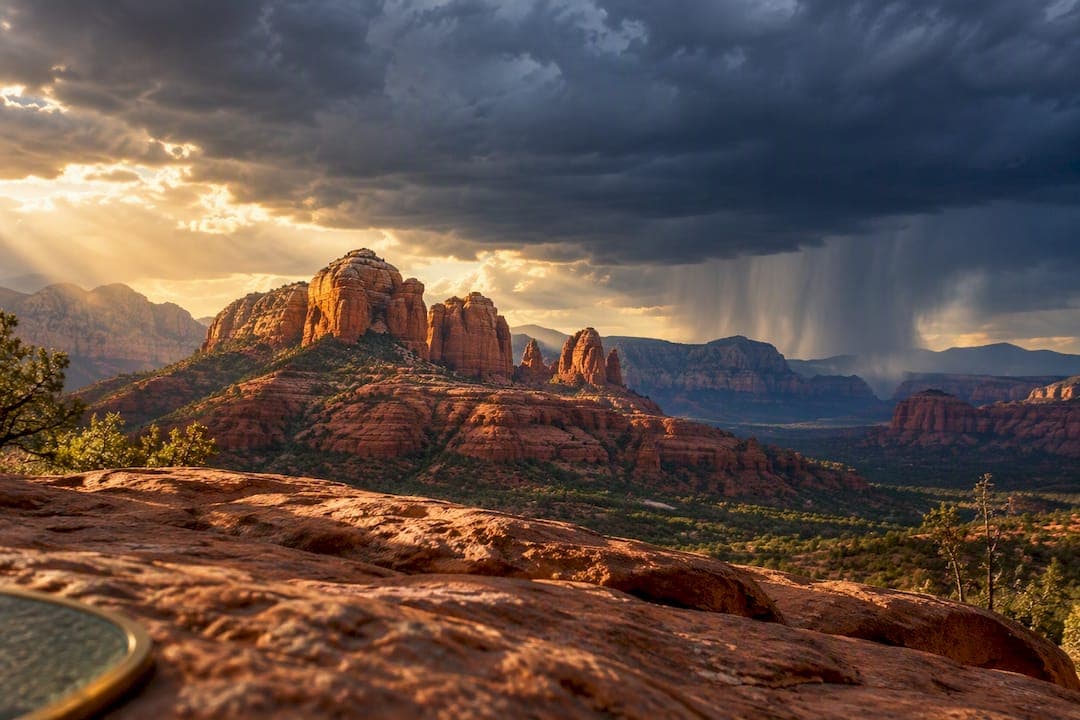
Spring (April–May) and fall (September–October) give you the best mix of warm afternoons and cool nights for hiking and sightseeing in Sedona. Summer brings highs near 97°F plus afternoon monsoon storms, and winter mornings can dip into the low 30s, so check the Red Rock State Park normals for planning and the National Weather Service the morning of any outdoor activity.
TL;DR:
- Sedona's weather varies significantly based on season, with the hottest and driest months being June and July, which can reach near 97°F and see monsoon storms.
- The best hiking conditions occur in April and October, when temperatures are moderate, humidity is low, and storm risk is minimal.
- Monsoon season from July to September presents hazards like flash floods, requiring caution, early morning hikes, and avoidance of washes during storms.
- Layering clothing is essential year-round due to large temperature swings between morning lows and afternoon highs, particularly at higher elevations.
- Checking short-term forecasts and weather alerts is crucial for outdoor plans, as monthly normals cannot predict daily storm activity or flash flood risks.
Table of Contents
- Sedona Weather By Month: Averages And Travel Notes
- When Is Monsoon Season In Sedona?
- What Should You Pack For Sedona's Seasons?
- Should You Trust Monthly Averages Or The Daily Forecast?
- How Humid Does Sedona Get?
- Does Sedona Get Snow In Winter?
- How Does Wind Affect Sedona's Weather?
- What Kind Of Climate Does Sedona Have?
- How Strong Is The Sun In Sedona?
- A Local Operator's View On Sedona's Weather
- Plan Your Sedona Trip Around Weather, Not Around It
- Sources
- FAQ
Sedona Weather By Month: Averages And Travel Notes
Sedona's climate swings more than most desert towns expect, mostly because of elevation. Sitting around 4,500 feet, the town runs cooler than Phoenix year round but still bakes in July. The monthly normals below come from Red Rock State Park, a few miles south of town, and they give you the clearest month-by-month starting point for packing and timing your trip.
| Month | Avg High | Avg Low | Avg Precipitation | Travel Note |
|---|---|---|---|---|
| January | 56°F | 30°F | 2.10 inches | Cold mornings, occasional frost; layer up for sunrise hikes |
| February | 61°F | 33°F | 2.16 inches | Wettest stretch of winter; trails can be muddy after storms |
| March | 65°F | 37°F | 2.47 inches | Wildflowers start; still pack a warm layer for early starts |
| April | 73°F | 42°F | 1.16 inches | One of the most comfortable months for full-day hiking |
| May | 82°F | 49°F | 0.71 inches | Dry and warm; start hikes early before midday heat builds |
| June | 93°F | 58°F | 0.36 inches | Hottest, driest month before monsoon moisture arrives |
| July | 97°F | 64°F | 1.65 inches | Peak heat plus first monsoon storms; plan around afternoons |
| August | 94°F | 63°F | 1.90 inches | Storm season continues; humidity noticeably higher |
| September | 88°F | 58°F | 1.94 inches | Monsoon tapering off; still watch afternoon sky |
| October | 77°F | 48°F | 1.67" | Fall color season begins; excellent hiking weather |
| November | 64°F | 36°F | 1.38" | Crisp days, cold nights; good for photography |
| December | 57°F | 31°F | 1.51" | Occasional snow dusting on higher terrain around town |
Every row here reflects Red Rock State Park's published normals, which is the most cited baseline for Sedona monthly weather.
A few patterns stand out once you look at the full year side by side. June is bone dry and brutally hot, while July and August carry both the highest humidity and the heaviest rainfall of the year, thanks to monsoon storms rolling in during the afternoon. February and March are wetter than you'd guess for "winter," often bringing steady rain rather than snow. And October quietly outperforms September for comfort, since the monsoon has usually wound down but daytime highs still sit in the mid 70s. If you're chasing fall foliage, the window around mid to late October tends to line up with both cooler air and peak color in the canyons.
For any month you're visiting, treat sunrise to mid-morning as your safest window for strenuous activity between May and September. Once you get into the shoulder months, that window stretches out considerably, and a 2 p.m. start in November is still perfectly comfortable.

When Is Monsoon Season In Sedona?
Arizona's official monsoon season runs June 15 through September 30, but northern Arizona usually doesn't feel real monsoon moisture until early July. Storms build through the day and hit hardest in the late afternoon and evening, dumping heavy rain fast on ground that often can't absorb it.
That combination, intense rain plus rocky, sloped terrain, is exactly what drives flash flooding in Sedona's canyons and washes. A storm several miles away can send a wall of water through a drainage channel that looked bone dry an hour earlier. Northern Arizona gets a large share of its yearly rain during this stretch, which is why trail conditions can flip from dusty to dangerous within a single afternoon.
Safety rules worth memorizing before you hike, drive, or picnic near a wash during July through September:
- Stay out of narrow canyons and dry washes when storms are forecast for the afternoon.
- Treat any Flash Flood Warning as an order to move to higher ground immediately.
- Never drive through flowing water. Just 6 inches can knock down an adult, and 18 inches can float most vehicles.
- Build a backup plan for afternoon activities in case a storm rolls in early.
Pro Tip: Start any monsoon-season hike before 9 a.m. and be back at the trailhead by early afternoon, well before storm clouds typically build.
What Should You Pack For Sedona's Seasons?
Sedona's day-to-night temperature swing is bigger than most visitors expect, often 25 to 30 degrees between the morning low and afternoon high. That gap makes layers your best friend regardless of season.
- Summer: light, breathable clothing for midday, a rain shell for sudden monsoon storms, sun protection, and an early alarm clock.
- Winter: an insulated jacket for sunrise starts, plus grippy shoes if overnight temperatures dropped near freezing and left icy patches on shaded trails.
- Spring and fall: a light layer you can shed by midmorning works for nearly any activity, including wine tasting patios and canyon overlooks.
Golden hour photographers should aim for the hour after sunrise or before sunset in any season, and avoid midday shooting in July and August when the light is harsh and the heat is punishing. For a full seasonal breakdown of what to bring, the Grand Canyon Journeys packing guide covers layering for the region's elevation swings in more detail. For gear specifics on hiking footwear and outer layers, a resource like this hiking outfit guide is worth a look.
Pro Tip: Pack one warm layer even for a June trip. Trailheads at higher elevation around Sedona can feel 10 degrees cooler than town.
Should You Trust Monthly Averages Or The Daily Forecast?
Monthly normals tell you what to pack and which weeks tend to be comfortable. They do not tell you what will happen on the specific Tuesday you're hiking Devil's Bridge. Red Rock State Park itself recommends using its normals for trip planning, then checking a short-term forecast the morning of any outdoor activity.
Before heading out, run through a quick checklist:
- Check the current point forecast on the National Weather Service site for Sedona.
- Scan the Arizona Emergency Information Network for active monsoon or wind advisories.
- Confirm trail and road conditions on the relevant park page if you're headed somewhere remote.
How Humid Does Sedona Get?
Sedona spends most of the year comfortably dry, which is a big part of why the heat feels manageable even in the 90s during May and June. Relative humidity typically sits in the 20 to 30 percent range through the cooler months and into early summer, similar to what you'd expect from a classic desert climate.
That changes once monsoon season kicks in. Afternoon humidity climbs noticeably in July and August as moisture pushes up from the south, and it's this jump in humidity, not just the rain itself, that makes late summer feel heavier than June even though June is technically hotter. Mornings stay relatively comfortable during monsoon months, but by early afternoon the combination of heat and humidity can make hiking feel far more taxing than the thermometer alone suggests.
Winter humidity tends to rise slightly during wetter stretches in February and March, though it rarely feels sticky the way monsoon afternoons do. If you're sensitive to humid air, plan strenuous activity for morning hours between July and September, and don't assume a "cooler" August day will feel easy just because the high is a few degrees below July's peak.
Does Sedona Get Snow In Winter?
Snow in Sedona is possible but inconsistent. The town itself, at roughly 4,500 feet, sees only occasional light snowfall, usually a dusting that melts within a day once the sun comes out. December and January average lows in the low 30s, cold enough for frost and the occasional icy patch on shaded trails, but sustained snow cover on the valley floor is uncommon.
Head up in elevation toward the Mogollon Rim or nearby Flagstaff, sitting above 6,900 feet, and the picture changes fast. Those areas regularly see real accumulation through the winter, which is worth knowing if your itinerary includes a day trip north. Within Sedona proper, the bigger winter concern isn't snow depth but black ice on shaded switchbacks and north-facing trail sections after a cold, damp night.
If you're visiting between December and February, pack traction-ready shoes for any trail with shaded stretches, and don't assume a clear, sunny afternoon means the trail dried out completely from an overnight freeze. Red rock surfaces hold moisture and ice longer than you'd think, especially in narrow canyon sections that stay shaded most of the day.

How Does Wind Affect Sedona's Weather?
Wind in Sedona is mostly a story of terrain, not storm systems. The red rock formations and canyon walls funnel and redirect airflow, so wind speeds and direction can change noticeably just by walking from an open overlook into a sheltered canyon.
Spring, particularly March and April, tends to bring the gustiest days of the year as weather systems transition and pressure differences build across the region. Those winds can kick up dust on exposed trails and make higher viewpoints feel considerably colder than the forecast high suggests. Afternoon breezes are also common through the summer, sometimes offering welcome relief from the heat before a monsoon storm rolls in, sometimes signaling that a storm is close enough to change your plans.
During monsoon season, wind often arrives as an early warning sign. A sudden gust ahead of darkening skies is frequently the first indicator that a thunderstorm is close, and it's smart to treat that shift as your cue to head toward shelter or your vehicle rather than waiting to see if rain follows. Dust storms, while less common in Sedona itself than in the open desert around Phoenix, can still reduce visibility along Highway 89A during strong spring wind events.
What Kind Of Climate Does Sedona Have?
Sedona sits in a semi-arid climate zone, a step wetter than the true desert conditions found in Phoenix or Tucson but still dry enough that water conservation and sun exposure are year-round considerations. The elevation is the key difference maker: at roughly 4,500 feet, Sedona runs 10 to 15 degrees cooler than the low desert on a typical summer day, which is why so many Phoenix residents treat it as a warm-weather escape.
That semi-arid label also explains the sharp seasonal contrast in this guide. Dry, mild winters give way to a dry, hot early summer, which then flips into the monsoon's wetter, more humid stretch before drying out again heading into a crisp fall. Few climates pack that much variation into a single calendar year without ever tipping into true desert extremes or mountain cold.
How Strong Is The Sun In Sedona?
UV exposure in Sedona runs high for most of the year, a combination of elevation, clear skies, and the region's abundant sunshine. The UV index typically peaks from May through August, often reaching the "very high" category on clear afternoons, which means sunburn can happen in well under 30 minutes of unprotected exposure.
Even in cooler months, the risk doesn't disappear. Winter sun angles are lower, but Sedona's frequently clear skies and light-colored rock surfaces reflect additional UV onto hikers, making sunburn a real possibility even in January if you're out for a few hours midday. Spring and fall carry a similar year-round baseline risk, just without summer's added heat stress.
Sunscreen, a hat, and UV-blocking sunglasses belong in your daypack regardless of season. The clear desert air that makes Sedona's sunsets so striking is the same air that lets UV rays through with little atmospheric filtering.
A Local Operator's View On Sedona's Weather
Private tour operators in the Sedona area watch forecasts closely and adjust start times or routes to dodge storms and cold mornings rather than canceling outright. That flexibility is exactly why a private, weather-aware guide can take the guesswork out of a day when the forecast looks uncertain.
— Chris
Plan Your Sedona Trip Around Weather, Not Around It
A locally owned Northern Arizona operator can provide flexibility on days when the forecast is uncertain. Private tours offer the option to shift start times, adjust routes, or swap stops without coordinating with a larger group. This flexibility is an advantage over self-guided itineraries when weather is unpredictable.
If your Sedona plans include red rock sightseeing, a scenic hike, or a wine-tasting stop, the Sedona Highlights & Hike Tour pairs guided sightseeing with a trail suited to the day's conditions, door-to-door pickup included. Check available dates and book directly through the Sedona departures page to lock in a private guide who's already watching the forecast for you.
Sources
- Red Rock State Park — Weather & Climate
- Northern Arizona Monsoon Season — NWS Flagstaff
- Monsoon awareness — Arizona Emergency Information Network
- Average Weather in Sedona, Arizona — WeatherSpark
FAQ
What Is The Best Month To Travel To Sedona?
October and April are widely considered the best months, combining daytime highs in the mid 70s with low humidity and minimal storm risk. Late May through early July and late August through October are also favorable shoulder windows if your dates are flexible.
What Is The Golden Hour In Sedona?
Golden hour refers to the hour after sunrise and the hour before sunset, when red rock formations glow with warm, low-angle light. Photographers chase these windows year round, though the exact clock time shifts with the season, earlier sunsets in winter and later ones in summer.
What Is The Weather Like In Sedona During The Different Months?
Sedona ranges from average lows near 30°F in January to average highs near 97°F in July, with monthly precipitation shifting from steady winter rain to a dry early summer and back to storm-driven monsoon rainfall in July and August. Fall brings the year's most stable, comfortable stretch.
Is Sedona Liberal Or Conservative?
Sedona's population leans politically mixed, with the city itself often described as more moderate to liberal compared to the broader conservative-leaning region of northern Arizona surrounding it. Political leanings vary block by block and aren't something weather planning depends on either way.
How Do I Know If A Storm Will Disrupt My Plans?
Check the National Weather Service point forecast the morning of your activity rather than relying on the monthly averages alone. A Flash Flood Warning means leaving washes and low ground immediately, not waiting to see if rain actually starts falling near you.