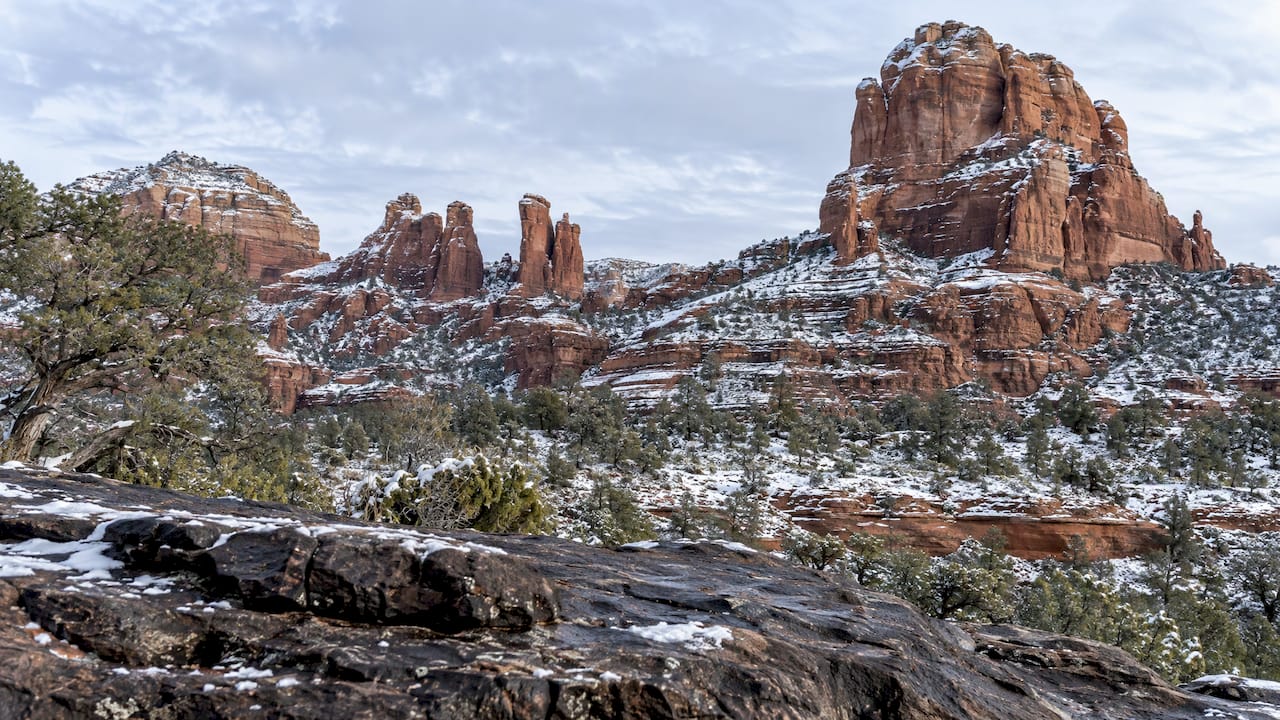
Sedona in winter is cool, bright and quiet. Daytime highs sit in the mid-to-high 50s °F, nights hover around freezing, and snow is rare and brief. It is a very good season for red rock views, easy hiking and an unhurried private tour, as long as you pack layers and plan around the shorter days.
Below you will find the actual numbers, a straight answer on snow, what to do when the temperature drops, and how to keep yourself feeling well in dry desert air at elevation.
TL;DR
- Temperatures: Winter highs run from the mid-50s to low 60s °F, with January the coldest month at a 56°F average high and a 30°F average low.
- Snow: Light snow reaches Sedona only a handful of times a year and usually melts the same day. Flagstaff, 45 minutes north, gets far more.
- Crowds: Winter is the slow season, so trails, viewpoints and restaurants are calmer than in spring.
- Pack: Layers, a warm hat for early mornings and evenings, sunscreen and plenty of water. Dry air and elevation still affect you in cold weather.
- Best plan: Pair a scenic day with a private guide, and use the cool weather for hiking, wine tasting or stargazing.
Table of Contents
- What Sedona weather is really like from December to February
- Does it snow in Sedona?
- Why winter is a smart time to visit
- Packing and planning for cold mornings and warm afternoons
- Staying well in cold, dry, high desert air
- Best things to do in Sedona in winter
- A sample winter day in Sedona
- How a private tour makes a cool-weather trip easier
- Ready for a private Sedona or Grand Canyon day?
- Our view: winter is when Sedona is at its best
- FAQ
- Sources
What Sedona weather is really like from December to February
Sedona sits in high desert, and that shapes everything about winter. Days are sunny and crisp, mornings and nights are cold, and the temperature swing between the two can be 25 degrees or more.
Arizona State Parks publishes long-term normals for Red Rock State Park, which sits right in the Sedona area. Its annual weather page lists these winter averages:
| Month | Average high | Average low | Average precipitation |
|---|---|---|---|
| December | 57°F | 31°F | 1.51 inches |
| January | 56°F | 30°F | 2.10 inches |
| February | 61°F | 33°F | 2.16 inches |
A separate climate analysis built on 1980 to 2016 data from Weather Spark points the same way: winter highs of around 57°F that rarely drop below 43°F or climb above 71°F. Its coldest day of the year falls on December 26, with a range of 35°F to 53°F.
Two practical takeaways:
- Averages hide the swing. A 56°F afternoon feels pleasant in full sun on a trail. The same day can start at 30°F at sunrise, and shaded canyons stay cold well into the morning.
- Skies are mostly clear. The same Weather Spark report puts cloud cover at roughly 33% to 40% of the time through winter, with the chance of a wet day rising from 12% early in the season to 18% by the end. Most days are bright.
If you want to compare other seasons, our monthly Sedona weather guide walks through the state park normals month by month.
Does it snow in Sedona?
Yes, but lightly and rarely. According to Visit Sedona, snow arrives about five times a year and typically melts the same day. U.S. News Travel puts annual snowfall at around 3½ inches, usually a light dusting on the red rocks.
Elevation explains it. Sedona sits at about 4,500 feet, while Flagstaff is at about 7,000 feet, 45 minutes north. Visit Sedona describes Sedona as roughly 20 degrees warmer than Flagstaff in winter. A storm that closes Flagstaff streets may leave only a white frosting on Sedona's buttes.
What that means for your trip:
- Do not count on snow. A dusting is a bonus, not a forecast. If you want snow-covered red rock photos, stay flexible with your dates.
- A snowy morning is brief. The dusting tends to disappear by afternoon, so plan photo stops early in the day.
- Higher ground is different. If your itinerary includes Flagstaff or the high country on the way to the Grand Canyon, expect colder temperatures than in Sedona and dress for them.
Why winter is a smart time to visit
Winter is Sedona's slow season. U.S. News Travel notes that tourists tend to head farther south, which leaves the town with open hotel rooms and softer prices. Spring crowds are gone, and you can often walk into a restaurant without a long wait.
There are three real reasons to come now rather than in April:
- Comfortable exertion. Summer afternoons in the desert can be punishing. In winter, a 56°F to 61°F afternoon is ideal for walking, so you can stay out longer without wilting.
- Better light. The sun stays low, so the red rock walls take on a deeper, warmer color for much of the day. Photographers love it.
- Space. Viewpoints and short trails are easier to enjoy when you are not sharing them with a crowd.
Holiday weeks are the exception. Around Christmas and New Year's, Sedona still fills with visitors, so book lodging and any private tours early for those dates.
Packing and planning for cold mornings and warm afternoons
The winter formula in Sedona is layers.
- Base layer and a fleece or light insulated jacket for sunrise and evening.
- A windproof shell. Wind on exposed rock makes a 50°F day feel much colder.
- Sturdy shoes with good grip. Wet or frosty slickrock can be slippery after a cold night. Choose real hiking shoes over smooth-soled sneakers.
- Sunglasses, sunscreen and a hat. The sun is strong at elevation even when the air is cool.
- A refillable water bottle. More on that below.
Daylight is also shorter than in summer, so build your day around it. Start early, keep sunset viewing for the end, and avoid planning a long trail that finishes in the dark. For ideas on where to catch first light, see our guide to Sedona sunrise spots.
Staying well in cold, dry, high desert air
Visitors sometimes feel off in Sedona even in winter. Cold weather hides a few common causes, and most are simple to manage.
Dehydration
Dry desert air pulls moisture out of you without you noticing, especially when you are not sweating visibly in cool weather. The Wilderness Medical Society's 2024 altitude-illness guidelines note that symptoms of dehydration can mimic altitude sickness, so drinking enough matters. Headache, dizziness and fatigue are all reasons to stop, rest and drink.
Visit Sedona's hiking tips add that you should eat and drink more than usual, with salty snacks and water or sports drinks, because replacing water without the electrolytes you lose can lead to hyponatremia. Hyponatremia is a dangerous drop in blood sodium, and untreated it can cause seizures. The same page recommends a pace at which you can still talk while walking.
Elevation
The town is at roughly 4,500 feet, which is well below the level where most people notice altitude problems. The Wilderness Medical Society guidelines say unacclimatized people are at risk of altitude illness above about 8,200 feet, although susceptible individuals can develop acute mountain sickness as low as roughly 6,600 feet. If you also visit high country such as Flagstaff or the Grand Canyon rim, give yourself time to adjust, go slowly and tell your guide if you get a headache or nausea.

Valley fever
Valley fever is a fungal infection caught by breathing in soil spores in parts of Arizona. The University of Arizona's valley fever awareness card says short visits carry a much lower risk than the roughly 1-in-25 annual risk for residents. It also advises that if you develop cough, fever, night sweats, fatigue or muscle and joint pain within a month of visiting Arizona, you should see a health care provider and ask for the specific valley fever blood test.
If you have a chronic lung condition, are pregnant, or are unsure whether a strenuous hike is right for you, speak to your own doctor before you travel.
Best things to do in Sedona in winter
Take a scenic drive
Winter is excellent for driving. The roads are quiet, the rock is lit from a low angle, and you can warm up in the car between photo stops. Our guide to Sedona scenic drives lays out routes for different travelers.
Hike in the cool of the day
This is hiking weather. Classic Sedona trails such as Cathedral Rock, Boynton Canyon and Devil's Bridge are popular, and AZ Central's Sedona bucket-list calls out Devils Bridge, a roughly 4-mile round trip to a 50-foot-high sandstone arch. Expect an occasional icy patch in shaded spots after a cold night. A guided hike lets someone else watch the route, the footing and the time. Our Sedona Highlights & Hike tour combines red rock sightseeing with a guided hike.
Go wine tasting
Cool afternoons suit a slow tasting day. The Verde Valley has a wine scene within a short drive of Sedona, and a private driver means everyone in your group can taste. See our three Sedona wine tasting routes for ideas.
Look up at night
Long winter nights make for good stargazing. Bundle up, because it gets cold fast once the sun sets.

Visit the Grand Canyon or Antelope Canyon
Sedona is a practical base for bigger days out. The Grand Canyon is a long day trip, and the cold season is a good time to see it without summer heat. Winter conditions on the canyon rim and in northern Arizona can be colder than in Sedona, so pack warmer layers than you think you need.
A sample winter day in Sedona
Here is how a first-timer might shape one cool-weather day:
- Early morning: Watch the sunrise from a viewpoint with a hot drink, with a jacket and gloves on.
- Late morning: Take a short hike once the sun has warmed the trail. Shaded sections will be the coldest.
- Midday: Eat lunch in town or at a winery, outside in the sun if you can.
- Afternoon: Drive a scenic route and stop wherever the low light hits the rock best.
- Evening: Head back before dark, or end with stargazing if you have layers for it.
The point is to follow the temperature. Do the cold things when the sun is up and the warm things in the middle of the day.
How a private tour makes a cool-weather trip easier
Winter in Sedona rewards flexibility. A cold morning might be better spent over a hot breakfast and a drive, with the hike moved to early afternoon. That is hard to do on a fixed group schedule.
Our tours are 100% private, with no shared buses and no strangers. We offer door-to-door pickup at your hotel or B&B, luxury vehicles, expert local guides who speak English and German, and itineraries that adjust to you. All park fees and dining are included. That means you can concentrate on the scenery rather than on timing, parking and trail logistics.
Here are the Sedona-area options and the published starting prices, per person:
| Tour | Starting price |
|---|---|
| Sedona Stargazing Tour | from $179 |
| Sedona Highlights Tour | from $189 |
| Sedona Highlights & Hike | from $269 |
| Sedona Highlights & Wine | from $289 |
| Private Grand Canyon Day Tour | from $319 |
| Antelope Canyon & Horseshoe Bend | from $419 |
You can see the full lineup on our private tours page, and our Sedona guide covers the area in more detail.
Ready for a private Sedona or Grand Canyon day?
If you want the winter quiet without the planning work, start with the Sedona Highlights tour, a private red rock sightseeing day from $189 per person. For a bigger day, the private Grand Canyon day tour from Sedona starts at $319 per person. Both include door-to-door pickup, an expert guide, and a vehicle just for your group.
Wine lovers can choose the Sedona Highlights & Wine tour, from $289 per person.
Our view: winter is when Sedona is at its best
We spend our days with guests in the red rocks, and winter is the season we would pick for a first visit to Northern Arizona if the choice were ours.
The reasons are simple. The air is clear, the light is low and warm, and the trails are quiet enough that you can hear the canyon. Comfortable temperatures mean you can stay out longer, see more and enjoy it more.
The catch with winter is that mornings are cold and days are short, so the day needs shaping. That is where a private tour pays off. We can start later on a frosty morning, move a hike to the warmest part of the day, and build in a long lunch or a wine stop. Everything is private, with door-to-door pickup and park fees and dining included, so nobody is watching a clock or waiting for a bus to fill.
If you are coming from the US, Canada or Europe and want a calm, beautiful trip, plan for layers and plenty of water, and let us handle the rest.
Chris
FAQ
Is Sedona warm in winter?
It is mild rather than warm. Average highs are 56°F to 61°F from December through February, according to Arizona State Parks, and nights drop to about 30°F to 33°F. Sunny afternoons feel pleasant, but you will want a jacket in the morning and evening.
Does it snow in Sedona?
Occasionally, and lightly. Visit Sedona says snow comes about five times a year and usually melts the same day. Flagstaff, at a higher elevation, sees much more.
Is Arizona worth visiting in January?
For Sedona, yes, if you like quiet trails and cool, sunny weather. January is the coldest month, with a 56°F average high and a 30°F average low. U.S. News Travel describes winter as the slow season, with lighter crowds and lower hotel prices. Dress in layers and plan outdoor activities for the middle of the day.
Why do I feel sick in Sedona?
The most common causes are dehydration, exertion and, on higher hikes, elevation. The dry air makes you lose water even in cool weather, so drink often, eat salty snacks and keep a pace at which you can still talk. If you develop a cough, fever or night sweats within a month of your visit, see a health care provider and mention your Arizona trip.
Sources
- Annual Weather, Red Rock State Park (Arizona State Parks)
- Sedona Winter Weather, Weather Spark
- Best Season to Visit Sedona: Winter Edition (Visit Sedona)
- Best Times to Visit Sedona (U.S. News Travel)
- Wilderness Medical Society Clinical Practice Guidelines, 2024
- Tips for Hiking in Sedona (Visit Sedona)
- Valley Fever Tips (University of Arizona)