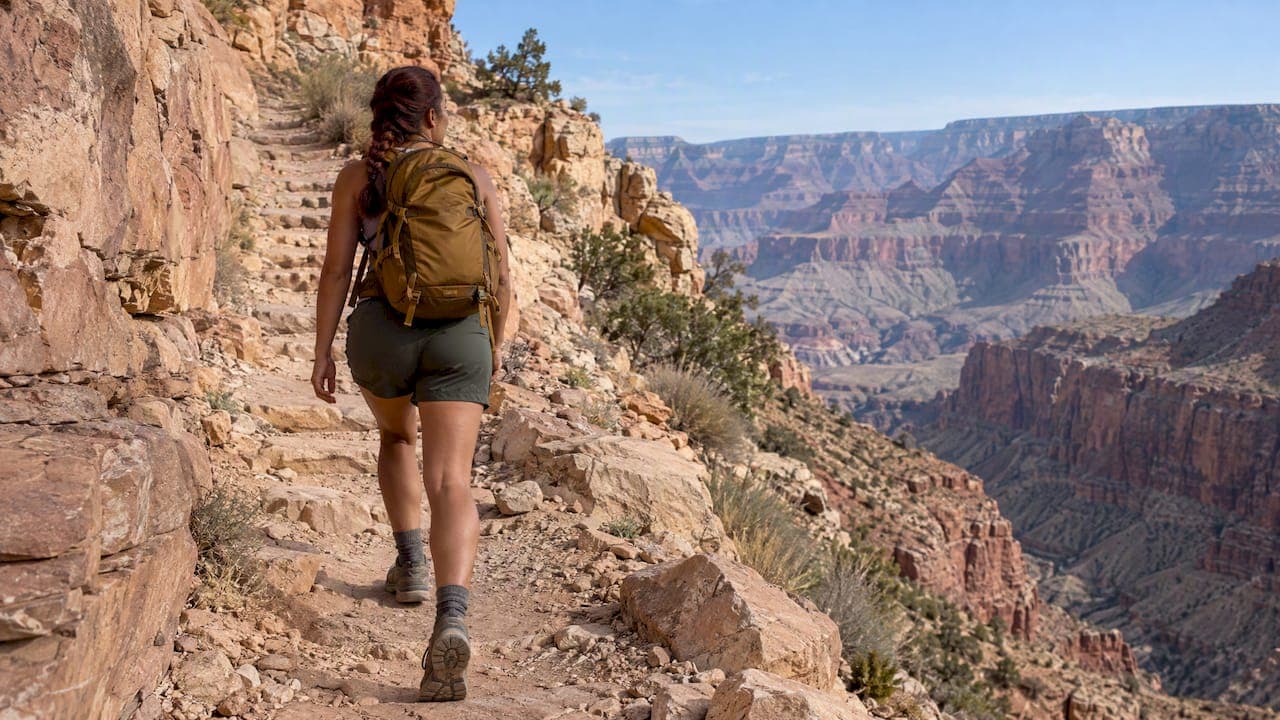
For a Grand Canyon day hike, your daypack needs the National Park Service's ten essentials: water, salty and high-calorie food, first aid, a map, a light source, sun protection, communication tools, emergency shelter, broken-in footwear and layers. Water and food should be the heaviest things in the pack. Everything else should be small, light and chosen for the season you are hiking in. This checklist covers each item, how much to bring and what to swap in summer or winter.
TL;DR
- Carry about 1 gallon (4 liters) of water per person for a warm-season day, plus electrolyte drink mix and salty snacks. Water alone is not enough.
- Pack a headlamp with spare batteries, a first-aid kit with blister care, a whistle, a map and a charged phone, even for a "short" hike.
- Wear broken-in hiking shoes, a wide-brimmed hat, sunglasses and sunscreen, and bring a layer you can add or remove.
- In summer, plan around timing: the park strongly discourages hiking between 10 a.m. and 4 p.m.
- In spring and fall, add traction devices for lingering ice or early snow.
Table of Contents
- The daypack checklist at a glance
- Water: how much to carry
- Food: salty, easy and more than you expect
- Clothing, footwear and sun protection
- Safety, first aid and light
- Adjusting the pack by season
- Choose the right route for your pack
- A pack-it-in-order routine
- Perspective
- Hike with a private guide instead
- FAQ
- Sources
The daypack checklist at a glance
This is the short version to screenshot. The sections after it explain the reasoning and the amounts.
| Category | What goes in the pack |
|---|---|
| Water | Bottles or a reservoir sized for the season, electrolyte mix, a water treatment method |
| Food | Salty snacks, bars, hard candy, fruit or nuts, more than you think you will eat |
| First aid | Kit with blister care, duct tape, a knife, personal medications |
| Navigation | Trail map or guide, phone, awareness of where the next water source is |
| Light | Headlamp or flashlight with spare batteries |
| Sun | Sunscreen, lip balm, wide-brimmed hat, sunglasses |
| Signaling | Whistle, signal mirror, phone |
| Shelter | Lightweight emergency tarp or blanket |
| Clothing | Layers, windproof or waterproof shell by season, extra socks |
| Feet | Broken-in hiking shoes with good soles, trekking poles if you use them |
The list follows the ten essentials the park publishes in its Grand Canyon trip planner: sufficient water, salty snacks and high-calorie food, a first-aid kit, a map or trail guide, a flashlight or headlamp with spare batteries, sun protection, communication tools, lightweight emergency shelter, broken-in footwear and layers of clothing.
Water: how much to carry
Water is the item people underpack. The park advises warm-month hikers to carry and drink about 1 gallon (4 liters) of water per day. The same page notes that fluid and electrolyte loss can exceed 2 quarts per hour when hiking uphill in direct sunlight during the hottest part of the day.

That figure is for the whole day, not a single outing from the rim, so adjust to your route. A park ranger in the Hike Smart podcast describes packing a gallon of water, an electrolyte drink and extra electrolyte powder for an anticipated five-hour hike in hot weather. A common rule of thumb quoted by an Outside editor is 0.5 to 1 liter per hour in extreme heat, though needs shift with elevation, effort and temperature.
Practical water setup
- Two carry systems. A reservoir plus one bottle means a leak or a dropped bottle does not end your day.
- Electrolytes. Pack powder or tablets for at least part of your water.
- Water treatment. The park's trip planner says to bring a way to treat water in case of pipeline breaks or repair work. A small filter or tablets weigh almost nothing.
- Evaporative cooling. Many hikers stay cooler by spraying water on the face, head, hat and shirt, according to the Hike Smart podcast. Budget a little extra for that.
Do not overdrink
More water is not always better. Hyponatremia is low blood sodium caused by drinking too much water while losing salt through sweat. The park recommends electrolyte replacement and salty snacks to balance water intake. Symptoms listed in the park's backcountry hiking guide include nausea, vomiting, headache, difficulty walking, confusion and seizures. Eat regular meals, snack often and rest frequently.
Food: salty, easy and more than you expect
Heat dulls appetite, which is exactly when your body needs fuel. The ranger in the Hike Smart podcast recommends 300 to 500 calories per hour and high-energy salty snacks.
A realistic daypack food bag for a full day:
- Salty items you actually like: pretzels, salted nuts, jerky, crackers.
- Dense calories: energy bars, nut butter packets, trail mix.
- Something sweet to eat when nothing else sounds good, such as hard candy or dried fruit.
- A real lunch, such as a sandwich or wrap, for a long outing.
Keep snacks in a hip-belt pocket or the top of the pack so you eat on the move rather than waiting for a break you may skip.
Clothing, footwear and sun protection
The park's guidance is plain: layer your clothing for the weather, wear broken-in hiking footwear with good soles, and use sunscreen, a wide-brimmed hat and sunglasses.
Shoes and socks
Break in new shoes well before the trip. Blisters are one of the most common reasons a hike goes wrong, and the canyon's long descents punish toes. Bring a spare pair of socks and keep blister care within reach, not at the bottom of the pack. Trekking poles can take strain off your legs on steep sections, as the park's Hike Smart guidance notes.
Layers
Temperatures can swing a long way between the rim and deeper into the canyon, and between dawn and midday. Carry a light insulating layer even if you start in warm sun. Add a windproof shell for windy days and a waterproof one in winter, as the park's backcountry guide recommends.
Sun
Sunscreen, lip balm, a wide-brimmed hat and sunglasses belong in the lid pocket, not buried. A light long-sleeve sun shirt that you can wet down does double duty with the cooling trick above.
Safety, first aid and light
First-aid kit
The park's list calls for a kit that includes prescriptions, blister care, duct tape and a knife. Keep it small and organized: blister dressings, tape, antiseptic wipes, pain relievers you already know you tolerate, any personal medication, and a few electrolyte packets. If you take prescription medication or have a medical condition, ask your own doctor how heat and exertion could affect you before the trip.
Light
A headlamp or flashlight with spare batteries is on the park's list because hikers can inadvertently end up on the trail after dark. The park warns against relying on your phone's light alone. A headlamp frees both hands for poles and handrails.
Communication and shelter
Pack a whistle, a signal mirror and a phone. Do not count on coverage below the rim. Add a lightweight emergency tarp or blanket, which weighs a few ounces and matters if you are stuck waiting for help in cold or wind.
Know the signs of heat illness
The park's backcountry guide lists headache, dizziness, nausea, vomiting, cramping and decreased urine output as heat illness signs. If they appear, rest in shade, get wet and hydrate. If symptoms are severe or do not improve, treat it as an emergency and get help; do not push on to finish the trail.
Adjusting the pack by season
The canyon is not one climate. The same trail can need two completely different packs.
| Season | Swap or add |
|---|---|
| Summer | Extra water and electrolytes, sun shirt, cooling spray bottle, headlamp for pre-dawn starts |
| Fall | Light insulating layer, windproof shell, traction devices if early snow is forecast |
| Winter | Insulated and waterproof layers, gloves, hat, traction devices, extra food |
| Spring | Traction devices for lingering ice, wind layer, flexible layers for swings in temperature |
Traction devices for lingering spring ice or early autumn snow come straight from the park's backcountry guide, as do the windproof and waterproof layer recommendations.
For a deeper look at conditions month by month, see our Grand Canyon weather guide, and for clothing beyond the daypack our Grand Canyon packing guide and Arizona packing guide by season.
Summer timing matters more than gear
The park strongly discourages hiking between 10 a.m. and 4 p.m. in summer to avoid life-threatening heat, and recommends predawn starts and late-afternoon finishes. The Hike Smart podcast makes the same point from the experience side: timing is the most important factor in avoiding desert hazards. If you want the full reasoning, read our piece on summer safety and the 10 a.m. to 4 p.m. window.
Storms
Lightning, falling rocks and flash floods are real risks during storms. The park advises staying away from edges, promontories and individual trees. If thunder starts, change the plan; no view is worth it.
Choose the right route for your pack
Your checklist assumes a sensible route. The park says that hiking from the rim to the river and back in a single day is not recommended at any time of year because of extreme weather, long distances and nearly 5,000 feet of elevation change each way. Plan an out-and-back to a turnaround point instead, and remember the climb back out is the hard part.
For first-timers, our guides to easy South Rim hikes for beginners and the Bright Angel day hike explain routes, timing and turnaround points. Our Grand Canyon hiking guide covers the wider picture, and the South Rim itinerary helps if the hike is one part of a longer visit.
A pack-it-in-order routine
Pack the night before, and do it in this order:
- Water goes in first, closest to your back, so weight sits high and centered.
- Insulating layer and shell next.
- First aid, shelter and headlamp in an easy-to-find pocket, not the bottom.
- Snacks, sunscreen, lip balm and phone in the hip belt or lid.
- Trail map or downloaded offline map, and a printed copy of your plan left with someone.
The park's rule is to travel as light as possible, with food and water as the heaviest items. If something has not earned its weight, leave it out. Standard backpacking gear often becomes superfluous in extreme summer heat, a point made by a rescue ranger in Backpacker, who urges hikers to adapt their style to the environment.
Perspective
Most daypack problems we see start before anyone touches the trail: a late start, too little salt, or a plan that is longer than the day allows. A checklist helps, but the real protection is choosing the right hour and the right route.
That is why we build our private tours around timing and pace. Our guided hikes are private, so the schedule follows your group rather than a bus timetable, and we can set the pace, the turnaround point and the breaks around who is actually walking. Our guides speak English and German, and our tours include door-to-door pickup and all park fees.
If you would rather spend your energy on the views than on logistics, a private guided day is built for exactly that. You still bring the essentials above, and you hike with a local who knows the canyon.
Chris
Hike with a private guide instead
If you would like the planning handled, our Grand Canyon Hiking Tour is a private guided hike from $349 per person, and our Private Grand Canyon Day Tour starts from $319 per person. Both are 100% private, with no shared buses or strangers.
We pick up at your hotel or B&B and work from Sedona, Flagstaff, Williams and Tusayan. Compare departure points on our page for private Grand Canyon tours from Sedona, or browse all our Grand Canyon tours to match your pace and interests.
FAQ
What is the most important item in a Grand Canyon daypack?
Water, with salty food to go with it. The park advises about 1 gallon (4 liters) per person for a warm-season day and recommends electrolyte replacement and salty snacks so you do not dilute your sodium. Everything else on the list protects you if plans change.
Do I need a headlamp for a day hike?
Yes. The park lists a flashlight or headlamp with spare batteries among its essentials because hikers can end up on the trail after dark, and it warns against relying only on a phone light. A headlamp is light and leaves your hands free.
Can I hike to the river and back in one day?
The park says this is not recommended at any time of year, given the distance, the weather and nearly 5,000 feet of elevation change each way. Choose a shorter out-and-back and turn around early.
What should I change for a summer hike?
Bring more water and electrolytes, start before dawn or hike in the evening, and avoid the hours from 10 a.m. to 4 p.m. Carry a headlamp for the dark start, and wet your hat and shirt to stay cooler.
Do I need traction devices?
In spring and early autumn, possibly. The park advises traction devices for lingering spring ice or early autumn snow, and waterproof layers in winter. Check current trail conditions on the park's official pages before you go.
Sources
- Grand Canyon Trip Planner (National Park Service)
- Hiking Frequently Asked Questions (National Park Service)
- Hike Smart Podcast 02, Ten Essentials (National Park Service)
- Summer Hiking, Hike Smart (National Park Service)
- Introduction to Backcountry Hiking (National Park Service)
- How I Hike Safely in Extreme Heat (Outside)
- 8 Survival Tips From a Grand Canyon Rescue Ranger (Backpacker)