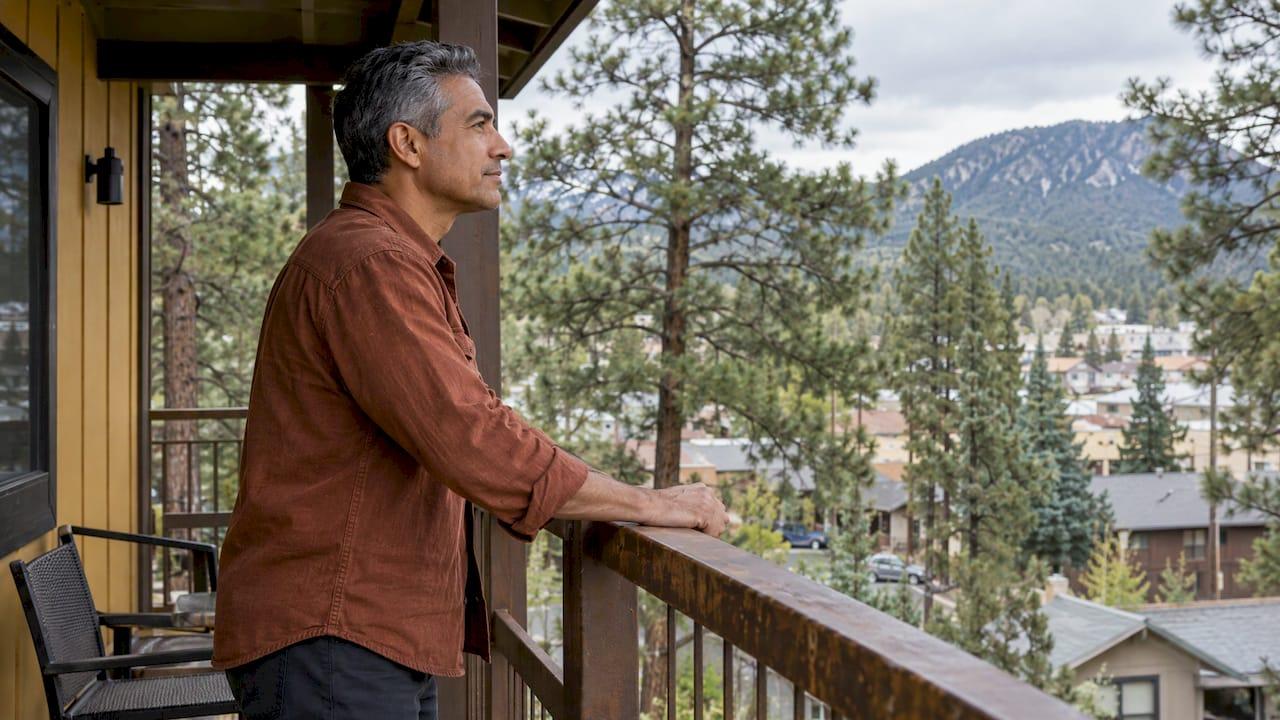
Flagstaff sits at roughly 7,000 feet, high enough that some visitors from sea level feel it, though serious illness is uncommon at this elevation. Most people who notice anything get a mild headache, poor sleep or unusual tiredness in the first day. A slower first 48 hours, steady fluids and a plan for the Grand Canyon that doesn't pile effort onto your arrival day prevent most of it. When we plan a private Grand Canyon day for guests staying in Flagstaff, we build the pace around that first-day reality.
TL;DR
- Flagstaff is at approximately 7,000 feet (2,135 m), about the same as the Grand Canyon South Rim. Altitude symptoms are possible for people arriving from low elevations.
- Symptoms (headache, dizziness, fatigue, nausea, poor appetite) usually begin 2 to 12 hours after arrival, often during or after the first night.
- For the first 48 hours, keep exercise mild, skip alcohol and drink water. Do not ascend further while you have symptoms.
- Confusion, loss of coordination, breathlessness at rest or chest tightness need immediate descent and urgent medical care.
Table of Contents
- How high is Flagstaff, and is altitude sickness really possible?
- Symptoms of altitude sickness in Flagstaff and when they start
- How to prevent altitude sickness when you arrive in Flagstaff
- Altitude and the Grand Canyon: the part many visitors get wrong
- Staying in Flagstaff and visiting the canyon: how to schedule it
- Our perspective on altitude and Grand Canyon days
- A private Grand Canyon day built around an easy pace
- What to pack and do for comfort at 7,000 feet
- When to stop, descend or get help
- FAQ
- Sources
How high is Flagstaff, and is altitude sickness really possible?
Yes, it is possible, but it is usually mild. Flagstaff's tourism bureau lists the city at approximately 7,000 feet (2,135 m) above sea level and acknowledges that altitude symptoms can occur there. The National Park Service says the Grand Canyon South Rim averages 7,000 feet (2,134 m). So the two places are close to the same elevation, and what you feel in one is what you will feel in the other.
The common benchmark for altitude illness is higher. The CDC's Yellow Book says unacclimatized travelers sleeping at 8,000 feet (2,450 m) or higher, and sometimes lower, are at risk. The Wilderness Medical Society's 2024 guidelines add that susceptible people can develop acute mountain sickness (AMS), and rarely high-altitude pulmonary edema, as low as 2,000 m (6,562 feet). Flagstaff is just above that line.

The same guidelines note that naming one safe elevation is difficult, because AMS-like symptoms are nonspecific and can appear without any altitude gain. In practice: most visitors are fine, some are not, and you can't reliably predict which group you are in from your fitness alone. Having been fine at altitude before helps as a guide. Being young and fit does not guarantee it.
Who is most likely to notice it
The people who feel Flagstaff most are those who fly in from near sea level (Los Angeles, Houston, New York, London, Frankfurt, Toronto) and head straight to the rim, a hike or a big dinner with wine. Travelers coming up from Phoenix, which is much lower, gain several thousand feet in a couple of hours of driving. The Park Service also warns that respiratory or heart problems may cause difficulty at 7,000 feet, so anyone with those conditions should speak to their doctor before the trip.
Children can be affected as well. The CDC says children are susceptible like adults, and that very young children who cannot describe a headache may instead show loss of appetite, irritability or paleness. If you are traveling with a toddler, watch those signs rather than waiting for them to tell you.
Symptoms of altitude sickness in Flagstaff and when they start
The CDC describes the typical picture as headache with dizziness, fatigue, loss of appetite, nausea or occasional vomiting. Onset is usually 2 to 12 hours after arrival or ascent, often during or after the first night. Discover Flagstaff also lists shortness of breath and difficulty sleeping among what visitors notice.
A useful way to read your own body:
| What you feel | What it usually means | What to do |
|---|---|---|
| Mild headache, tired, light sleep, a little breathless on stairs | Normal early adjustment or mild AMS | Rest, drink water, keep activity easy, stay at the same elevation |
| Headache plus nausea, dizziness, no appetite | AMS | Stop climbing or hiking, rest, do not go higher to sleep, consider descending if it persists |
| Breathless at rest, chest tightness, cough | Possible pulmonary complication | Descend and get urgent medical care |
| Confusion, clumsiness, slurred speech, extreme drowsiness | Possible cerebral complication | Descend immediately and call emergency services |
The bottom two rows are not wait-and-see. The CDC says warning signs of high-altitude cerebral edema include extreme fatigue, drowsiness, confusion and loss of coordination, and that they call for immediate movement to a lower elevation. Cleveland Clinic lists shortness of breath at rest, chest tightness or pain, clumsiness, confusion, slurred speech and decreased consciousness as emergency symptoms, and notes that severe forms can become deadly within hours. At 7,000 feet these are rare, but you should know them. If you are in doubt, call 911 or head down to a lower elevation such as Phoenix or Sedona and get seen.
How to prevent altitude sickness when you arrive in Flagstaff
The CDC's guidance for high-altitude travel is built around gradual ascent and a gentle start. It applies in a scaled-down way to a 7,000 foot destination. These are the habits that matter most.
- Ascend gradually if you can. Spending a night somewhere lower before Flagstaff helps. If you land in Phoenix, an easy day and an overnight in Sedona, which is lower than Flagstaff, is a gentler staircase than driving straight up. Our guide to altitude in Sedona explains that step.
- Keep the first 48 hours mild. The CDC advises only mild exercise and no alcohol for the first 48 hours. That means the welcome cocktail waits, and the big hike waits.
- Drink water and eat regularly. Loss of appetite is itself a symptom, so a light meal you can actually finish is better than a heavy one you can't.
- Sleep lower after higher day trips. The CDC recommends sleeping lower after day trips to higher elevations, and never ascending to sleep higher while you have symptoms.
- Ask your doctor about medication before you travel. The CDC mentions acetazolamide as an option when an abrupt ascent is unavoidable. That is a prescription decision for your own physician, especially if you have other conditions, are pregnant, or take other medicines.
The CDC also recommends avoiding a one-day trip from low elevation to above 9,000 feet (2,750 m), and, above that height, raising your sleeping elevation by no more than 1,600 feet (500 m) a day, with an extra rest day for every 3,300 feet (1,000 m) gained. Neither Flagstaff nor the South Rim is above 9,000 feet, so these limits are not your constraint here. They are useful if your itinerary continues to higher mountain country afterward.
A realistic first 48 hours
Here is how a traveler from sea level might shape a Northern Arizona arrival, without over-planning it.
- Day 1: Arrive, check in, walk around town for an hour, eat early, drink water, sleep. No alcohol, no big climb.
- Day 2: A sightseeing day at an easy pace. Scenic viewpoints and short, flat walks are better than steep trails. The Grand Canyon rim itself involves gentle walking along paved paths.
- Day 3 onward: Longer hikes, early starts and active days make more sense once you have slept at altitude two nights.
That order works well for the canyon too. Our South Rim itinerary lays out options by how much time you have, and the Grand Canyon altitude guide goes deeper on the rim itself.
Altitude and the Grand Canyon: the part many visitors get wrong
People worry about the elevation of the rim, then underestimate the other two stressors that sit on top of it: dry air and heat. Dehydration looks a lot like altitude sickness (headache, fatigue, nausea), and the two compound each other. If you are visiting in summer, our piece on Grand Canyon summer safety explains why the middle of the day is the time to be in the shade or the vehicle.

Hiking below the rim is a separate question. The hike down is easy on the lungs and the hike back up is not. Walking down feels like nothing, which is exactly when people overcommit. If you are not yet acclimatized, a short guided outing is a better first bite than a long trail. For beginners we cover this in guided hikes for beginners and easy South Rim hikes.
Families and older travelers have their own planning needs. See our pages on Grand Canyon safety for kids and visiting the Grand Canyon for seniors.
Staying in Flagstaff and visiting the canyon: how to schedule it
Because Flagstaff and the South Rim are at similar elevations, a day trip from one to the other does not add much altitude. The CDC's advice to sleep lower after higher day trips is easy to follow here, since you return to the same elevation or a lower one. What changes the picture is length: a long day, with early starts, driving, sun and walking, is a lot for a body still adjusting. Our Flagstaff to Grand Canyon day trip guide covers routes, timing and costs.
A few scheduling choices reduce strain:
- Put the Grand Canyon on day 2 or 3, not the morning after a red-eye flight.
- Plan the long drive when you can sit and rest, rather than driving yourself while tired and headachy.
- Leave room in the day for an unhurried lunch, shade and water.
- If you feel unwell, change the plan. Nothing on the rim is worth ignoring a headache that is getting worse.
Our perspective on altitude and Grand Canyon days
We hear the altitude question a lot, usually from couples and families who have flown in from sea level and are excited but a little nervous. Our honest view: Flagstaff and the South Rim are manageable for most visitors, and the people who struggle are mostly the ones who tried to do too much on day one.
That is one of the reasons we run private tours. Everything is built around you: the pickup is door-to-door from your hotel or B&B, the pace is yours, and the itinerary is flexible. There is no shared bus on a fixed schedule pushing a group to the next stop, so if you need to sit, drink water, or shorten the day, you can. Park fees and dining are included, so you are not rushing to line up for food or tickets.
If it is your first day at elevation, we would rather take you to the best viewpoints in comfort than march you down a trail. And if you want to hike, we would rather build up to it. That is a better day, and a safer one.
Chris
A private Grand Canyon day built around an easy pace
If you are arriving from low elevation and want the Grand Canyon without a rushed schedule, our Private Grand Canyon Day Tour starts from $319 per person. It is a 100% private experience with door-to-door hotel or B&B pickup, a luxury vehicle, an expert local guide (English or German) and all park fees and dining included.
If you would like a different rhythm, there are also the Grand Canyon Sunset Tour from $349 per person, a Grand Canyon Hiking Tour from $349 per person, and the Grand Canyon & Ancient Ruins tour from $339 per person. You can see how our private Grand Canyon tours from Sedona and Flagstaff work, or use the Grand Canyon travel planner to shape the days around your arrival.
What to pack and do for comfort at 7,000 feet
Altitude is only part of the comfort story. Northern Arizona is dry, and the sun is strong at elevation. A few practical items go a long way:
- A refillable water bottle you actually use, starting on the day you arrive.
- Lip balm, moisturizer and sunscreen, since dry air and sun hit quickly.
- Layers. Mornings and evenings at this elevation are cooler than the midday sun suggests.
- Light, familiar food, and any medication you normally take, kept in your day bag.
- Sunglasses and a hat for the rim, where there is little shade.
If you have a heart or lung condition, are pregnant, or have had altitude illness before, speak to your own doctor before the trip. They can tell you whether a preventive medication such as acetazolamide is right for you, and they know your history in a way no travel guide does.
When to stop, descend or get help
The single most useful rule in the CDC's guidance is simple: do not go higher while you have symptoms, and go lower if they worsen. At Flagstaff's elevation, that often just means resting for a day and skipping the strenuous plan. If a headache keeps building, nausea sets in, or you cannot sleep at all, the practical move is to shorten the day and consider spending the night somewhere lower.
If you see any of the following, treat it as an emergency, descend and call 911:
- Confusion, odd behavior or slurred speech
- Loss of balance or clumsiness, such as stumbling on flat ground
- Breathlessness while resting, or chest tightness or pain
- Extreme drowsiness or difficulty waking
Traveling companions often spot these before the person affected does, so agree before you set out that anyone can call a halt.
FAQ
Is Flagstaff high enough to get altitude sickness?
Yes, it can happen, though it is usually mild. Flagstaff is at about 7,000 feet, and the Wilderness Medical Society notes that susceptible people can develop AMS from about 6,562 feet. Most visitors who feel it have a headache and poor sleep that ease within a day or two.
How long does altitude sickness last in Flagstaff?
Symptoms typically begin 2 to 12 hours after arrival, often after the first night. Mild cases usually settle as your body adjusts, and the CDC's guidance is to keep activity light and avoid alcohol during the first 48 hours. If symptoms worsen instead of easing, descend and see a doctor.
Is the Grand Canyon South Rim higher than Flagstaff?
They are about the same. The National Park Service gives the South Rim an average of 7,000 feet, and Flagstaff is also listed at roughly 7,000 feet. A day trip between them does not add significant altitude.
What are the warning signs that mean I should leave Flagstaff right away?
Confusion, loss of coordination, slurred speech, extreme drowsiness, breathlessness at rest and chest tightness or pain are emergency signs. Move to a lower elevation immediately and call 911 or seek urgent care. Do not wait to see if they pass.
Can children get altitude sickness in Flagstaff?
Yes. The CDC says children are susceptible like adults. Very young children may show loss of appetite, irritability or pallor instead of describing a headache, so watch for those changes and speak with your pediatrician before travel if you have concerns.
Sources
- Flagstaff altitude sickness tips, Discover Flagstaff
- Walking, Hiking, Running, and Jogging, National Park Service
- High-Altitude Travel and Altitude Illness, CDC Yellow Book
- Travel to High Altitudes, CDC Travelers' Health
- Altitude Sickness, Cleveland Clinic
- Wilderness Medical Society Clinical Practice Guidelines, 2024 update